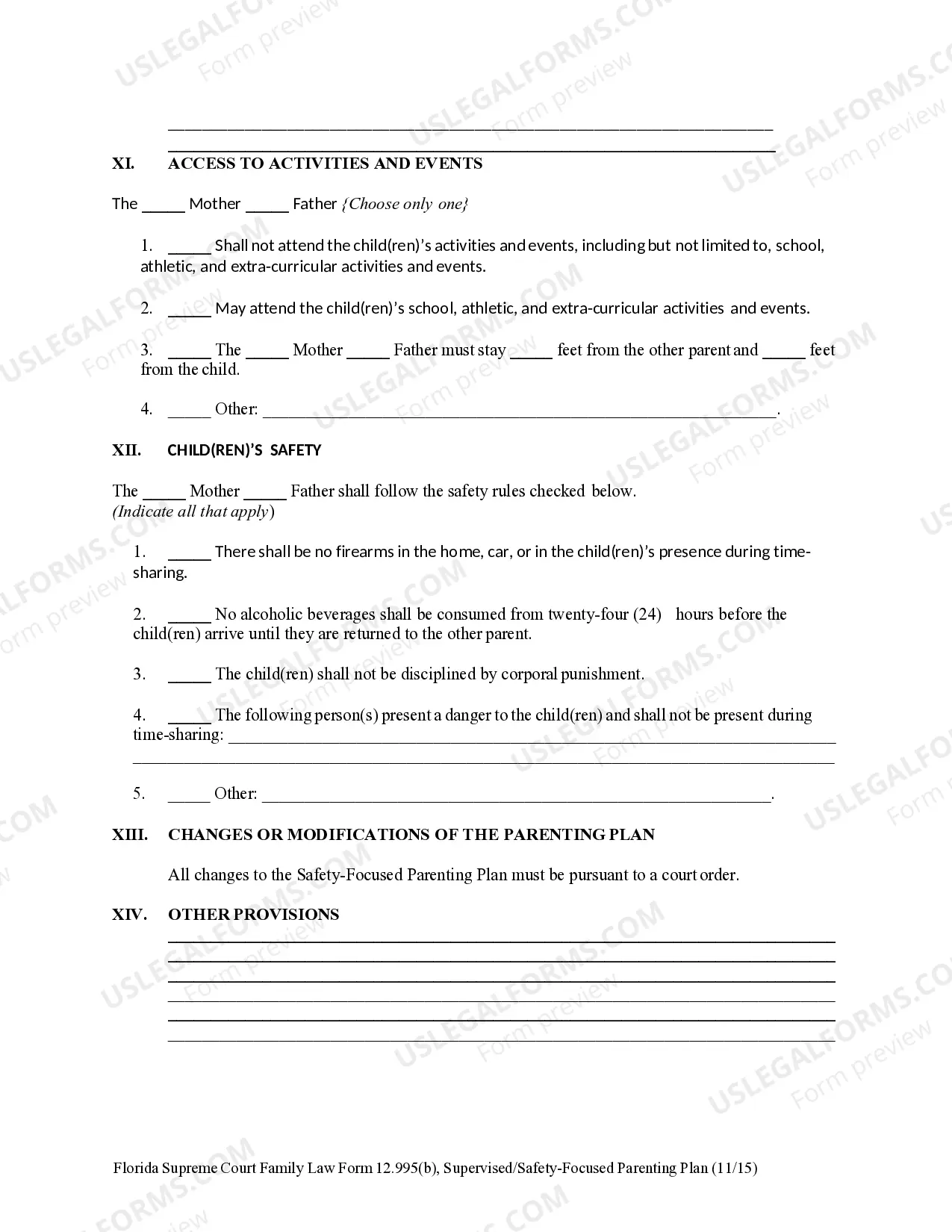
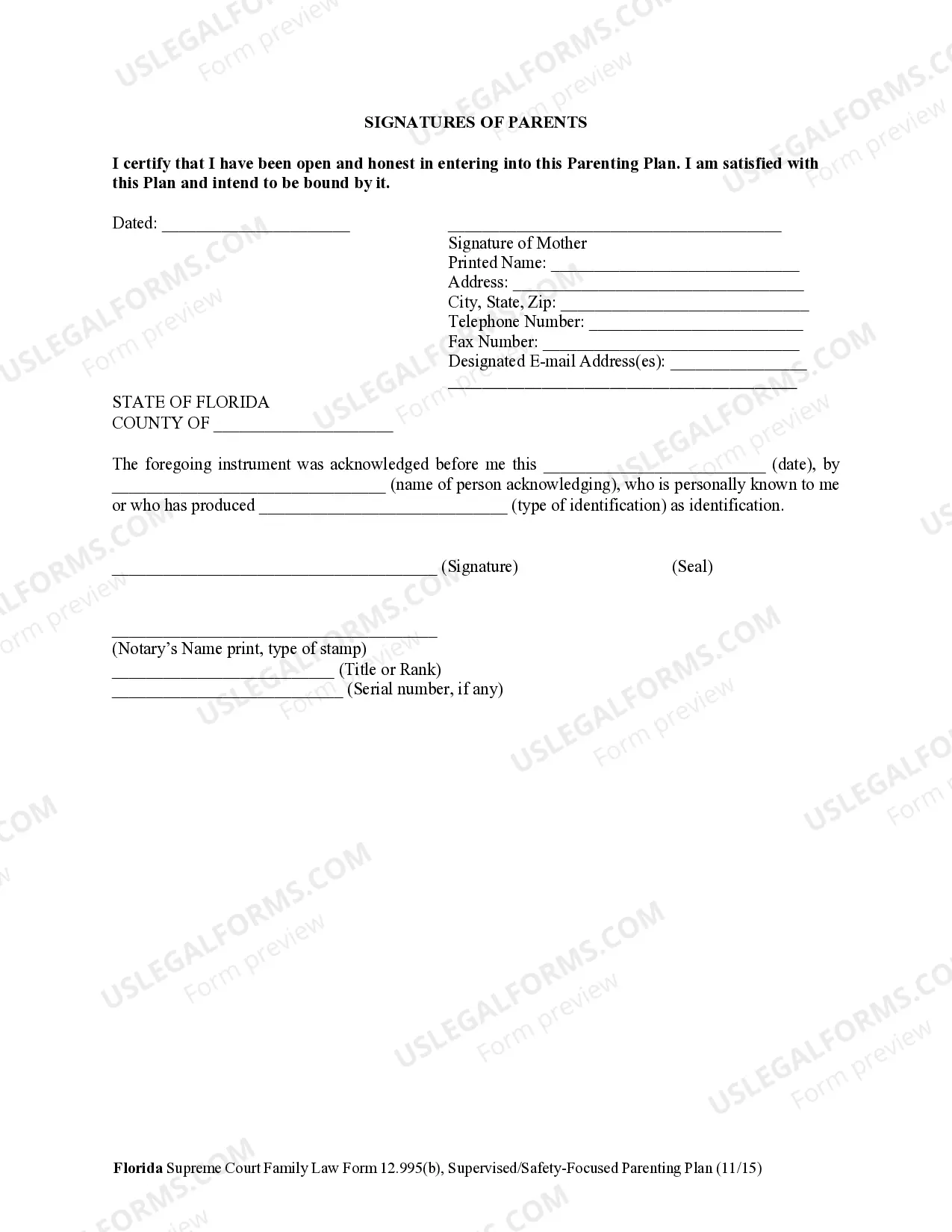
Safety Focused Parenting Plan
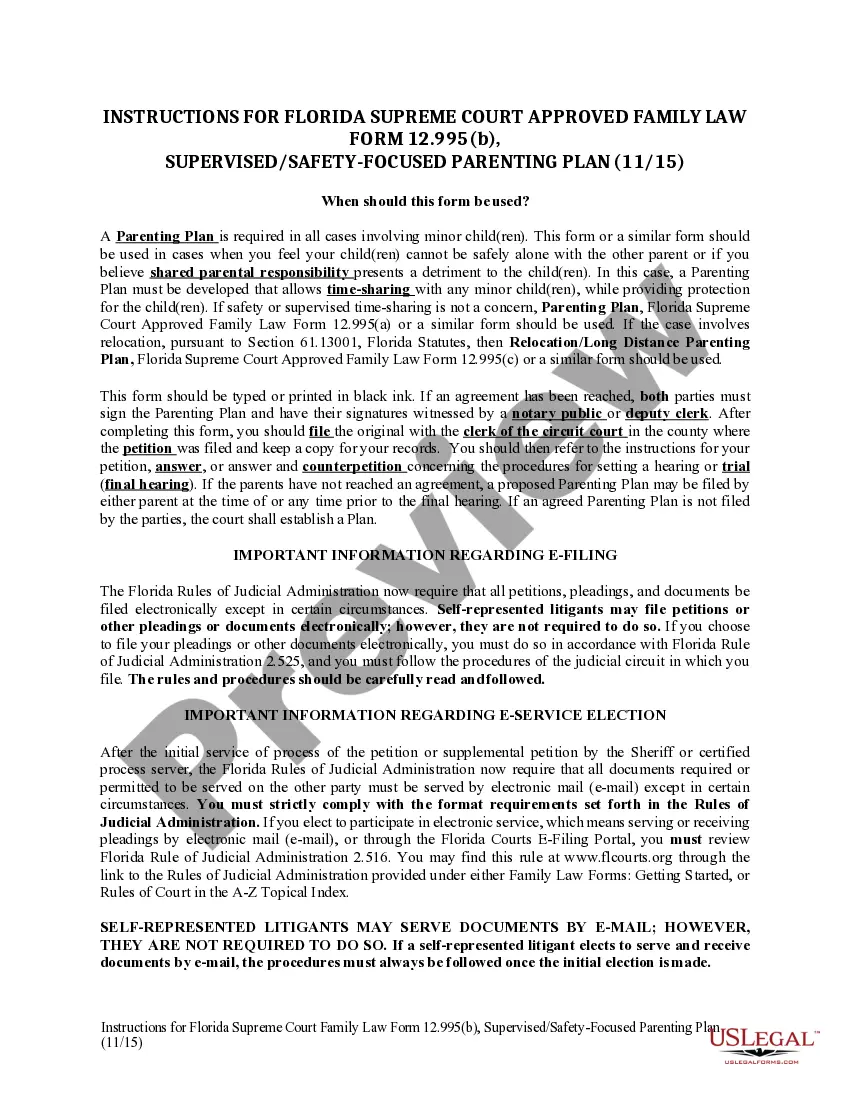
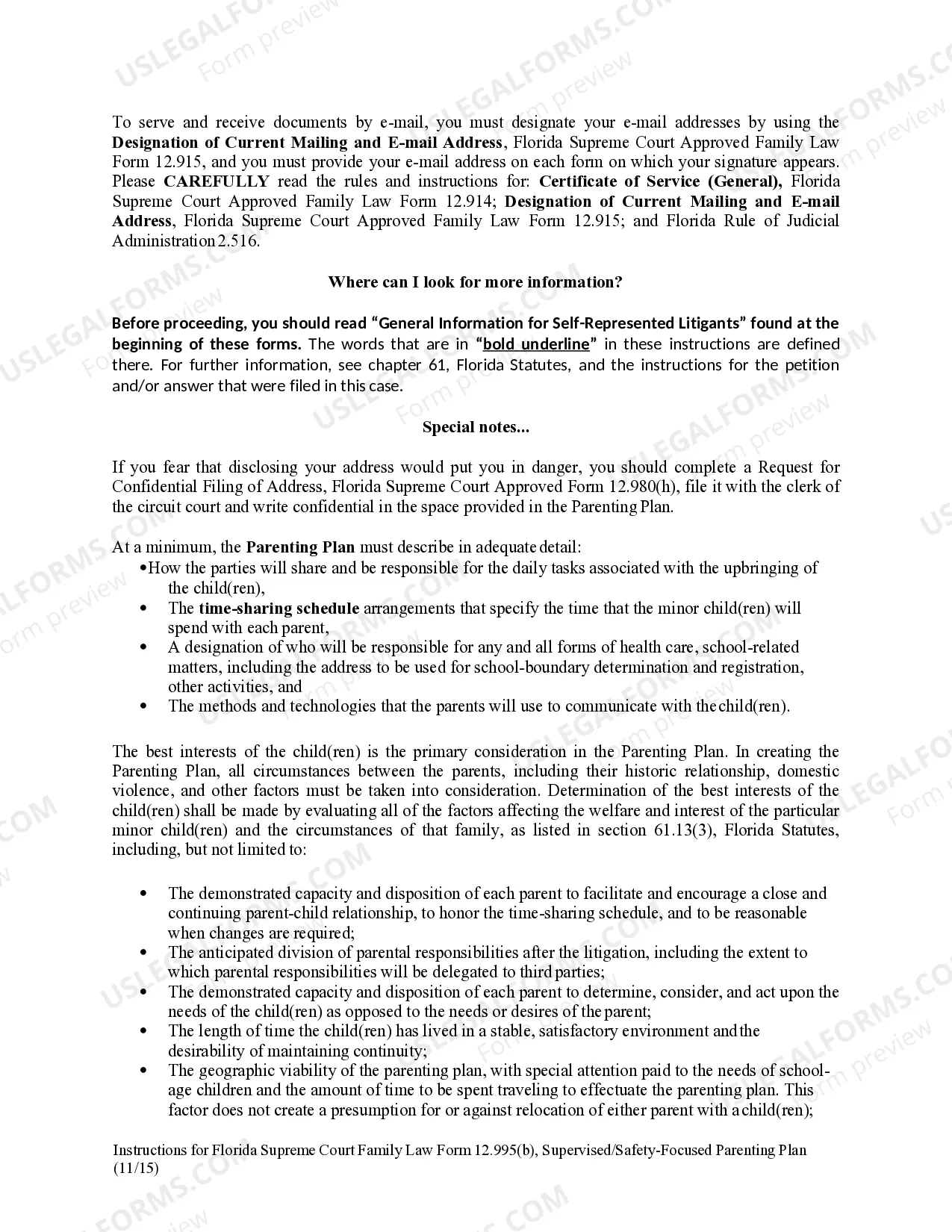
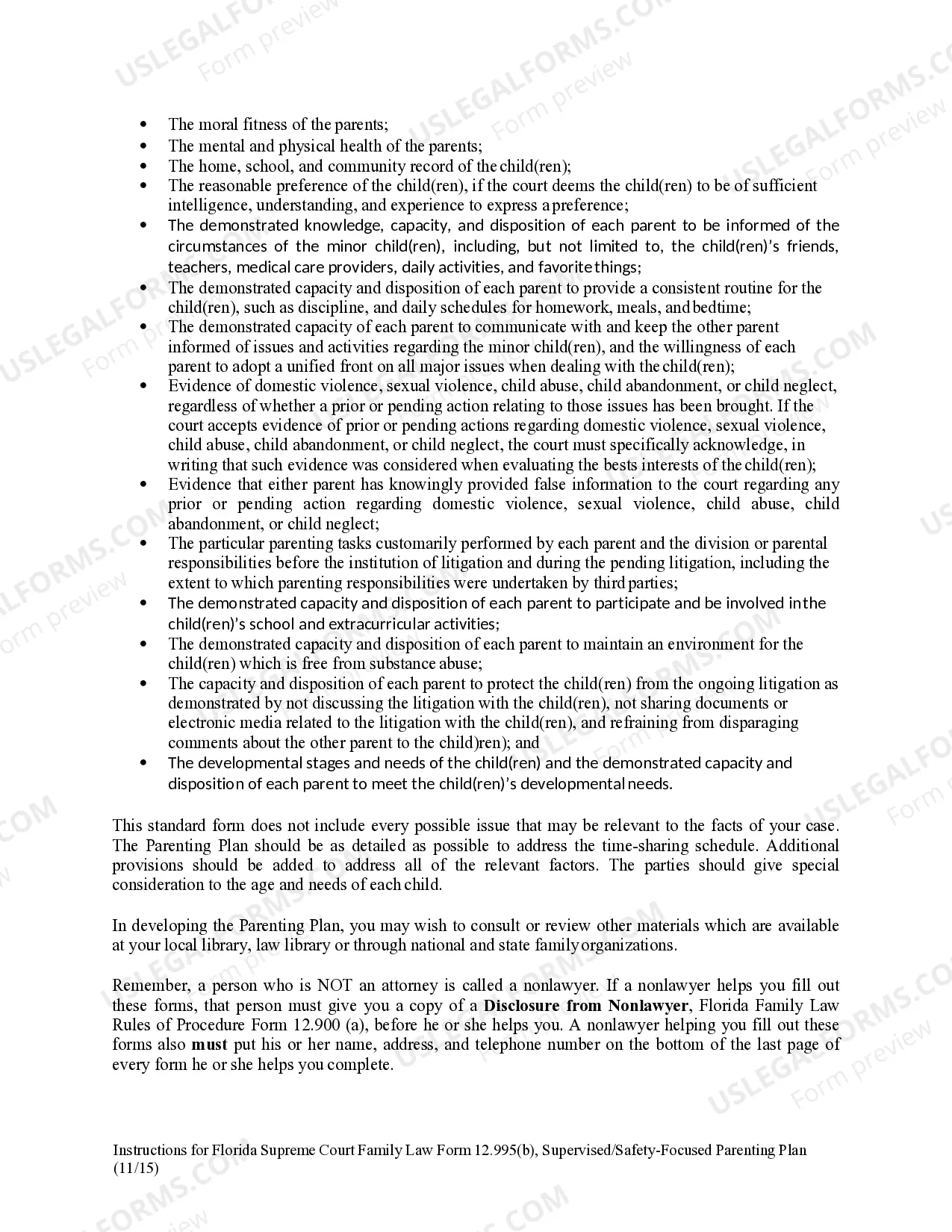
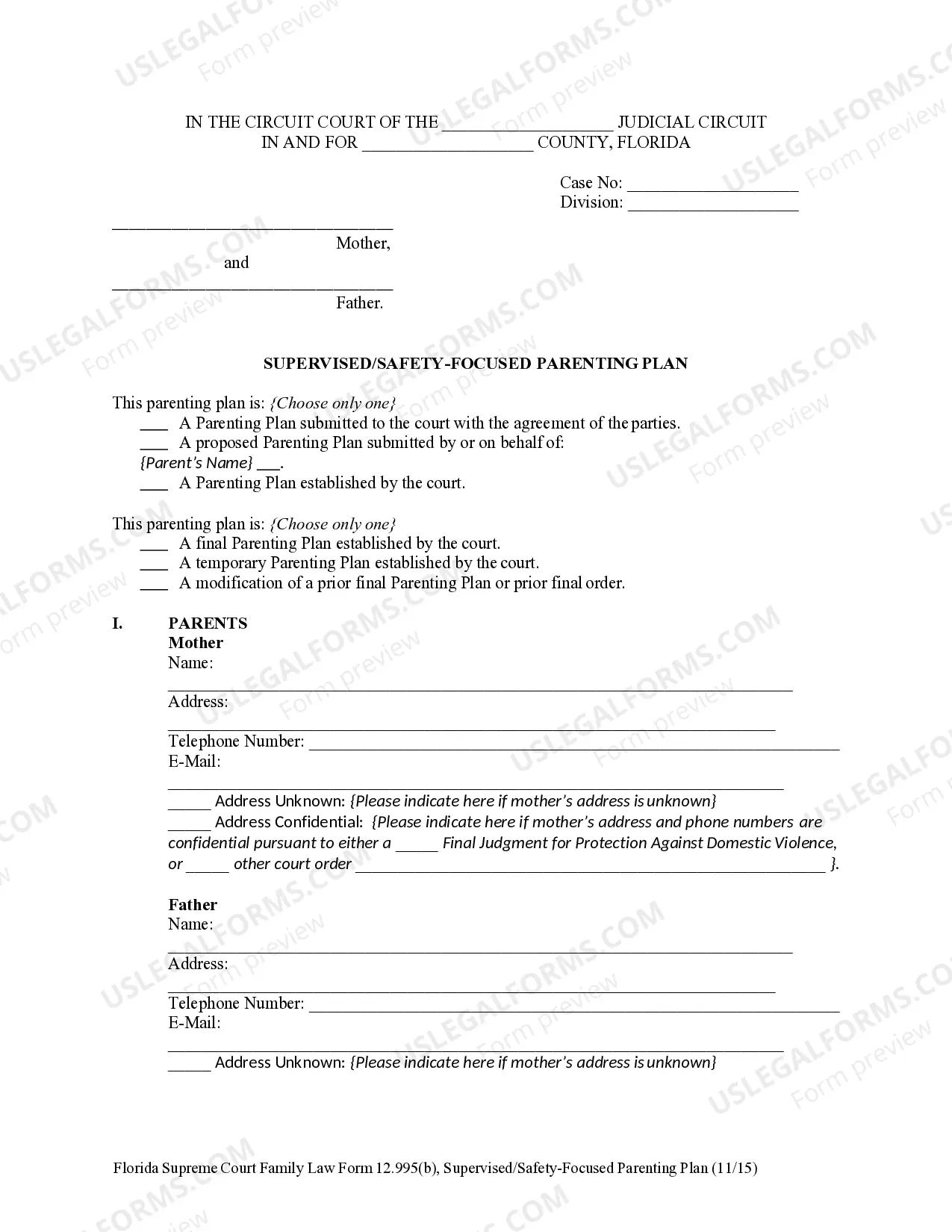
Description
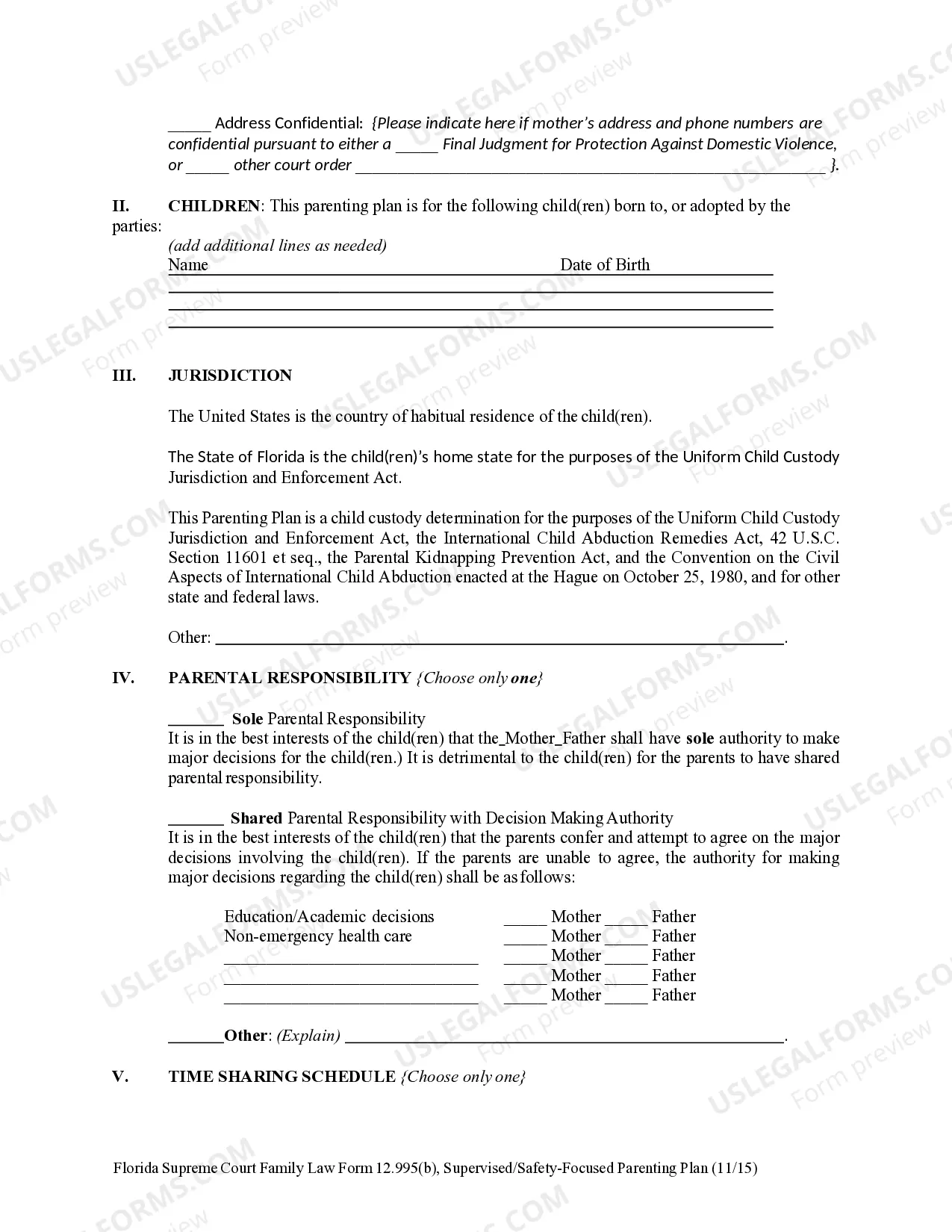
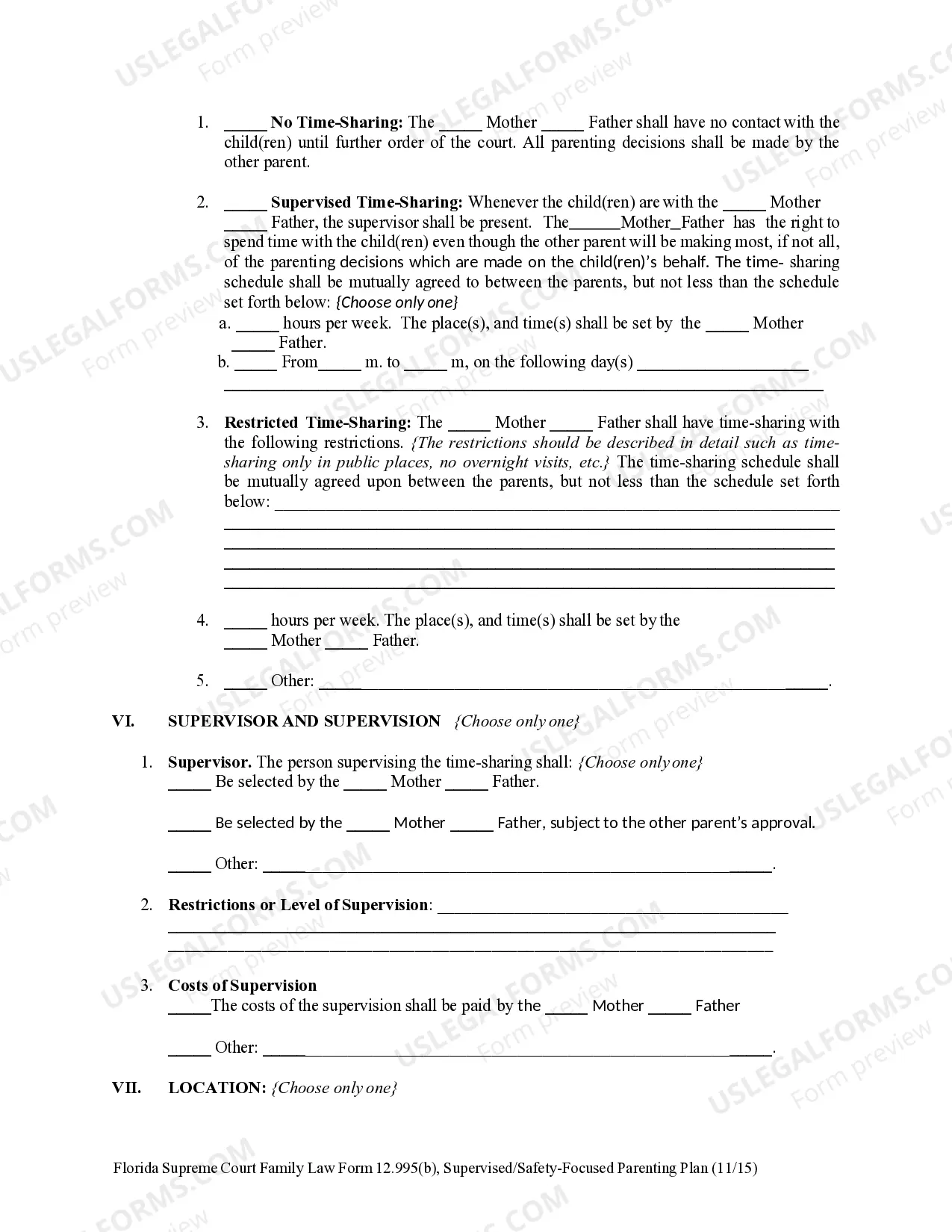
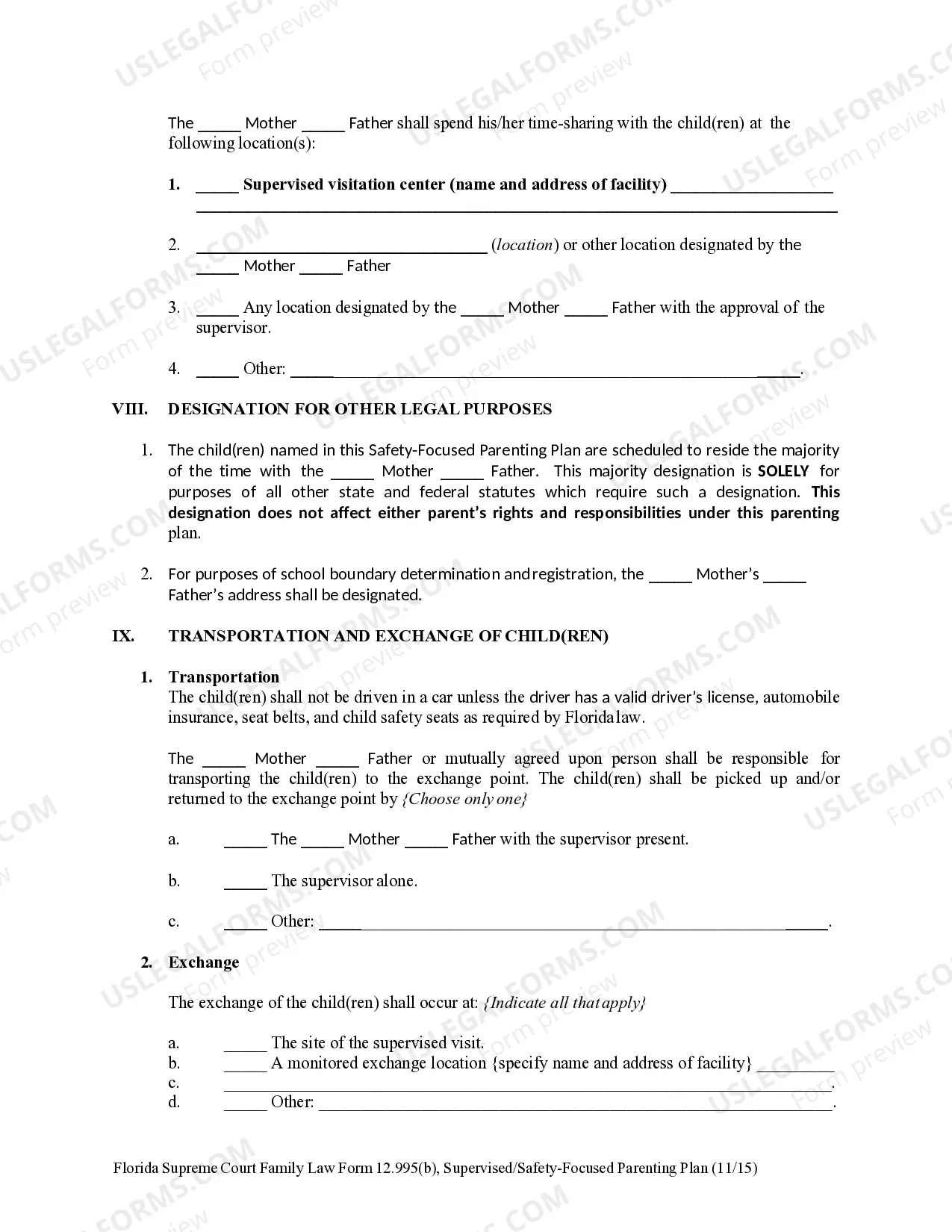
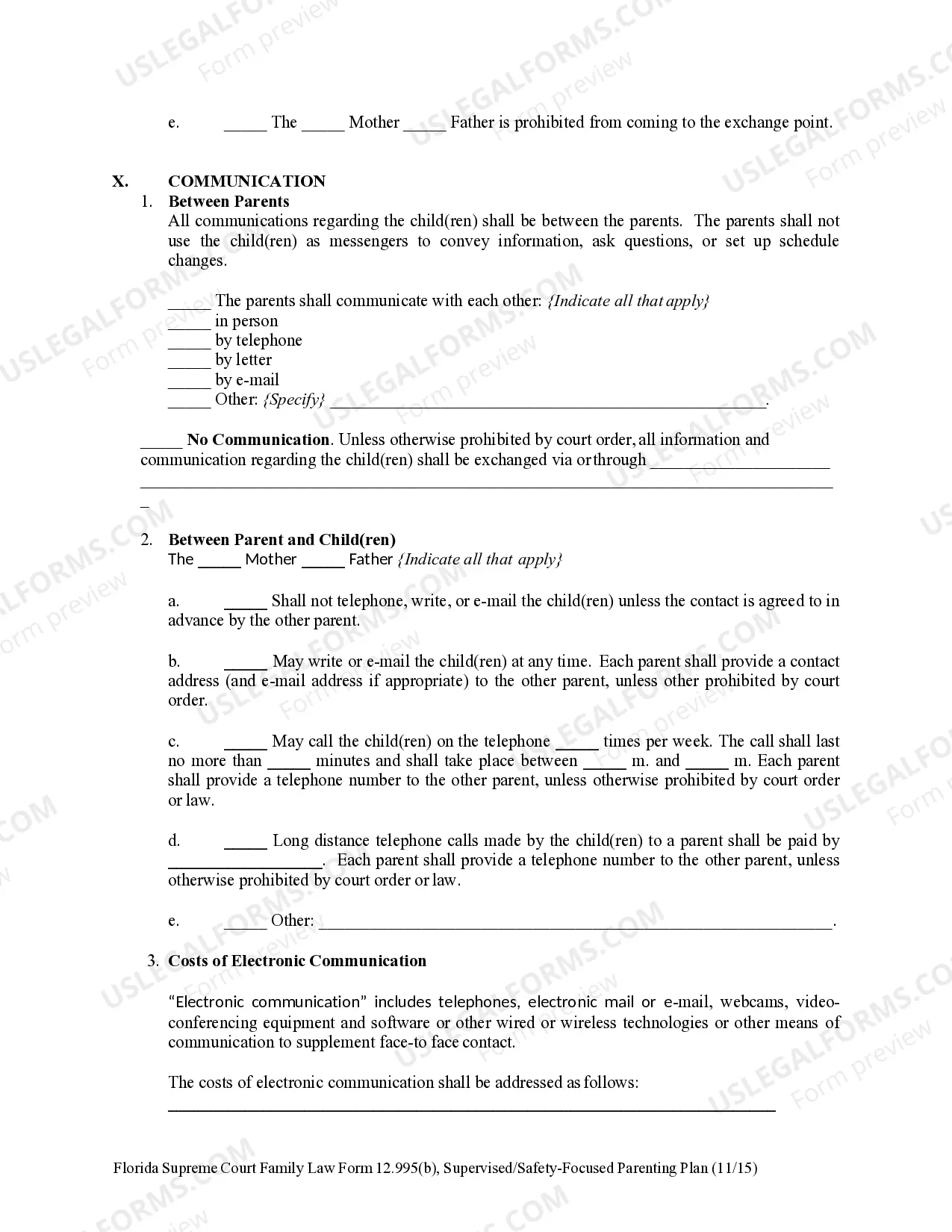

Get your form ready online
Our built-in tools help you complete, sign, share, and store your documents in one place.
Make edits, fill in missing information, and update formatting in US Legal Forms—just like you would in MS Word.
Download a copy, print it, send it by email, or mail it via USPS—whatever works best for your next step.
Sign and collect signatures with our SignNow integration. Send to multiple recipients, set reminders, and more. Go Premium to unlock E-Sign.
If this form requires notarization, complete it online through a secure video call—no need to meet a notary in person or wait for an appointment.
We protect your documents and personal data by following strict security and privacy standards.

Make edits, fill in missing information, and update formatting in US Legal Forms—just like you would in MS Word.

Download a copy, print it, send it by email, or mail it via USPS—whatever works best for your next step.

Sign and collect signatures with our SignNow integration. Send to multiple recipients, set reminders, and more. Go Premium to unlock E-Sign.

If this form requires notarization, complete it online through a secure video call—no need to meet a notary in person or wait for an appointment.

We protect your documents and personal data by following strict security and privacy standards.
Looking for another form?





Form popularity
FAQ
A good parenting plan clearly defines custody schedules, communication methods, and decision-making authority for both parents. It should also include guidelines for holidays, vacations, and unforeseen circumstances. A safety focused parenting plan will prioritize the child's emotional and physical safety, making it essential for both parents to commit to mutual respect and support in their efforts.
In a 70/30 split, one parent has the child for 70% of the time, while the other parent has 30%. This arrangement can include weekends for the non-custodial parent, along with regular weekday visits. It's crucial for both parents to discuss the terms clearly in a safety focused parenting plan, ensuring that the child's needs are met while still allowing for quality time with both parents.
The most common parenting plan often includes joint custody, where both parents share responsibilities and time with the child. This type of arrangement is designed to keep the child’s best interests in focus while promoting involvement from both parents. A safety focused parenting plan will detail how parents communicate about the child’s needs and scheduling, making it beneficial for the whole family.
Writing a detailed parenting plan requires outlining all aspects of childcare, including daily routines, education, health care, and conflict resolution processes. It should highlight both parents' responsibilities while fostering a stable and safe environment for the child. Utilizing a platform like uslegalforms can simplify the creation process, guiding you through necessary components to ensure a comprehensive safety focused parenting plan.
The biggest mistake in a custody battle often involves placing personal grievances above the child's needs. This can lead to conflicts and undermine a safety focused parenting plan. Involving children in disputes, using them as pawns, or failing to cooperate with the other parent can have lasting negative impacts on the child's emotional well-being.
A 60/40 split in a parenting plan indicates that one parent has the child for 60% of the time, while the other parent has 40%. Typically, this might involve alternating weekends and a few weekdays with the other parent. A safety focused parenting plan should outline the schedule clearly, ensuring both parents meet their responsibilities and maintain a stable environment for the child.
Refusal to co-parent occurs when one parent does not communicate or cooperate with the other regarding the child's needs. This can include a lack of shared decision-making, ignoring parenting schedules, or failing to attend important events together. Such behavior can undermine the effectiveness of a safety focused parenting plan, as cooperation is essential for the child's well-being.
After filing a safety focused parenting plan in Washington State, the court will review your documentation for compliance. If everything is in order, the plan can be approved, becoming enforceable by law. You may also receive a hearing date if any objections arise. Utilizing resources like USLegalForms can help ensure your filing process goes smoothly, from preparation to submission.
Yes, a notarized parenting plan is legal and can help provide additional protection and validity to your agreement. This step shows a commitment to the terms outlined in your safety focused parenting plan. While notarization is not always required, it strengthens your plan in the event of future disputes. Using services like USLegalForms can offer templates that facilitate notarization.
In Washington State, the child support amount varies based on the income of both parents and other factors. Generally, the state uses a formula to determine the appropriate percentage. This approach ensures that the child’s expenses are met fairly, aligning with a safety focused parenting plan. It’s best to consult tools or resources for an accurate calculation specific to your situation.
