Sample Response To Motion For Contempt With Motion To Dismiss
Description
Get your form ready online
Our built-in tools help you complete, sign, share, and store your documents in one place.
Make edits, fill in missing information, and update formatting in US Legal Forms—just like you would in MS Word.
Download a copy, print it, send it by email, or mail it via USPS—whatever works best for your next step.
Sign and collect signatures with our SignNow integration. Send to multiple recipients, set reminders, and more. Go Premium to unlock E-Sign.
If this form requires notarization, complete it online through a secure video call—no need to meet a notary in person or wait for an appointment.
We protect your documents and personal data by following strict security and privacy standards.

Make edits, fill in missing information, and update formatting in US Legal Forms—just like you would in MS Word.

Download a copy, print it, send it by email, or mail it via USPS—whatever works best for your next step.

Sign and collect signatures with our SignNow integration. Send to multiple recipients, set reminders, and more. Go Premium to unlock E-Sign.

If this form requires notarization, complete it online through a secure video call—no need to meet a notary in person or wait for an appointment.

We protect your documents and personal data by following strict security and privacy standards.
Looking for another form?









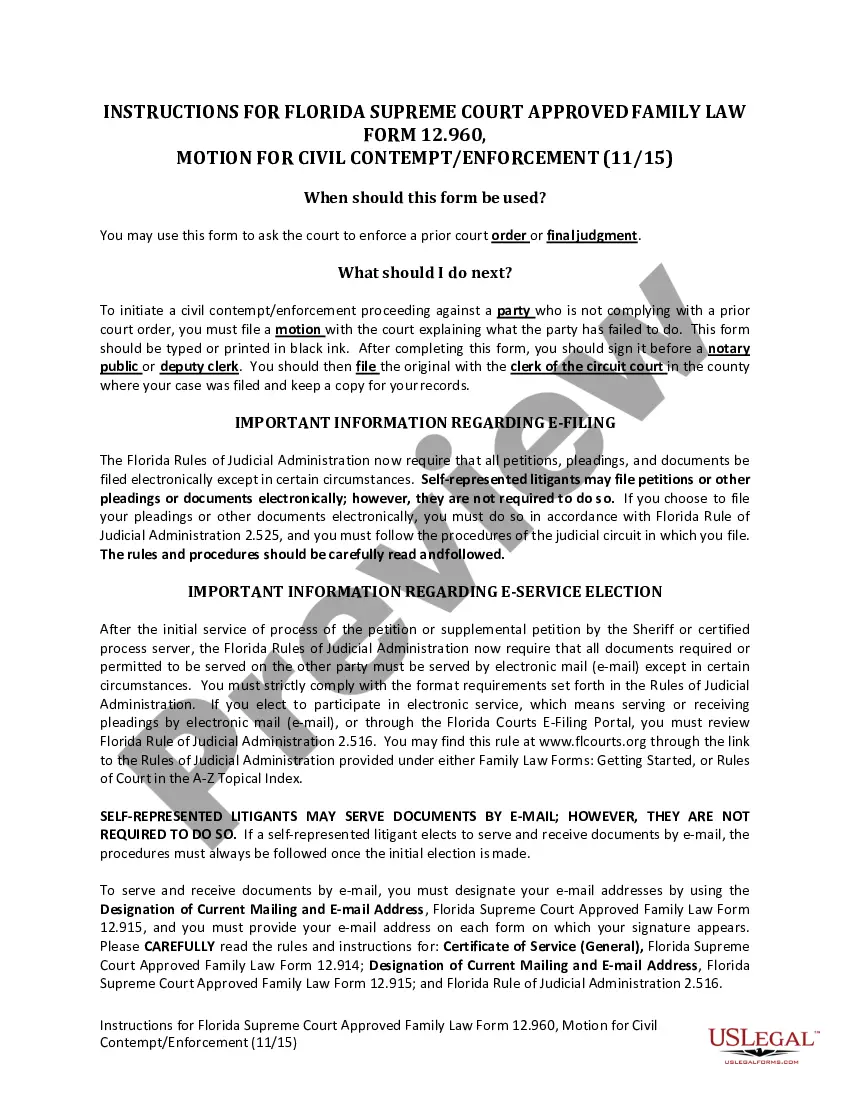
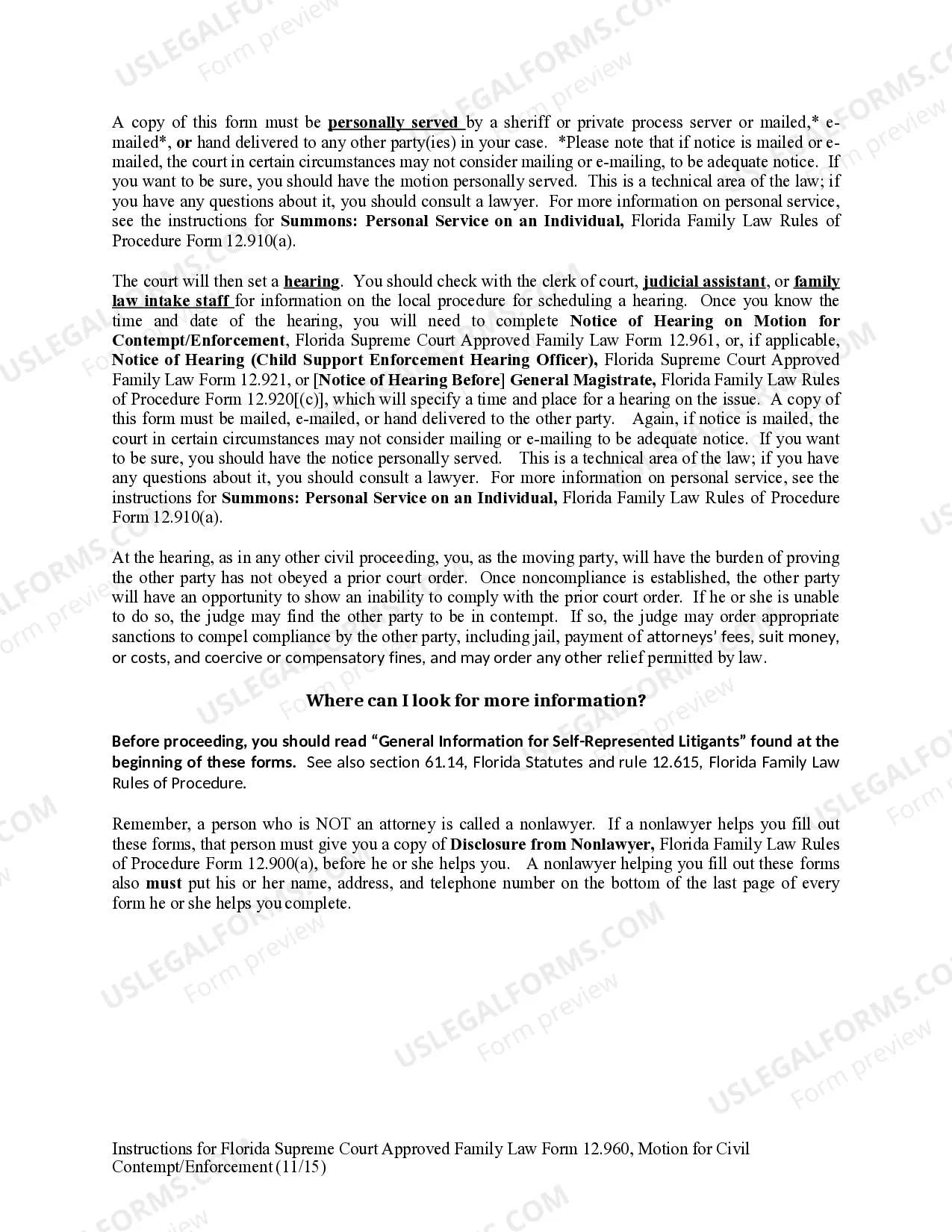
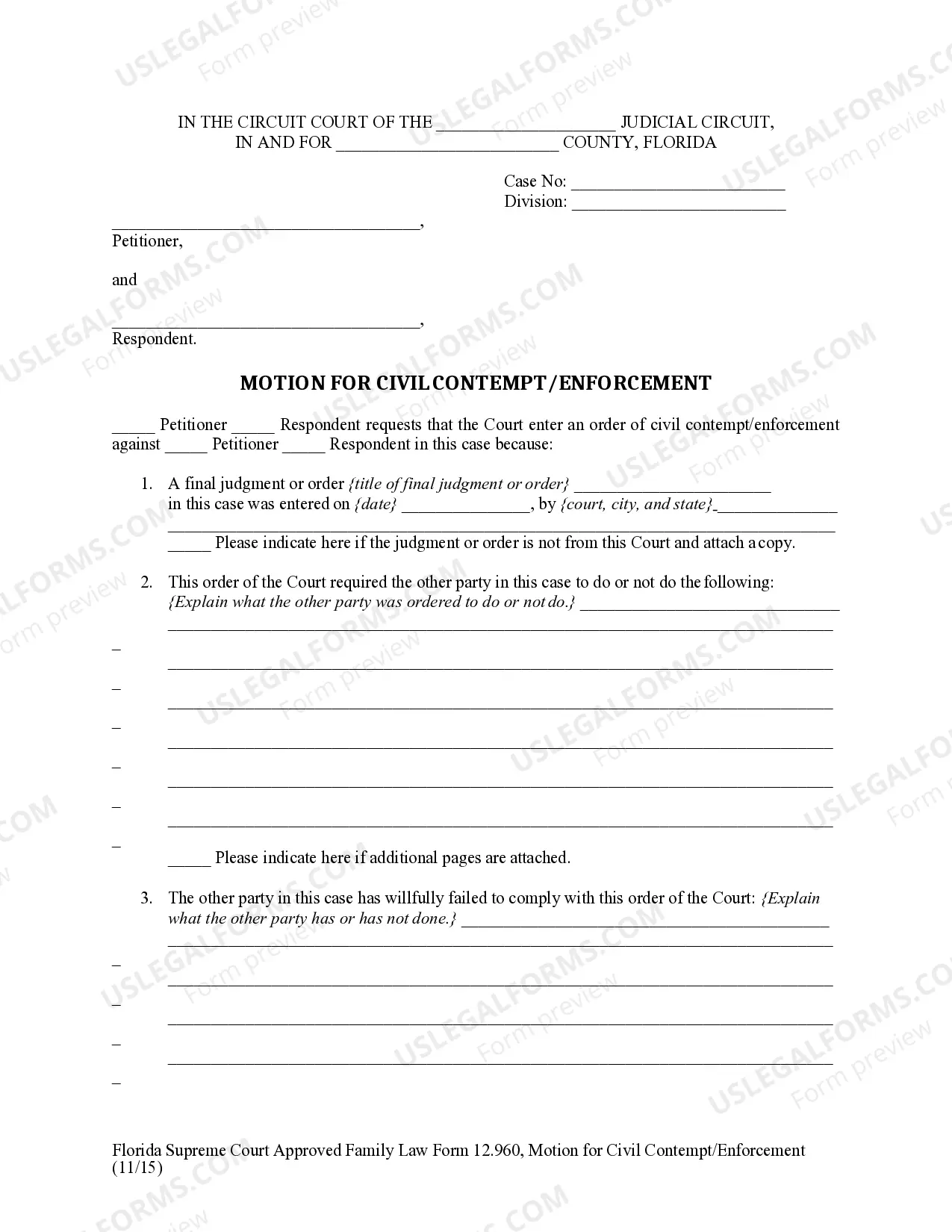
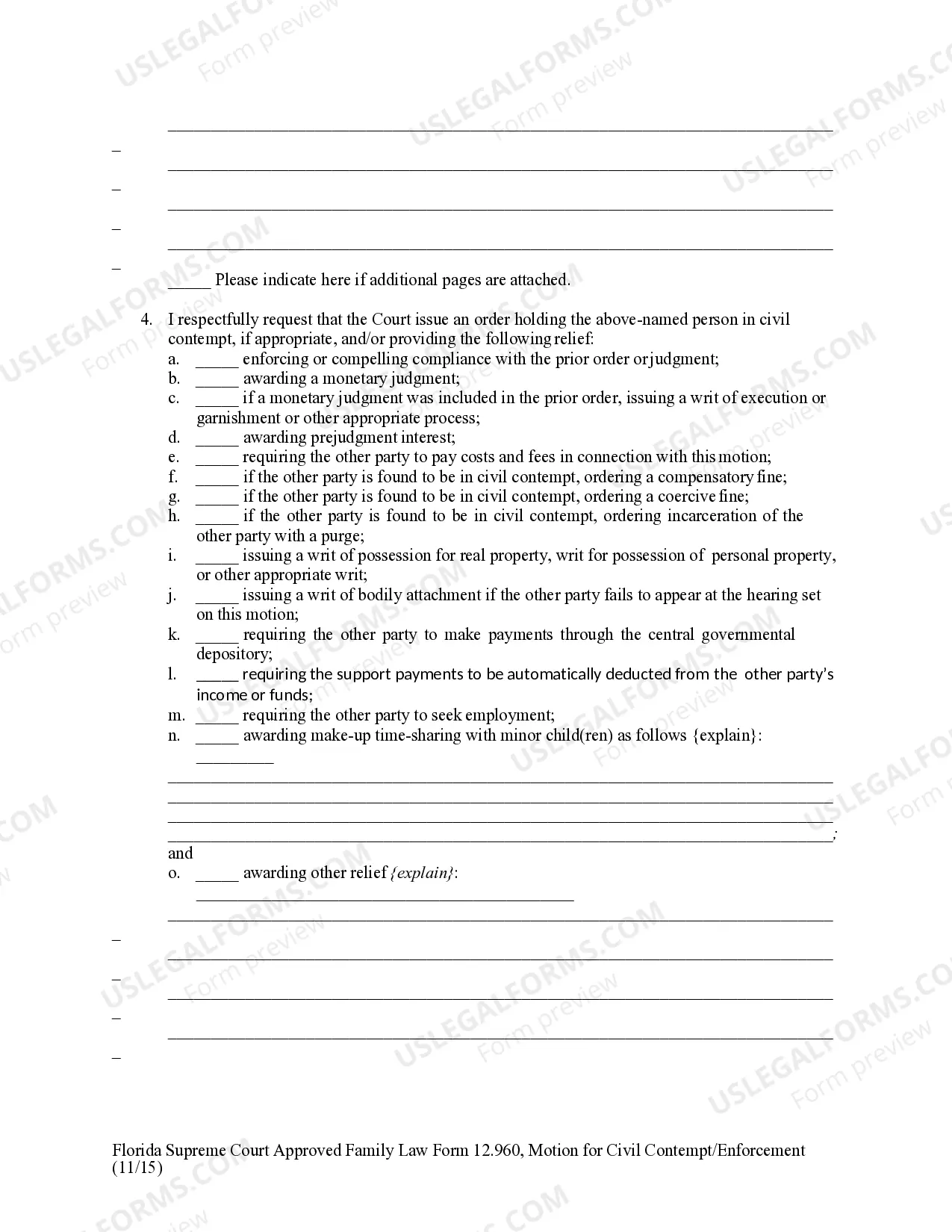
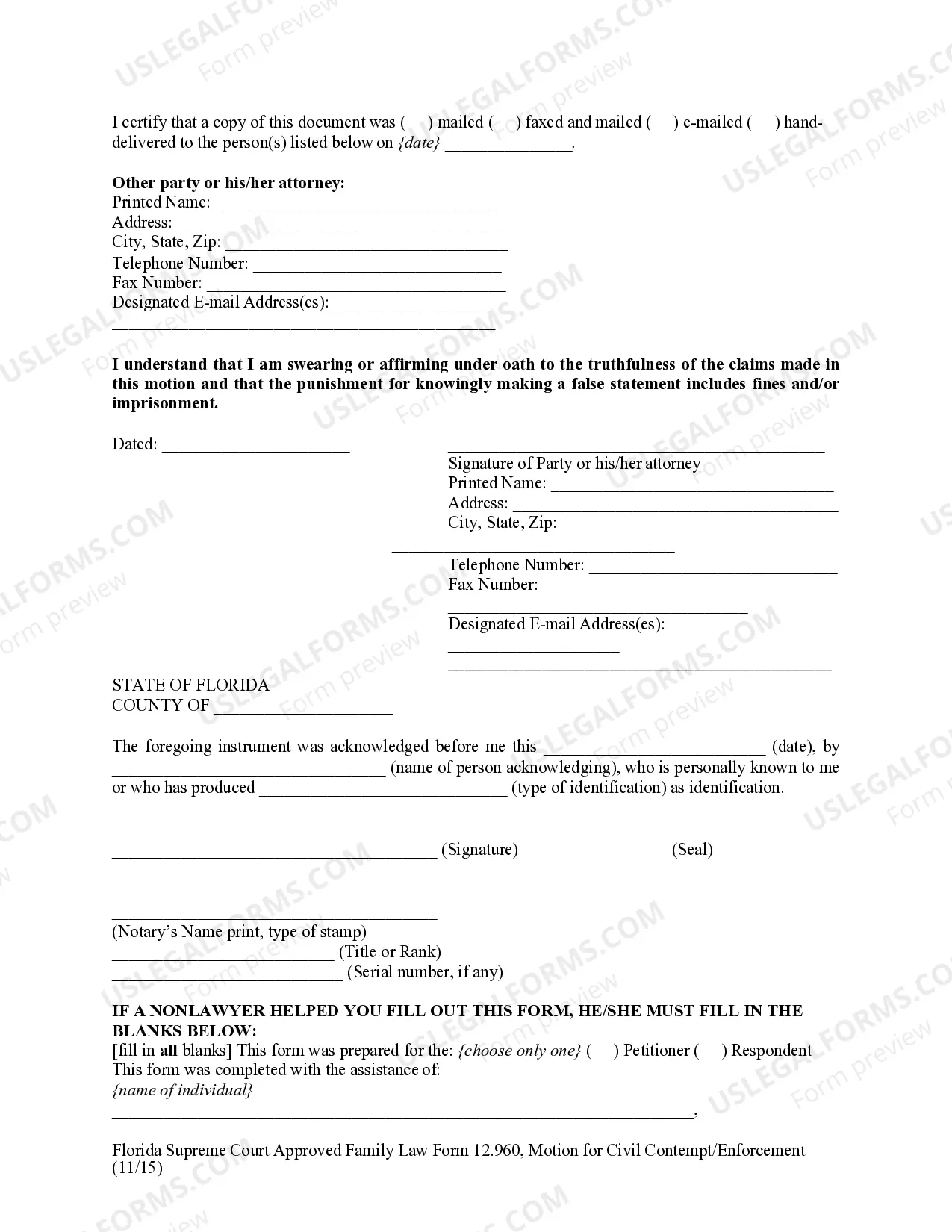
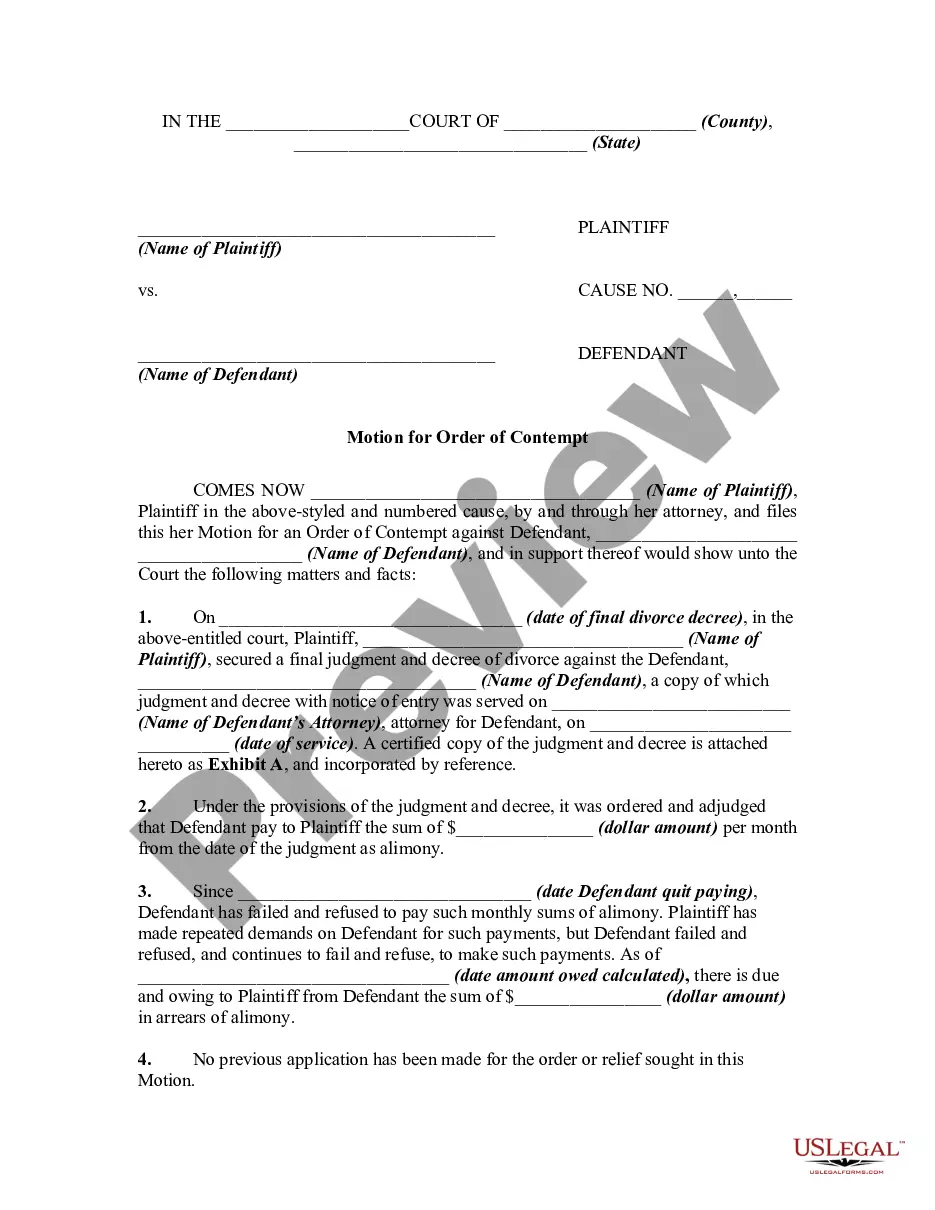
How to fill out Florida Motion For Civil Contempt - Enforcement?
The Example Reply To Motion For Contempt Alongside Motion To Dismiss you observe on this page is a versatile legal framework composed by experienced attorneys in accordance with federal and state legislation and guidelines.
For over 25 years, US Legal Forms has supplied individuals, companies, and legal practitioners with more than 85,000 validated, state-specific documents for any business and personal circumstances. It’s the quickest, most direct, and most reliable means to procure the paperwork you require, as the service ensures bank-level data security and malware protection.
Subscribe to US Legal Forms to have authenticated legal templates for every situation in life available at your fingertips.
- Search for the document you require and verify it.
- Examine the sample you sought and preview it or review the form description to ensure it meets your criteria. If it doesn’t, use the search function to find the appropriate one. Click Buy Now when you have identified the template you need.
- Register and Log In.
- Choose the pricing plan that works for you and create an account. Use PayPal or a credit card to make a swift payment. If you already possess an account, Log In and check your subscription to continue.
- Obtain the fillable template.
- Select the format you prefer for your Example Reply To Motion For Contempt Alongside Motion To Dismiss (PDF, DOCX, RTF) and download the sample onto your device.
- Complete and sign the document.
- Print the template to fill it out by hand. Alternatively, use an online multifunctional PDF editor to quickly and precisely complete and sign your form with a valid.
- Re-download your documents.
- Utilize the same file again whenever necessary. Access the My documents tab in your profile to re-download any previously saved forms.
Form popularity
FAQ
Filling out a Motion to dismiss form requires careful attention to detail and adherence to legal standards. You should clearly state the reasons for the dismissal, supported by relevant facts or law. For assistance, consider using a sample response to motion for contempt with motion to dismiss to guide you step-by-step through the process, ensuring a thorough and accurate submission.
The best defense for contempt of court often relies on demonstrating that the order was not willfully disobeyed or that the terms of the order were unclear. Providing evidence or circumstances that prove compliance or misunderstanding can greatly support your case. A practical approach involves using a sample response to motion for contempt with motion to dismiss, which can help structure a convincing defense.
To respond to an opposition to a motion, first analyze the arguments made against your position. Next, prepare a concise rebuttal that addresses each point with clarity. Utilizing a sample response to motion for contempt with motion to dismiss can offer you insight into constructing a powerful and reasoned reply.
Opposing a motion means formally contesting the claims made in that motion in a court proceeding. This entails presenting counterarguments, evidence, and reasons why the court should not grant the motion. When drafting your sample response to motion for contempt with motion to dismiss, aim to address the core issues raised by the opposing party.
Opposition to a motion signifies that a party disagrees with the motion put forward by the other party in court. Essentially, it is a formal way to challenge the request made in the motion. When crafting a sample response to motion for contempt with motion to dismiss, understanding the nature of opposition helps you effectively present your case.
Yes, you can respond to a response to a motion, often called a reply. This allows you to clarify or counter any new arguments introduced by the opposing party. Enhance your arguments by referencing a sample response to motion for contempt with motion to dismiss, making sure to stay focused on the key legal points at issue in the motion.
Responsive pleadings include answers, counterclaims, and motions that respond to opposing allegations. These documents serve to address the assertions made in the initial complaint and set forth defenses or additional claims. Crafting a strong sample response to motion for contempt with motion to dismiss can showcase an effective approach to responding to any claims made against you.
A motion to dismiss a responsive pleading challenges an answer filed by the opposing party, arguing that it is insufficient or unwarranted. It is a strategic move in litigation that can simplify the case by eliminating unnecessary or invalid claims. When faced with such a motion, consider utilizing a tailored sample response to motion for contempt with motion to dismiss to articulate your defenses effectively.
The timeframe for a plaintiff to respond to a motion to dismiss varies by jurisdiction, but it is generally set by local rules. Often, a plaintiff has around 14 to 30 days to submit their reply. It's crucial to adhere to these timelines and prepare a well-thought-out sample response to motion for contempt with motion to dismiss, ensuring that your arguments are presented clearly within the designated period.
A responsive pleading motion to dismiss refers to a specific type of legal challenge presented in response to a complaint. It allows the responding party to assert that the complaint does not have enough legal basis for a claim. If you find yourself in this situation, a sample response to motion for contempt with motion to dismiss can provide a solid framework for addressing the issues raised in the initial complaint.