Sample Response To Motion For Contempt With District Court
Description
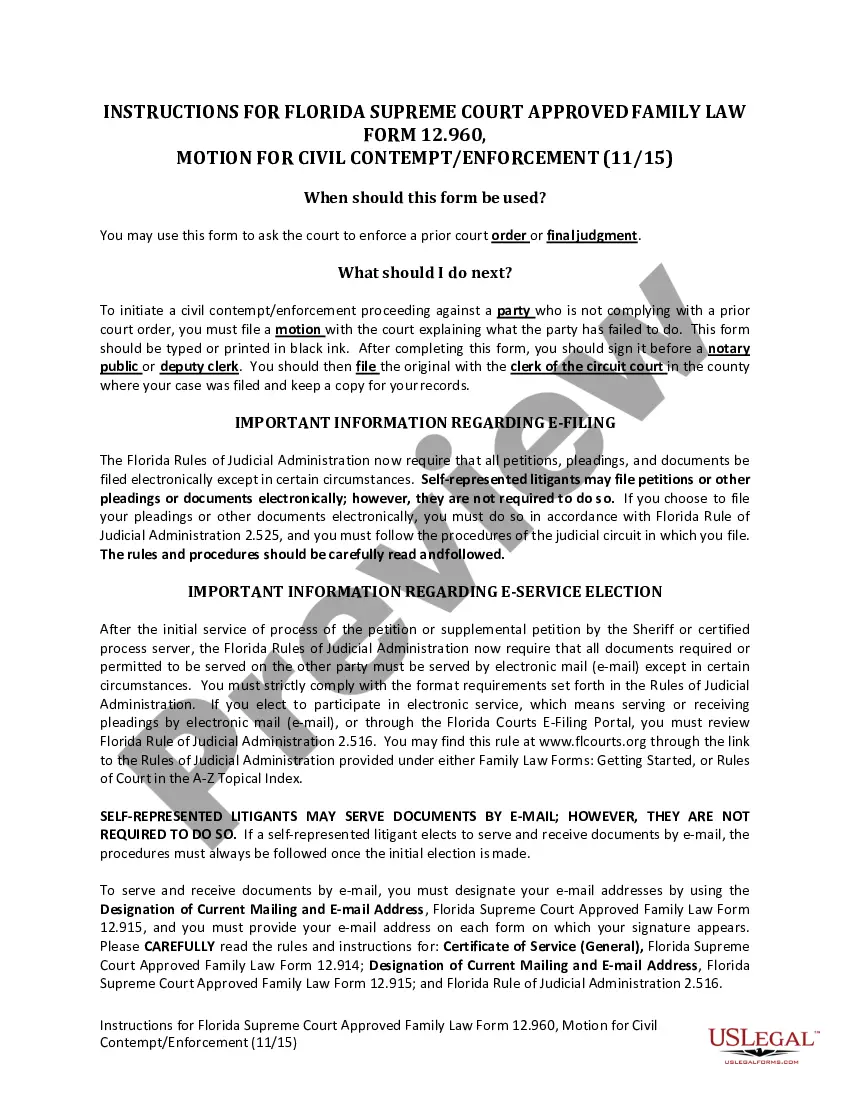
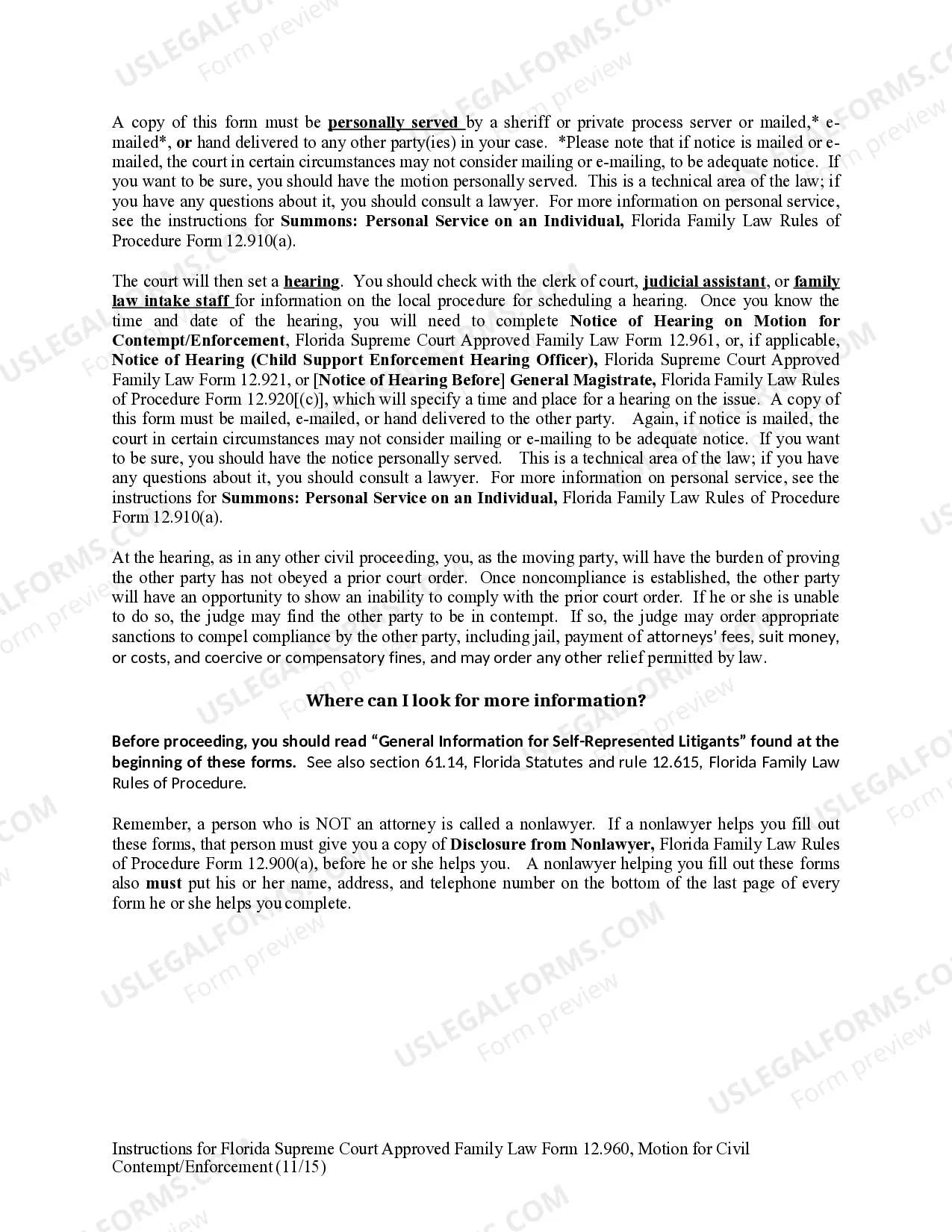
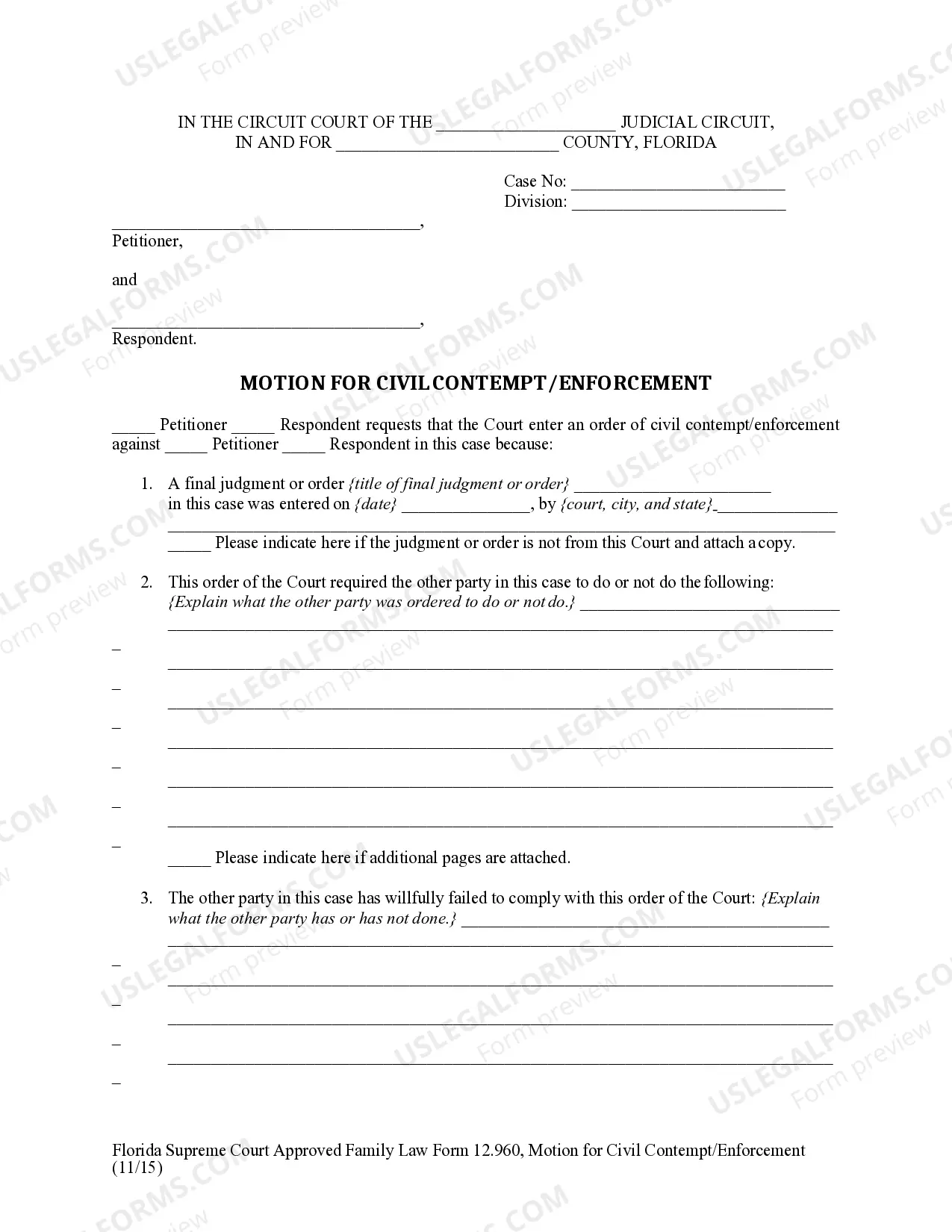
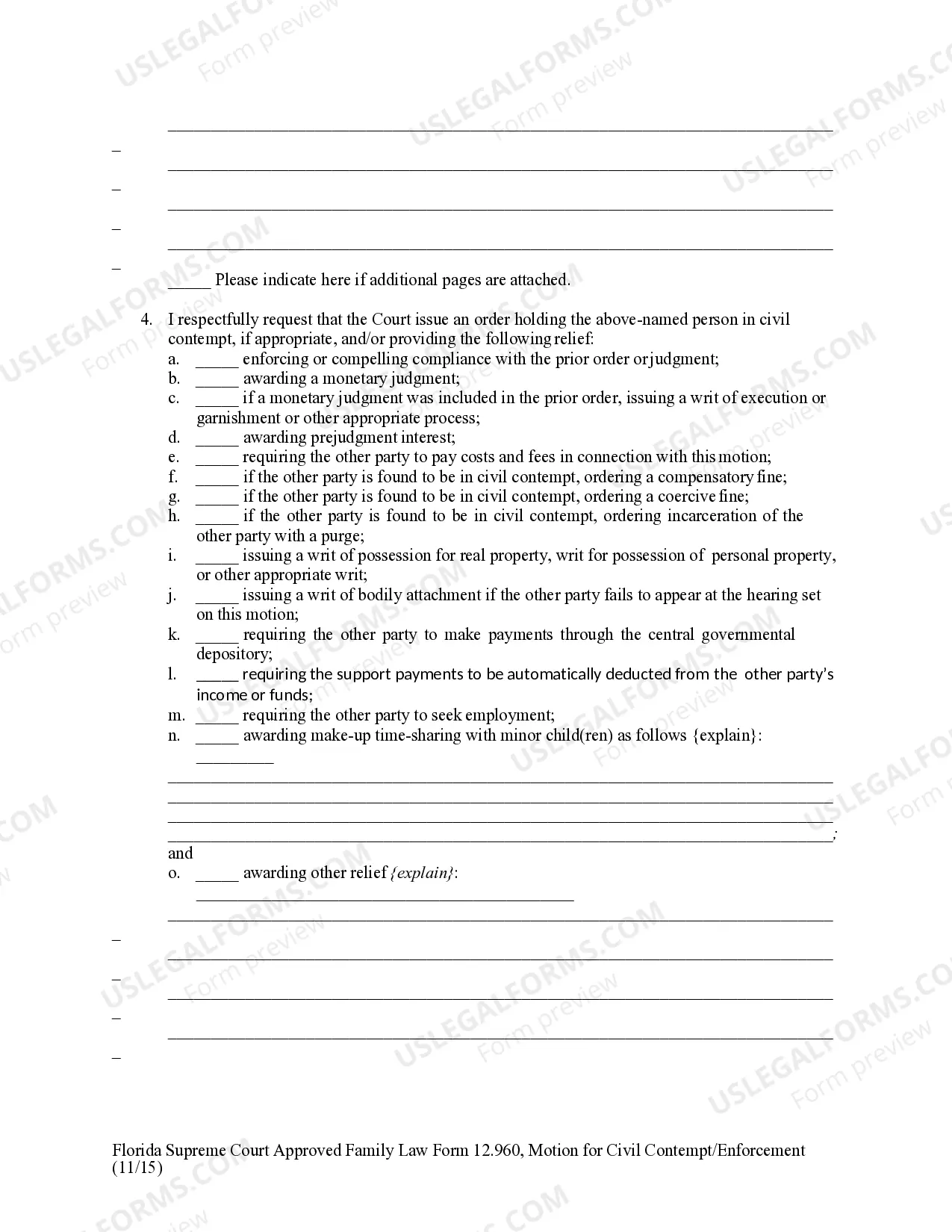
Get your form ready online
Our built-in tools help you complete, sign, share, and store your documents in one place.
Make edits, fill in missing information, and update formatting in US Legal Forms—just like you would in MS Word.
Download a copy, print it, send it by email, or mail it via USPS—whatever works best for your next step.
Sign and collect signatures with our SignNow integration. Send to multiple recipients, set reminders, and more. Go Premium to unlock E-Sign.
If this form requires notarization, complete it online through a secure video call—no need to meet a notary in person or wait for an appointment.
We protect your documents and personal data by following strict security and privacy standards.

Make edits, fill in missing information, and update formatting in US Legal Forms—just like you would in MS Word.

Download a copy, print it, send it by email, or mail it via USPS—whatever works best for your next step.

Sign and collect signatures with our SignNow integration. Send to multiple recipients, set reminders, and more. Go Premium to unlock E-Sign.

If this form requires notarization, complete it online through a secure video call—no need to meet a notary in person or wait for an appointment.

We protect your documents and personal data by following strict security and privacy standards.
Looking for another form?
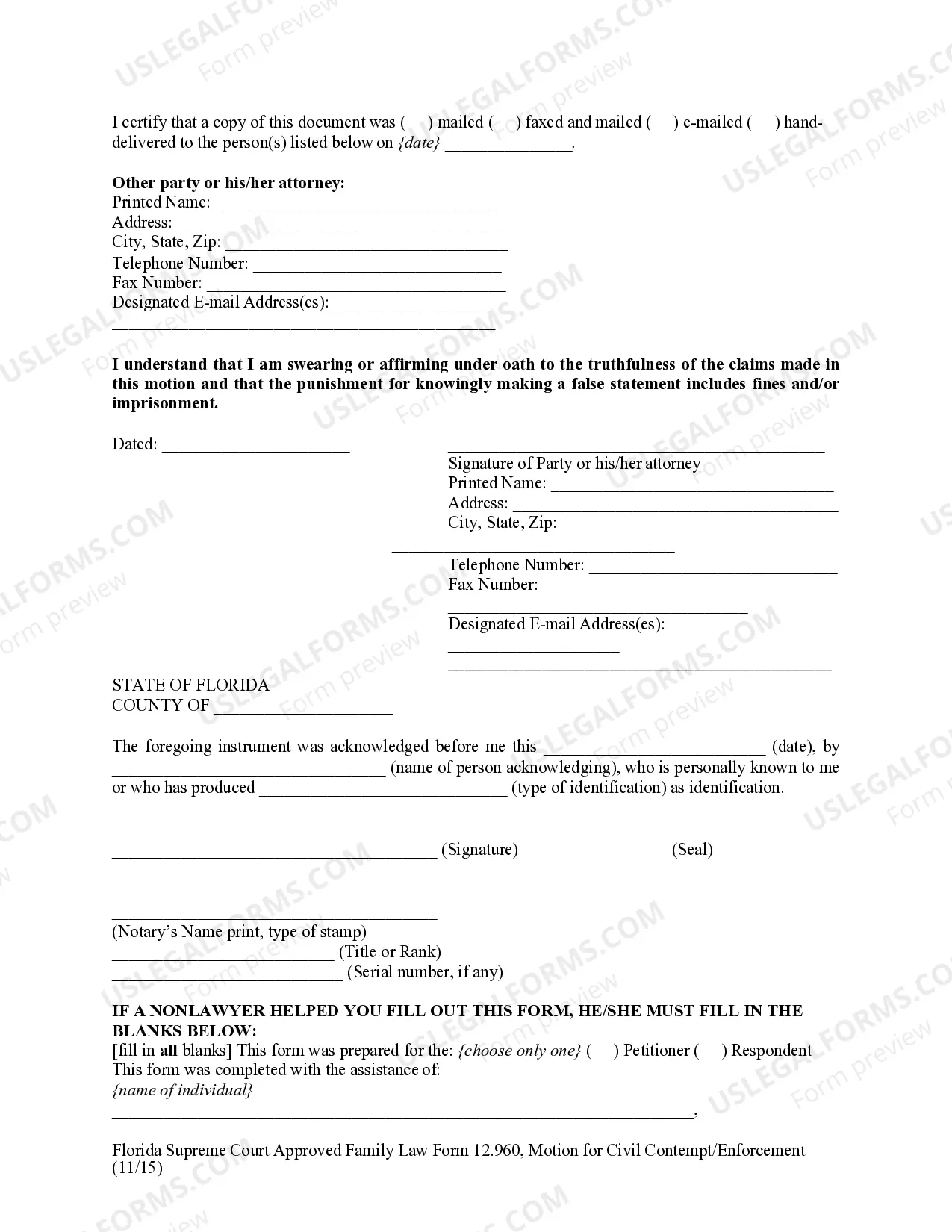
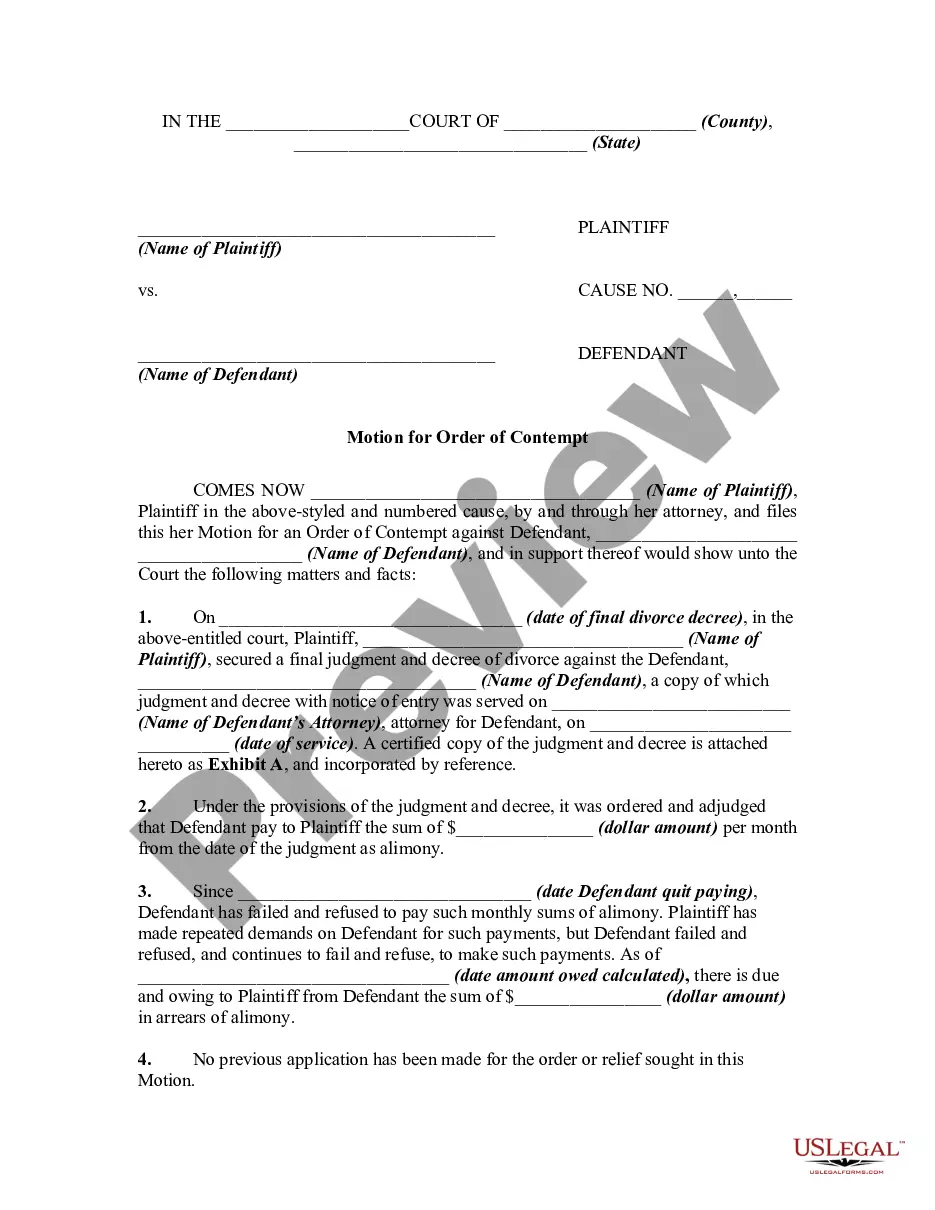
How to fill out Florida Motion For Civil Contempt - Enforcement?
Acquiring legal document examples that conform to the federal and state regulations is crucial, and the web provides numerous alternatives to select from.
However, what is the benefit of spending time hunting for the suitable Sample Response To Motion For Contempt With District Court example online when the US Legal Forms digital library already compiles such templates in one location.
US Legal Forms is the largest online legal repository with over 85,000 printable templates created by attorneys for any professional and personal situation.
Evaluate the template using the Preview feature or through the text summary to confirm it fulfills your needs.
- They are straightforward to navigate with all documents categorized by state and intended use.
- Our experts stay updated with legal changes so you can always guarantee that your form is current and compliant when obtaining a Sample Response To Motion For Contempt With District Court from our site.
- Acquiring a Sample Response To Motion For Contempt With District Court is swift and uncomplicated for both existing and new users.
- If you already possess an account with an active subscription, Log In and download the document example you require in the desired format.
- If you are visiting our site for the first time, follow the guidelines below.
Form popularity
FAQ
Winning a contempt hearing requires thorough preparation and clear evidence of compliance or non-compliance with court orders. Understand the specific allegations against you and gather any documentation or witness testimonies that support your case. Make your arguments concise and compelling in court, and be ready to counter the opposing party’s claims. Familiarizing yourself with a sample response to motion for contempt with district court may provide insights into effective strategies for your hearing.
To write a reply to a motion, begin by summarizing the key points in the initial motion. Then, address those points with your arguments and supporting evidence. Use a professional tone, and ensure that your reply is clear and organized. Consider consulting a sample response to motion for contempt with district court to help you formulate a precise and persuasive reply.
When writing a letter of response to a court summons, be sure to address the court directly and include the case number. State your intention to respond and outline your understanding of the situation. Follow up with your position and any relevant details that support your case. Reviewing a sample response to motion for contempt with district court can help you structure your letter appropriately.
Writing a response statement for court involves formally addressing the issues raised by the opposing party. Start with an introductory statement that includes your position. Then, respond to each point made in the original motion, providing evidence and legal rationale where applicable. A sample response to motion for contempt with district court can serve as a valuable resource to ensure your statement is effective and compliant with court procedures.
To write an opposition to a motion, begin by reviewing the motion carefully to understand its arguments. Then, articulate your counterarguments clearly and support them with relevant laws and facts. Use a clear structure, starting with a brief introduction before discussing each point. Consider utilizing a sample response to motion for contempt with district court for guidance on format and content.
To write a response to a court summons, begin by reviewing the summons for pertinent information and deadlines. Clearly state your intention to respond and include any defenses you wish to assert. Ensure that your response is formatted correctly and filed on time to avoid any adverse consequences. It can be helpful to reference a sample response to motion for contempt with district court as a framework for your writing.
Writing a response to a court motion involves acknowledging the motion and addressing its key points. Start by clearly stating your stance, then systematically counter each argument presented in the motion. Be direct and concise in your language, while also citing relevant laws or precedents. Use examples like a sample response to motion for contempt with district court for guidance in structuring your response.
An opposition to a motion for contempt outlines the rebuttal against allegations of contempt. It typically includes arguments that demonstrate compliance with court orders or emphasize misunderstandings regarding the circumstances. Crafting an effective opposition is key to maintaining your rights, and examining a sample response to motion for contempt with district court can provide helpful insights.
Opposition to a motion generally refers to a formal statement by the opposing party, challenging the motion’s validity. This document argues against the claims made in the original motion, presenting reasons why the court should deny it. Understanding this concept is crucial when drafting your own responses, keeping in mind the importance of clarity and logical reasoning.
The best defense for contempt of court often hinges on proving that you did not willfully disobey a court order. You may argue that you were unable to comply due to circumstances beyond your control. Additionally, demonstrating that the order is vague or unclear can be a strong defense. Consider reviewing examples like a sample response to motion for contempt with district court to strengthen your case further.