Notice Intent Enter Landlord For Tenants
Description

Get your form ready online
Our built-in tools help you complete, sign, share, and store your documents in one place.
Make edits, fill in missing information, and update formatting in US Legal Forms—just like you would in MS Word.
Download a copy, print it, send it by email, or mail it via USPS—whatever works best for your next step.
Sign and collect signatures with our SignNow integration. Send to multiple recipients, set reminders, and more. Go Premium to unlock E-Sign.
If this form requires notarization, complete it online through a secure video call—no need to meet a notary in person or wait for an appointment.
We protect your documents and personal data by following strict security and privacy standards.

Make edits, fill in missing information, and update formatting in US Legal Forms—just like you would in MS Word.

Download a copy, print it, send it by email, or mail it via USPS—whatever works best for your next step.

Sign and collect signatures with our SignNow integration. Send to multiple recipients, set reminders, and more. Go Premium to unlock E-Sign.

If this form requires notarization, complete it online through a secure video call—no need to meet a notary in person or wait for an appointment.

We protect your documents and personal data by following strict security and privacy standards.
Looking for another form?




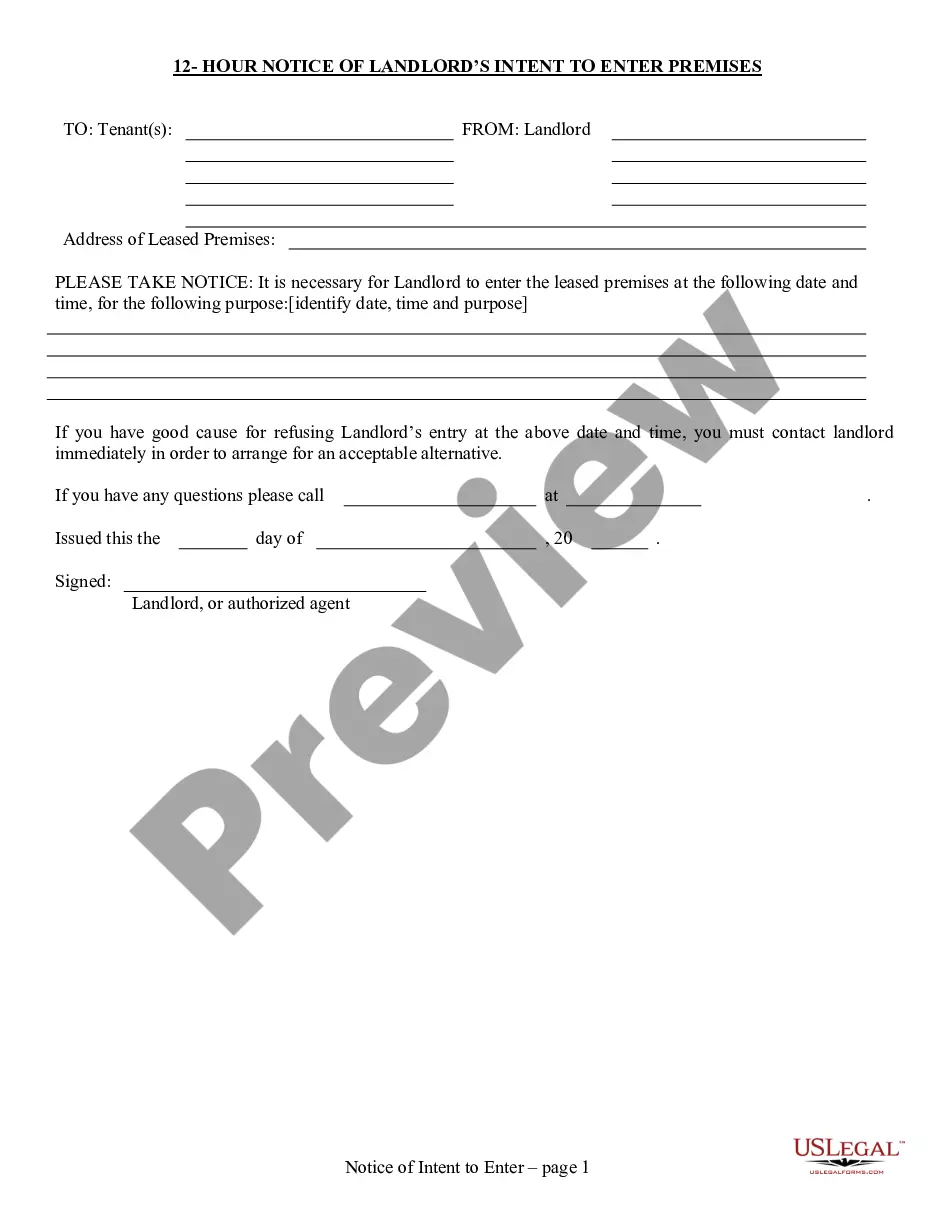
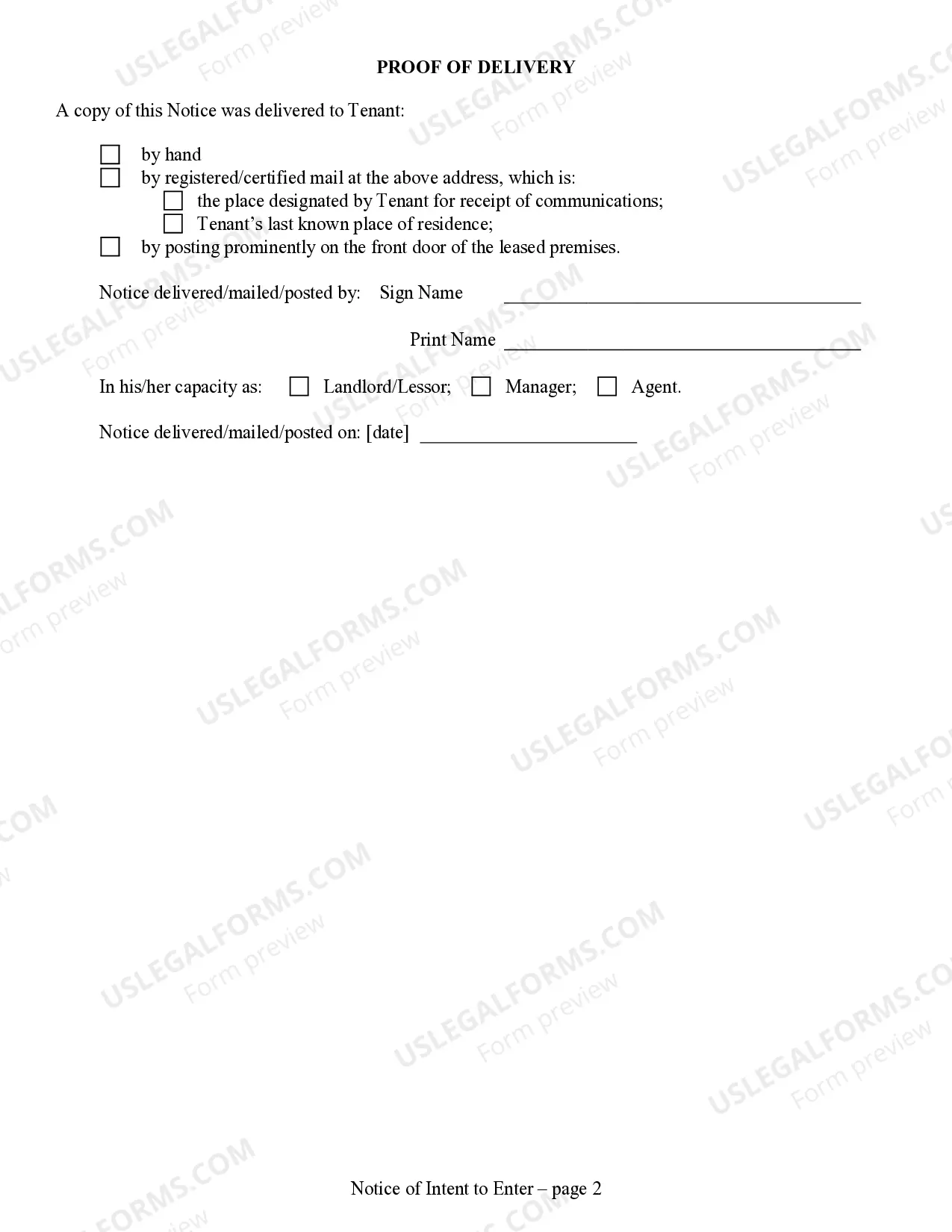
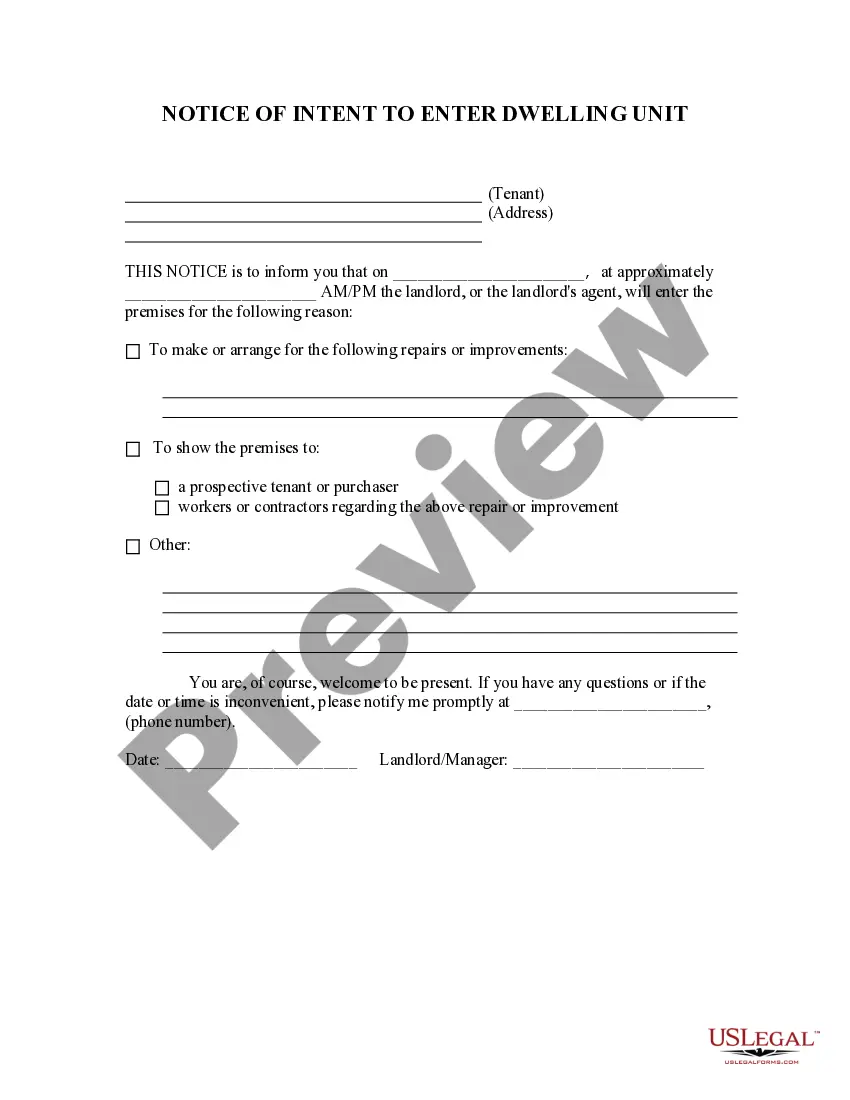
How to fill out Florida 12 Hour Notice Of Landlord's Intent To Enter Premises For Residential From Landlord To Tenant?
- If you are a returning user, log in to your account and select the desired template. Ensure your subscription is still active; if it’s expired, renew it based on your chosen payment plan.
- For first-time users, start by browsing the extensive library. Check the preview of the intended form to confirm it matches your needs and complies with local laws.
- If the form is not suitable, utilize the Search tab to find an alternative template that fits your requirements.
- Once you find the right document, click on the Buy Now button to choose your subscription plan. You'll need to create an account to access the complete range of resources.
- Proceed to payment by entering your credit card details or using your PayPal account to finalize the subscription.
- After purchase, download the form to your device. You can also find it later in the My Forms section.
By following these steps, you ensure that your legal communications with landlords are clear and compliant. US Legal Forms provides an accessible solution, allowing not just quick access to documents but also expert assistance if needed.
Start navigating your legal needs efficiently with US Legal Forms today!
Form popularity
FAQ
To refuse your landlord access, communicate your reasons clearly and diplomatically, citing the lack of notice as a primary reason. It's important to maintain a constructive dialogue while standing firm on your rights. Ensure that you highlight the Notice intent enter landlord for tenants in your discussions as it supports your position. If needed, legal tools like US Legal Forms can offer essential documents to formalize your stance.
As a tenant, you can refuse entry to your landlord if they fail to provide adequate notice. This notice must typically be at least 24 hours unless there is an emergency. Understanding this aspect empowers you to protect your privacy while living in your rental. Utilizing resources like the Notice intent enter landlord for tenants can enhance your knowledge and ensure your rights are respected.
In New York, it is illegal for landlords to lock out tenants or deny them essential services such as heat and water. Such actions violate tenant rights and can lead to legal repercussions for the landlord. If you're facing issues, knowing your rights is essential, and the Notice intent enter landlord for tenants can guide you in these situations. Always consult legal resources or professionals if needed for support.
In Minnesota, tenants can refuse entry to their landlord under specific circumstances. If the landlord does not provide proper notice, which typically is 24 hours, then you have the right to deny access. Remember, the Notice intent enter landlord for tenants helps clarify your rights. Always communicate directly with your landlord to resolve any misunderstandings.
To write a notice letter to a landlord, start with your personal details, then clearly indicate the reason for your notice. Be direct yet polite, and include any necessary dates or actions that need to follow. Ensure to refer to the legal rights associated with the notice intent enter landlord for tenants. Using USLegalForms can help you create a structured and compliant letter.
In a notice letter to your landlord, begin with a formal greeting and state the purpose of your notice clearly. Include critical details like your name, address, and the specific matter being addressed, such as repairs needed or intent to vacate. Closing your letter with thanks can foster goodwill and maintain a positive relationship. Consider using services like USLegalForms for guidance.
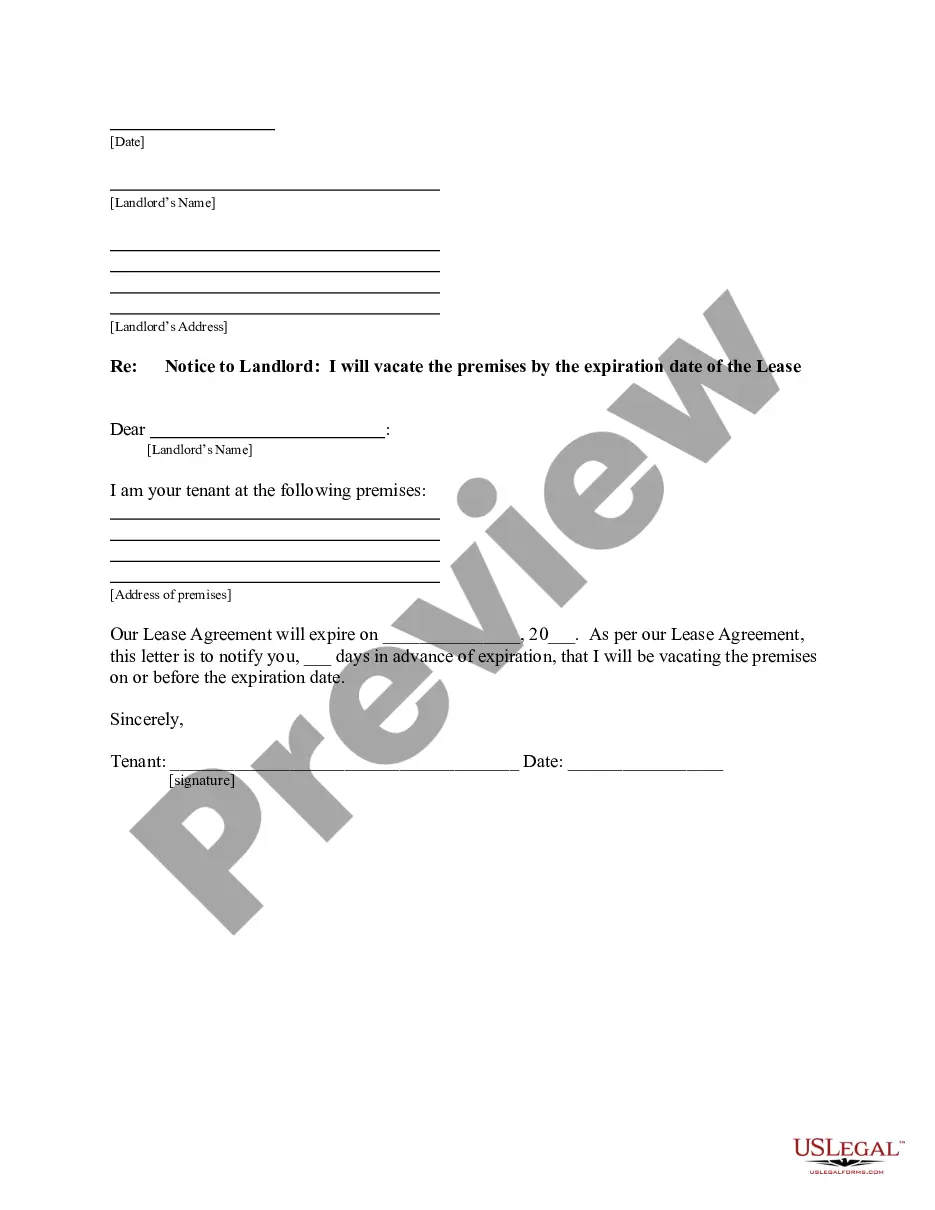
When writing a notification letter to your landlord, be clear and concise about your message. Start with your contact information, followed by the landlord's details, and then state the purpose of the letter. Include relevant dates and any actions you wish for the landlord to take. Utilizing templates from USLegalForms can ensure you include all necessary information.
To inform a tenant to move out nicely, approach the conversation with empathy and respect. Clearly state your reasons for the request and provide a reasonable timeline for their departure. Using a written notice can help formalize your request while maintaining a positive tone. Platforms like USLegalForms can assist in crafting a thoughtful notification letter.
In New York, tenants have the right to refuse entry to their landlord under certain conditions. Generally, landlords must provide proper notice before entering the unit, unless it's an emergency. However, if the landlord continues to violate this, tenants should document each incident and may consider legal advice to protect their rights. Consider using a notice intent enter landlord for tenants as a formal method of communication.
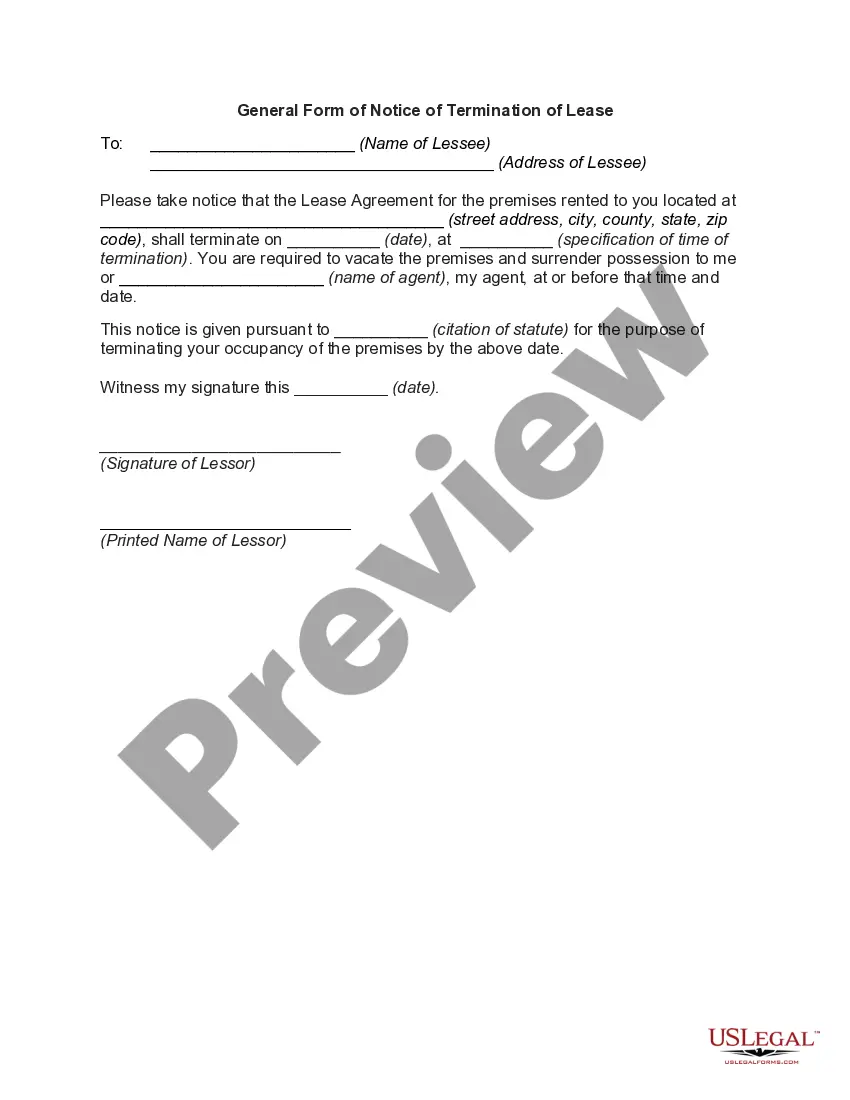
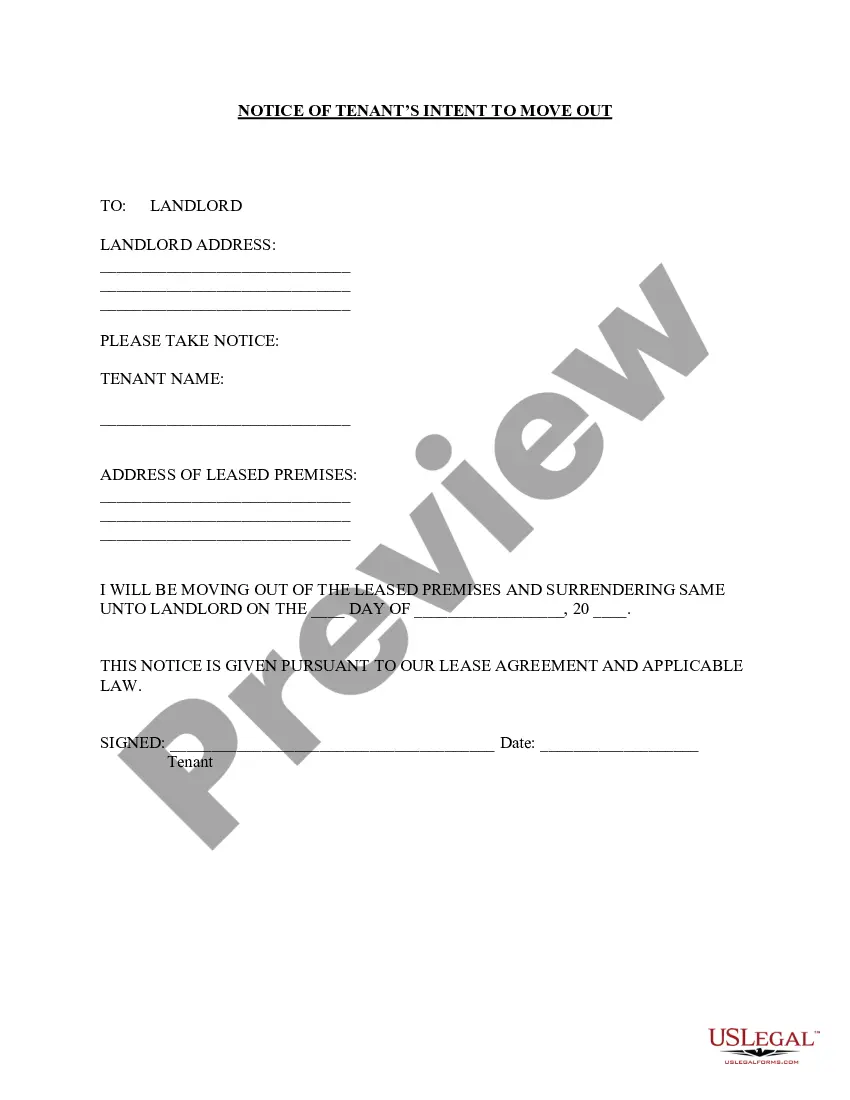
To write an effective notice to vacate a letter to your landlord, start with a clear statement of your intent to vacate. Include the date you plan to leave, and express gratitude for your time in the property. Remember to sign the letter and keep a copy for your records. Using a template available on platforms like USLegalForms can streamline the process.