Florida Lien Foreclosure Process
Description
Get your form ready online
Our built-in tools help you complete, sign, share, and store your documents in one place.
Make edits, fill in missing information, and update formatting in US Legal Forms—just like you would in MS Word.
Download a copy, print it, send it by email, or mail it via USPS—whatever works best for your next step.
Sign and collect signatures with our SignNow integration. Send to multiple recipients, set reminders, and more. Go Premium to unlock E-Sign.
If this form requires notarization, complete it online through a secure video call—no need to meet a notary in person or wait for an appointment.
We protect your documents and personal data by following strict security and privacy standards.

Make edits, fill in missing information, and update formatting in US Legal Forms—just like you would in MS Word.

Download a copy, print it, send it by email, or mail it via USPS—whatever works best for your next step.

Sign and collect signatures with our SignNow integration. Send to multiple recipients, set reminders, and more. Go Premium to unlock E-Sign.

If this form requires notarization, complete it online through a secure video call—no need to meet a notary in person or wait for an appointment.

We protect your documents and personal data by following strict security and privacy standards.
Looking for another form?
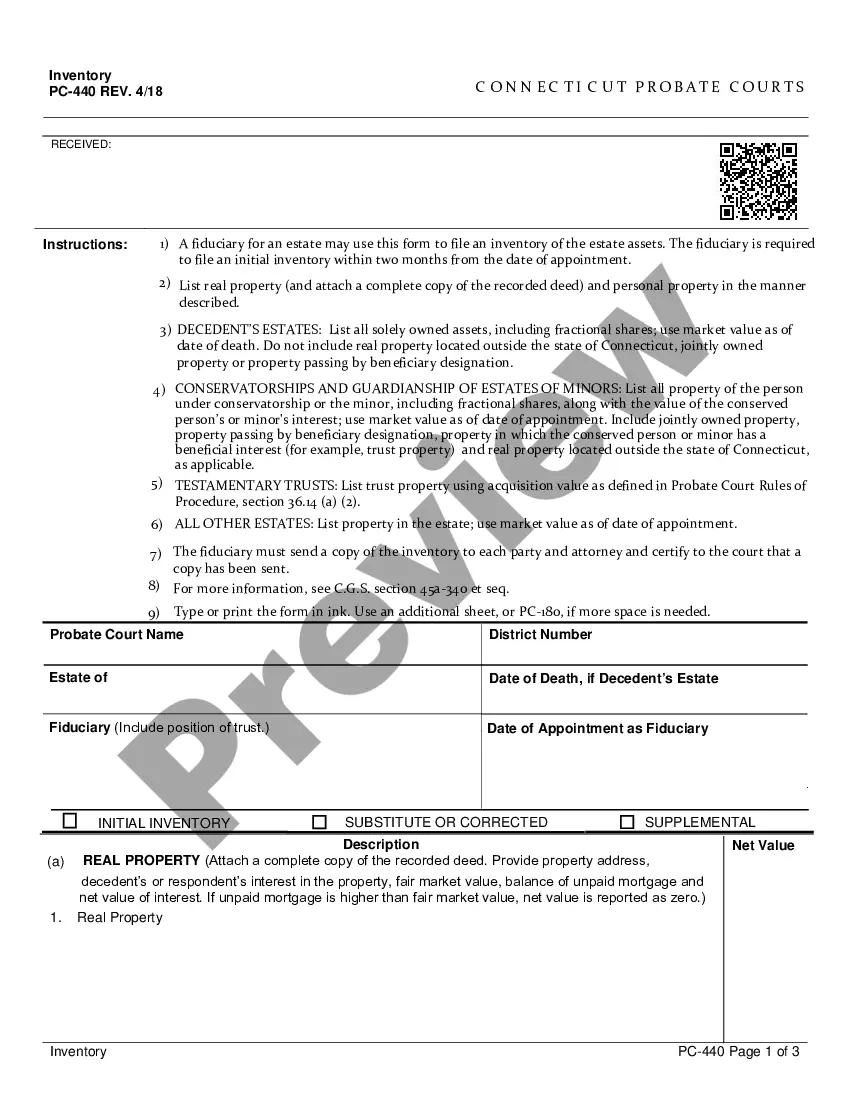
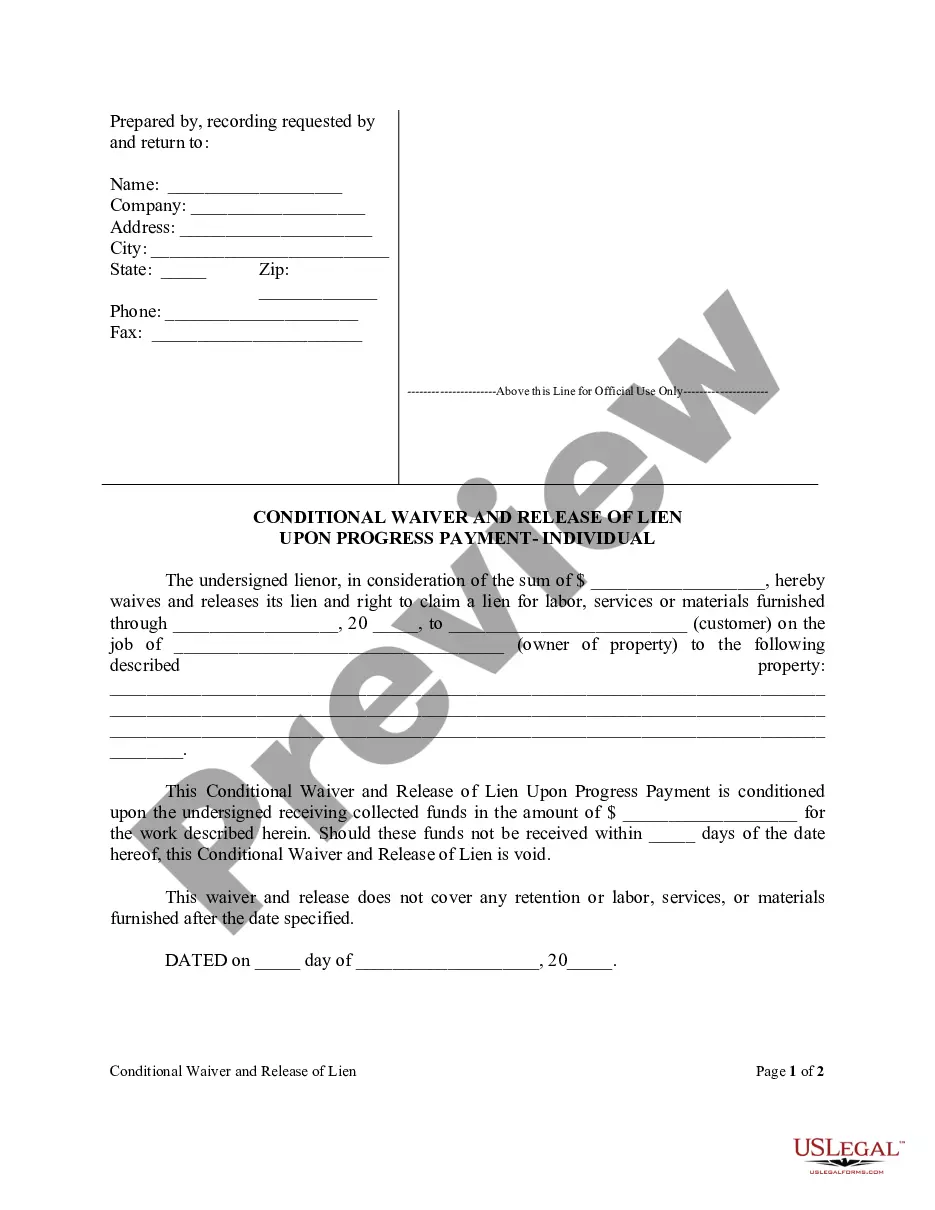
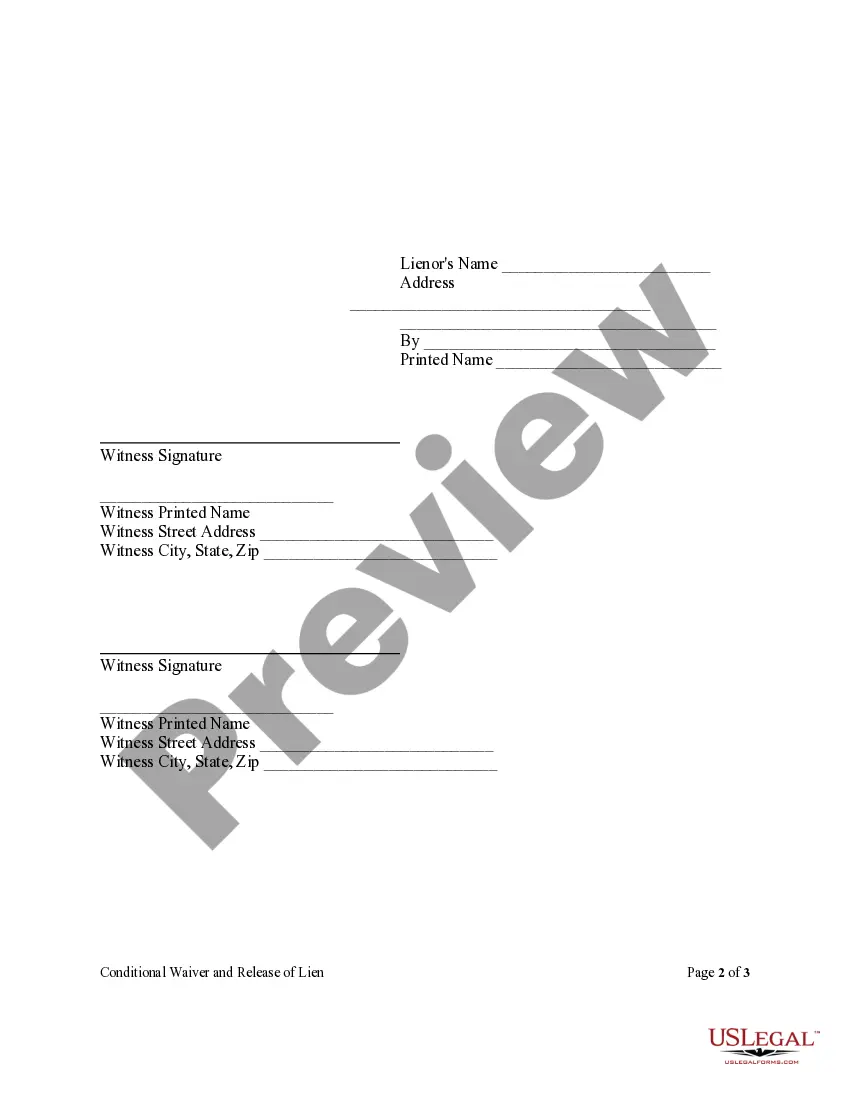
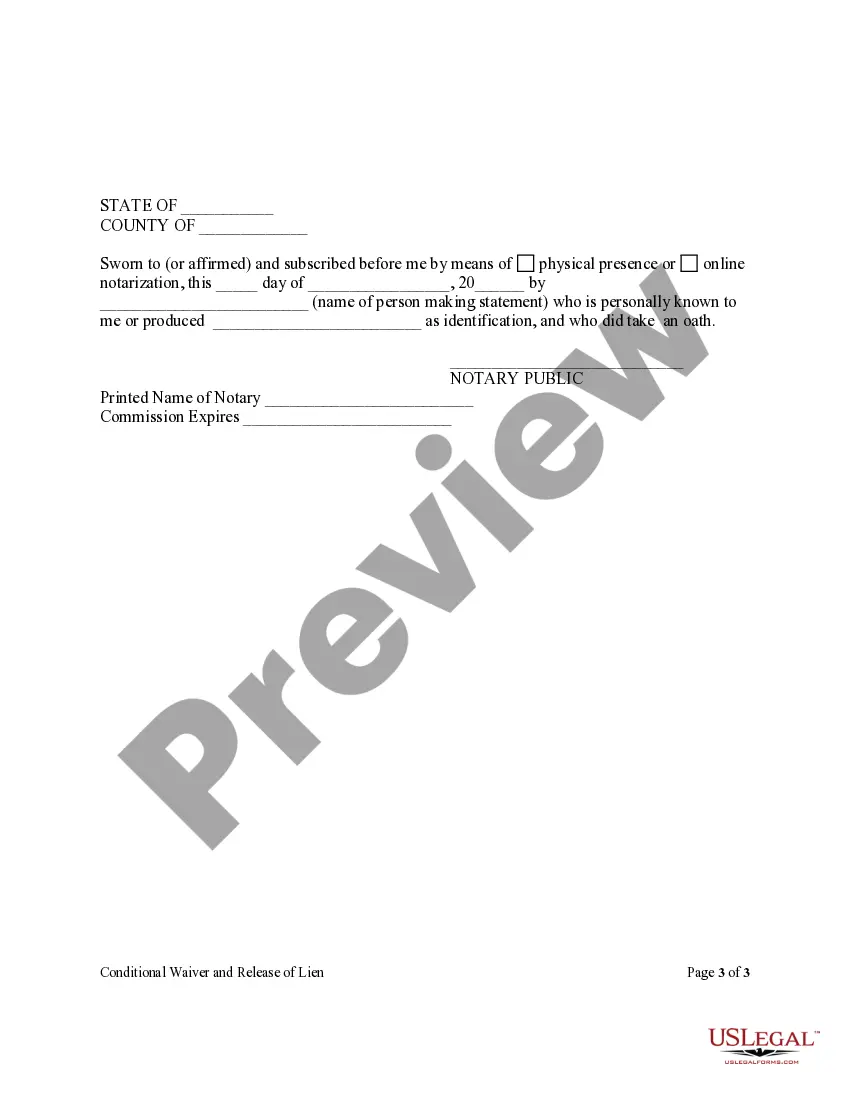
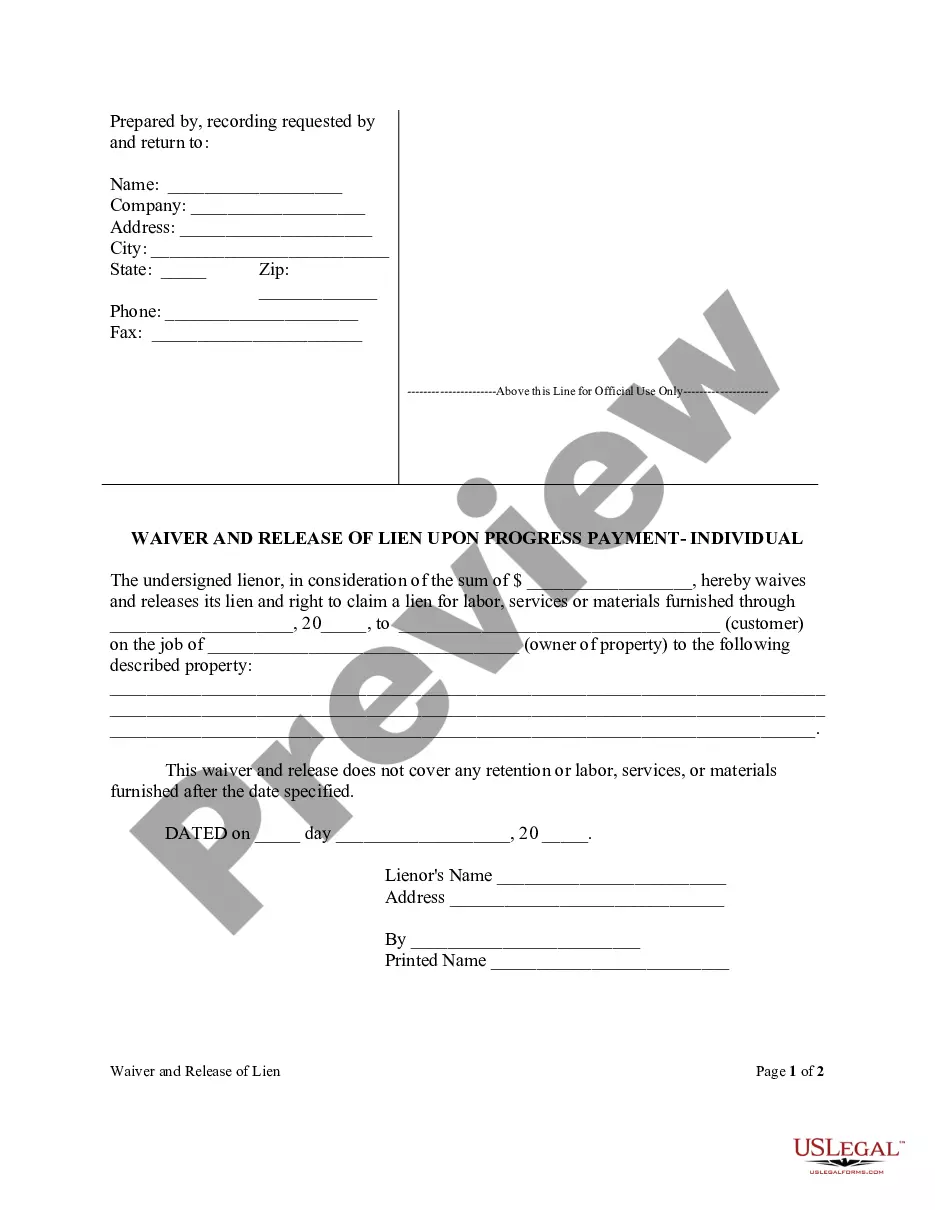
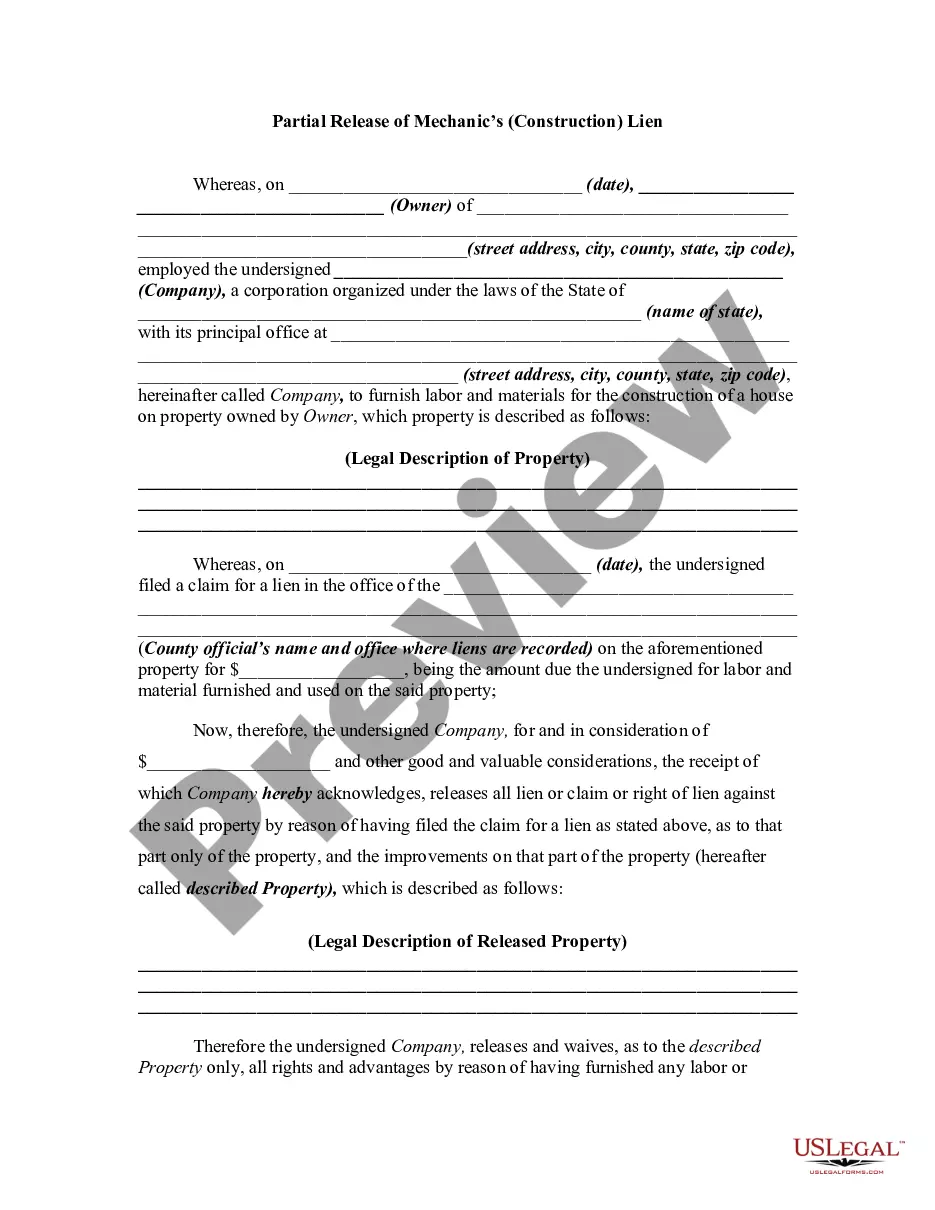
How to fill out Florida Conditional Partial Release And Waiver Of Lien Form - Construction - Mechanic Liens - Individual?
Utilizing legal document samples that comply with federal and local regulations is crucial, and the internet provides numerous choices to select from.
However, what's the benefit of expending time searching for the accurately drafted Florida Lien Foreclosure Process sample online when the US Legal Forms digital library already has such templates gathered in one location.
US Legal Forms is the largest online legal repository with over 85,000 fillable templates prepared by attorneys for any business and personal circumstance.
Review the template using the Preview option or through the text description to ensure it fulfills your needs.
- They are simple to navigate with all documents categorized by state and intended use.
- Our experts stay updated with legal modifications, ensuring your paperwork is always current and compliant when acquiring a Florida Lien Foreclosure Process from our site.
- Obtaining a Florida Lien Foreclosure Process is straightforward and fast for both existing and new users.
- If you already possess an account with an active subscription, Log In to download the document sample you need in the appropriate format.
- If you are a new visitor to our site, follow the steps outlined below.
Form popularity
FAQ
In the new changes to Regulation F, the frequency at which a collections agency can contact a consumer has changed. This change, presented in Section 1006.14B21A, addresses telephone call frequency and restricts agencies to contacting a consumer seven times within seven consecutive days.
If you make a payment on the account within the statute of limitations period, the time period restarts. The creditor will get another 6 or 3 years (depending on the kind of contract it is) to file a lawsuit. If you make a payment after the statute of limitations time has expired, that will not restart the time period.
Statute of Limitations in Washington In Washington, the statute of limitations on debt collection lawsuits is six years after the date of default or last payment on the debt account. When six years have passed, debt collectors can still attempt to collect these debts, but they cannot file a collection lawsuit.
The Fair Debt Collection Practices Act was signed into law by President Jimmy Carter on September 20, 1977. The act prohibits certain debt collection practices, and requires debt collectors to identify themselves when communicating with a consumer and to validate the debt at the consumer's request.
Under this Act (Title VIII of the Consumer Credit Protection Act), third-party debt collectors are prohibited from using deceptive or abusive conduct in the collection of consumer debts incurred for personal, family, or household purposes.
Debt collectors may not be able to sue you to collect on old (time-barred) debts, but they may still try to collect on those debts. In California, there is generally a four-year limit for filing a lawsuit to collect a debt based on a written agreement.
Can a Debt Collector Collect After 10 Years? In most cases, the statute of limitations for a debt will have passed after 10 years. This means a debt collector may still attempt to pursue it (and you technically do still owe it), but they can't typically take legal action against you.
A debt collector can't harass, intimidate, threaten, or embarrass you. This prohibition includes contacting you too often or at unusual times. Washington law assumes a debt collector is harassing you if it calls three times a week or more than once a week at your workplace.