Florida Appeal Circuit For Beginners
Description
Get your form ready online
Our built-in tools help you complete, sign, share, and store your documents in one place.
Make edits, fill in missing information, and update formatting in US Legal Forms—just like you would in MS Word.
Download a copy, print it, send it by email, or mail it via USPS—whatever works best for your next step.
Sign and collect signatures with our SignNow integration. Send to multiple recipients, set reminders, and more. Go Premium to unlock E-Sign.
If this form requires notarization, complete it online through a secure video call—no need to meet a notary in person or wait for an appointment.
We protect your documents and personal data by following strict security and privacy standards.

Make edits, fill in missing information, and update formatting in US Legal Forms—just like you would in MS Word.

Download a copy, print it, send it by email, or mail it via USPS—whatever works best for your next step.

Sign and collect signatures with our SignNow integration. Send to multiple recipients, set reminders, and more. Go Premium to unlock E-Sign.

If this form requires notarization, complete it online through a secure video call—no need to meet a notary in person or wait for an appointment.

We protect your documents and personal data by following strict security and privacy standards.
Looking for another form?









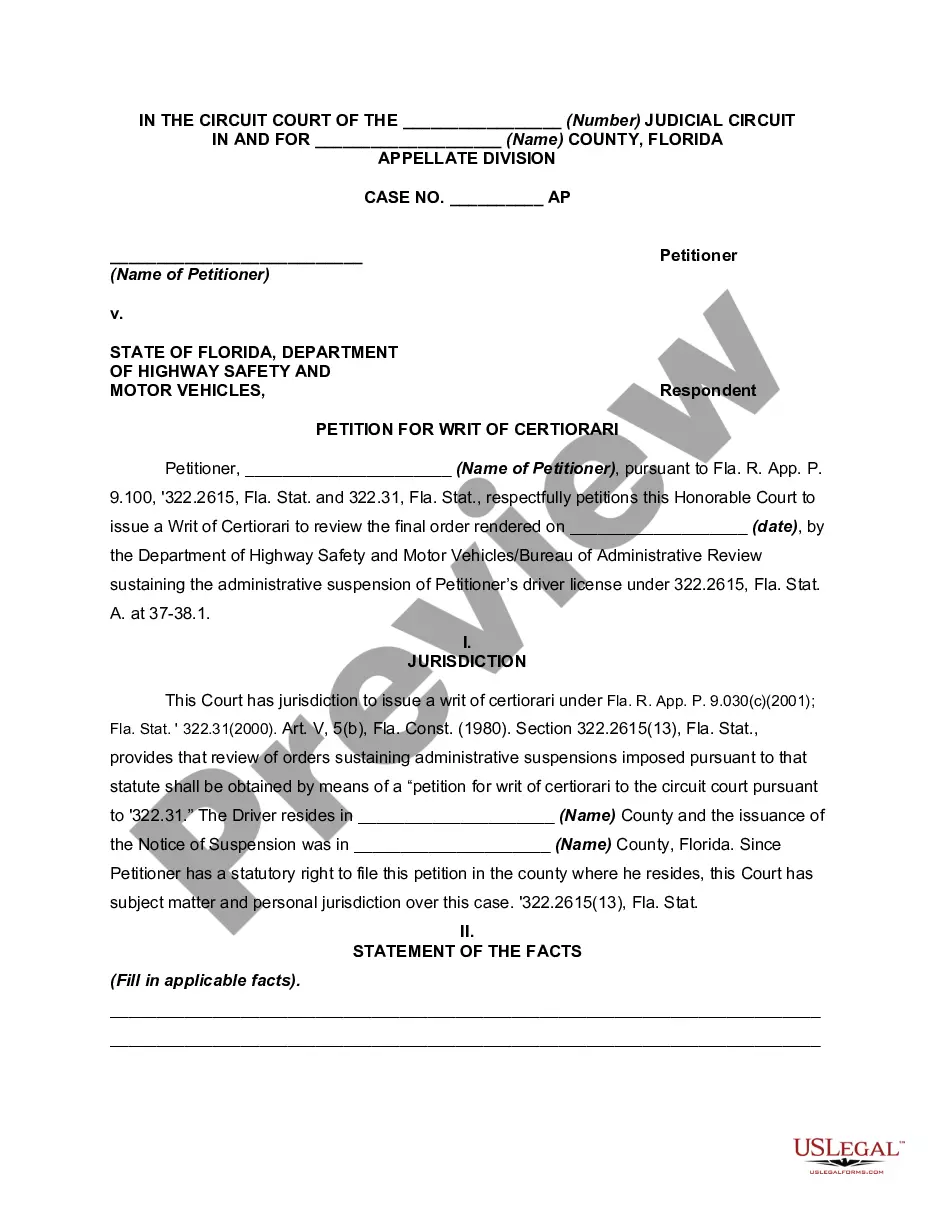
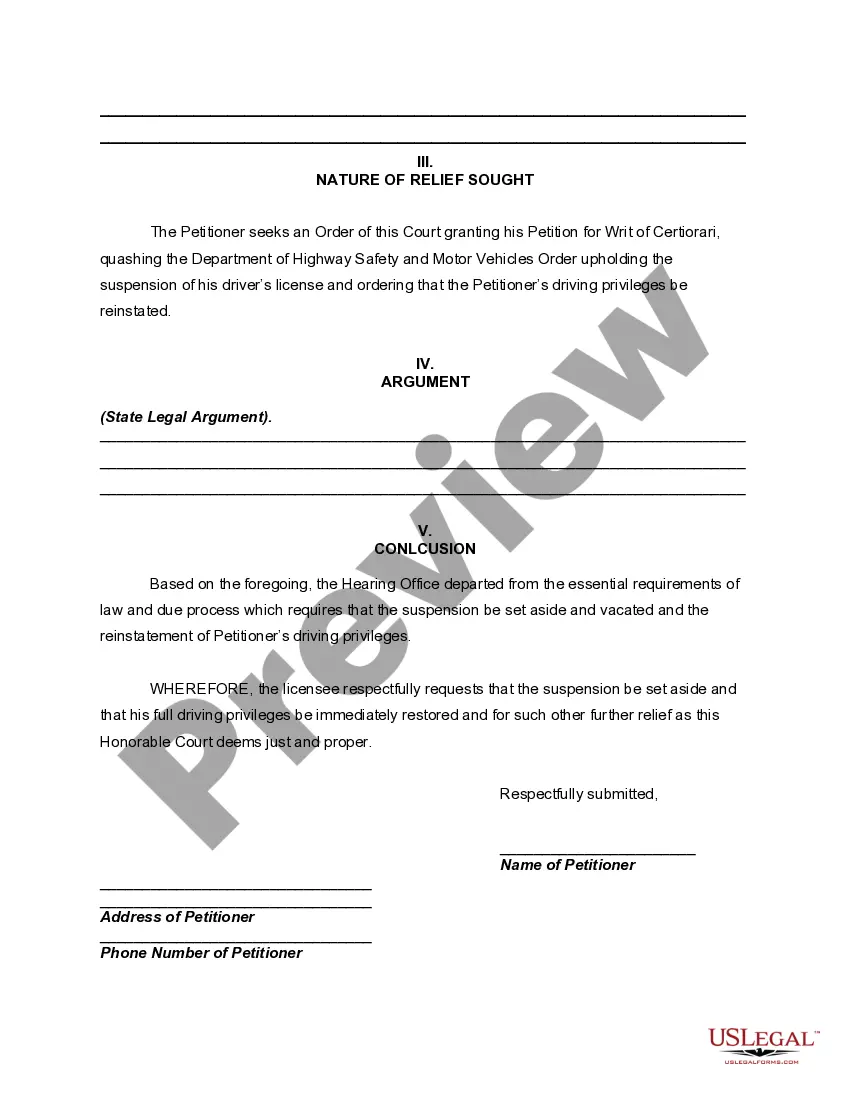
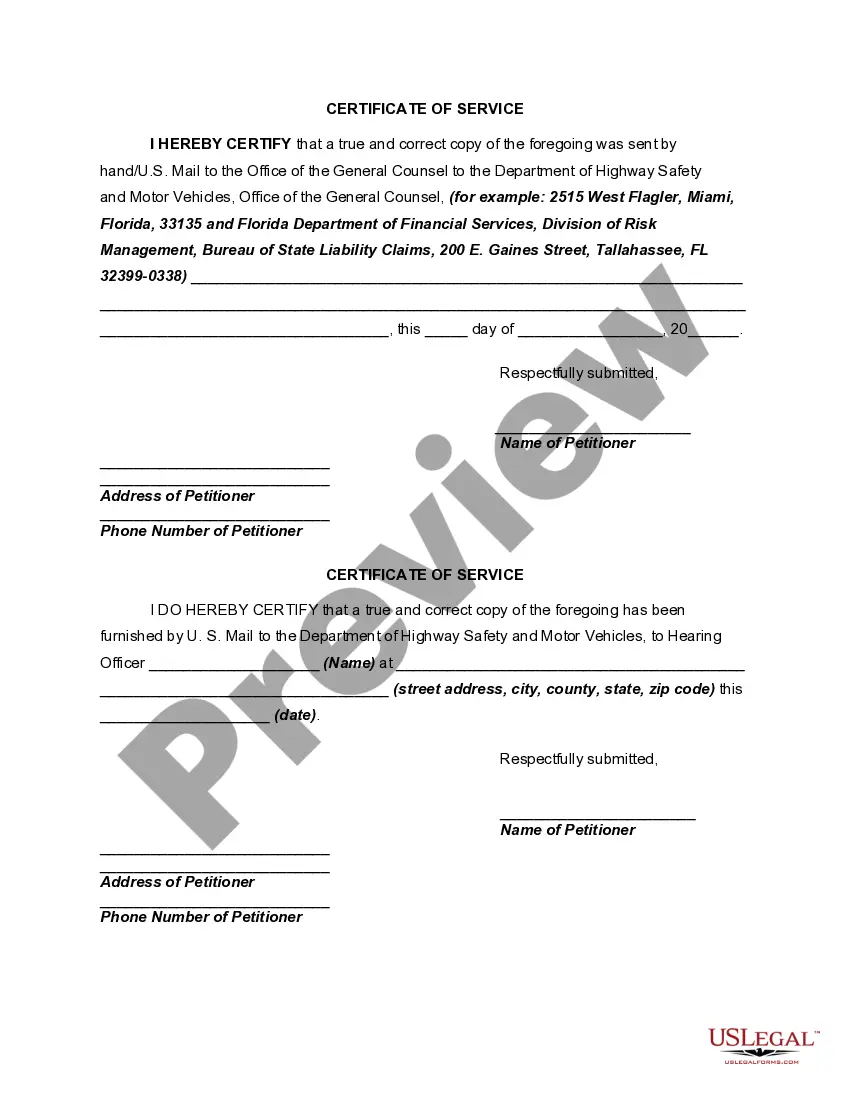
How to fill out Florida Writ Of Certiorari And Appeal Of License Suspension?
It’s well known that you cannot become a legal expert instantly, nor can you understand how to swiftly prepare Florida Appeal Circuit For Beginners without a particular set of skills.
Assembling legal documents is a lengthy task that demands specific training and expertise. So why not entrust the creation of the Florida Appeal Circuit For Beginners to the professionals.
With US Legal Forms, one of the most comprehensive legal document collections, you can access everything from court forms to templates for internal business communication. We recognize the significance of compliance and adherence to federal and state regulations.
Select Buy now. Once the payment is completed, you can obtain the Florida Appeal Circuit For Beginners, complete it, print it out, and send it or mail it to the necessary individuals or organizations.
You can regain access to your documents from the My documents tab at any time. If you are an existing customer, you can simply Log In, and find and download the template from the same tab.
- Here’s how you can begin with our platform and acquire the form you need in just minutes.
- Locate the form you require by utilizing the search bar at the top of the page.
- Preview it (if this option is available) and review the accompanying description to determine if Florida Appeal Circuit For Beginners is what you seek.
- Restart your search if you need a different form.
- Create a free account and select a subscription plan to purchase the form.
Form popularity
FAQ
The 5 Steps of the Appeals Process Step 1: Hiring an Appellate Attorney (Before Your Appeal) ... Step 2: Filing the Notice of Appeal. ... Step 3: Preparing the Record on Appeal. ... Step 4: Researching and Writing Your Appeal. ... Step 5: Oral Argument.
Step 1: File the Notice of Appeal. Step 2: Pay the filing fee. Step 3: Determine if/when additional information must be provided to the appeals court as part of opening your case. Step 4: Order the trial transcripts.
Requirements To File An Appeal A Notice of Appeal must be filed with the Clerk within 30 days from the date the judgment or order being appealed is filed with the Clerk and must be in the form prescribed by Florida Rules of Appellate Procedures, found in Rule 9.900.
The appeal is taken by filing a notice of appeal with the court that rendered the judgment or final order appealed from. The notice of appeal shall indicate the parties to the appeal, the judgment or final order or part thereof appealed from, and state the material dates showing the timeliness of the appeal.
If the outcome of your case might have been different if you had had effective counsel, you may have grounds for appeal. The prosecutor acted unethically or made errors. It is up to the court of appeals to decide if these mistakes led to an unfair conviction. The judge made mistakes in pretrial rulings or at trial.