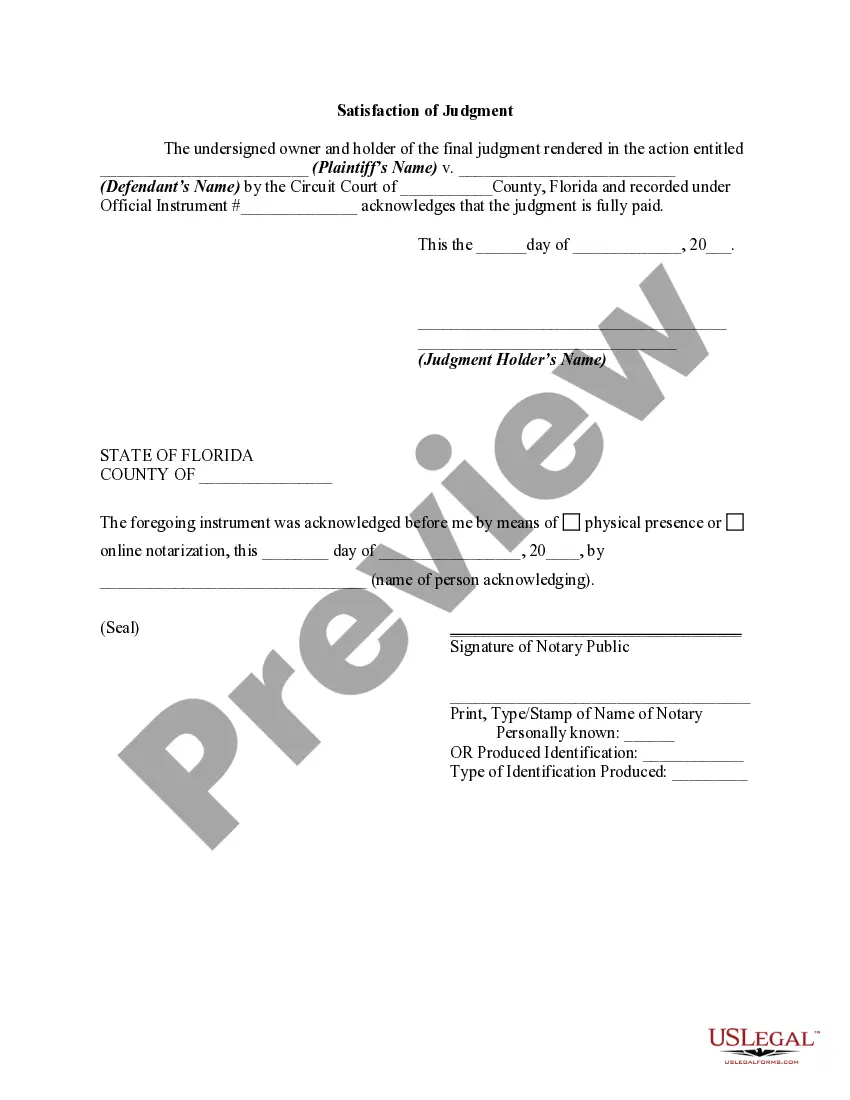
Satisfaction Of Judgment Form Pennsylvania
Description
Get your form ready online
Our built-in tools help you complete, sign, share, and store your documents in one place.
Make edits, fill in missing information, and update formatting in US Legal Forms—just like you would in MS Word.
Download a copy, print it, send it by email, or mail it via USPS—whatever works best for your next step.
Sign and collect signatures with our SignNow integration. Send to multiple recipients, set reminders, and more. Go Premium to unlock E-Sign.
If this form requires notarization, complete it online through a secure video call—no need to meet a notary in person or wait for an appointment.
We protect your documents and personal data by following strict security and privacy standards.

Make edits, fill in missing information, and update formatting in US Legal Forms—just like you would in MS Word.

Download a copy, print it, send it by email, or mail it via USPS—whatever works best for your next step.

Sign and collect signatures with our SignNow integration. Send to multiple recipients, set reminders, and more. Go Premium to unlock E-Sign.

If this form requires notarization, complete it online through a secure video call—no need to meet a notary in person or wait for an appointment.

We protect your documents and personal data by following strict security and privacy standards.
Looking for another form?

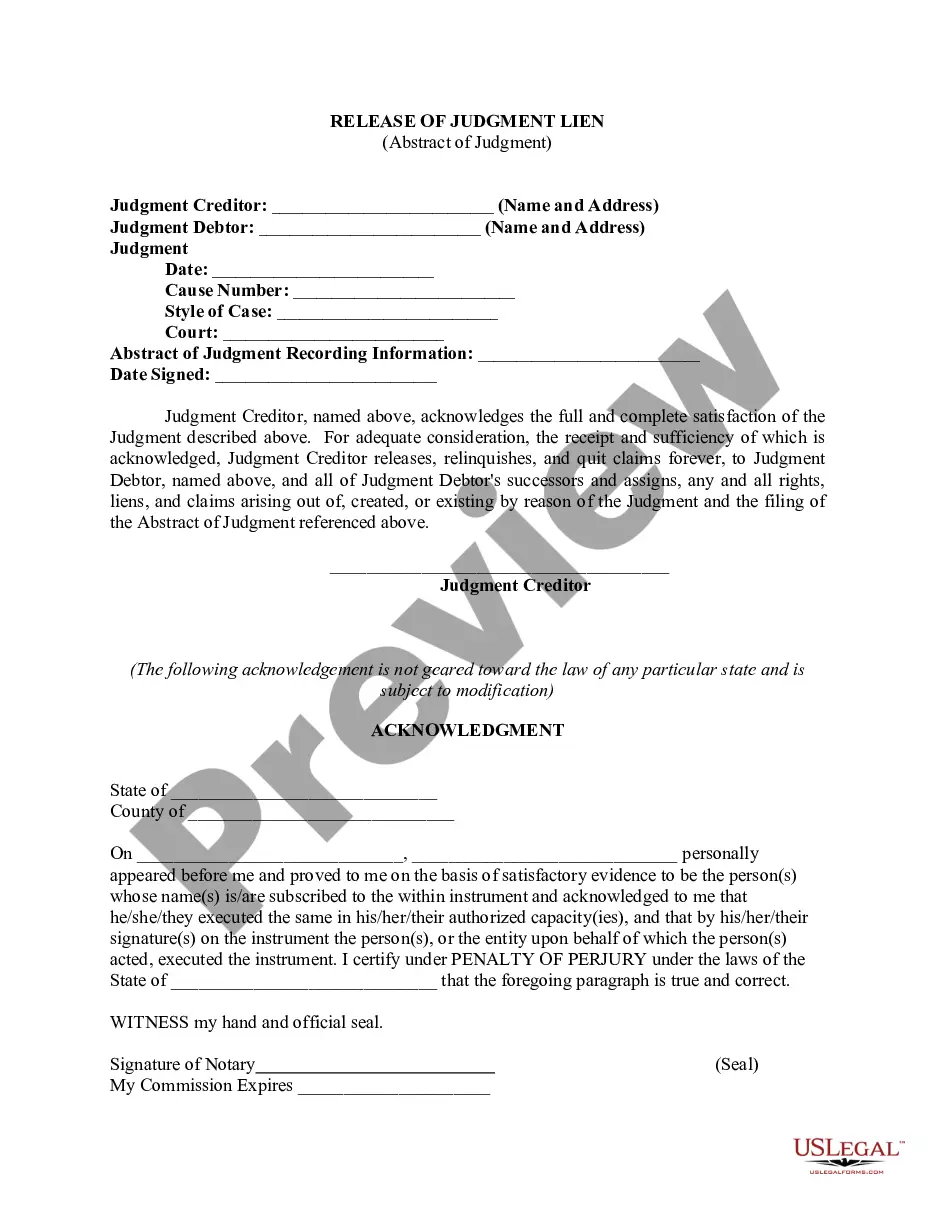
How to fill out Florida Satisfaction Of Judgment?
It’s well known that you cannot become a legal expert instantly, nor can you learn how to swiftly prepare the Satisfaction Of Judgment Form Pennsylvania without possessing a specific set of expertise.
Assembling legal documents is a lengthy process that demands specialized training and abilities. So why not entrust the creation of the Satisfaction Of Judgment Form Pennsylvania to the professionals.
With US Legal Forms, one of the most extensive legal document repositories, you can access everything from court papers to templates for internal communication.
If you need a different template, start your search again.
Register for a free account and select a subscription plan to purchase the form. Click Buy now. Once the transaction is finalized, you can download the Satisfaction Of Judgment Form Pennsylvania, complete it, print it, and send or mail it to the necessary parties or organizations.
- We recognize how important compliance and adherence to federal and state laws and regulations are.
- That’s why, on our site, all forms are specific to locations and current.
- Here’s how you can begin with our platform and obtain the form you need in just a few minutes.
- Locate the document you require using the search bar at the top of the page.
- Preview it (if this option is available) and read the accompanying description to determine if the Satisfaction Of Judgment Form Pennsylvania is what you are looking for.
Form popularity
FAQ
Rule 237.5 in Pennsylvania outlines the requirements for filing a Satisfaction of Judgment Form Pennsylvania. This rule ensures that once a judgment has been satisfied, the creditor must file the appropriate form to officially record it. By doing so, you can clear your credit history and demonstrate that the debt has been resolved. Using a reliable service like USLegalForms can simplify the process, ensuring you complete the Satisfaction of Judgment Form Pennsylvania correctly and efficiently.
To domesticate a judgment means to recognize and enforce a judgment from one jurisdiction in another. This process involves filing the judgment in the new jurisdiction, allowing it to be treated as if it were originally issued there. Using the satisfaction of judgment form Pennsylvania can be part of this process to ensure that any debts are properly recorded and satisfied.
A 236 notice in Pennsylvania is a document that informs a debtor about a judgment against them, specifically regarding the satisfaction of a judgment. This notice outlines the debt owed and the steps required to satisfy the judgment. Understanding this notice is crucial, as it can guide you on how to effectively use the satisfaction of judgment form Pennsylvania.
To domesticate a judgment in Pennsylvania, you must file a certified copy of the original judgment in a Pennsylvania court. You will also need to provide a petition that outlines the details of the judgment. After filing, you may need to notify the original creditor and use the satisfaction of judgment form Pennsylvania once the judgment is satisfied.
To file a satisfaction of judgment in Pennsylvania, complete the satisfaction of judgment form Pennsylvania and submit it to the court where the judgment was originally filed. Be sure to include any relevant supporting documentation, such as proof of payment. Once filed, this document updates the court record to reflect that the judgment has been satisfied.
To respond to a motion for summary judgment in Pennsylvania, you must file a written response with the court. This response should include your arguments, evidence, and any relevant facts that support your case. You can also refer to the satisfaction of judgment form Pennsylvania if a judgment has been entered and you seek to show it has been satisfied.
The 5 Steps To Collect Debt In Pennsylvania. File Your Judgment With the County Courts. ... File Your Writ of Execution (This the Key for the Sheriff to help you) . ... Seize Bank Accounts by Sending Questions (Interrogatories) to the Banks. ... Levy and Sell Personal Assets and Vehicles. ... Levy and Sell Real Property / Land.
File a praecipe for judgment, a dated copy of the 10 day notice, and a Pennsylvania Rule 236 form. If the debtor is an individual, you must file a notarized affidavit of nonmilitary service. File an original and a copy for each debtor with a Rule 236 form. Include a stamped envelope addressed to each debtor.
As the judgment creditor, you may transfer the judgment to any county, though it makes the most sense to transfer the judgment to a county where the person possesses personal property. You may also continue to apply a judgment lien against the property until the amount of the judgment is satisfied.