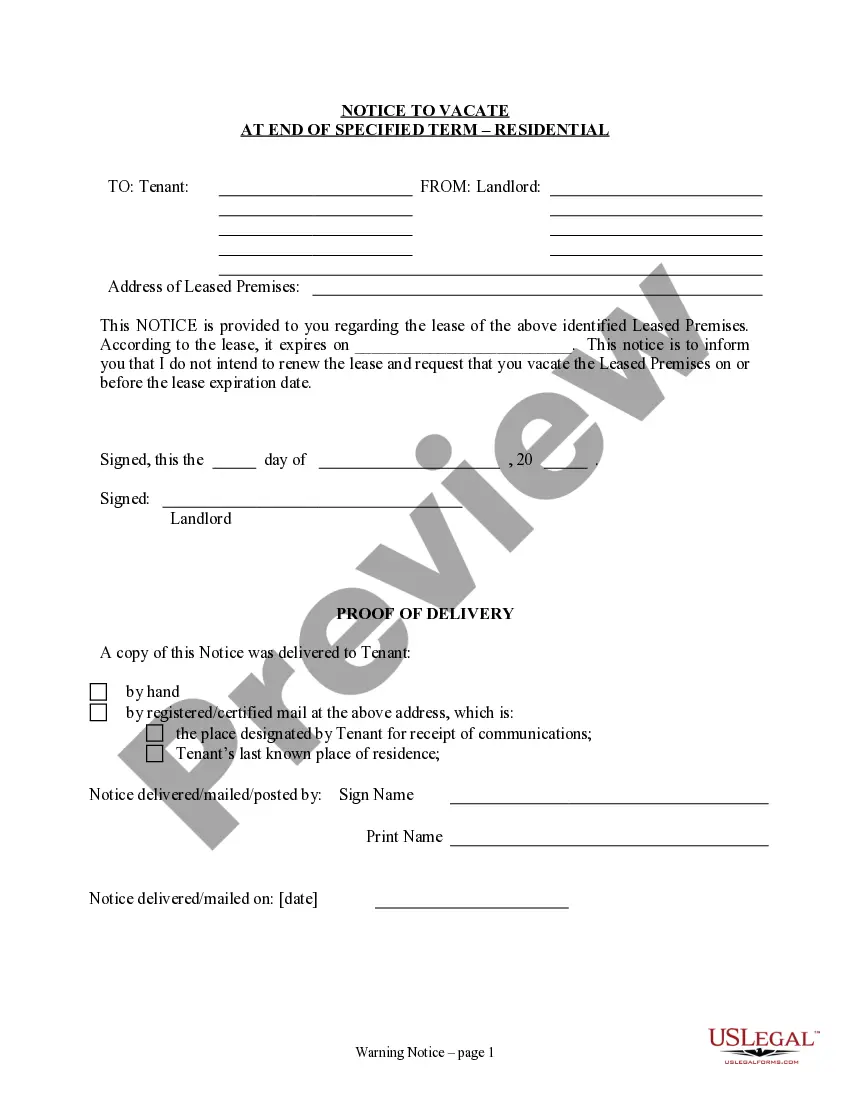
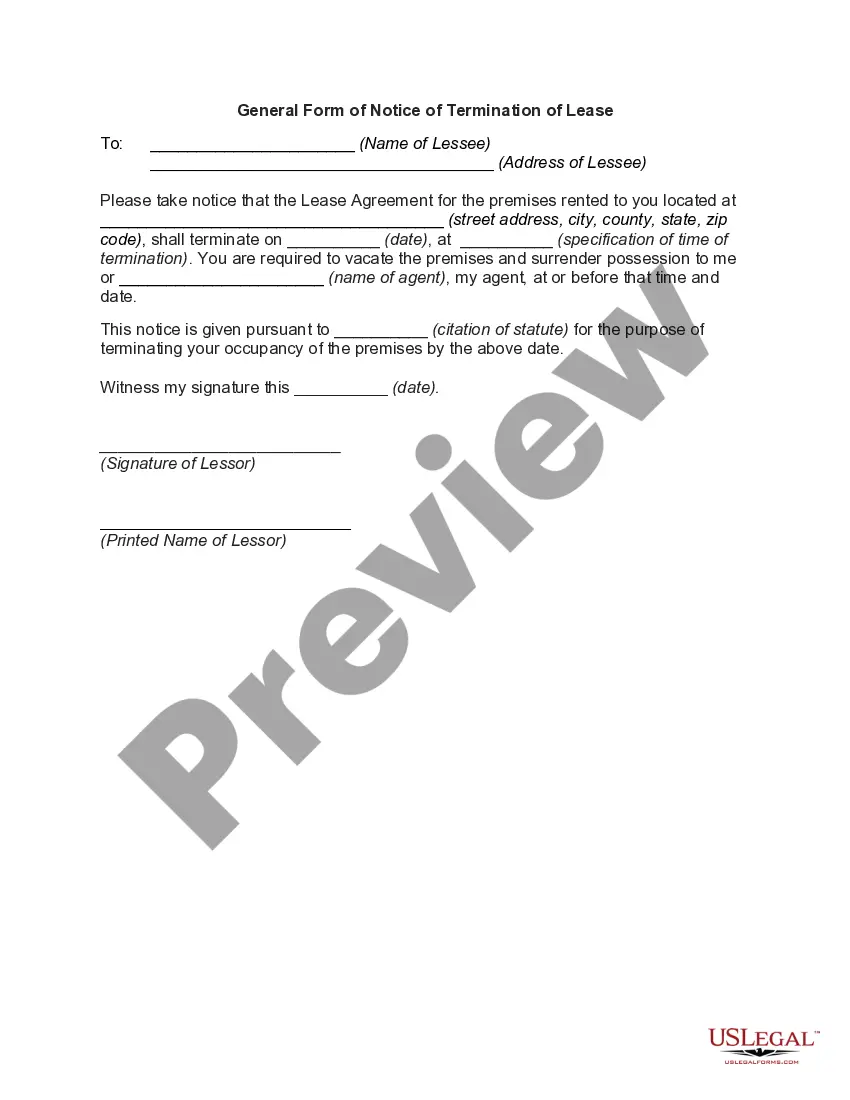
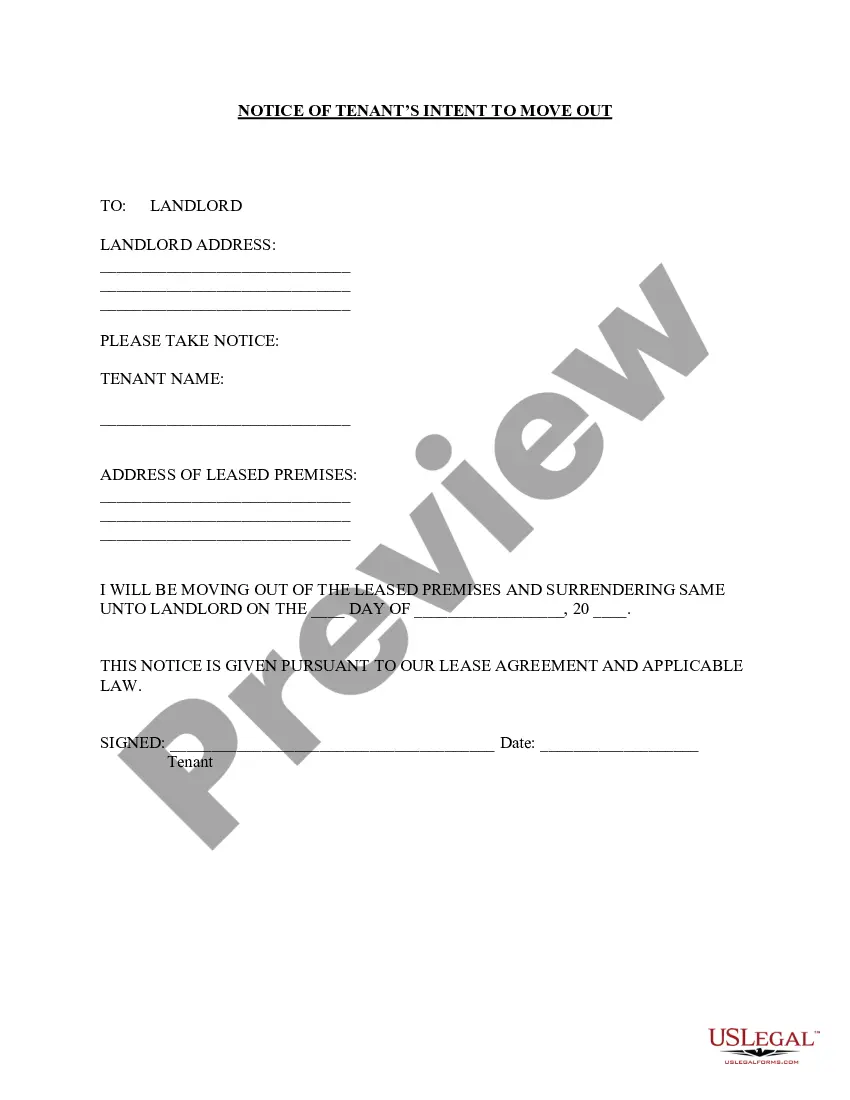
Notice Landlord Tenant With No Deposit
Description

Get your form ready online
Our built-in tools help you complete, sign, share, and store your documents in one place.
Make edits, fill in missing information, and update formatting in US Legal Forms—just like you would in MS Word.
Download a copy, print it, send it by email, or mail it via USPS—whatever works best for your next step.
Sign and collect signatures with our SignNow integration. Send to multiple recipients, set reminders, and more. Go Premium to unlock E-Sign.
If this form requires notarization, complete it online through a secure video call—no need to meet a notary in person or wait for an appointment.
We protect your documents and personal data by following strict security and privacy standards.

Make edits, fill in missing information, and update formatting in US Legal Forms—just like you would in MS Word.

Download a copy, print it, send it by email, or mail it via USPS—whatever works best for your next step.

Sign and collect signatures with our SignNow integration. Send to multiple recipients, set reminders, and more. Go Premium to unlock E-Sign.

If this form requires notarization, complete it online through a secure video call—no need to meet a notary in person or wait for an appointment.

We protect your documents and personal data by following strict security and privacy standards.
Looking for another form?
How to fill out Connecticut Notice Of Intent Not To Renew At End Of Specified Term From Landlord To Tenant For Residential Property?
- Visit the US Legal Forms website and log into your existing account to access your downloaded templates. Ensure your subscription is active before proceeding.
- If you're a new user, start by browsing the form library. Check the preview mode and read the form description to confirm that it matches your specific needs and local jurisdiction requirements.
- If you don't find the right template, use the search functionality to locate additional options that may fit better. Choose the correct document and proceed to the next step.
- Purchase the selected document by clicking the Buy Now button. Select a subscription plan that works for you, creating an account if necessary for access to the full library.
- Complete your purchase by entering your payment details or using PayPal. After confirming your order, download the form directly to your device.
- To access your downloaded form later, visit the My Forms section within your account for easy retrieval.
In conclusion, using US Legal Forms allows you to effectively manage landlord-tenant communications without the hassle of a deposit. By following these simple steps, you can ensure that your legal documents are accurate and readily accessible.
Don’t hesitate—visit US Legal Forms today to streamline your legal documentation process!
Form popularity
FAQ
In Georgia, landlords must return the security deposit within one month after the lease ends, provided there are no deductions. If deductions are necessary, a clear accounting must be provided to the tenant. Being familiar with topics such as 'Notice landlord tenant with no deposit' helps you understand your rights and responsibilities as a tenant or landlord. Check out resources available through US Legal Forms for additional assistance.
If you have not received your deposit back, first check any communication from your landlord regarding the reasons for withholding it. You may need to send a formal notice requesting the return of your deposit, citing your rights as a tenant under local laws related to 'Notice landlord tenant with no deposit.' US Legal Forms offers templates that can help you draft appropriate notices to facilitate this communication.
Communicate clearly and respectfully, providing specific details on why the deposit will not be returned. Document reasons such as damages, unpaid rent, or lease violations to support your feedback. Addressing issues like 'Notice landlord tenant with no deposit' can help clarify expectations for future tenants. US Legal Forms provides templates to ensure you're communicating effectively and following legal guidelines.
In Arizona, landlords must return security deposits within 14 days after the tenant does not renew the rental agreement. Any deductions need to be properly documented and communicated to the tenant. Understanding the 'Notice landlord tenant with no deposit' is part of guiding your actions as a landlord in compliance with state law. Make sure to review information provided by US Legal Forms for further insights.
To write a notice letter to your tenant, begin with your name and address, and date the letter. Include your tenant's information and outline the purpose of the letter clearly. Whether you address lease violations or other concerns such as 'Notice landlord tenant with no deposit,' US Legal Forms can provide structured templates to simplify the process for you.
Notify your tenant in writing, clearly stating the reasons for withholding the deposit. Reference any damages or unmet conditions in the rental agreement that justify your decision. Use an empathetic tone to maintain a professional relationship, even while discussing the 'Notice landlord tenant with no deposit.' US Legal Forms offers notice templates that can help you communicate this effectively.
Writing a notice from a tenant to a landlord involves being clear and formal. Begin with your name and address, include the date, and address it to your landlord. Clearly state the purpose of the notice, whether it concerns maintenance, rent payments, or even the 'Notice landlord tenant with no deposit.' US Legal Forms provides templates that can streamline this process, ensuring you cover all necessary details.
If you have no rental history, focus on providing your current financial situation and employment details. Include references that speak to your reliability and responsibility. It is also helpful to explain your situation in a cover letter, referencing that you are aware of the 'Notice landlord tenant with no deposit' issues. Utilize US Legal Forms to find templates that can assist you in this process.
In Massachusetts, the law requires landlords to handle security deposits with care. When you collect a security deposit, you must provide a written receipt, and you must deposit the funds in a separate interest-bearing account. Knowing the 'Notice landlord tenant with no deposit' can help you understand your rights and obligations regarding security deposits. This ensures you manage deposits appropriately while protecting your interests.
To evict a tenant in Massachusetts without a lease, you must provide a proper notice to the tenant. This notice should inform them that you are ending the tenancy, even if no formal lease exists. You can utilize the 'Notice landlord tenant with no deposit' to serve your notice effectively. After the notice period expires, you may file for eviction in court if the tenant does not vacate.