Tenant About Rent With A Room
Description


Get your form ready online
Our built-in tools help you complete, sign, share, and store your documents in one place.
Make edits, fill in missing information, and update formatting in US Legal Forms—just like you would in MS Word.
Download a copy, print it, send it by email, or mail it via USPS—whatever works best for your next step.
Sign and collect signatures with our SignNow integration. Send to multiple recipients, set reminders, and more. Go Premium to unlock E-Sign.
If this form requires notarization, complete it online through a secure video call—no need to meet a notary in person or wait for an appointment.
We protect your documents and personal data by following strict security and privacy standards.

Make edits, fill in missing information, and update formatting in US Legal Forms—just like you would in MS Word.

Download a copy, print it, send it by email, or mail it via USPS—whatever works best for your next step.

Sign and collect signatures with our SignNow integration. Send to multiple recipients, set reminders, and more. Go Premium to unlock E-Sign.

If this form requires notarization, complete it online through a secure video call—no need to meet a notary in person or wait for an appointment.

We protect your documents and personal data by following strict security and privacy standards.
Looking for another form?
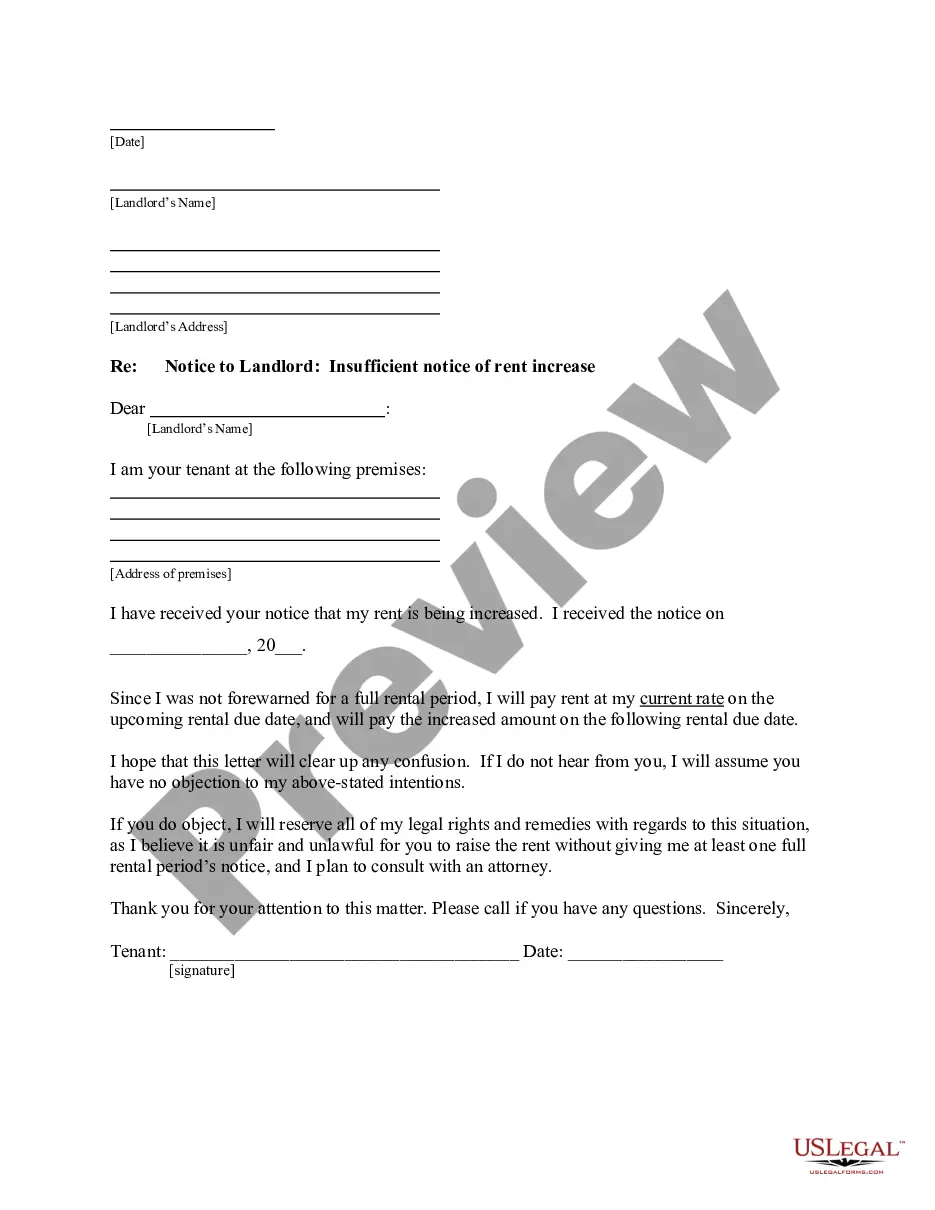
How to fill out Connecticut Letter From Tenant To Landlord About Insufficient Notice Of Rent Increase?
- If you are an existing user, log in to your account at US Legal Forms and locate the desired form template by clicking on the Download button. Ensure your subscription is active; otherwise, renew it as per your selected payment plan.
- For first-time users, start by checking the Preview mode and the description of available forms to select the one that fits your needs and complies with local regulations.
- If the chosen form does not meet your needs, utilize the Search feature to find alternative templates that may be more suitable.
- Purchase the document by selecting your preferred subscription plan and clicking the Buy Now button. Registration is required to access the complete library.
- Complete your purchase by entering your payment details via credit card or PayPal.
- Download the form to your device. You can access it anytime from the My Forms section of your profile to complete it seamlessly.
In conclusion, US Legal Forms empowers both individuals and legal professionals to effectively manage their rental agreements with ease. Whether you are a tenant or landlord, the extensive library and resources can make the rental process much simpler.
Start today by visiting US Legal Forms to explore the powerful options available at your fingertips!
Form popularity
FAQ
Yes, it is generally legal to rent out a room, but local laws and regulations may vary. Always check your city or state zoning laws and obtain any necessary permits. Review your lease agreement if you are a renter, as some contracts prohibit subletting. Knowing the legal aspects is crucial for a smooth rental experience for a tenant about rent with a room.
To encourage someone to rent a room, ensure your property is clean, well-maintained, and inviting. Clearly highlight all benefits in your listings, such as location, nearby amenities, and inclusions. Use professional photography to showcase the space, making it easier to visualize living there. These steps will help you attract a tenant about rent with a room.
The best way to find tenants is through a combination of online and offline strategies. Consider using rental websites, social media groups, and local listings, while also posting flyers in community centers. Effective communication during the listing phase will attract quality tenants about rent with a room.
Finding a tenant to rent a room involves effective marketing and thorough screening processes. Utilize online platforms that specialize in room rentals to reach a wider audience. Once you receive inquiries, be sure to conduct interviews and background checks. This diligence will help you find a reliable tenant about rent with a room.
To find a tenant for a room, start by advertising your space on popular rental platforms. Provide clear details including features, rent, and amenities. Additionally, share your listing on social media and consider word-of-mouth referrals. Engaging the right channels will help attract the right tenant about rent with a room.
Many cities require permits to rent out a room in your home, making it essential to check local regulations. These permits typically ensure safety, zoning compliance, and adherence to housing standards. Addressing this requirement fosters a reliable environment for the tenant about rent with a room and protects you as a homeowner.
Renting out your living room can be legal, but it greatly depends on your local rental laws and your lease agreement if you are renting yourself. Before considering this arrangement, check with local authorities and your own lease conditions. This ensures that you provide a smooth experience for the tenant about rent with a room.
Yes, renting a room does classify as rental property, and it impacts your taxes and legal obligations. When you lease a room, you engage as a landlord, even if it’s just a portion of your home. Understanding the implications helps you comply with tax laws and offer clarity to the tenant about rent with a room.
To legally rent out a room, start by researching your state's landlord-tenant laws. Prepare a detailed rental agreement that outlines rent, utilities, and house rules. With the right approach, you can confidently navigate the process as a tenant about rent with a room, ensuring that your arrangements protect both parties.
When someone rents a room in your house, it's often referred to as room renting or sharing an apartment. This type of arrangement can be beneficial for both parties, as it allows the homeowner to generate income while providing the tenant about rent with a room. Clarity in terms and conditions is key to a successful living situation.