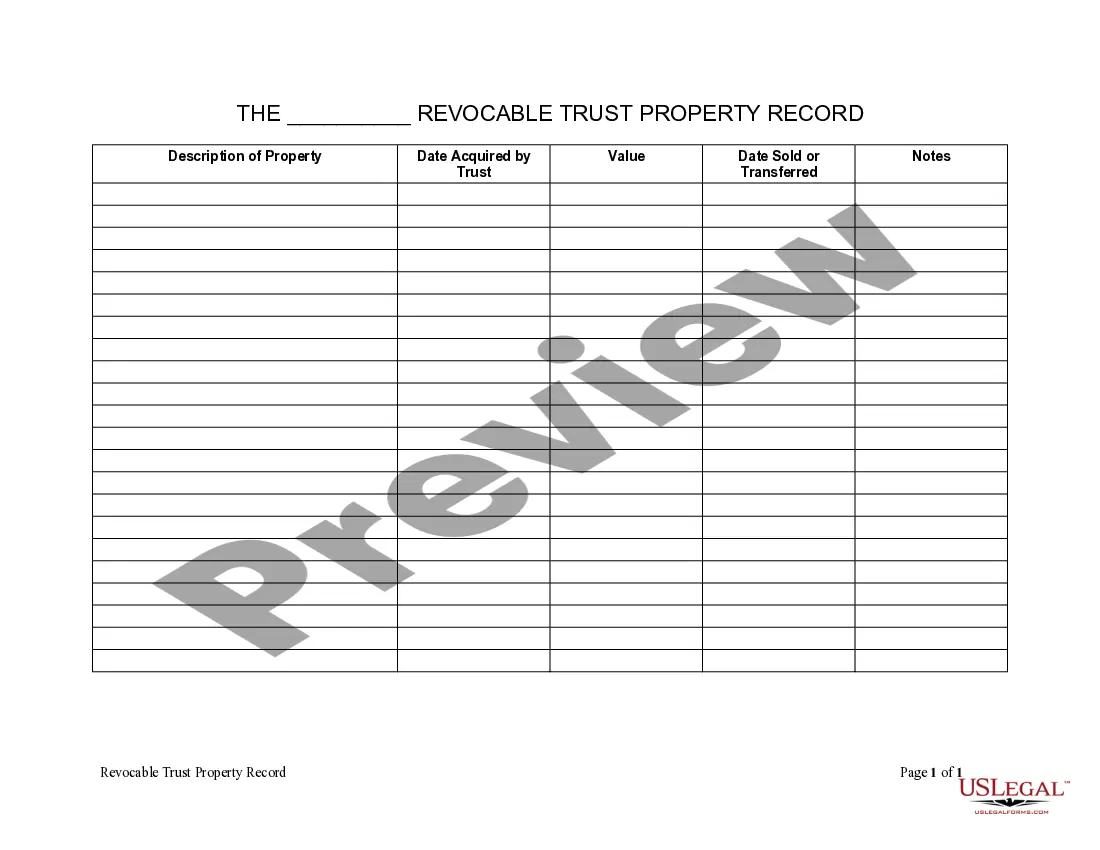
Living Trust For Property
Description

Get your form ready online
Our built-in tools help you complete, sign, share, and store your documents in one place.
Make edits, fill in missing information, and update formatting in US Legal Forms—just like you would in MS Word.
Download a copy, print it, send it by email, or mail it via USPS—whatever works best for your next step.
Sign and collect signatures with our SignNow integration. Send to multiple recipients, set reminders, and more. Go Premium to unlock E-Sign.
If this form requires notarization, complete it online through a secure video call—no need to meet a notary in person or wait for an appointment.
We protect your documents and personal data by following strict security and privacy standards.

Make edits, fill in missing information, and update formatting in US Legal Forms—just like you would in MS Word.

Download a copy, print it, send it by email, or mail it via USPS—whatever works best for your next step.

Sign and collect signatures with our SignNow integration. Send to multiple recipients, set reminders, and more. Go Premium to unlock E-Sign.

If this form requires notarization, complete it online through a secure video call—no need to meet a notary in person or wait for an appointment.

We protect your documents and personal data by following strict security and privacy standards.
Looking for another form?

How to fill out Colorado Living Trust Property Record?
- If you’re an existing user, simply log in to your account and download the living trust template you need by clicking the Download button. Ensure your subscription remains active; if not, renew it as per your plan.
- If you're a new user, begin by checking the Preview mode and reading the form description to verify it's the correct living trust template for your needs and compliant with local laws.
- If you need a different template, use the Search tab above to locate alternatives that better fit your requirements.
- Purchase the document by clicking the Buy Now button and selecting a subscription plan that suits you. You will need to create an account to gain access to the extensive library of legal forms.
- Complete your purchase by entering your credit card information or utilizing your PayPal account for the transaction.
- Finally, download the living trust form to your device. You can access it anytime via the My Forms section of your account.
In conclusion, using US Legal Forms simplifies the process of creating a living trust for property. With a vast selection of legal forms and expert assistance available, you can ensure your documents are accurate and effective.
Take control of your estate planning today and explore the resources at US Legal Forms!
Form popularity
FAQ
Putting your house in a living trust for property can simplify the transfer of ownership while alleviating probate issues, allowing your heirs to access it more quickly. On the flip side, managing a trust can take effort, and unexpected fees may arise. Additionally, any decision about the property must align with the trust's terms, which can limit your flexibility. It’s wise to carefully consider these factors before proceeding.
Placing your house in a living trust for property can come with challenges. A potential drawback is that refinancing or selling the property may involve additional paperwork and steps. Also, depending on your state laws, there could be taxes or fees associated with transferring ownership to the trust. It’s crucial to weigh these factors before making a decision.
People often choose to place their property in a living trust to streamline the transfer of assets after they pass away. A living trust for property helps avoid probate, which can be a lengthy and costly process. Additionally, it offers privacy since the trust does not go through public court records. This tool can also provide flexibility in managing your assets while you are still alive.
A living trust for property may seem appealing, but it has its downsides. One concern is that it does not protect your assets from creditors or lawsuits, which can leave you vulnerable. Furthermore, if you fail to fund the trust properly, it may not serve its intended purpose. Consulting with resources like uslegalforms can assist you in understanding these challenges.
While a living trust for property can provide benefits like avoiding probate, it does have disadvantages. One significant drawback is that setting up a trust can involve upfront costs, including legal fees. Additionally, if you transfer your house into the trust, you may lose certain tax benefits. It’s crucial to weigh these factors carefully, and platforms like uslegalforms can help guide you through the process.
A common mistake parents make when setting up a trust fund is failing to clearly define their intentions and guidelines for the trust. Without specific instructions, heirs may misinterpret your wishes, leading to disputes later. Additionally, many overlook updating the trust as their family dynamics or financial situations change. Making use of comprehensive resources, such as those offered by uslegalforms, can help clarify your goals and ensure your living trust for property functions as intended.
Filling a living trust for property involves several steps, including gathering necessary documents and information about your assets. First, you need to complete the trust document, which outlines how you want your assets to be managed and distributed. Next, you'll transfer ownership of your property to the trust by changing the titles and deeds. Using platforms like uslegalforms can simplify this process by providing clear templates and guidance.