Landlord And Tenant Lease Agreement Form Alberta
Description
Get your form ready online
Our built-in tools help you complete, sign, share, and store your documents in one place.
Make edits, fill in missing information, and update formatting in US Legal Forms—just like you would in MS Word.
Download a copy, print it, send it by email, or mail it via USPS—whatever works best for your next step.
Sign and collect signatures with our SignNow integration. Send to multiple recipients, set reminders, and more. Go Premium to unlock E-Sign.
If this form requires notarization, complete it online through a secure video call—no need to meet a notary in person or wait for an appointment.
We protect your documents and personal data by following strict security and privacy standards.

Make edits, fill in missing information, and update formatting in US Legal Forms—just like you would in MS Word.

Download a copy, print it, send it by email, or mail it via USPS—whatever works best for your next step.

Sign and collect signatures with our SignNow integration. Send to multiple recipients, set reminders, and more. Go Premium to unlock E-Sign.

If this form requires notarization, complete it online through a secure video call—no need to meet a notary in person or wait for an appointment.

We protect your documents and personal data by following strict security and privacy standards.
Looking for another form?
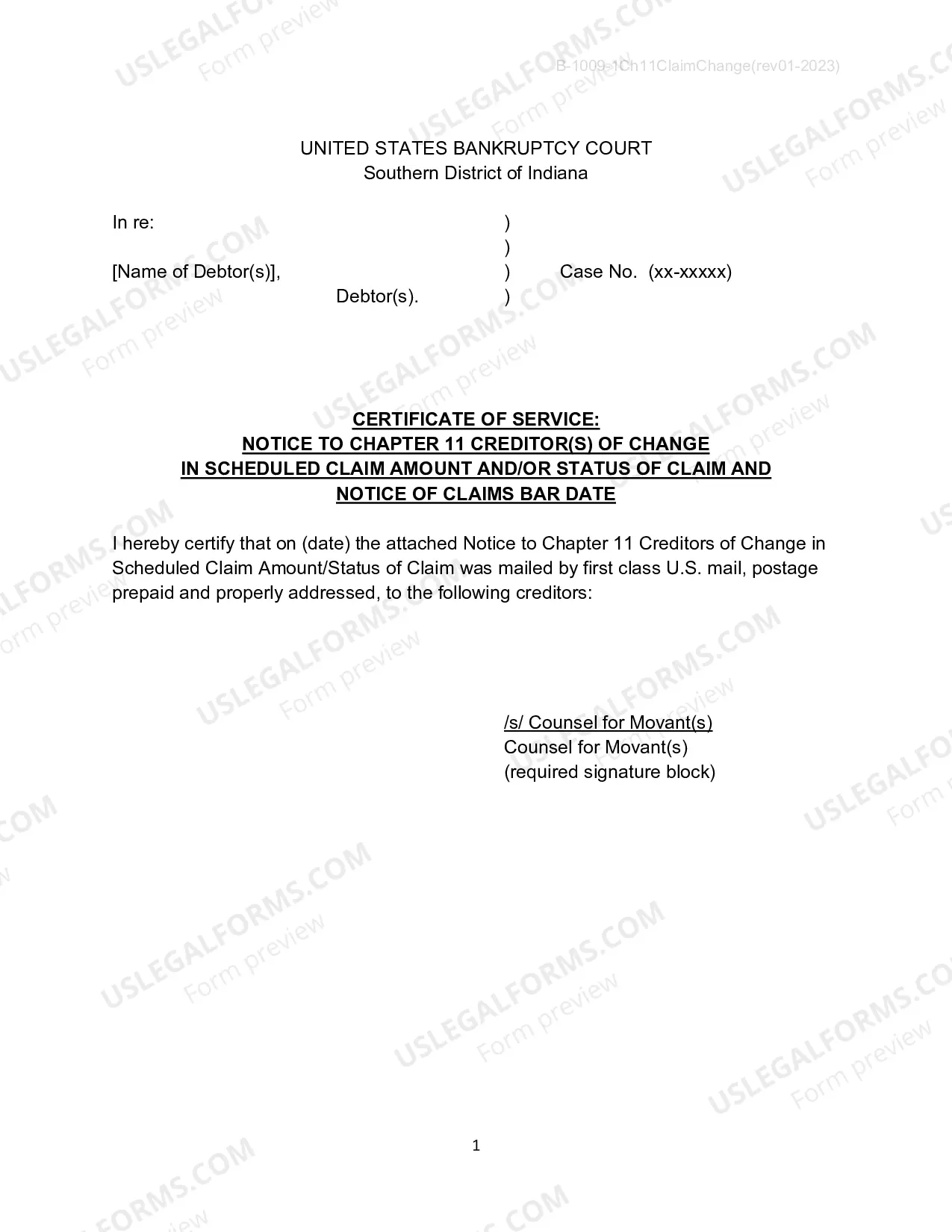
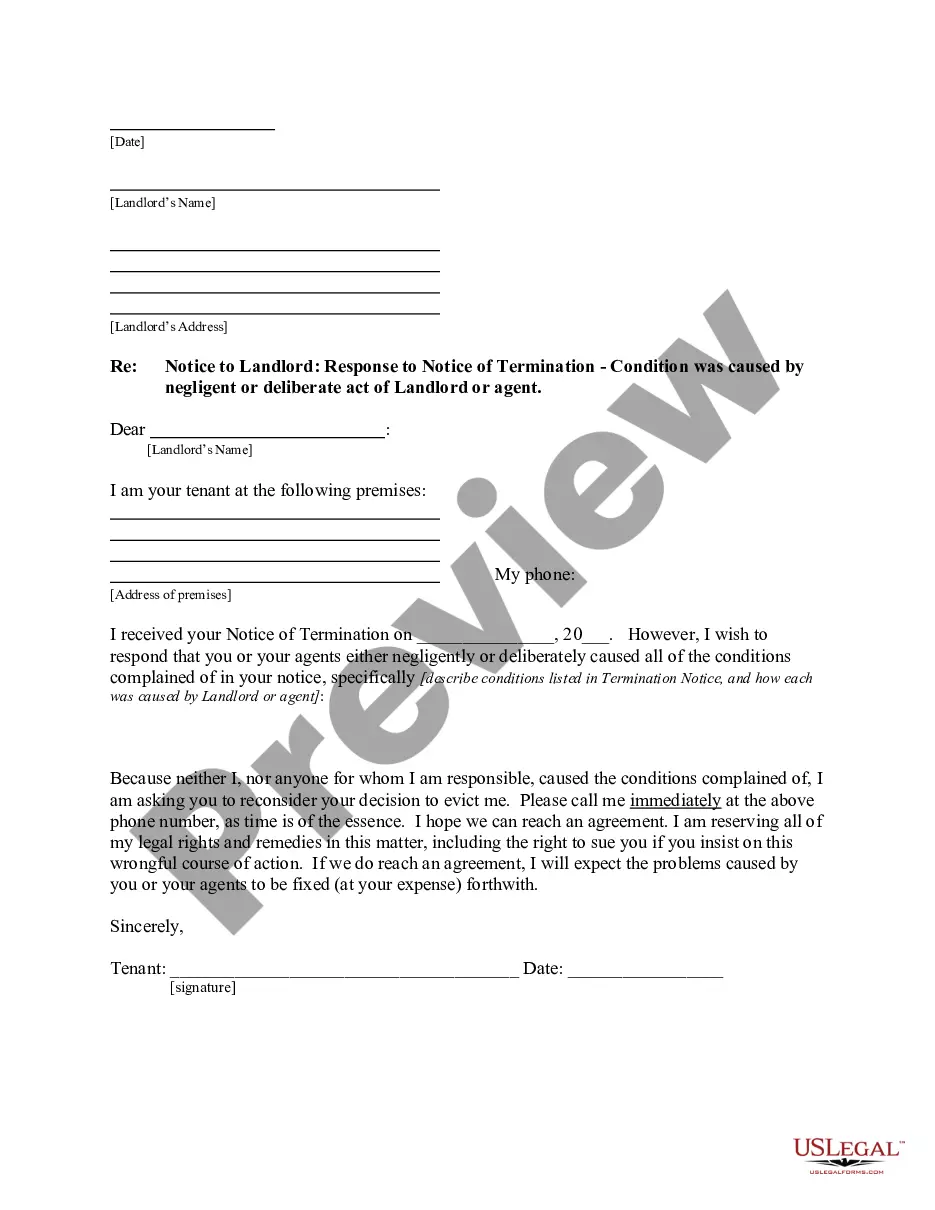
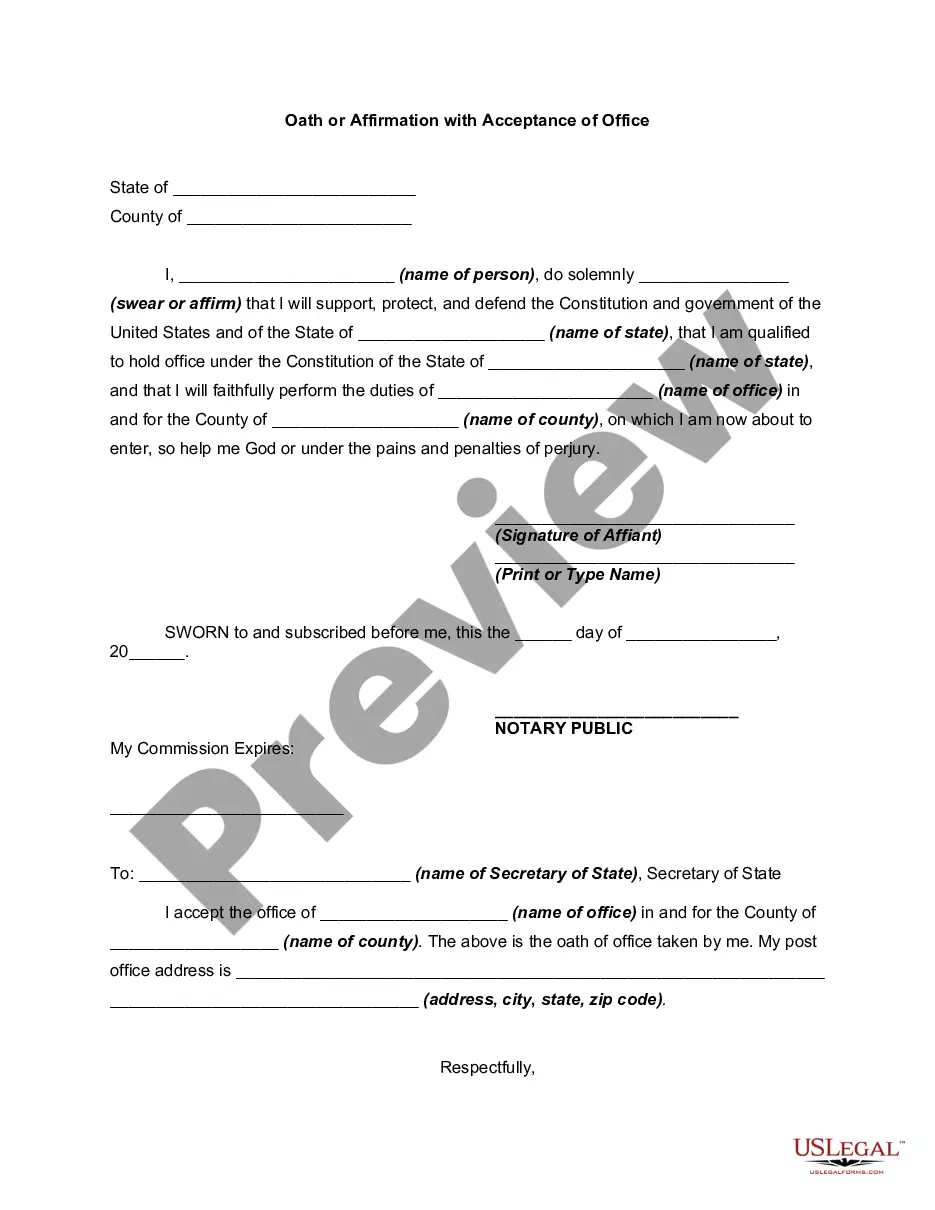
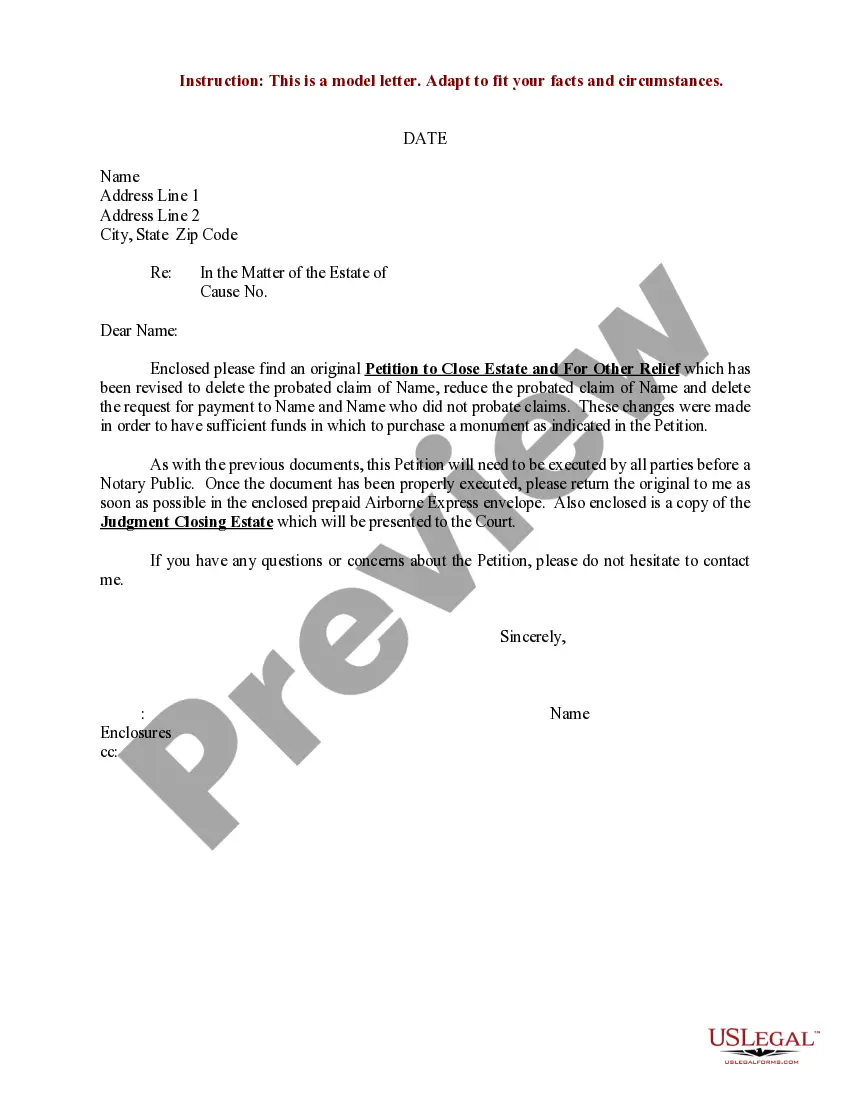
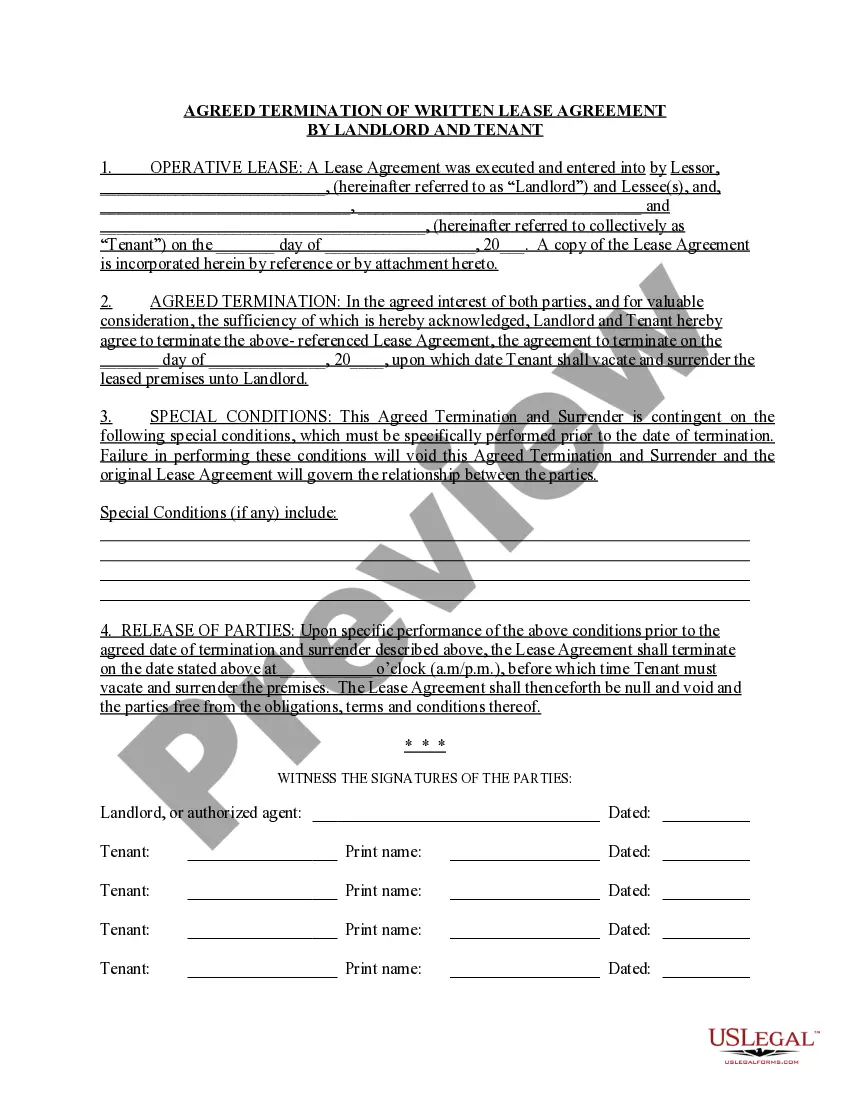
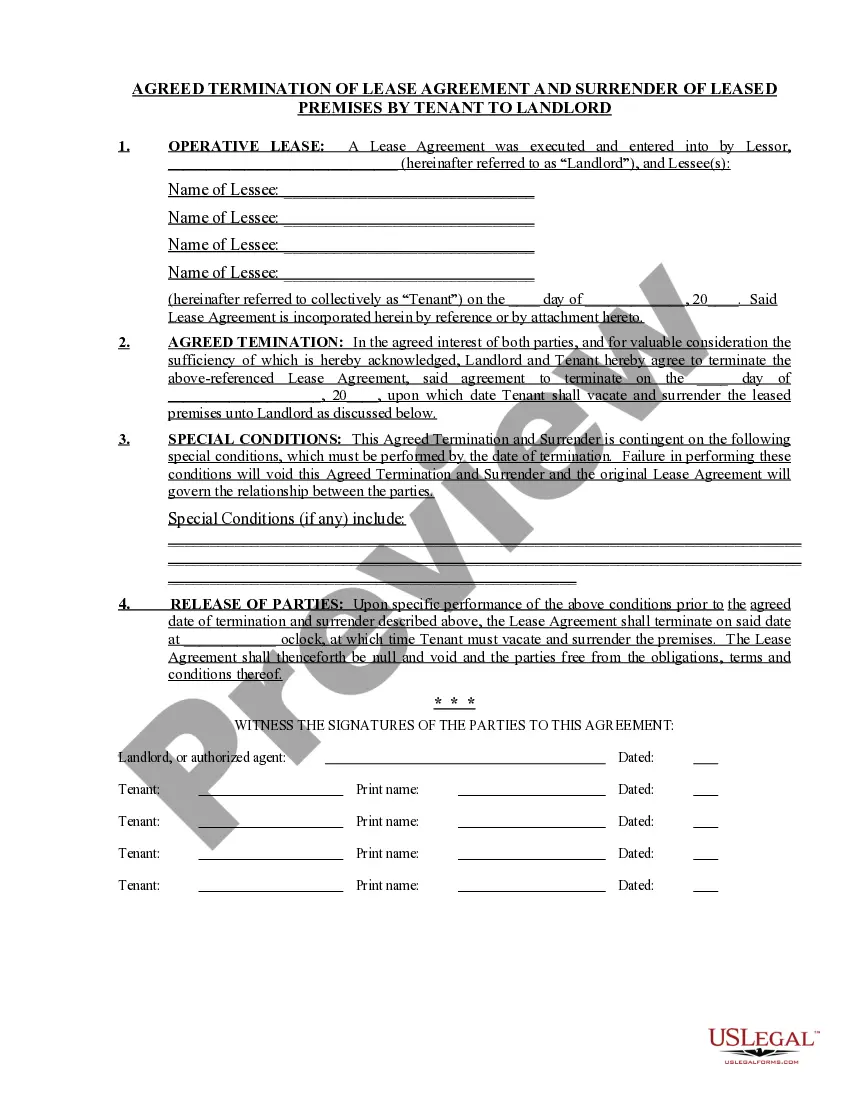
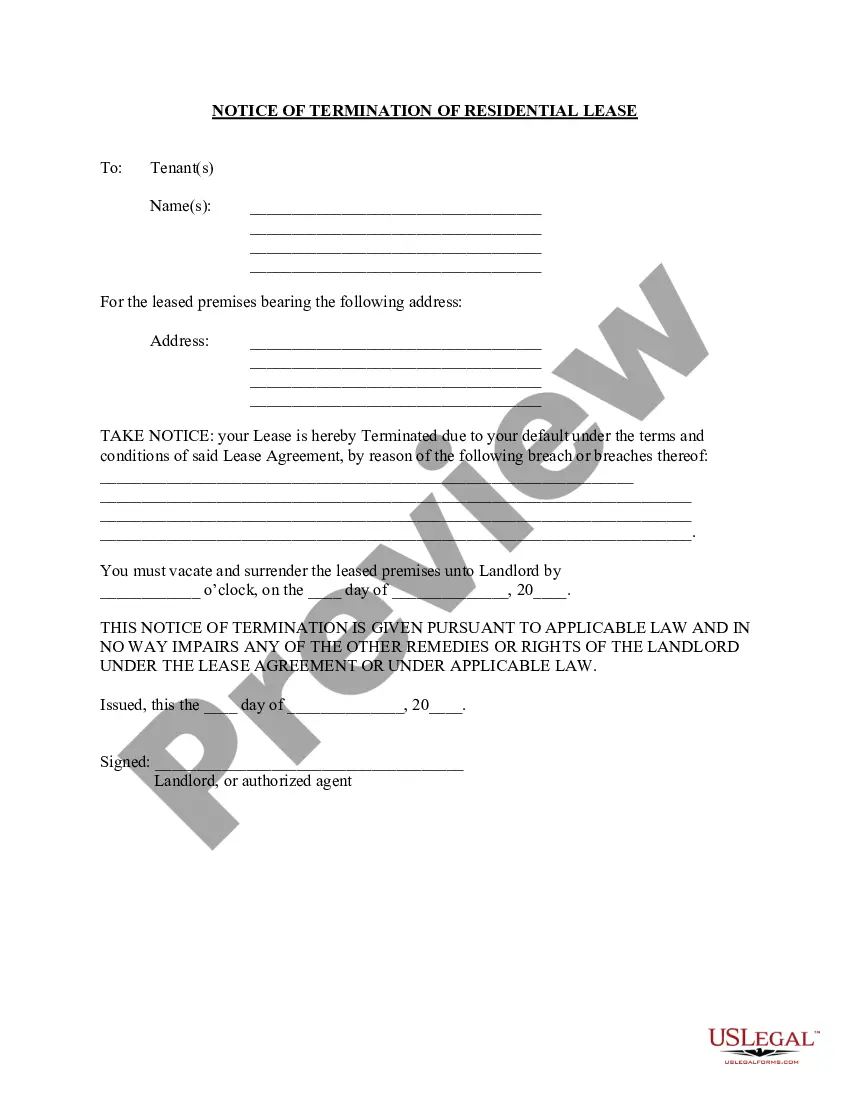
How to fill out Colorado Agreed Written Termination Of Lease By Landlord And Tenant?
There’s no further justification to squander time searching for legal documents to satisfy your local state requirements.
US Legal Forms has gathered all of them in a single location and enhanced their accessibility.
Our platform offers over 85k templates for any business and individual legal situations categorized by state and area of application.
Navigating the preparation of official documentation under federal and state laws is quick and simple with our library. Experience US Legal Forms today to maintain your documents in order!
- All forms are skillfully drafted and verified for accuracy, ensuring you receive an up-to-date Landlord And Tenant Lease Agreement Form Alberta.
- If you are acquainted with our service and already possess an account, ensure your subscription is active before accessing any templates.
- Log In to your account, select the document, and click Download.
- You can also revisit all downloaded documents whenever necessary by accessing the My documents tab in your profile.
- If you’ve never used our service before, there will be additional steps to complete.
- Here’s how new users can acquire the Landlord And Tenant Lease Agreement Form Alberta from our catalog.
- Review the page content carefully to confirm it has the sample you seek.
- To do so, use the form description and preview options if available.
Form popularity
FAQ
Legal landlord documents: tenancy agreementsThe address of the property.The tenant's details.The landlord's details including their service address.The deposit amount and DPS details.The rent amount and payment method.Details of any permitted occupiers.Required notice periods.The length of the tenancy.More items...?
Landlords cannot increase the rent payable by a tenant under a fixed term or periodic tenancy agreement until a minimum of one year (365 days) has passed since the last rent increase or since the start of the tenancy, whichever is later. There is no limit on the amount by which the landlord may raise the rent.
Tenants have to be given the proper period of notice to increase the rent. Depending on the type of periodic tenancy, a landlord is required to provide the following amount of notice: For a periodic week-to-week tenancy, at least 12 full tenancy weeks before the date on which the increase is to be effective.
It's good practice for a written tenancy agreement to include the following details:your name and your landlord's name and the address of the property which is being let.the date the tenancy began.details of whether other people are allowed the use of the property and, if so, which rooms.More items...
When writing your own renters agreement you are able to include your own classes, such as tenants aren't allowed to have pets. However, these added clauses must be in line with both the landlord's and tenants' rights and if they infringe on these rights then they are void and can't stand up in a court of law.