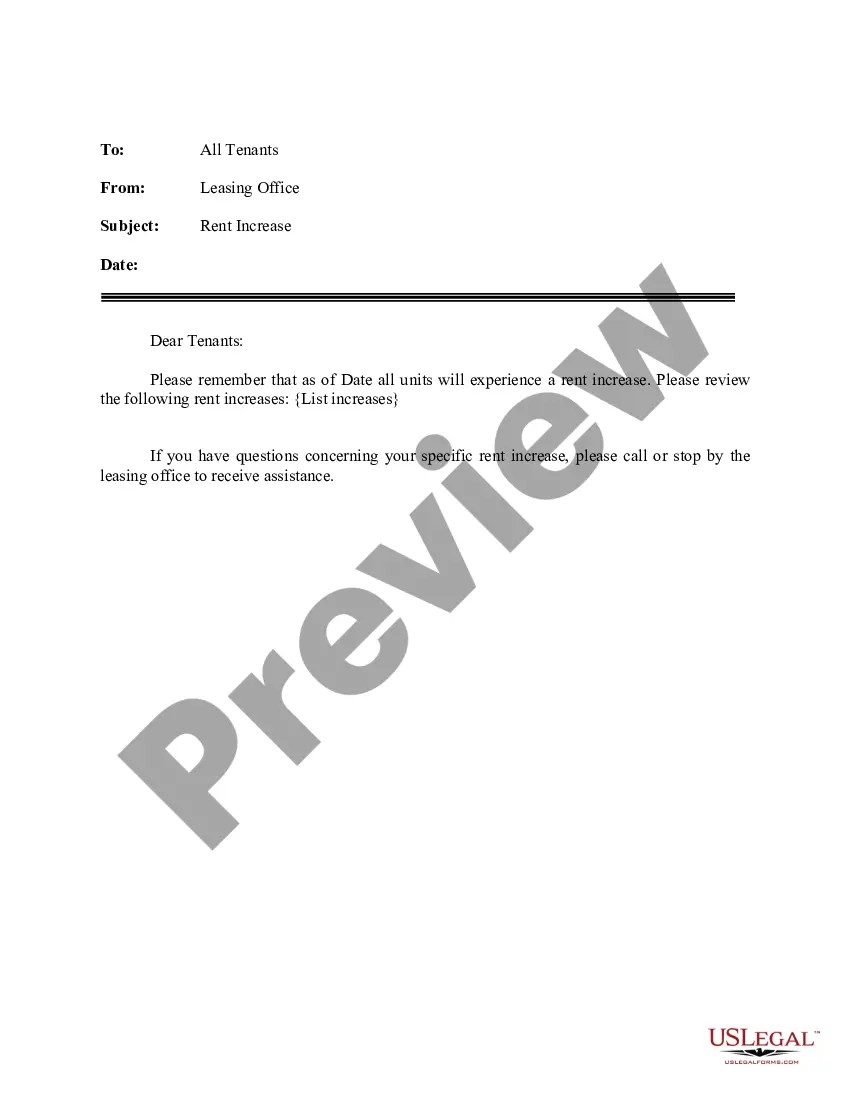
Rent Increase Letter For Section 8
Description
Get your form ready online
Our built-in tools help you complete, sign, share, and store your documents in one place.
Make edits, fill in missing information, and update formatting in US Legal Forms—just like you would in MS Word.
Download a copy, print it, send it by email, or mail it via USPS—whatever works best for your next step.
Sign and collect signatures with our SignNow integration. Send to multiple recipients, set reminders, and more. Go Premium to unlock E-Sign.
If this form requires notarization, complete it online through a secure video call—no need to meet a notary in person or wait for an appointment.
We protect your documents and personal data by following strict security and privacy standards.

Make edits, fill in missing information, and update formatting in US Legal Forms—just like you would in MS Word.

Download a copy, print it, send it by email, or mail it via USPS—whatever works best for your next step.

Sign and collect signatures with our SignNow integration. Send to multiple recipients, set reminders, and more. Go Premium to unlock E-Sign.

If this form requires notarization, complete it online through a secure video call—no need to meet a notary in person or wait for an appointment.

We protect your documents and personal data by following strict security and privacy standards.
Looking for another form?







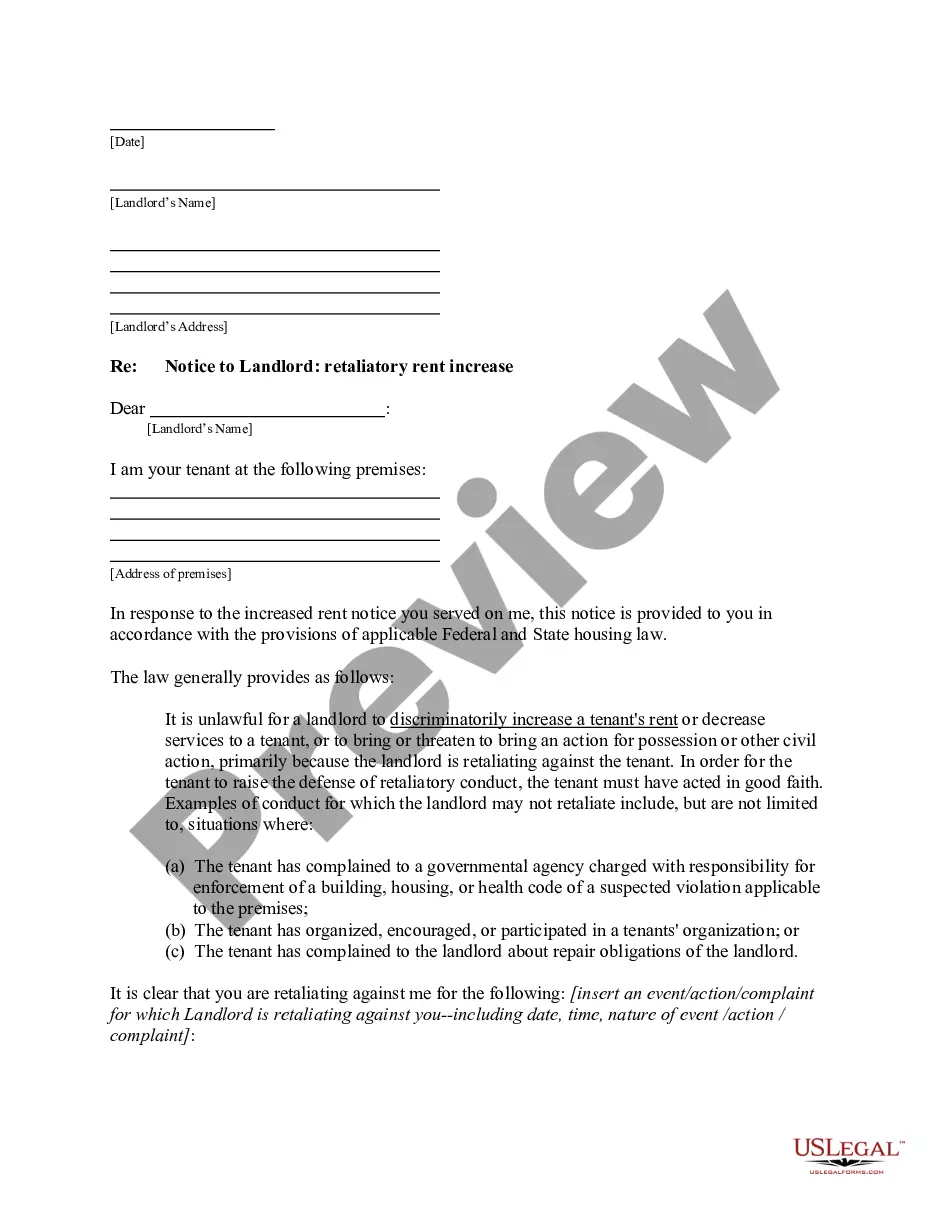
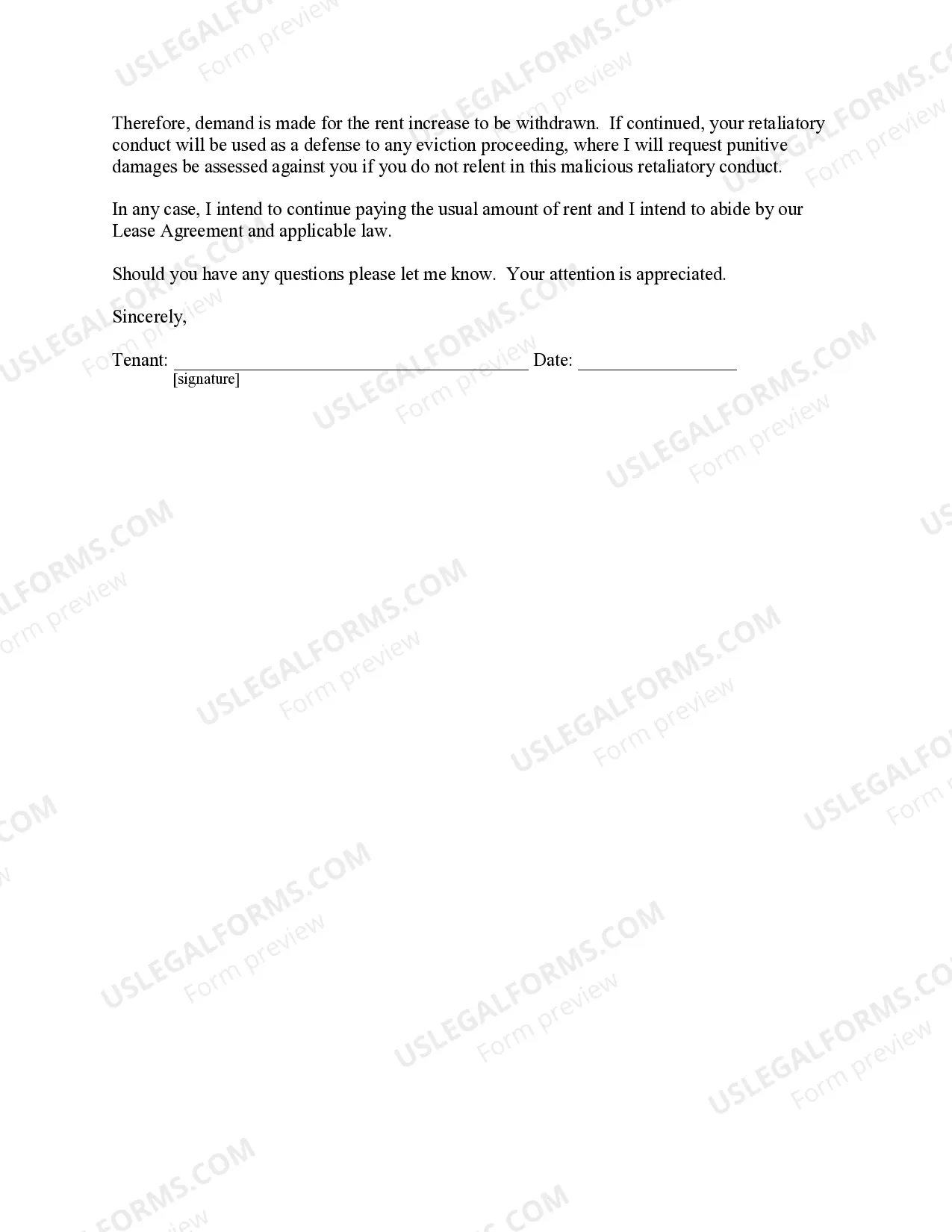
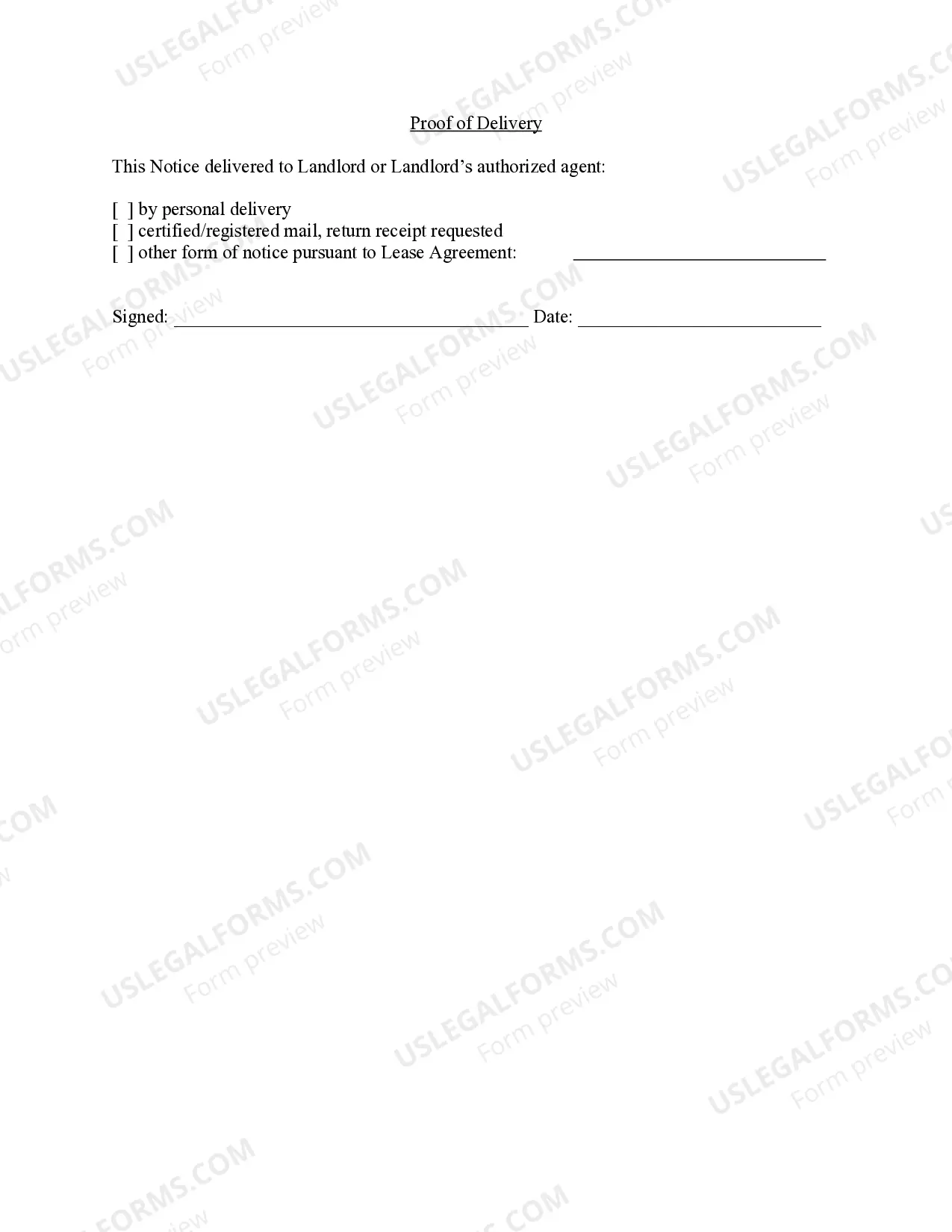
How to fill out Colorado Letter From Tenant To Landlord Containing Notice To Landlord To Withdraw Retaliatory Rent Increase?
- If you are a returning user, log into your US Legal Forms account and navigate to the template section. Ensure your subscription is active to access the necessary forms easily.
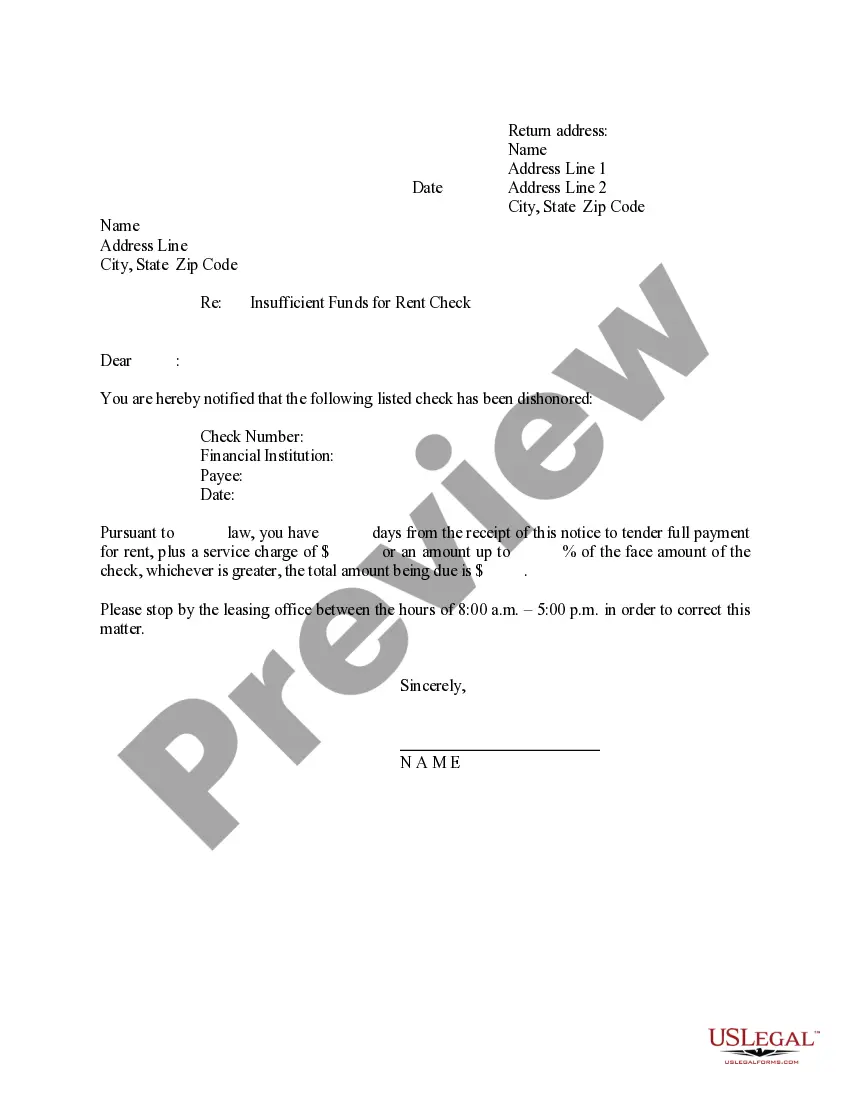
- For first-time users, begin by exploring the Preview mode of the rent increase letter for Section 8. Read the form description to confirm it aligns with your requirements and complies with local regulations.
- If you need to refine your search, utilize the Search tab to locate additional templates that may better suit your needs.
- Select your preferred document by clicking 'Buy Now' and choose a subscription plan that fits your budget. New users will need to register for an account to access the full resources.
- Complete your purchase by entering your payment details using a credit card or PayPal, ensuring you receive your document without hassle.
- Finally, download the completed template for your records and retain access through the My Forms section of your profile.
In conclusion, US Legal Forms empowers individuals to create legal documents quickly and accurately with its vast library. By following these simple steps, you can effortlessly secure your rent increase letter for Section 8.
Don’t hesitate; start your journey with US Legal Forms today and simplify your legal paperwork!
Form popularity
FAQ
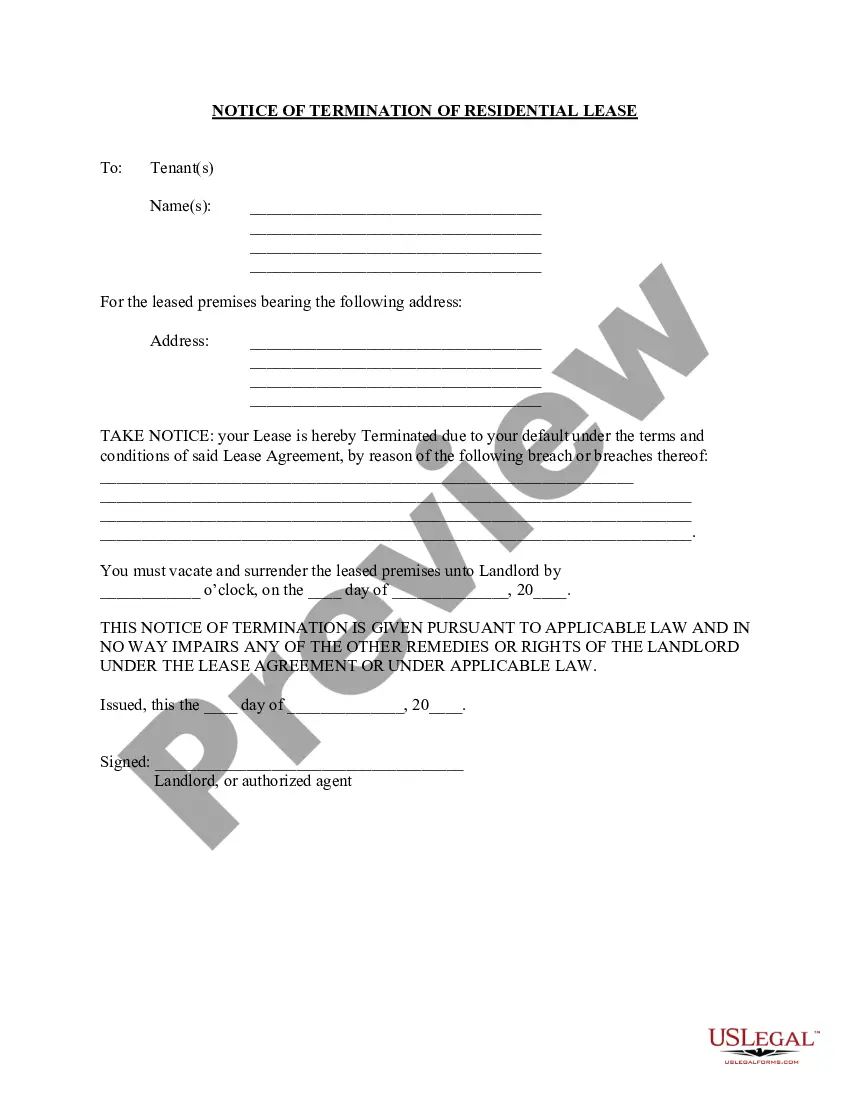
To move out of Section 8, you need to provide proper notice to your housing authority and landlord. Include details about your move in a rent increase letter for Section 8 to formally communicate your departure. Make sure to follow the termination procedures specified in your lease agreement. If you have questions about the process, the US Legal Forms platform can help you find the necessary forms and resources.
The income limits for Section 8 vary by location and family size. Generally, your income should not exceed 50% of the area median income. If you are considering a rent increase letter for Section 8, you’ll want to ensure your income is documented accordingly. It’s beneficial to check with your local housing authority for specific income guidelines in your area.
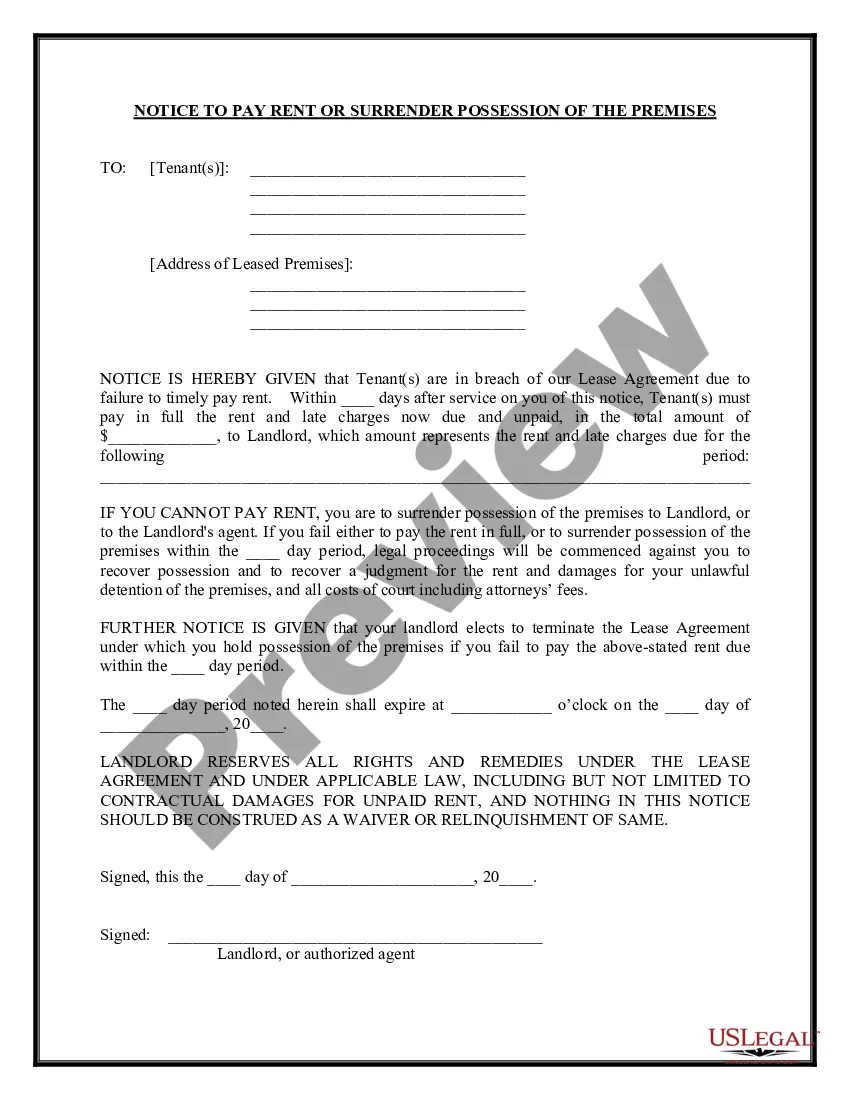
Yes, your boyfriend can live with you under Section 8, but you must notify your housing authority. Typically, they require you to submit a rent increase letter for Section 8 to inform them of any new household members. This could potentially affect your rental payment and eligibility. It is essential to follow the guidelines set by your local housing authority to avoid any issues.
When communicating a rent increase to a tenant, it's important to be respectful and direct. Explain the reasons for the increase, whether due to market shifts or rising maintenance costs. Reassure the tenant about the value they receive in your property, and invite them to discuss any concerns they may have. Providing a well-written rent increase letter for section 8 can establish a respectful dialogue and promote a positive landlord-tenant relationship.
The maximum rent increase allowed can vary by state and local regulations, so it's critical to verify your area's specific laws. Generally, there may be limits on the percentage increase for section 8 housing, ensuring affordability for tenants. Always reference the guidelines provided by your housing authority or utilize our resources to stay informed about allowable increases.
To craft an effective rent increase letter for section 8, begin with your name and address, followed by the tenant's details. Be direct in stating the new rent amount and the date it will change. Additionally, ensure the letter aligns with local laws regarding notice periods. Using a professional template can simplify this process, so consider checking out resources on our platform.
When you write a rent increase letter for section 8, clarity is key. Start by addressing the tenant by name and stating the reason for the increase, explaining any changes in living expenses or property costs. Include specific details about the new rent amount and when it will take effect. This transparent approach helps build trust and understanding between you and the tenant.
When writing a notice letter for a rent increase, begin with your name, the tenant's name, and the rental property's address. Clearly state the new rent amount and the date when the increase will take effect. It's helpful to explain the reasons for the increase, such as rising maintenance costs or improvements. By providing a well-structured letter, you help ensure transparency and understanding regarding the change.
Section 8 rent limits vary by area, as they are determined by Fair Market Rents and local authority regulations. The rent must also be deemed reasonable when compared to similar properties in the area. To explore the specific limits in your location, you can contact your local Housing Authority. Knowing these limits aids in drafting a compliant rent increase letter for Section 8.
Yes, an increase in income can potentially affect your Section 8 eligibility. While your housing assistance may decrease as your income rises, it does not automatically disqualify you. It's crucial to report any changes in income to your housing authority promptly. By doing so, you allow them to adjust your assistance accordingly and maintain your housing stability.