Common Law Marriage For Taxes
Description
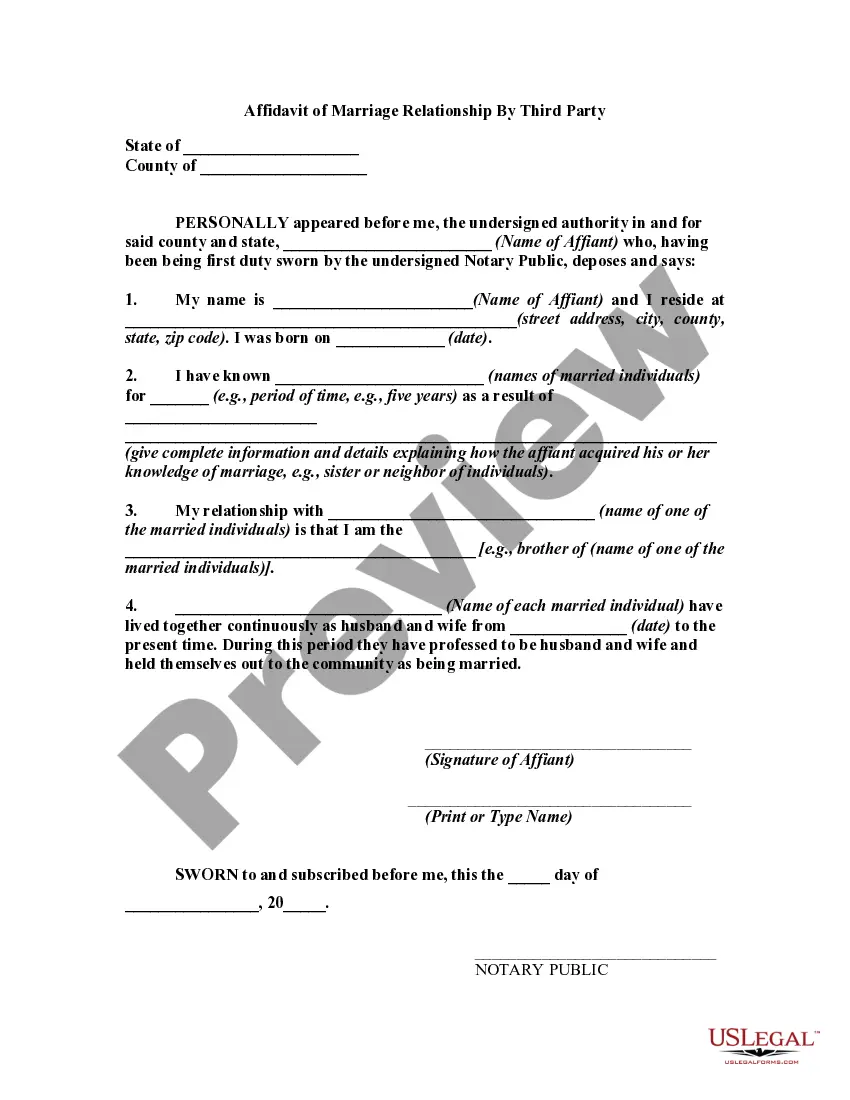
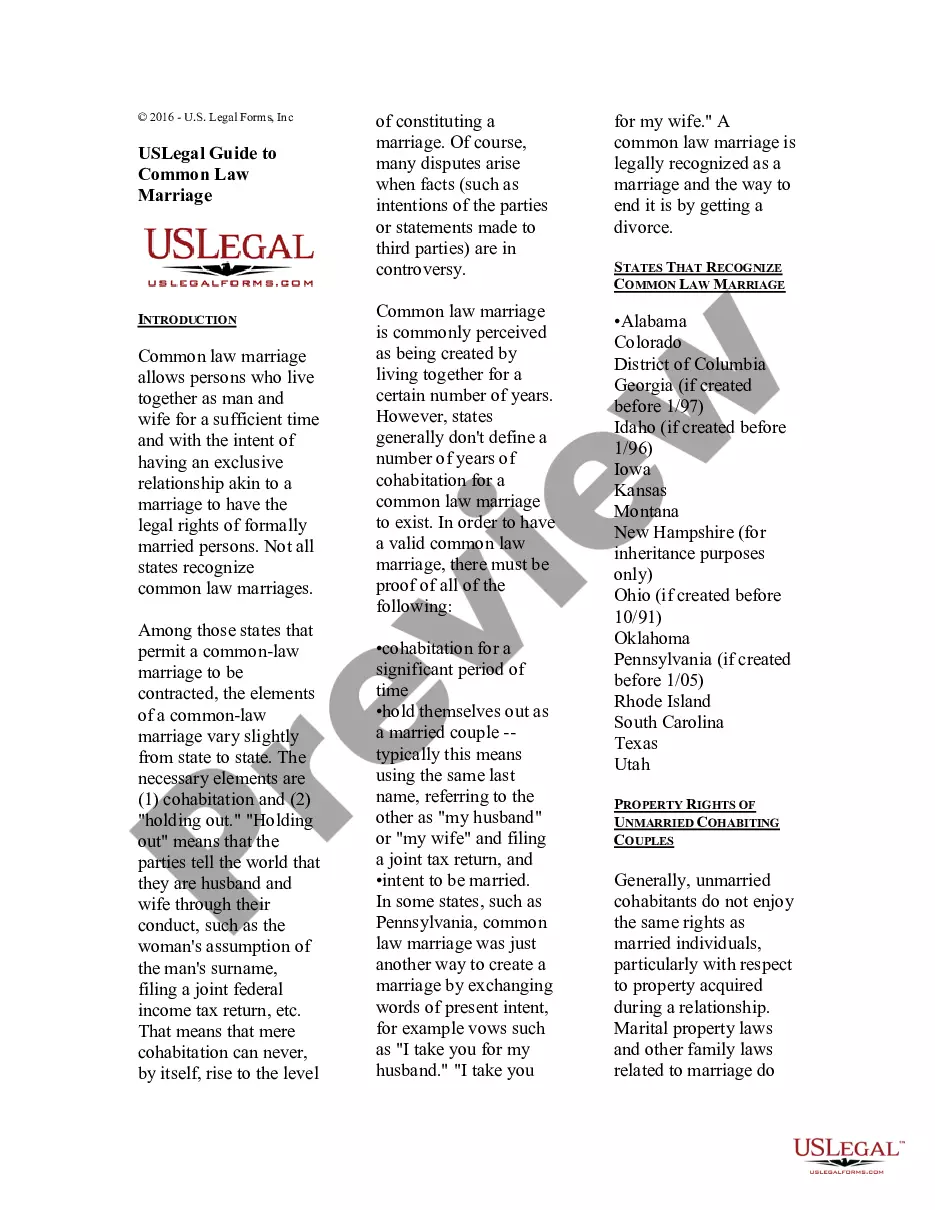


How to fill out Colorado Affidavit Of Common Law Marriage?
It’s no secret that you can’t become a legal expert overnight, nor can you learn how to quickly prepare Common Law Marriage For Taxes without having a specialized background. Putting together legal forms is a long venture requiring a specific training and skills. So why not leave the preparation of the Common Law Marriage For Taxes to the professionals?
With US Legal Forms, one of the most comprehensive legal document libraries, you can find anything from court documents to templates for in-office communication. We understand how crucial compliance and adherence to federal and state laws and regulations are. That’s why, on our website, all templates are location specific and up to date.
Here’s how you can get started with our platform and obtain the document you require in mere minutes:
- Discover the document you need by using the search bar at the top of the page.
- Preview it (if this option available) and check the supporting description to determine whether Common Law Marriage For Taxes is what you’re looking for.
- Begin your search again if you need any other form.
- Register for a free account and choose a subscription plan to purchase the template.
- Choose Buy now. Once the transaction is through, you can get the Common Law Marriage For Taxes, complete it, print it, and send or send it by post to the designated individuals or entities.
You can re-access your forms from the My Forms tab at any time. If you’re an existing client, you can simply log in, and find and download the template from the same tab.
No matter the purpose of your paperwork-be it financial and legal, or personal-our platform has you covered. Try US Legal Forms now!
Form popularity
FAQ
Texas is one of a handful of states that still recognizes common law marriages. Therefore, if you meet the statute of a common law marriage, then, yes, you may file a return as Married Filing Joint.
You can claim a boyfriend or girlfriend as a dependent on your federal income taxes if that person meets certain Internal Revenue Service requirements. To qualify as a dependent, your partner must have lived with you for the entire calendar year and listed your home as their official residence for the full year.
Common-law marriages have three basic features: (1) A present agreement to be married, (2) cohabitation, and (3) public representations of marriage. taxpayer and the taxpayer's spouse are currently domiciled in a state that requires a ceremony to establish the marital relationship.
Tax Benefits: Common law status entitles you and your spouse to claim certain tax deductions that apply to married couples. For example, if you own a home together and file a joint return you could claim a deduction for mortgage interest.
Common law marriages are recognized for federal income tax purposes if they are recognized by the state in which the taxpayers reside. If the taxpayers later move to a state which does not recognize common law marriages, they are still considered married for federal income tax purposes.