Limited Liability Company For Rental Property
Description
Get your form ready online
Our built-in tools help you complete, sign, share, and store your documents in one place.
Make edits, fill in missing information, and update formatting in US Legal Forms—just like you would in MS Word.
Download a copy, print it, send it by email, or mail it via USPS—whatever works best for your next step.
Sign and collect signatures with our SignNow integration. Send to multiple recipients, set reminders, and more. Go Premium to unlock E-Sign.
If this form requires notarization, complete it online through a secure video call—no need to meet a notary in person or wait for an appointment.
We protect your documents and personal data by following strict security and privacy standards.

Make edits, fill in missing information, and update formatting in US Legal Forms—just like you would in MS Word.

Download a copy, print it, send it by email, or mail it via USPS—whatever works best for your next step.

Sign and collect signatures with our SignNow integration. Send to multiple recipients, set reminders, and more. Go Premium to unlock E-Sign.

If this form requires notarization, complete it online through a secure video call—no need to meet a notary in person or wait for an appointment.

We protect your documents and personal data by following strict security and privacy standards.
Looking for another form?
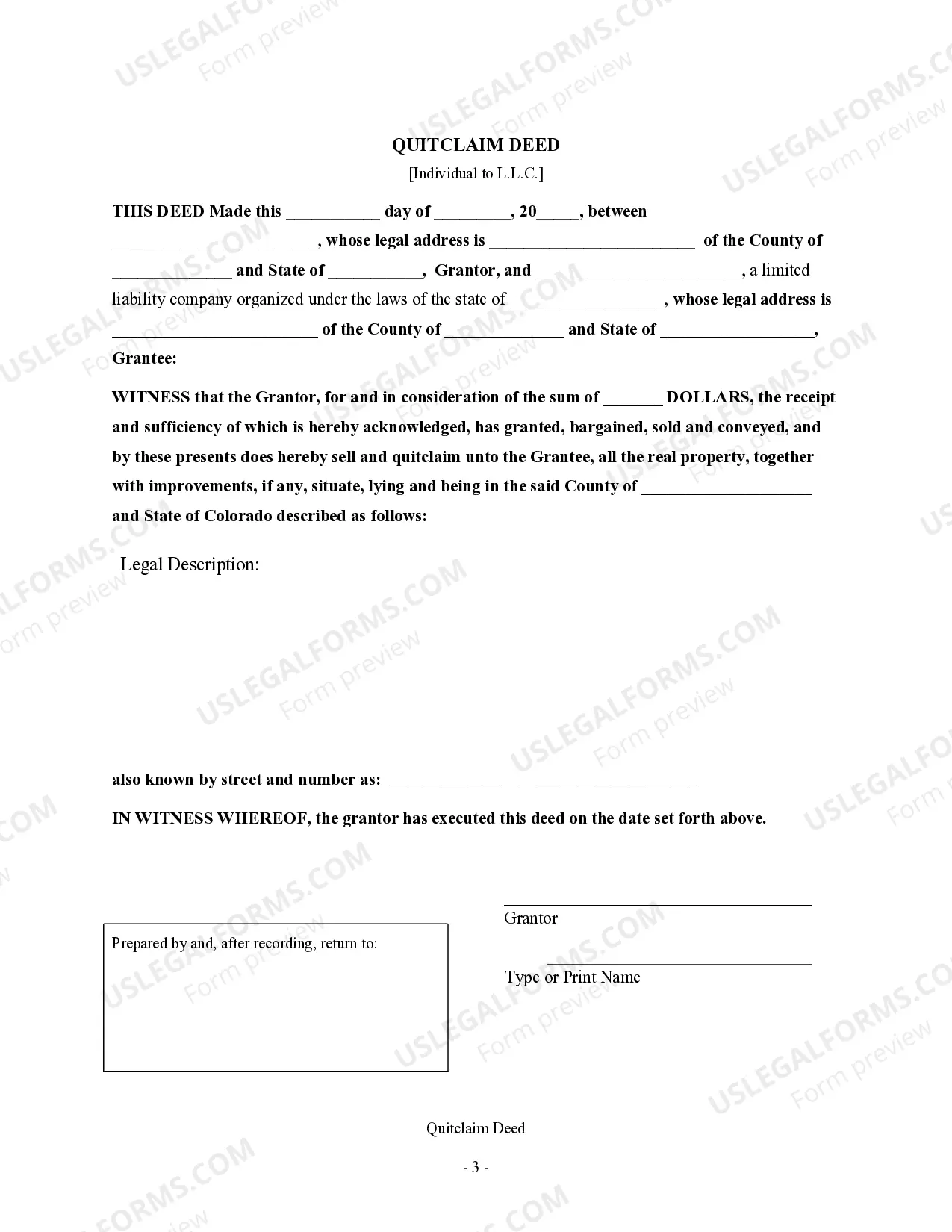
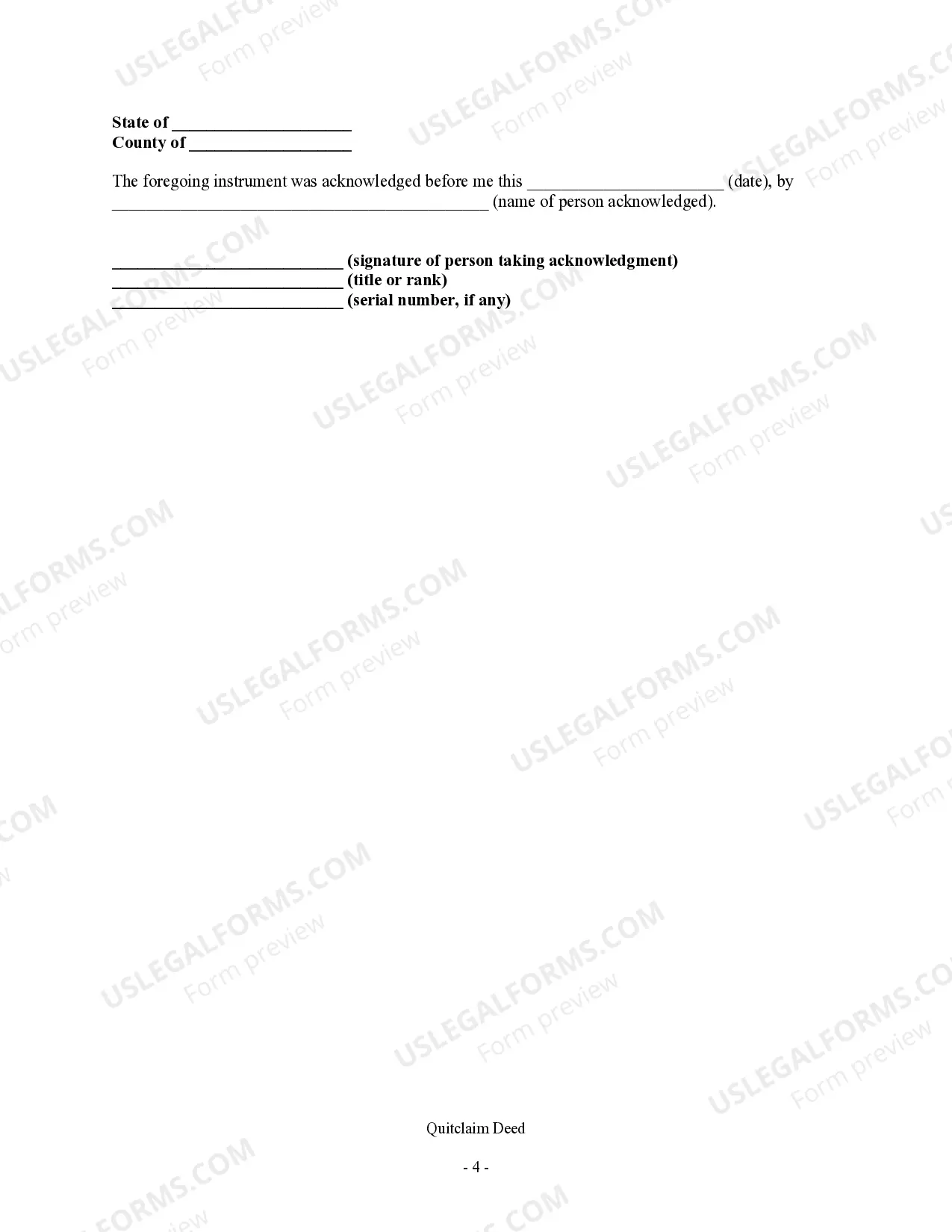
How to fill out Colorado Quitclaim Deed - Individual To Limited Liability Company?
- Access your US Legal Forms account. If you're a returning user, log in to start. Make sure your subscription is up to date.
- Browse the form library. Examine the preview and descriptions to select the LLC template appropriate for your rental property.
- Search for additional templates if necessary. Use the search bar to find any forms you may have missed that fit your specific needs.
- Purchase the required document. Click 'Buy Now' and choose a subscription plan that suits you. Registration is necessary to gain full access.
- Complete your payment. Enter your credit card information or use PayPal to finalize your subscription.
- Download your documents. Save the LLC template to your device for easy editing, and access it anytime through the My Forms section in your profile.
With US Legal Forms, you have access to a wide array of resources that simplify the legal process, making it accessible for everyone whether you’re an individual or an attorney. Their vast library of over 85,000 editable forms ensures you’re equipped with everything you need.
Protect your investment and streamline your rental property management today. Start your journey with US Legal Forms and gain access to expert assistance for all your legal document needs.
Form popularity
FAQ
It is advisable to start a limited liability company for rental property before purchasing real estate. Establishing an LLC first protects your personal assets from any potential liabilities that arise from owning rental properties. Moreover, having an LLC can simplify tax season by allowing you to take advantage of various deductions. By proactively setting up the LLC, you set a strong foundation for your rental property investment.
Rich individuals often choose to buy houses under a limited liability company for rental property to protect their personal assets. An LLC provides a barrier between the owner’s personal finances and the income generated from the rental property. This separation ensures that any legal issues or debts related to the property do not affect their personal wealth. Additionally, the tax benefits associated with an LLC can further enhance their financial strategy.
Filing taxes for a limited liability company for rental property involves reporting income and expenses on your tax return. If you formed a single-member LLC, you typically report your rental income on Schedule C of your personal tax return. For multi-member LLCs, you must file Form 1065 and issue K-1 forms to each member. It's beneficial to consult a tax professional to ensure accurate filings and maximize potential deductions.
The best type of limited liability company for rental property typically involves a single-member LLC or a multi-member LLC, depending on your ownership structure. Single-member LLCs offer simplicity and are often easier to manage, while multi-member LLCs allow for shared ownership, which may benefit investment strategies. Each option has its distinct advantages, so consider your circumstances when choosing the right structure.
To put your rental property in a limited liability company for rental property, start by forming the LLC through your state’s Secretary of State website or via a service like uslegalforms. Once established, you will need to draft and sign an operating agreement for the LLC. After that, you can transfer the property using a deed, making sure to notify your lender if necessary. Always seek legal advice to ensure that you follow all legal requirements.
While a limited liability company for rental property offers benefits, there are disadvantages to consider. One such drawback is the potential for increased costs related to setup and maintenance, including filing fees and ongoing compliance requirements. Additionally, transferring property can trigger transfer taxes or affect your mortgage terms. Thus, weighing these factors is crucial before making your decision.
Transferring your rental property to a limited liability company for rental property can provide you with personal asset protection. If any legal issues arise related to the property, your personal assets may remain safe from claims. Additionally, an LLC can offer tax advantages, depending on your situation. It's wise to consult a legal expert to see if this move aligns with your long-term goals.
When starting an LLC for rental property, consider forming a single-member LLC or a multi-member LLC based on your needs. A single-member LLC is ideal for solo investors, while a multi-member LLC can accommodate partners. Each type provides personal liability protection and offers flexibility in management. With the US Legal Forms platform, you can easily create an LLC tailored to your rental property needs.
The 50% rule in rental property suggests that approximately 50% of your rental income will go toward expenses, excluding mortgage payments. This guideline helps you estimate whether a property is a good investment by comparing your potential income against anticipated costs. Understanding this rule can be crucial when deciding on forming a Limited Liability Company for rental property, as it impacts financial planning.
Yes, you can put your rental property in an LLC even if you have a mortgage. However, it's essential to review your mortgage agreement, as some lenders may have specific requirements or restrictions. Transferring the property into an LLC can offer you protection and streamline management. Consider consulting with a professional to navigate any refinancing options if needed.