Transfer Death Deed Beneficiary For A Trust

Description

Get your form ready online
Our built-in tools help you complete, sign, share, and store your documents in one place.
Make edits, fill in missing information, and update formatting in US Legal Forms—just like you would in MS Word.
Download a copy, print it, send it by email, or mail it via USPS—whatever works best for your next step.
Sign and collect signatures with our SignNow integration. Send to multiple recipients, set reminders, and more. Go Premium to unlock E-Sign.
If this form requires notarization, complete it online through a secure video call—no need to meet a notary in person or wait for an appointment.
We protect your documents and personal data by following strict security and privacy standards.

Make edits, fill in missing information, and update formatting in US Legal Forms—just like you would in MS Word.

Download a copy, print it, send it by email, or mail it via USPS—whatever works best for your next step.

Sign and collect signatures with our SignNow integration. Send to multiple recipients, set reminders, and more. Go Premium to unlock E-Sign.

If this form requires notarization, complete it online through a secure video call—no need to meet a notary in person or wait for an appointment.

We protect your documents and personal data by following strict security and privacy standards.
Looking for another form?

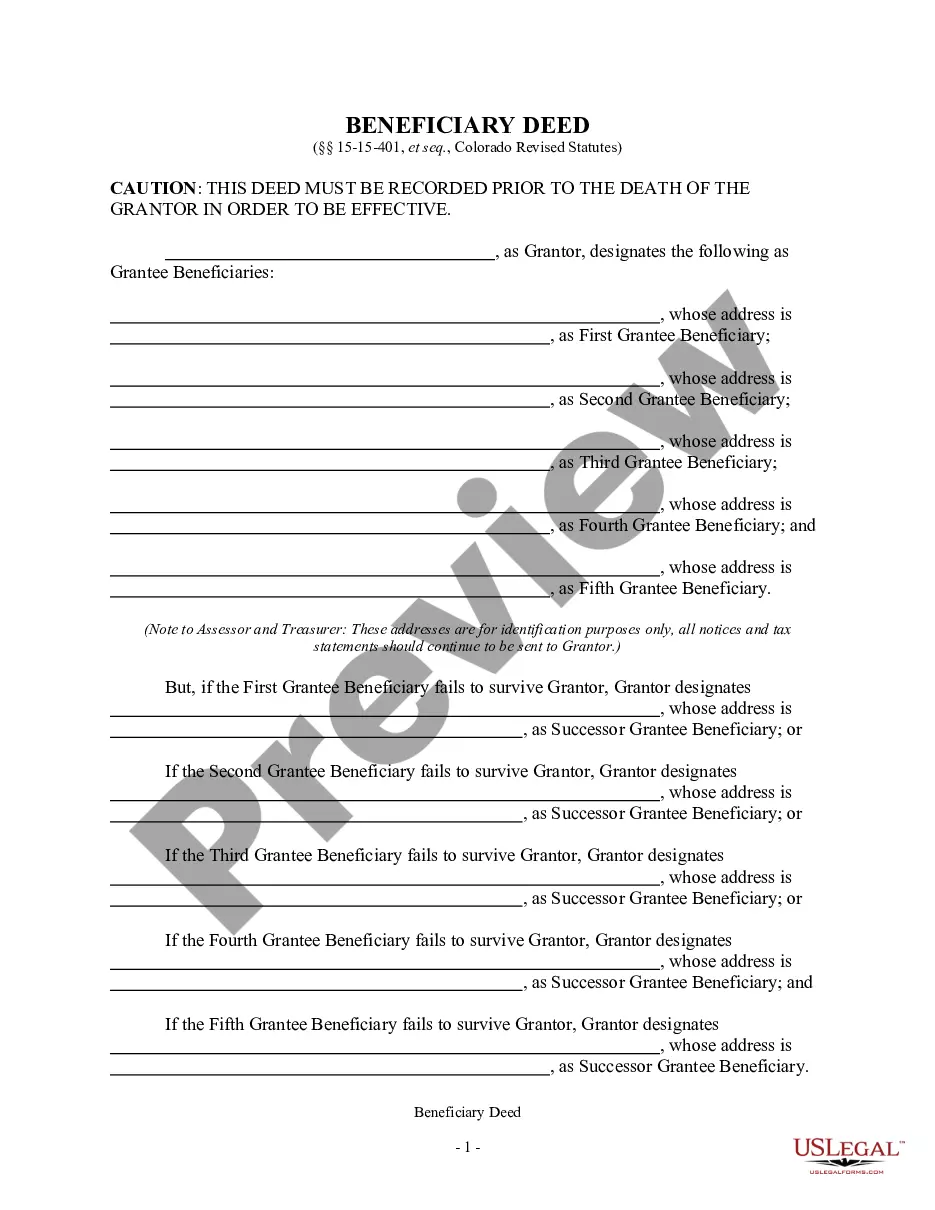
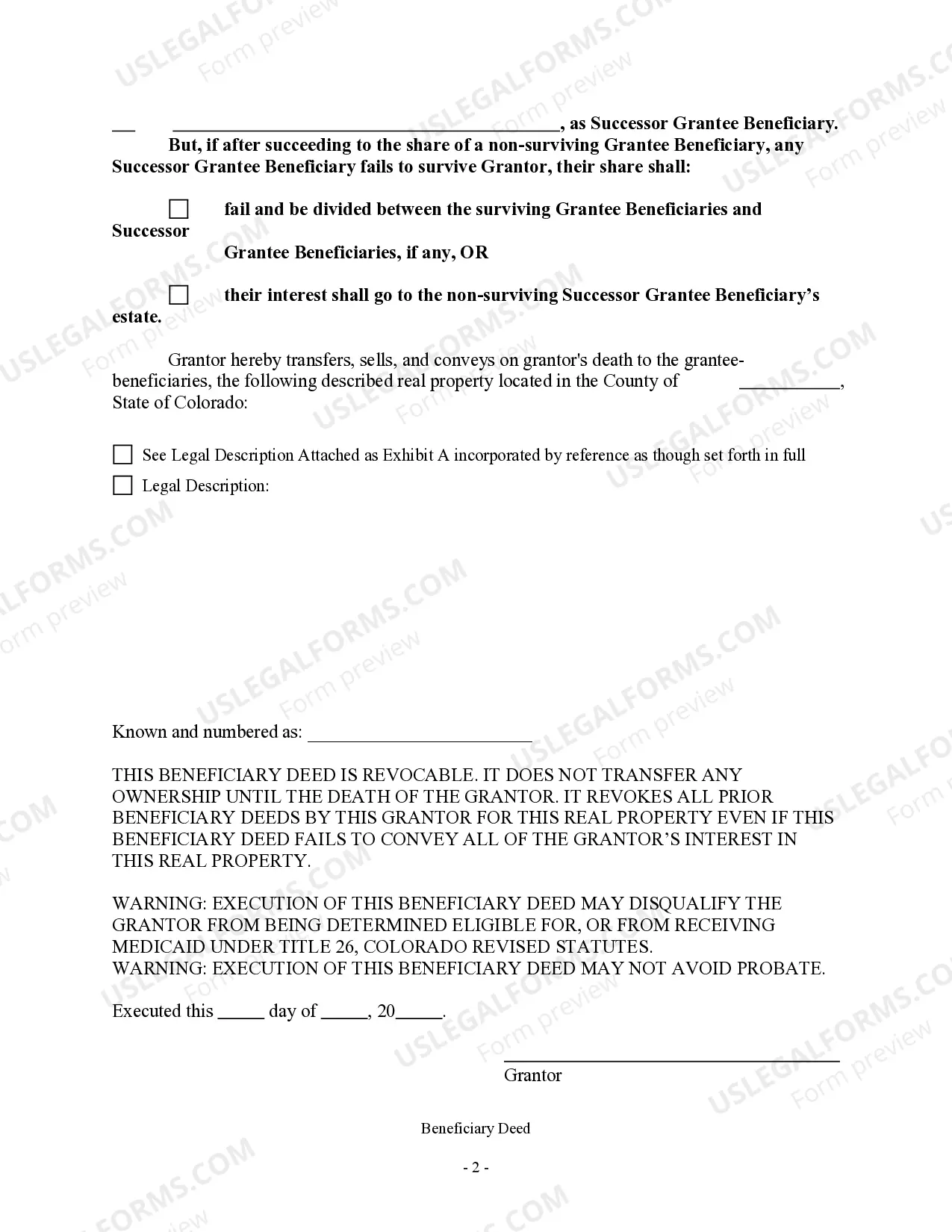
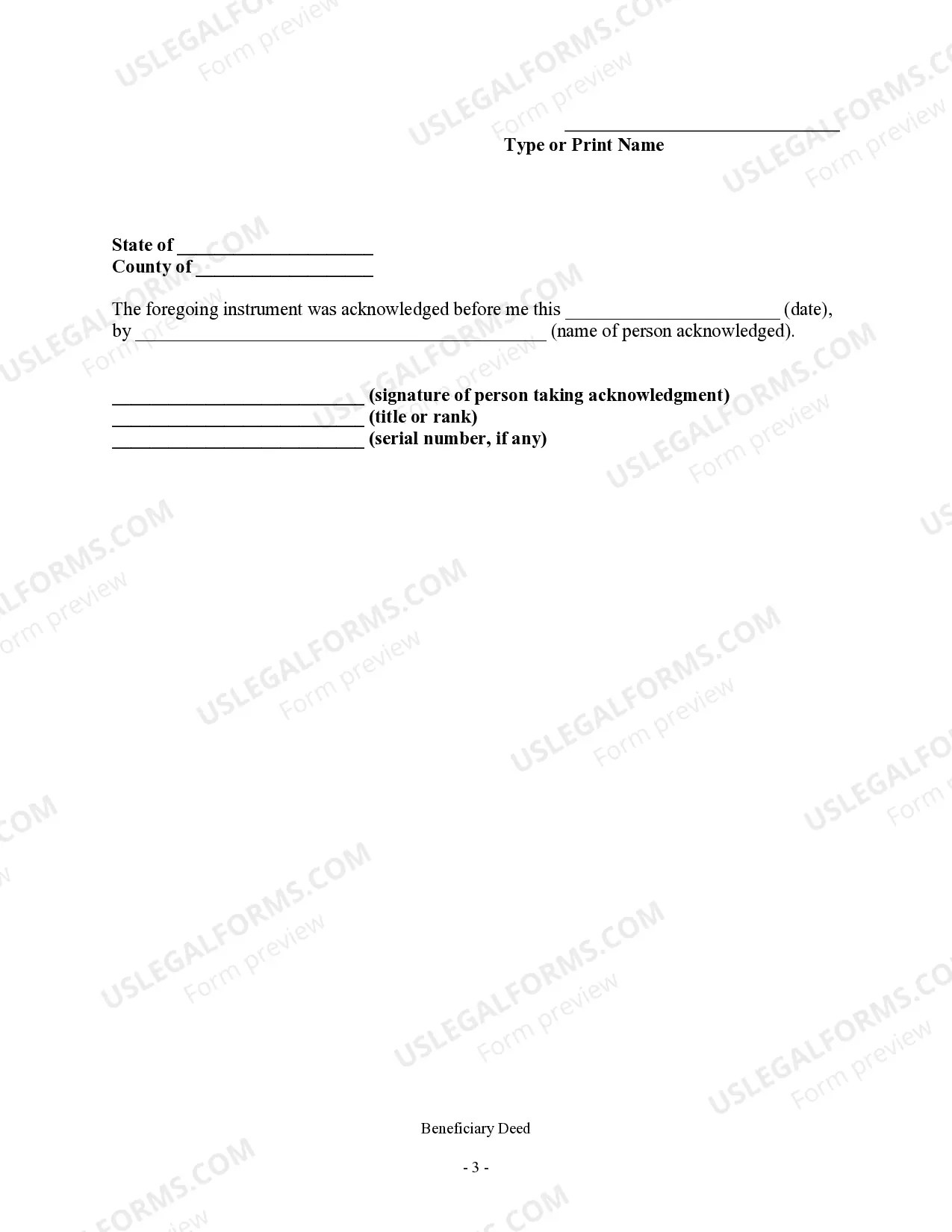
How to fill out Colorado Transfer On Death Deed Or TOD - Beneficiary Deed For Grantor To Five Grantee Beneficiaries?
- Log in to your US Legal Forms account or create a new account if you're a first-time user.
- Preview the document template you need and verify it matches your requirements and local laws.
- If the template isn’t satisfactory, utilize the search feature to find the one that fits your criteria.
- Select the document by clicking the 'Buy Now' button and choose an appropriate subscription that suits your usage.
- Complete the purchase by entering your payment details or using your PayPal account.
- Download your completed form and store it on your device for easy access. You can revisit it anytime from the 'My Forms' section of your account.
By following these steps, you can efficiently manage your legal documentation needs with US Legal Forms. Their diverse database and accessibility to legal professionals ensure that you can execute precisely what you require quickly and accurately.
Start utilizing US Legal Forms today to secure all your legal documentation needs!
Form popularity
FAQ
While a beneficiary deed offers several advantages, it also has some disadvantages to consider. One concern is that it may not address all property issues, such as debts tied to the property, which could complicate matters for your beneficiaries. Additionally, if you change your mind about the beneficiary, you must complete a new deed. An effective way to navigate these potential pitfalls is by exploring a transfer death deed beneficiary for a trust, providing broader estate management options.
A transfer on death deed becomes effective only upon the death of the grantor, meaning it does not constitute an inheritance until that time. This type of deed is a key part of your estate plan and allows for direct property transfer to your chosen beneficiary. By utilizing a transfer death deed beneficiary for a trust, you can mitigate lengthy probate processes, ensuring your assets are passed on quickly and efficiently. Understanding this distinction can impact your estate planning strategy.
To write a beneficiary deed, you must include essential information like the legal description of the property, your name, and the name of the beneficiary. It is crucial to follow your state's specific guidelines and formalities to ensure the deed’s validity. You can also choose to utilize online platforms like US Legal Forms, which provide user-friendly templates for creating beneficiary deeds. Engaging in this process means you effectively designate a transfer death deed beneficiary for a trust.
A beneficiary deed allows property to transfer directly to a specified individual upon your death, avoiding probate. This deed can simplify the transfer process and ensure your intended beneficiaries receive your assets without delays. Additionally, it provides peace of mind, knowing your property aligns with your wishes. Utilizing a transfer death deed beneficiary for a trust helps streamline estate management and reduce potential complications.
You do not necessarily need a lawyer to create a beneficiary deed, as many resources are available to guide you. However, consulting with a legal professional can help ensure that the document complies with state laws and meets your specific needs. Utilizing platforms like US Legal Forms can also simplify the process, offering templates designed for creating beneficiary deeds efficiently. An informed approach can help you effectively use a transfer death deed beneficiary for a trust and secure your assets.
A transfer on death deed is a specific legal instrument that allows you to name a beneficiary for your property, effective upon your death. This process is different from a general beneficiary designation, which can apply to various financial accounts and insurance policies. However, both concepts aim to make the transfer of assets smoother and can be essential for a trust. Understanding how a transfer death deed beneficiary for a trust works allows you to better manage your estate plan.
While a transfer on death deed has many advantages, it may not be ideal for everyone. Some potential drawbacks include the possibility of unintended consequences when property values change or if your chosen beneficiary predeceases you. Evaluating your estate planning strategy with the transfer death deed beneficiary for a trust can help you avoid these pitfalls and ensure that your assets are distributed according to your wishes.
Choosing between a transfer on death deed (TOD) and naming a beneficiary depends on your individual needs and circumstances. A TOD deed allows assets to transfer directly to a named beneficiary, which can be simpler than other options, such as wills or trusts. When you consider the transfer death deed beneficiary for a trust, understand that this method can protect your assets from lengthy probate while providing clarity for your loved ones.
The best way to leave property upon death is often through a transfer on death deed, especially if you want to simplify the process for your beneficiaries. This deed allows you to designate a beneficiary who will automatically inherit your property when you pass away, avoiding the lengthy probate process. Utilizing the transfer death deed beneficiary for a trust not only streamlines inheritance but also helps ensure your wishes are followed without complication.
You cannot transfer property into a trust after death, but the property will go through probate before being distributed to beneficiaries. Ensuring that all assets are designated in life, whether through a trust or TOD deed, can prevent complications. Platforms like US Legal Forms can guide you in structuring your estate plan effectively before it's too late.