Estate Planning Information With Trusts
Description
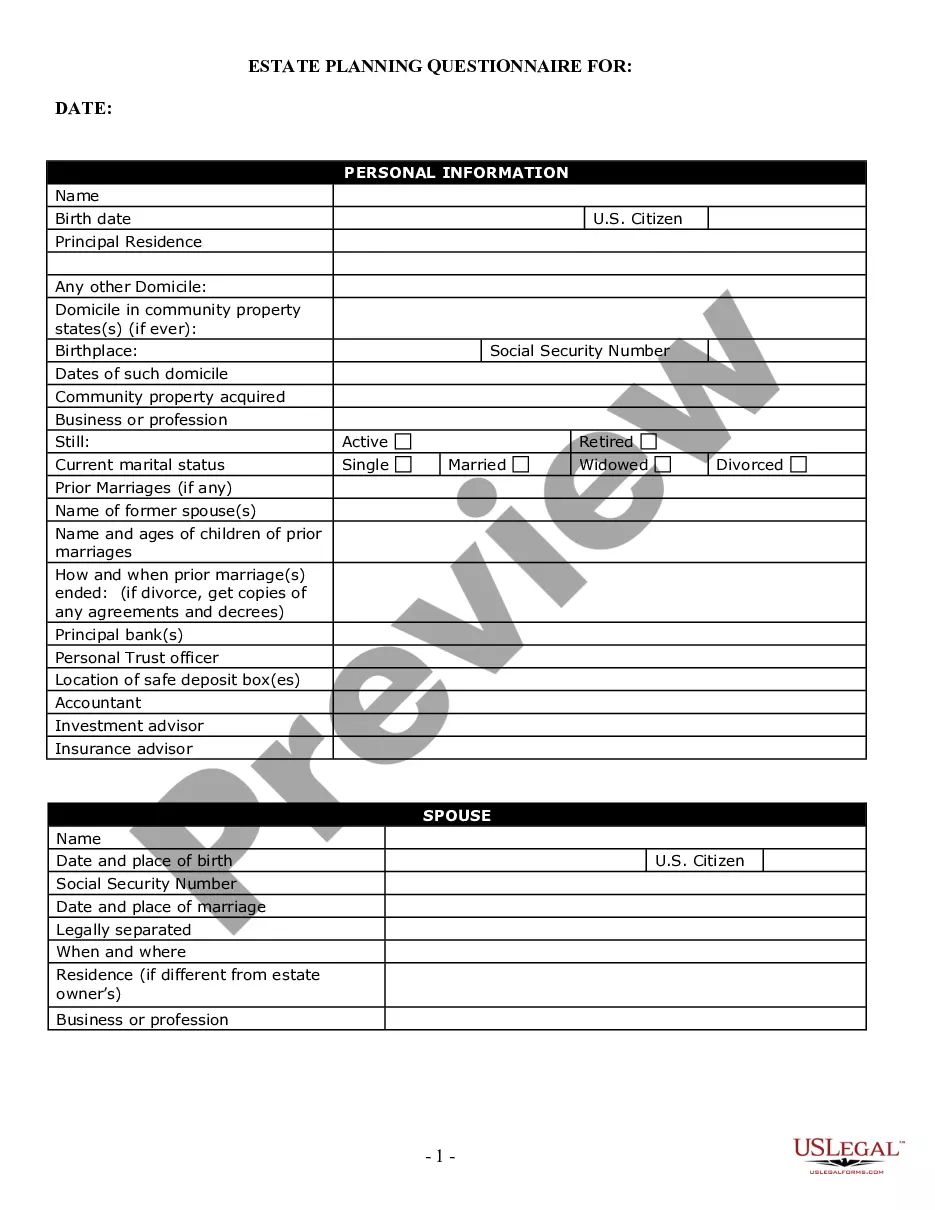
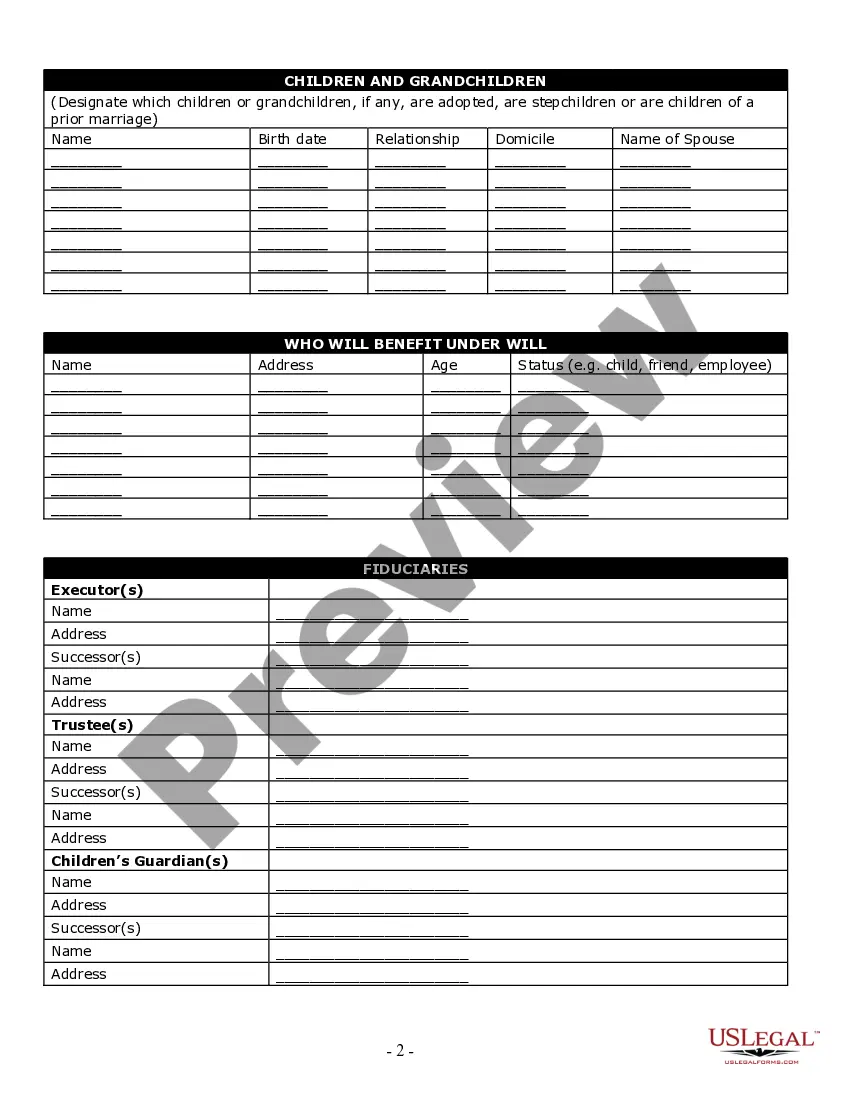
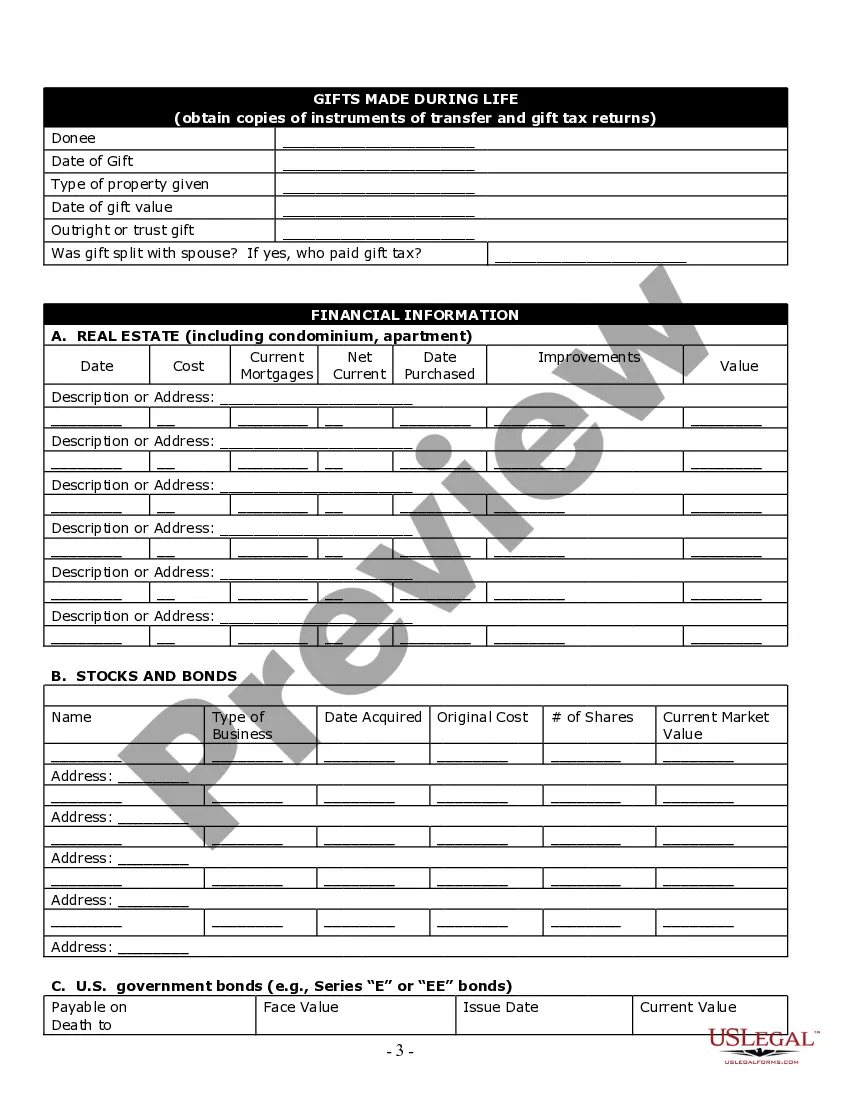
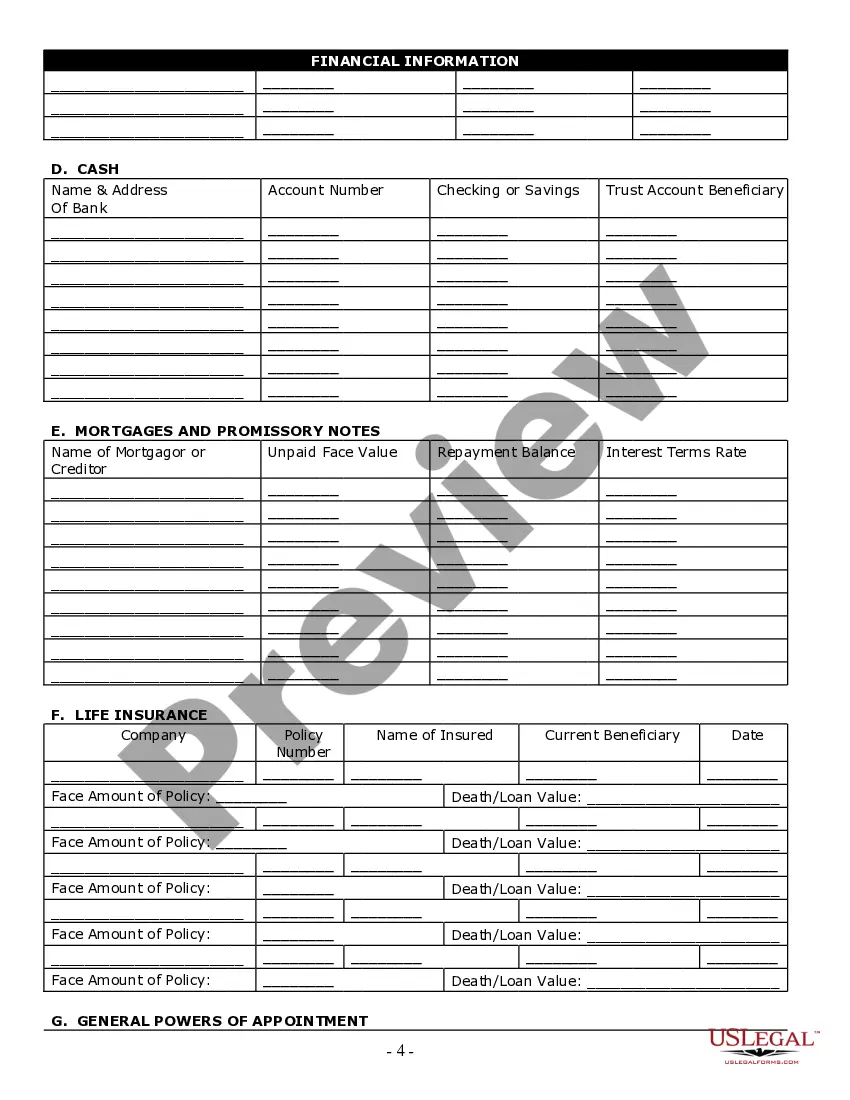
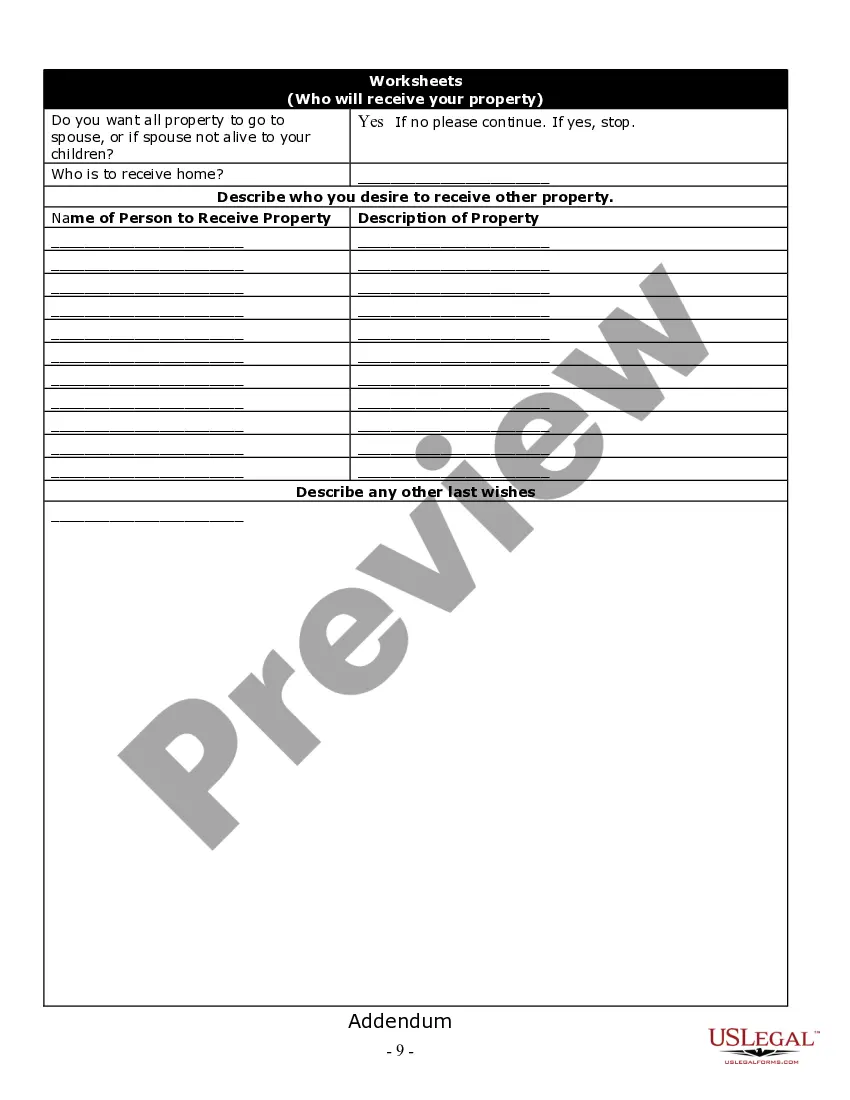

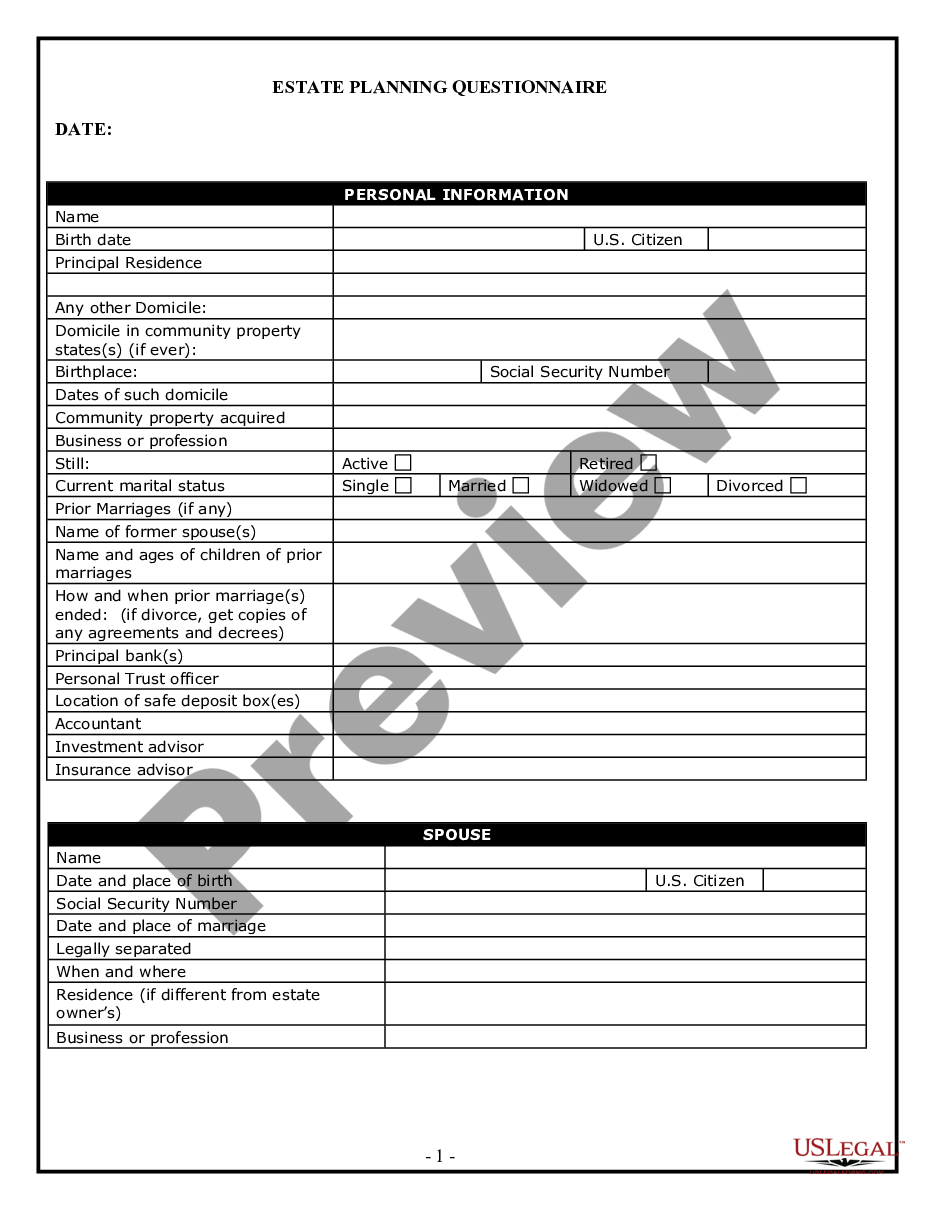
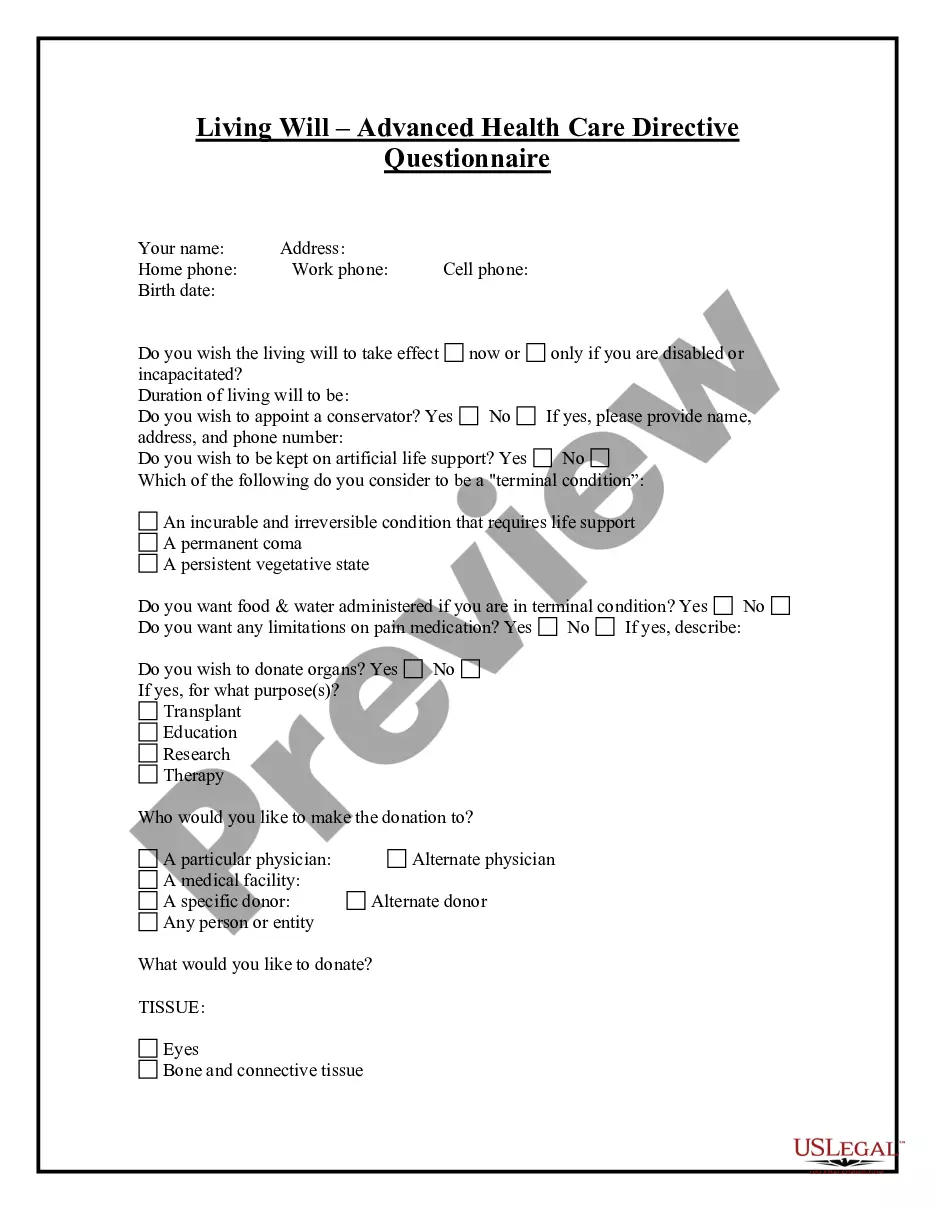
Get your form ready online
Our built-in tools help you complete, sign, share, and store your documents in one place.
Make edits, fill in missing information, and update formatting in US Legal Forms—just like you would in MS Word.
Download a copy, print it, send it by email, or mail it via USPS—whatever works best for your next step.
Sign and collect signatures with our SignNow integration. Send to multiple recipients, set reminders, and more. Go Premium to unlock E-Sign.
If this form requires notarization, complete it online through a secure video call—no need to meet a notary in person or wait for an appointment.
We protect your documents and personal data by following strict security and privacy standards.

Make edits, fill in missing information, and update formatting in US Legal Forms—just like you would in MS Word.

Download a copy, print it, send it by email, or mail it via USPS—whatever works best for your next step.

Sign and collect signatures with our SignNow integration. Send to multiple recipients, set reminders, and more. Go Premium to unlock E-Sign.

If this form requires notarization, complete it online through a secure video call—no need to meet a notary in person or wait for an appointment.

We protect your documents and personal data by following strict security and privacy standards.
Looking for another form?







Form popularity
FAQ
Yes, a trust is considered a part of your estate, but it functions differently than other assets. While assets within the trust are not subject to probate, they remain part of your overall estate for tax purposes. It is important to understand how trusts fit into your estate plan, as this can impact your beneficiaries. You can find detailed estate planning information with trusts on the US Legal Forms platform to ensure your plan is effective.
Using a trust can help you avoid the lengthy and often costly probate process. When assets are held in a trust, they pass directly to your beneficiaries without the need for court intervention. This not only saves time but also provides privacy for your estate settlements. For authoritative estate planning information with trusts, US Legal Forms offers valuable guidance on setting up a trust.
A trust provides a flexible way to manage your assets during your lifetime and after your death. By incorporating a trust in your estate planning, you can specify how and when your assets are distributed to your beneficiaries. This approach can also help minimize taxes and protect your assets from creditors. For comprehensive estate planning information with trusts, consider exploring the resources available through US Legal Forms.
Trusts reduce estate taxes by facilitating the transfer of assets out of the grantor's taxable estate, often using irrevocable trusts as a tool. These trusts can hold assets for beneficiaries and can significantly diminish the estate's overall value subject to taxation. By leveraging estate planning information with trusts, you can learn how to structure your estate effectively, ensuring your loved ones receive more of your wealth.
Wealthy individuals often utilize various estate planning strategies, including trusts, to minimize or avoid estate taxes. By strategically positioning their wealth in different types of trusts, they can protect assets and maintain lower tax liabilities. To gain a deeper understanding of how these strategies work, researching estate planning information with trusts can empower you to implement similar approaches.
You can avoid inheritance tax by placing assets into a trust that benefits your heirs while maintaining control over the distributions. By doing so, you can ensure that your beneficiaries receive their inheritance without being burdened by taxes. Utilizing estate planning information with trusts can provide valuable insights into how to manage these assets and protect your loved ones from excessive tax liabilities.
To avoid estate tax with a trust, you can establish irrevocable trusts that remove assets from your taxable estate. By transferring your assets into a trust, they may no longer be subject to estate taxes upon your passing. For reliable guidance, exploring estate planning information with trusts is vital to understanding how to implement this effectively and protect your heirs’ inheritance.
The trust fund loophole for estate tax refers to specific strategies that allow individuals to transfer assets into a trust, thereby reducing their taxable estate. When assets are held in a well-structured trust, they can potentially avoid estate taxes upon the grantor's death. This strategy requires careful planning and knowledge, making it essential to seek estate planning information with trusts to navigate these complex issues effectively.
Naming a trust can have disadvantages, particularly if the name creates confusion about the trust's purpose or beneficiaries. A poorly chosen name might lead to misunderstandings among heirs, potentially leading to disputes. Therefore, it is vital to consider well-researched estate planning information with trusts when deciding on a name. This foresight can help foster clear communication and understanding for all parties involved.
Whether to file your trust as an estate depends on the structure of your trust and the specific assets involved. Generally, a trust may not need to be filed as an estate unless it meets specific criteria mandated by law, such as triggering taxes. Consulting with a professional who understands estate planning information with trusts can provide clarity and ensure you're following the appropriate guidelines for your situation.
