California Wills Information For Tax Purposes
Description


Get your form ready online
Our built-in tools help you complete, sign, share, and store your documents in one place.
Make edits, fill in missing information, and update formatting in US Legal Forms—just like you would in MS Word.
Download a copy, print it, send it by email, or mail it via USPS—whatever works best for your next step.
Sign and collect signatures with our SignNow integration. Send to multiple recipients, set reminders, and more. Go Premium to unlock E-Sign.
If this form requires notarization, complete it online through a secure video call—no need to meet a notary in person or wait for an appointment.
We protect your documents and personal data by following strict security and privacy standards.

Make edits, fill in missing information, and update formatting in US Legal Forms—just like you would in MS Word.

Download a copy, print it, send it by email, or mail it via USPS—whatever works best for your next step.

Sign and collect signatures with our SignNow integration. Send to multiple recipients, set reminders, and more. Go Premium to unlock E-Sign.

If this form requires notarization, complete it online through a secure video call—no need to meet a notary in person or wait for an appointment.

We protect your documents and personal data by following strict security and privacy standards.
Looking for another form?
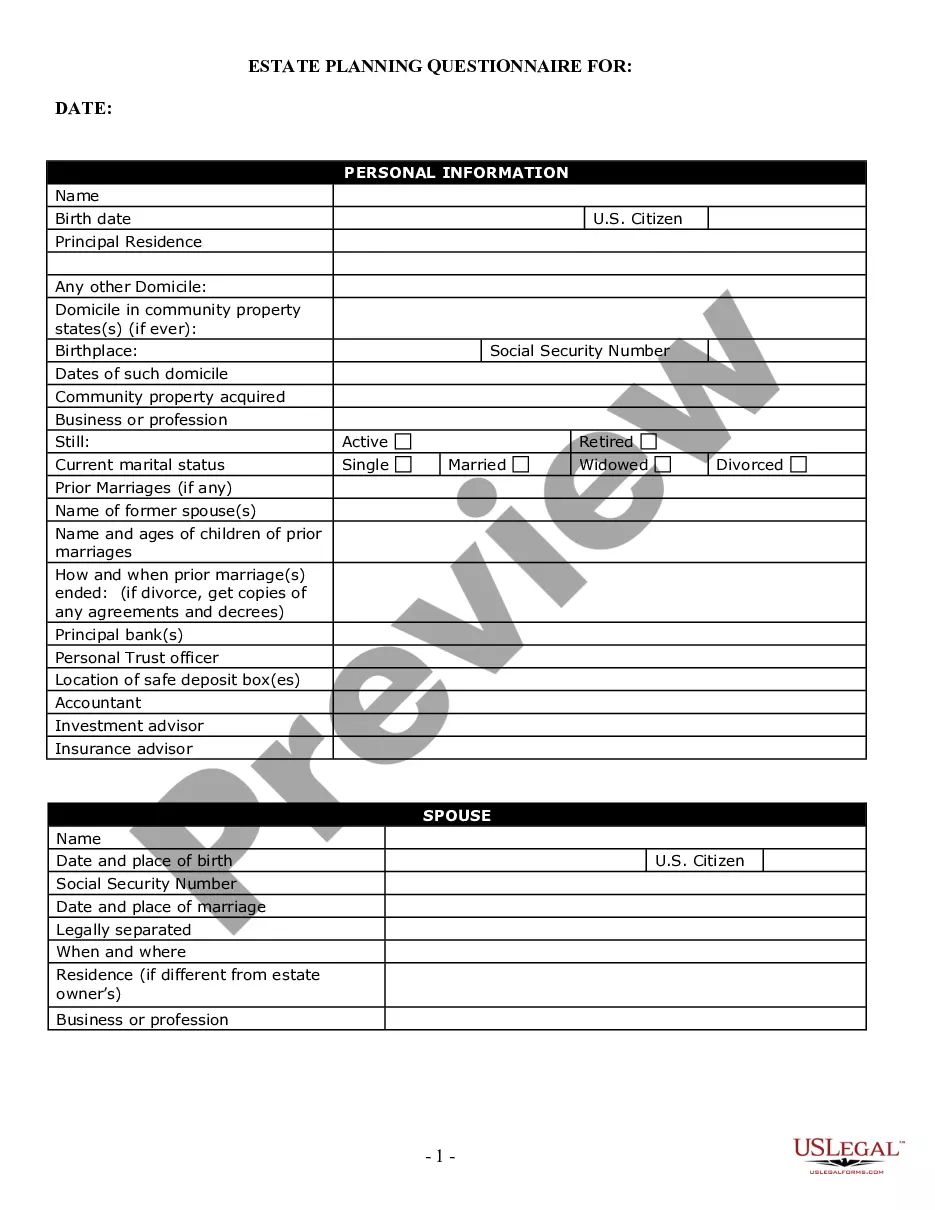
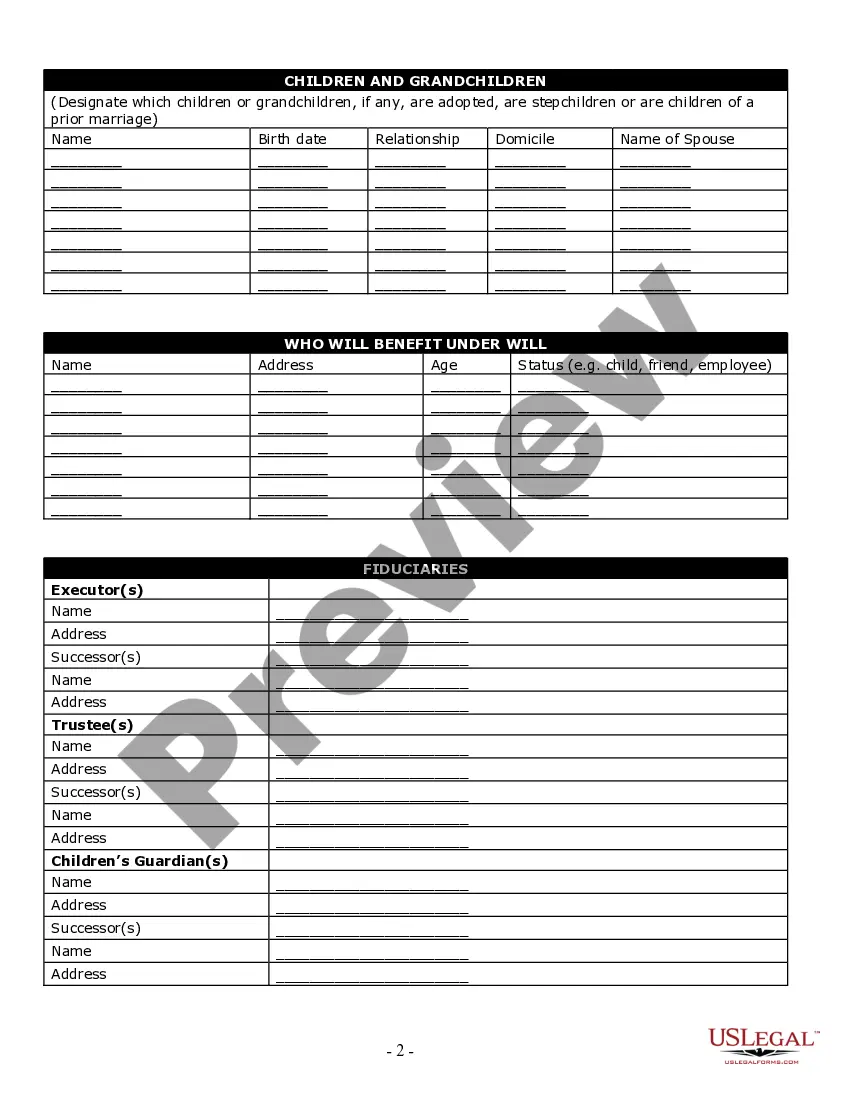
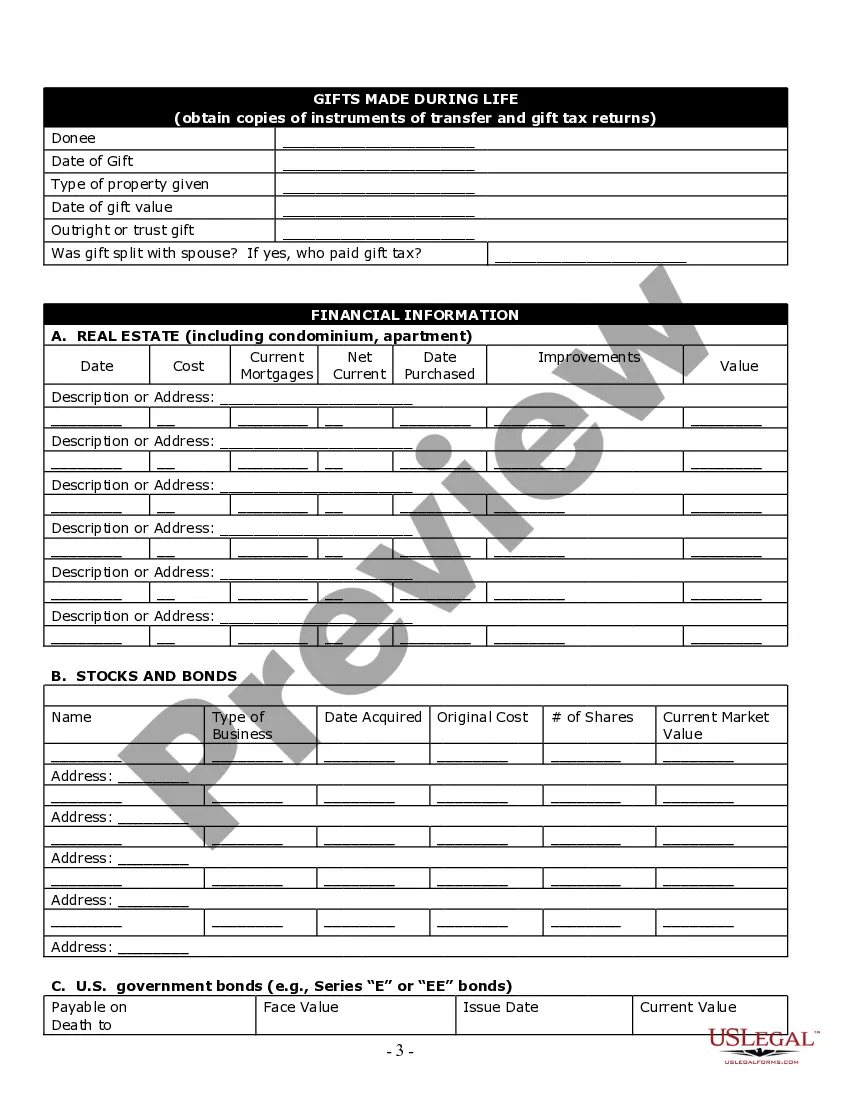
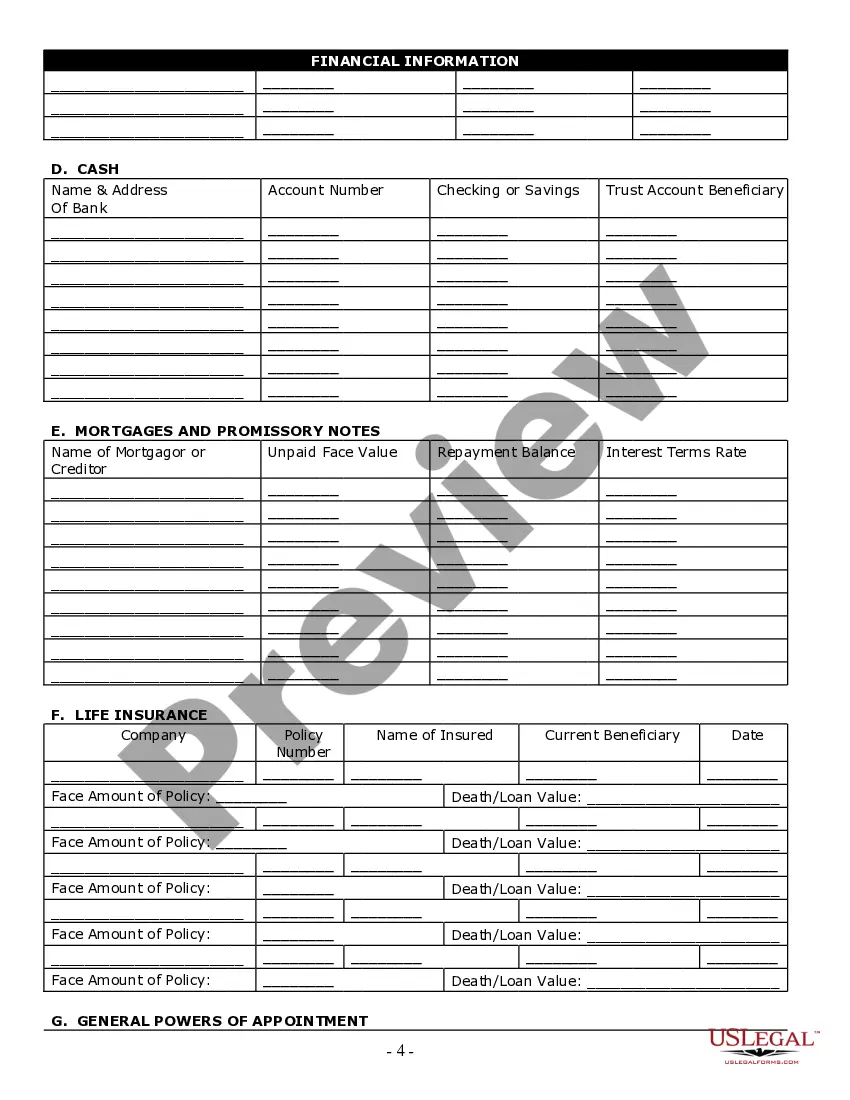
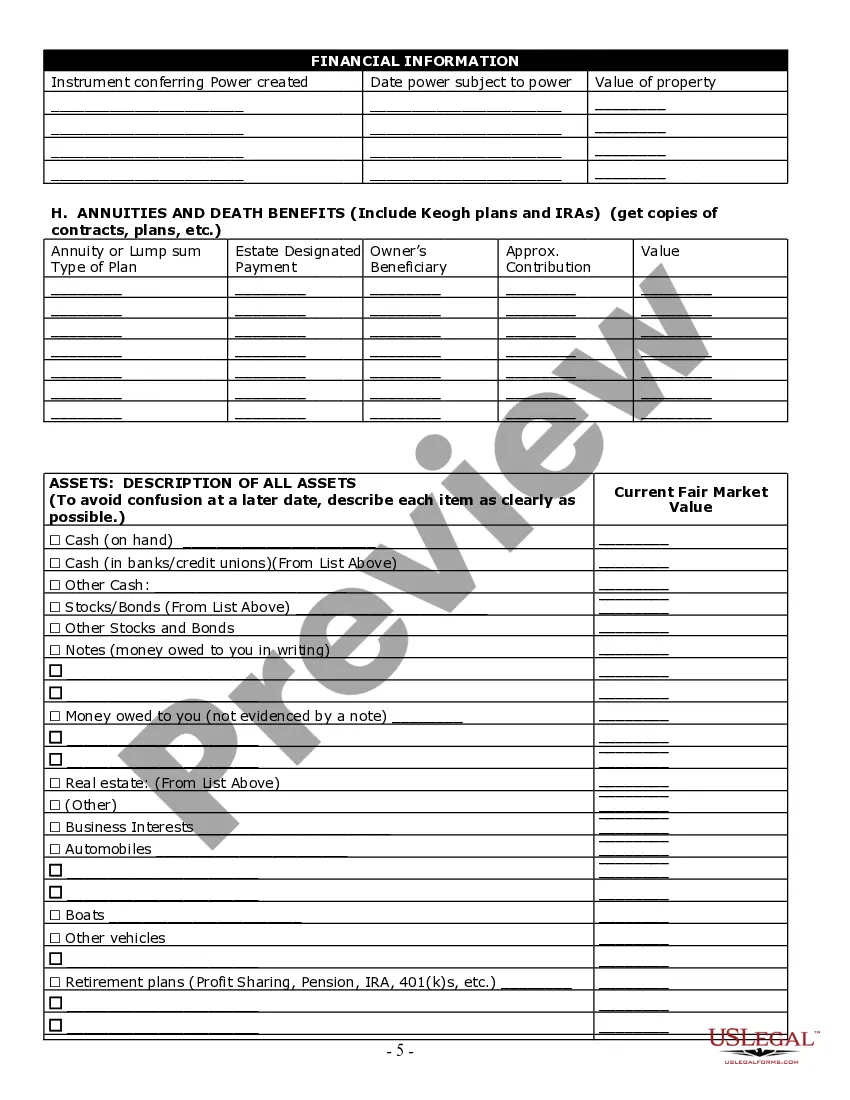
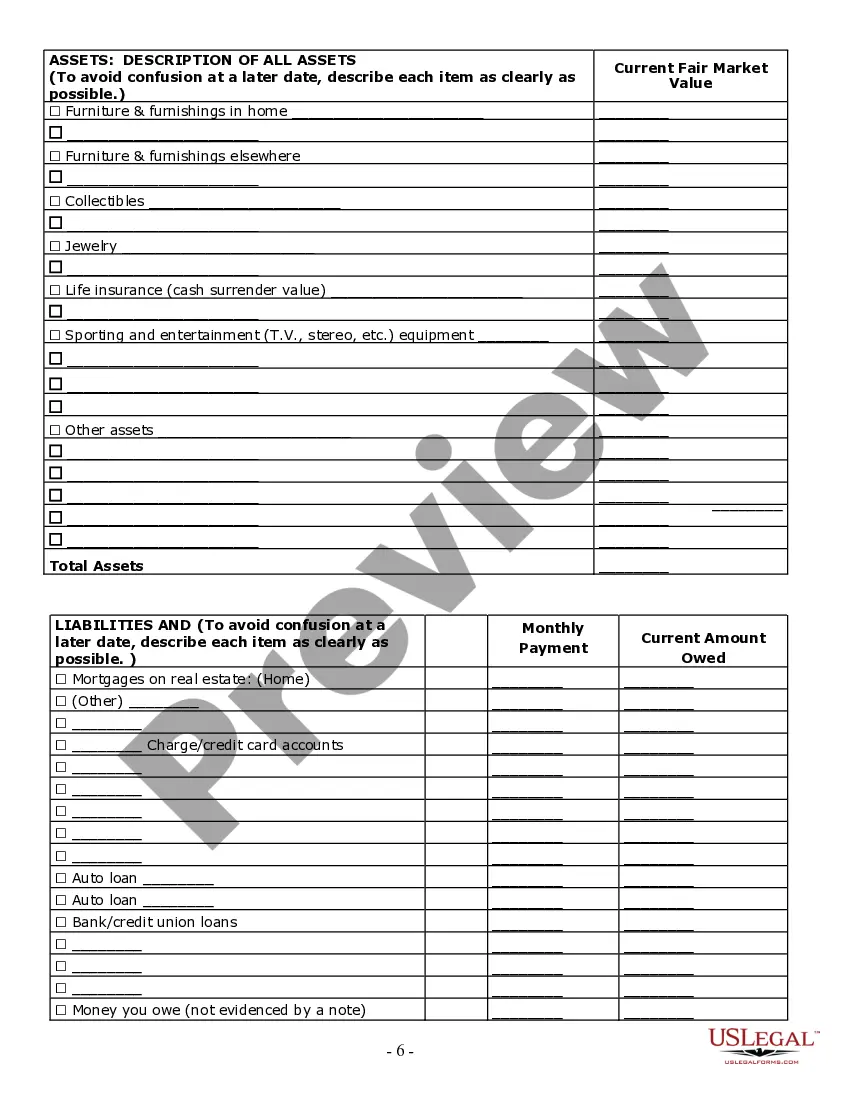
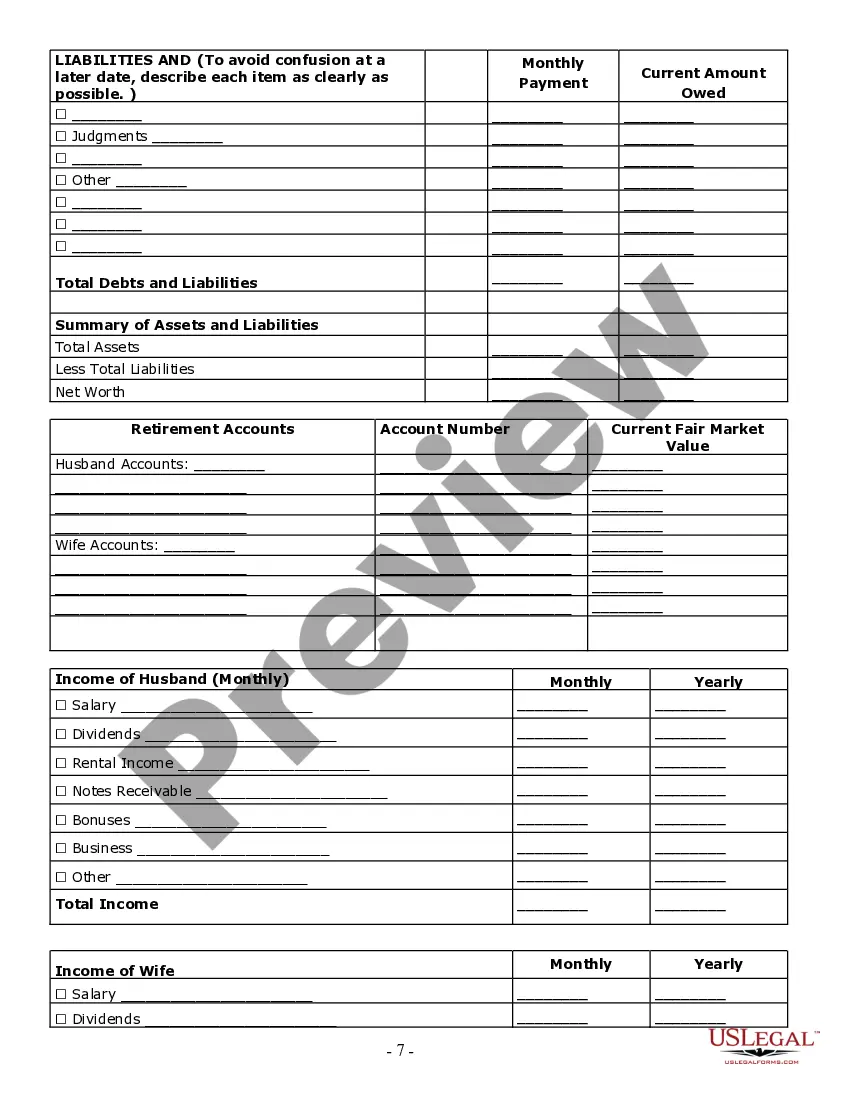
How to fill out California Estate Planning Questionnaire And Worksheets?
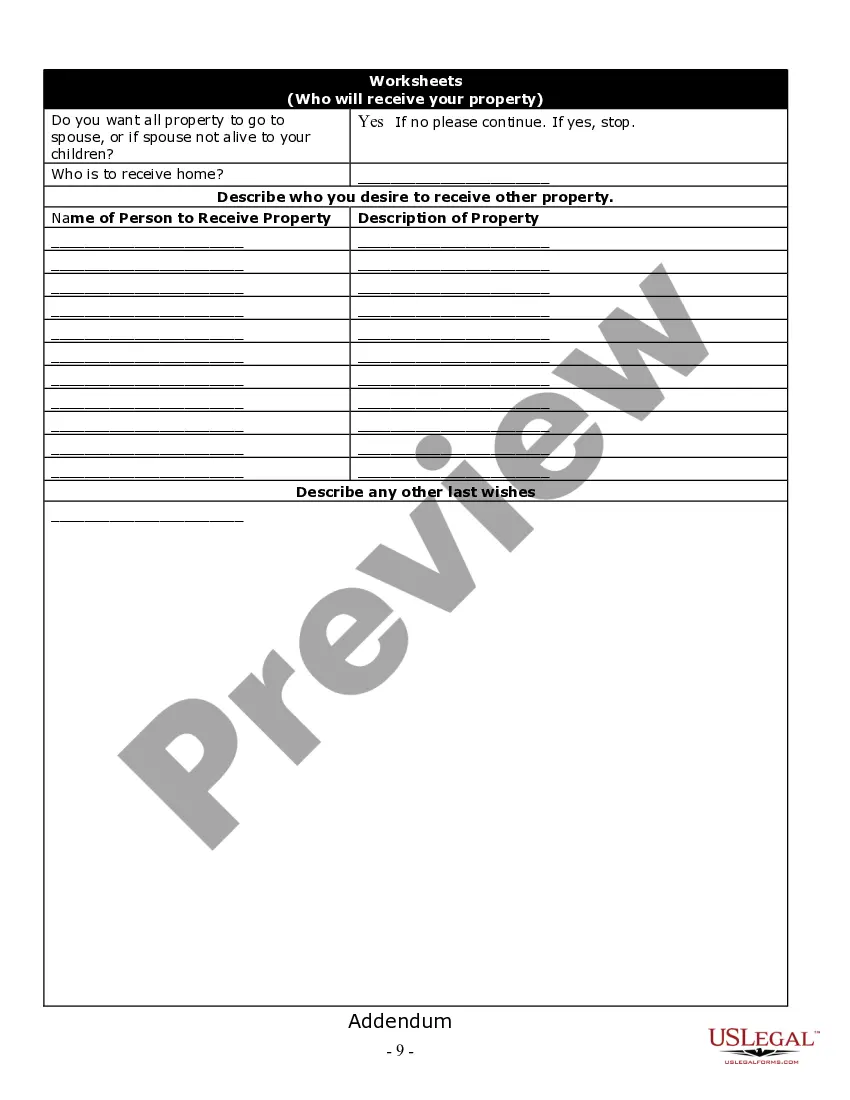
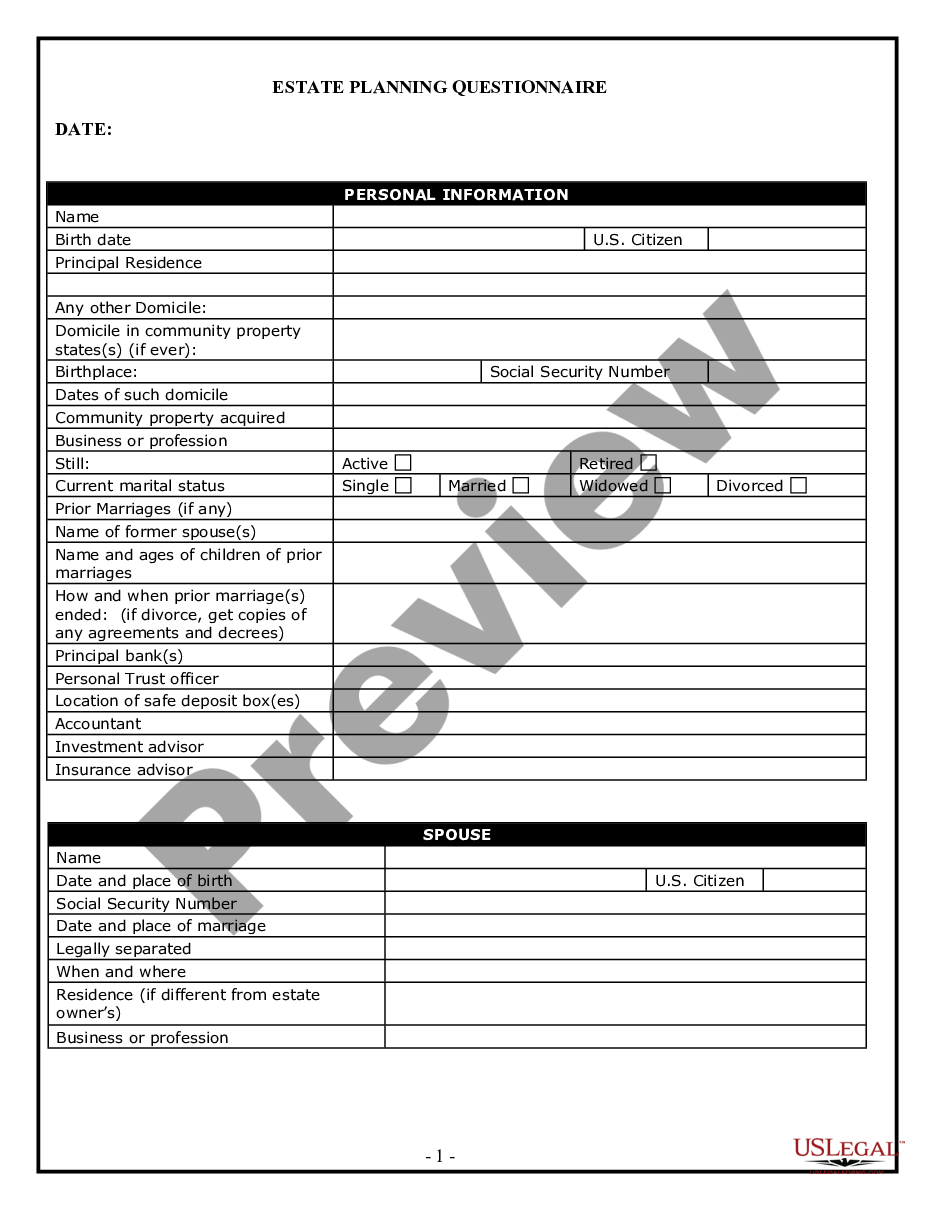
The California Wills Information For Tax Purposes displayed on this page is a reusable official template crafted by experienced attorneys in accordance with national and local laws.
For over 25 years, US Legal Forms has supplied individuals, enterprises, and legal experts with more than 85,000 validated, state-specific documents for every business and personal event. It’s the quickest, simplest, and most reliable method to acquire the paperwork you require, as the service ensures the utmost level of data protection and anti-malware safeguards.
Choose the format you prefer for your California Wills Information For Tax Purposes (PDF, Word, RTF) and download the example onto your device.
- Explore the document you require and examine it.
- Review the sample you found and preview it or verify the form description to confirm it meets your needs. If it does not, utilize the search feature to discover the correct one. Click Buy Now when you find the template you seek.
- Register and Log In.
- Select the pricing option that fits you and establish an account. Use PayPal or a credit card for a swift payment. If you already possess an account, Log In and review your subscription to proceed.
- Obtain the editable template.
Form popularity
FAQ
For a will to be legally valid in California, it must be in writing and signed by the testator, the person creating the will. Additionally, it must be witnessed by at least two people who are present at the same time. Understanding the legal requirements for your California wills information for tax purposes is critical, so utilizing resources from professionals can provide clarity and ensure compliance.
Wills in California do not have to be recorded to be accepted, but filing a will can simplify the process for your beneficiaries. Recording your will can help prevent disputes and ensure your wishes are honored. When dealing with California wills information for tax purposes, consult with legal experts on the best practices for keeping your documentation secure and accessible.
In California, a will does not need to be recorded to be valid. However, recording can provide a layer of security and accessibility. Knowing how to manage your California wills information for tax purposes is essential, and recording your will may streamline the probate process for your heirs. Consider using legal services to help you with this process.
Not all wills need to be filed with the court in California. Typically, only wills that are part of a probate process must be filed. If you want to manage your California wills information for tax purposes proactively, it can be beneficial to keep your will in a safe place or file it with your local court. This ensures that it is accessible when needed.
Generally, you do not need to report inheritance as income on your tax return in California. In most cases, inherited assets are not subject to income tax. However, it is wise to review your California wills information for tax purposes to ensure you understand any tax implications that might affect your estate. Consult a tax professional for tailored advice.
In California, wills themselves are not subject to taxation. However, estate taxes may apply based on the overall value of your estate. When preparing your California wills information for tax purposes, consider estate tax implications for your beneficiaries. Consulting a professional can help you navigate any associated taxes effectively.
One common mistake people make with wills is failing to update them regularly. Life events such as marriage, divorce, or the birth of a child can change your estate planning needs. To ensure your California wills information for tax purposes remains relevant, review your will periodically and make necessary changes. Keeping your will current prevents misunderstanding and disputes among heirs.
To look up a will in California, start by visiting the probate court in the county where the deceased lived. You can also use online databases provided by the court as many have digitized their records. Ensure you have the necessary details such as the person's full name and date of death. For a comprehensive guide, refer to California wills information for tax purposes, which helps you navigate the process effectively.
Wills are indeed public records in California once they have entered the probate process. As a result, you can typically access these documents without much difficulty. However, specific categories of information within these wills may be restricted to protect privacy. Familiarizing yourself with California wills information for tax purposes can enhance your understanding of how to navigate these documents.
To find out if someone left you something in their will, you can check with the probate court where the will is filed. You may need the deceased's name and potentially other information to help with your inquiry. If the will has been probated, the court records will provide the necessary details. Using California wills information for tax purposes can give you insights into any inheritances and their potential tax implications.