Substitution Trustee Reconveyance Without Consent
Description
Get your form ready online
Our built-in tools help you complete, sign, share, and store your documents in one place.
Make edits, fill in missing information, and update formatting in US Legal Forms—just like you would in MS Word.
Download a copy, print it, send it by email, or mail it via USPS—whatever works best for your next step.
Sign and collect signatures with our SignNow integration. Send to multiple recipients, set reminders, and more. Go Premium to unlock E-Sign.
If this form requires notarization, complete it online through a secure video call—no need to meet a notary in person or wait for an appointment.
We protect your documents and personal data by following strict security and privacy standards.

Make edits, fill in missing information, and update formatting in US Legal Forms—just like you would in MS Word.

Download a copy, print it, send it by email, or mail it via USPS—whatever works best for your next step.

Sign and collect signatures with our SignNow integration. Send to multiple recipients, set reminders, and more. Go Premium to unlock E-Sign.

If this form requires notarization, complete it online through a secure video call—no need to meet a notary in person or wait for an appointment.

We protect your documents and personal data by following strict security and privacy standards.
Looking for another form?








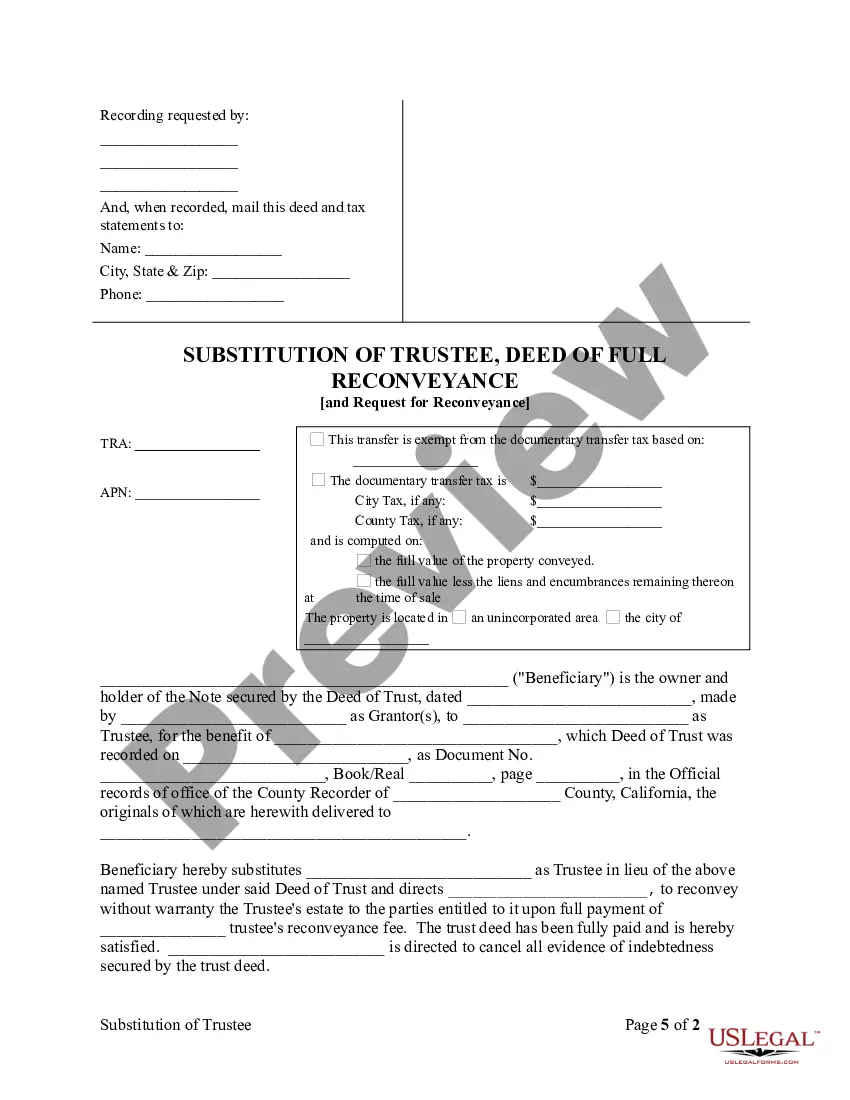
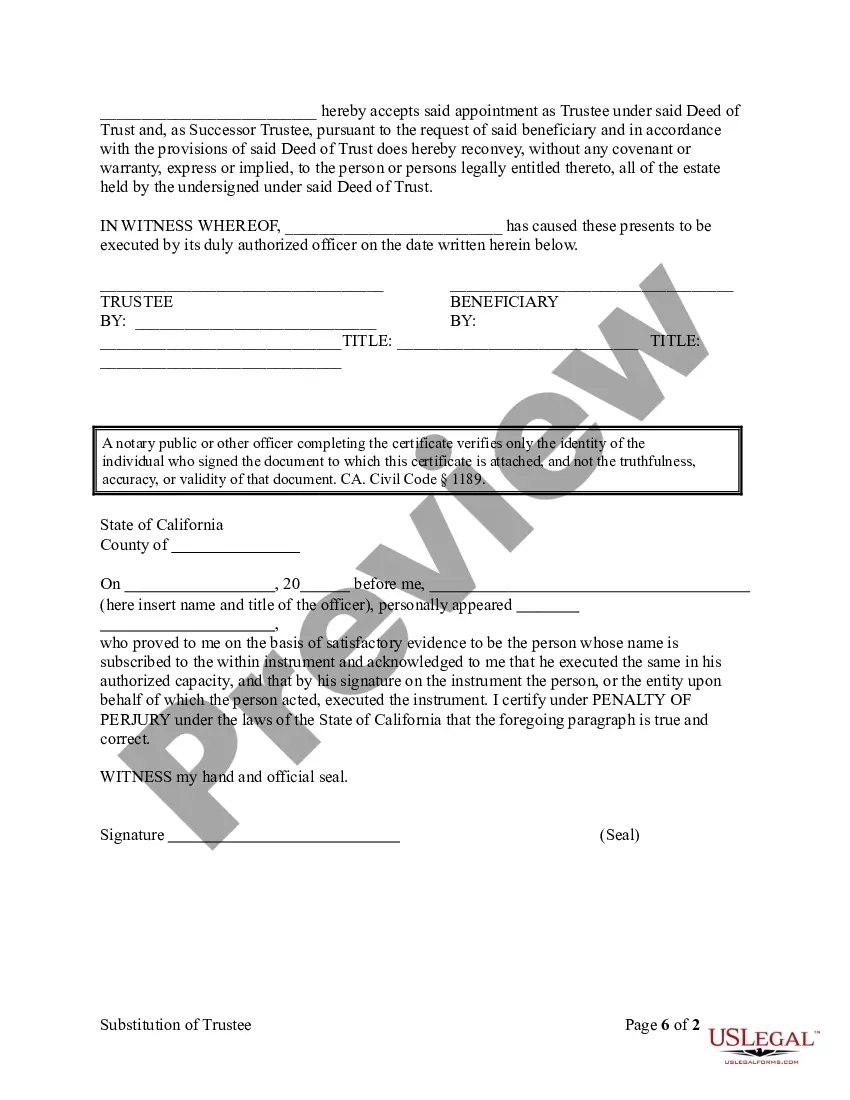
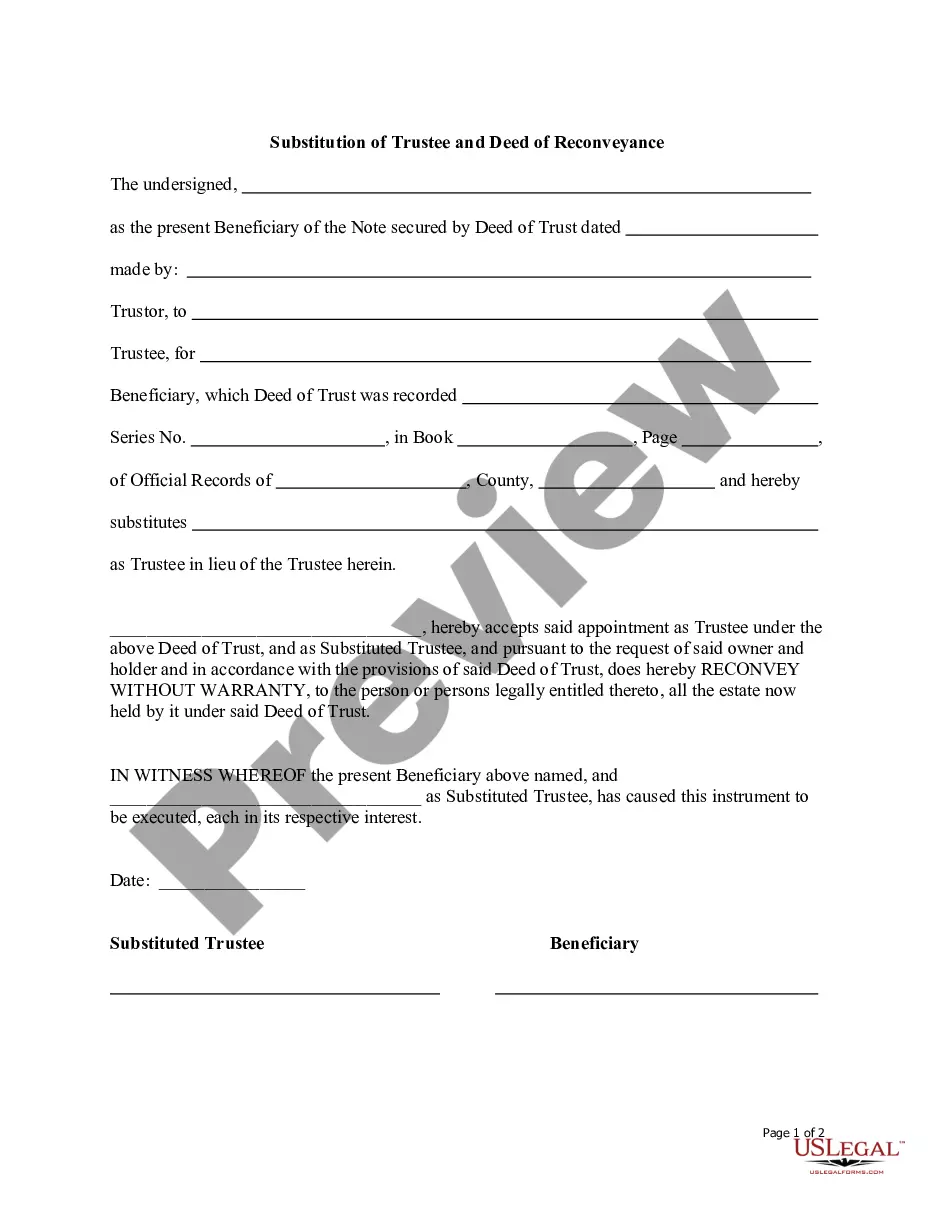
How to fill out California Substitution Of Trustee, Request For Reconveyance And Reconveyance?
Legal management can be daunting, even for seasoned professionals.
When you are looking for a Substitution Trustee Reconveyance Without Consent and do not have the opportunity to spend time searching for the correct and updated version, the process can be taxing.
US Legal Forms accommodates any requirements you may have, from personal to commercial papers, all in one location.
Employ advanced tools to complete and manage your Substitution Trustee Reconveyance Without Consent.
Here are the steps to follow after locating the form you need: Verify it's the proper document by previewing and reviewing its description.
- Gain access to a resource hub of articles, guides, and manuals that are highly pertinent to your circumstances and needs.
- Save time and effort searching for the documents you require and leverage US Legal Forms' advanced search and Review tool to find Substitution Trustee Reconveyance Without Consent and obtain it.
- If you are a member, Log In to your US Legal Forms account, find the form, and download it.
- Check your My documents tab to view the documents you have previously obtained and organize your folders as needed.
- If it is your initial experience with US Legal Forms, create a free account to access unlimited benefits of the library.
- Utilize a comprehensive web form database that could revolutionize the way you handle these circumstances efficiently.
- US Legal Forms is a front-runner in online legal forms, offering over 85,000 state-specific legal documents available to you at any moment.
- Access state- or county-specific legal and business documents.
Form popularity
FAQ
Yes, a trustee can retire without consent, but this process typically requires following the guidelines set forth in the trust agreement. In cases of substitution trustee reconveyance without consent, the new trustee may assume control without needing approval from beneficiaries. However, clear communication and proper documentation are vital to avoid disputes. For those seeking assistance, uslegalforms provides resources to help clarify these processes.
Yes, a trustee can sell property without beneficiary consent under specific circumstances. This may occur during a substitution trustee reconveyance without consent, where the trustee has the authority to act independently. However, beneficiaries should be informed about such actions to ensure transparency. It's essential to understand the terms of the trust and any applicable laws.
Substitution of trustee reconveyance is the process of replacing the original trustee and returning the property title to the borrower after the debt is settled. This process can occur even without the original trustee's consent under specific circumstances. Understanding this concept is crucial, especially when dealing with substitution trustee reconveyance without consent. For assistance with legal forms and information on this process, US Legal Forms is your go-to resource.
A substitute Trustee manages the trust agreement and ensures the terms are fulfilled, especially in the event of default. They have the authority to sell the property and handle all related transactions. In the context of substitution trustee reconveyance without consent, their role becomes pivotal in resolving disputes and executing the necessary legal actions. You can find useful forms and information on our platform to assist in understanding their responsibilities.
Removing someone from a deed without their consent can be complicated and typically requires legal procedures. You may need to file a court petition or explore options such as a substitution trustee reconveyance without consent if you hold certain rights. It's essential to consult legal advice tailored to your situation, and US Legal Forms can provide the necessary templates and guidance to navigate these challenges.
A document known as a substitution of trustee and full reconveyance identifies the person who has the authority to reconvey the property and remove the lien. Most importantly, a deed of full reconveyance, known as a satisfaction of mortgage in some states, transfers title back to the borrower.
*To record the reconveyed deed, the property owner must go to the office of the Registrar-Recorder in which the property is located. For example, if the property is located in Los Angeles County, the reconveyed deed must be taken to the Los Angeles County Recorder's Office.
In a nutshell, the Substitution of Trustee and Deed of Reconveyance is a legal document that evidences security interest is being release by a lender. In most cases, the document shows that a loan has been paid off. Property owners may even receive this document if they have refinanced a loan.
Loan reconveyance fee Once you've paid the mortgage balance, you'll receive a reconveyance deed as proof. Lenders typically charge around $50-$65 for this documentation ? which, by the way, you'll need to prove to the county that your lender no longer has claims to the property.
Once the loan amount has been paid in full, California requires lenders to request within 30 days after the loan has been paid off that the trustee executes a deed of reconveyance, which must be completed by the trustee within 21 days of the lender's request.