Tenancy Agreement For Universal Credit
Description


Get your form ready online
Our built-in tools help you complete, sign, share, and store your documents in one place.
Make edits, fill in missing information, and update formatting in US Legal Forms—just like you would in MS Word.
Download a copy, print it, send it by email, or mail it via USPS—whatever works best for your next step.
Sign and collect signatures with our SignNow integration. Send to multiple recipients, set reminders, and more. Go Premium to unlock E-Sign.
If this form requires notarization, complete it online through a secure video call—no need to meet a notary in person or wait for an appointment.
We protect your documents and personal data by following strict security and privacy standards.

Make edits, fill in missing information, and update formatting in US Legal Forms—just like you would in MS Word.

Download a copy, print it, send it by email, or mail it via USPS—whatever works best for your next step.

Sign and collect signatures with our SignNow integration. Send to multiple recipients, set reminders, and more. Go Premium to unlock E-Sign.

If this form requires notarization, complete it online through a secure video call—no need to meet a notary in person or wait for an appointment.

We protect your documents and personal data by following strict security and privacy standards.
Looking for another form?








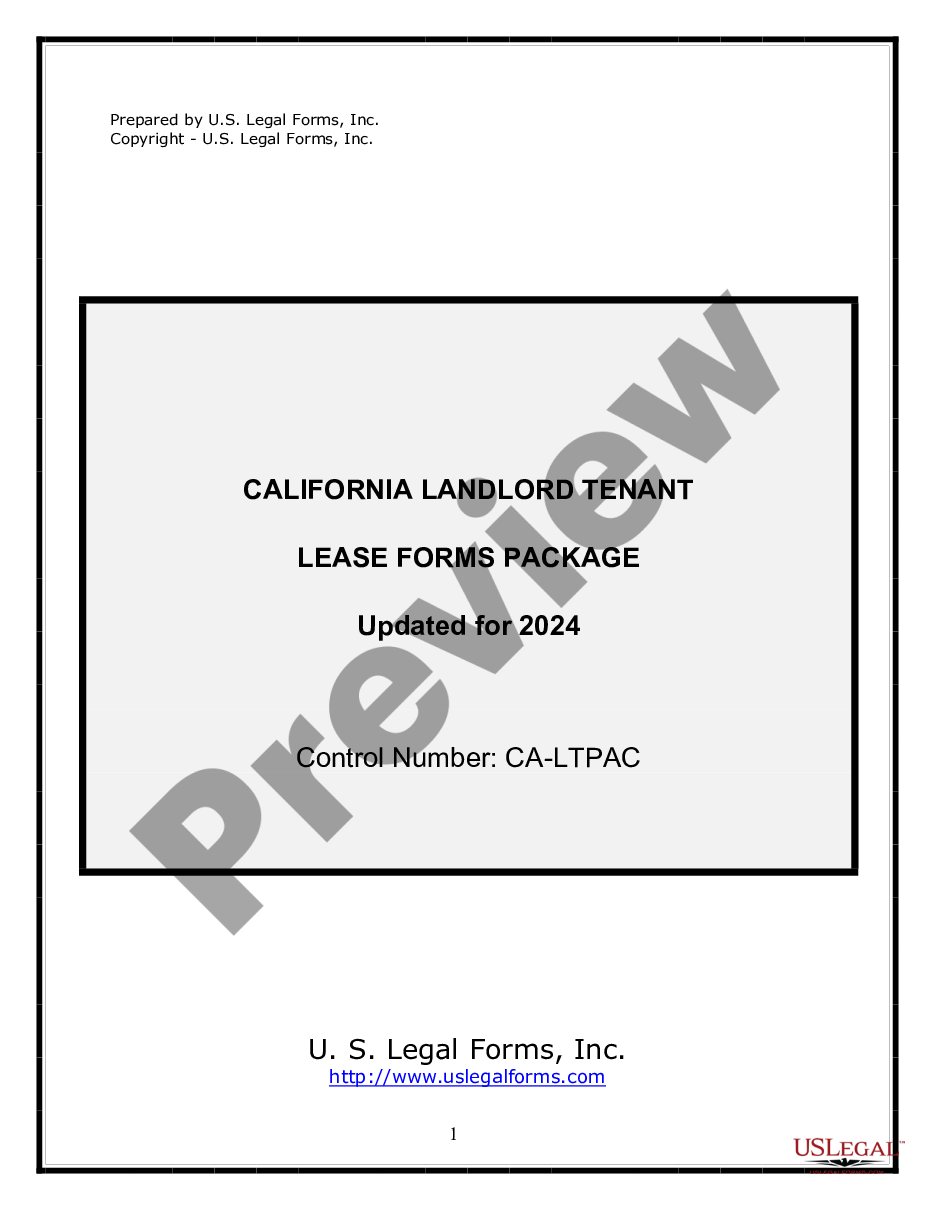
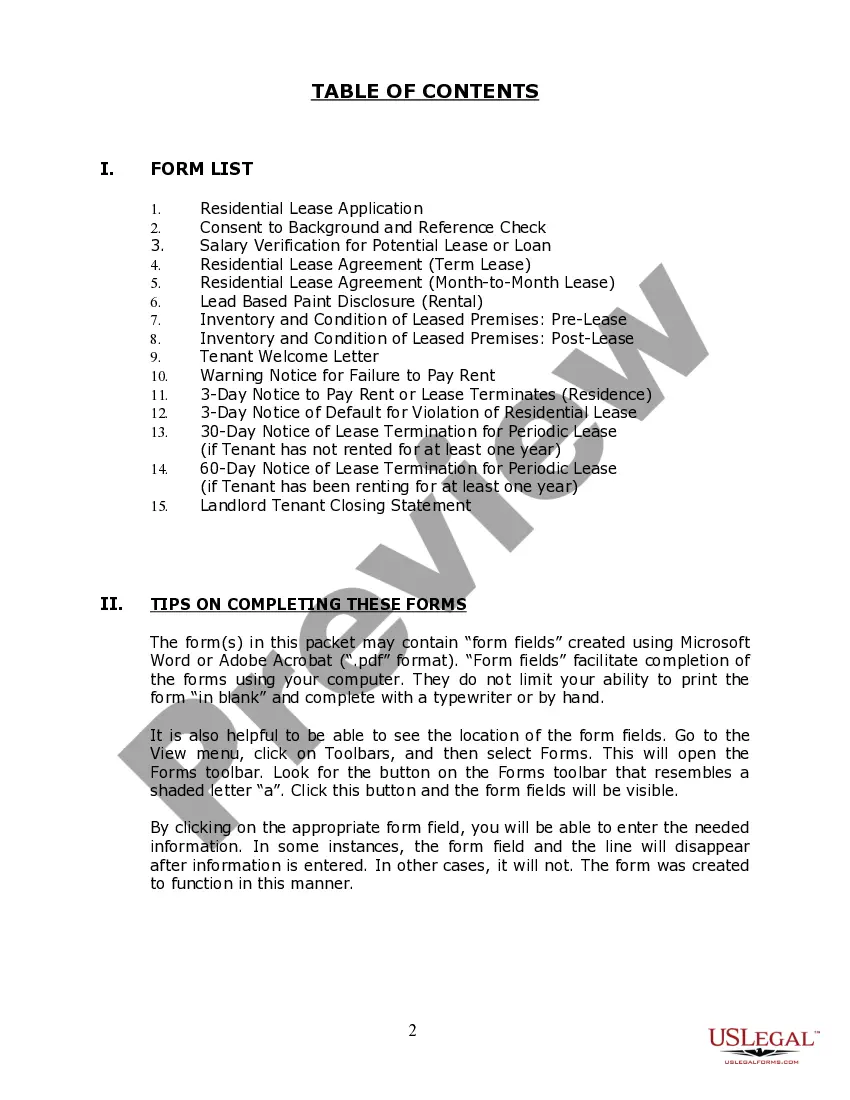
How to fill out California Residential Landlord Tenant Rental Lease Forms And Agreements Package?
Regardless of whether for commercial reasons or personal affairs, everyone must navigate legal issues at some point in their lives.
Completing legal documents necessitates meticulous care, starting from selecting the correct form template. For instance, if you select an incorrect version of a Tenancy Agreement For Universal Credit, it will be rejected upon submission.
With an extensive US Legal Forms catalog available, you do not have to waste time searching for the correct template across the web. Utilize the library’s straightforward navigation to find the appropriate form for any situation.
- Locate the template you require by using the search bar or catalog navigation.
- Review the form’s details to confirm it aligns with your circumstances, state, and county.
- Click on the form’s preview to inspect it.
- If it is the wrong form, return to the search feature to find the Tenancy Agreement For Universal Credit template you need.
- Download the document when it fits your requirements.
- If you possess a US Legal Forms account, click Log in to access previously saved documents in My documents.
- If you do not have an account yet, you can acquire the form by clicking Buy now.
- Choose the suitable pricing option.
- Complete the account registration form.
- Select your payment method: use a credit card or PayPal account.
- Choose the file format you desire and download the Tenancy Agreement For Universal Credit.
- Once it is downloaded, you can fill out the form using editing software or print it and complete it by hand.
Form popularity
FAQ
Landlords and agents usually want to check that you can pay the rent. They may ask to see: an employment contract or letter from your employer. recent payslips or bank statements.
If there is no tenancy agreement, a tenant cannot be given a section 21 notice for eviction. Instead, a landlord must use a section 8 notice (with a ground for eviction). To be able to evict a tenant in the absence of a written tenancy agreement, a landlord will need to apply to the courts for a possession order.
You can have a tenancy even if you do not have a written tenancy agreement, as long as it's clear that you agreed to rent the home based on an agreement in writing or even verbally. You can agree a tenancy agreement by email or message, or in conversation with the landlord or letting agent.
Consider a guarantor This person is usually a family member or close friend who has a good credit score and is willing to take on the responsibility. Having a guarantor can give landlords and letting agents the confidence they need to rent to you without proof of income.
It lets you live in a property as long as you pay rent and follow the rules. It also sets out the legal terms and conditions of your tenancy. It can be written down or oral (a spoken agreement).