One Meal Diet
Description
Get your form ready online
Our built-in tools help you complete, sign, share, and store your documents in one place.
Make edits, fill in missing information, and update formatting in US Legal Forms—just like you would in MS Word.
Download a copy, print it, send it by email, or mail it via USPS—whatever works best for your next step.
Sign and collect signatures with our SignNow integration. Send to multiple recipients, set reminders, and more. Go Premium to unlock E-Sign.
If this form requires notarization, complete it online through a secure video call—no need to meet a notary in person or wait for an appointment.
We protect your documents and personal data by following strict security and privacy standards.

Make edits, fill in missing information, and update formatting in US Legal Forms—just like you would in MS Word.

Download a copy, print it, send it by email, or mail it via USPS—whatever works best for your next step.

Sign and collect signatures with our SignNow integration. Send to multiple recipients, set reminders, and more. Go Premium to unlock E-Sign.

If this form requires notarization, complete it online through a secure video call—no need to meet a notary in person or wait for an appointment.

We protect your documents and personal data by following strict security and privacy standards.
Looking for another form?

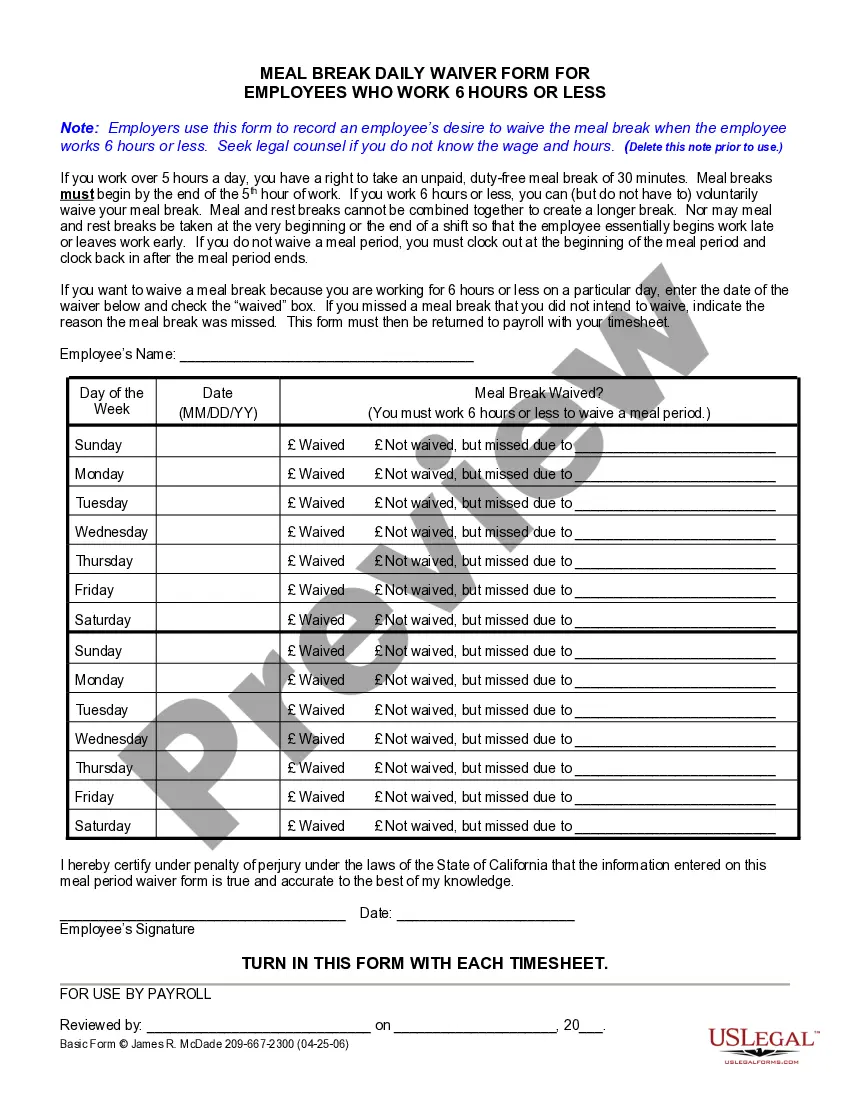
How to fill out California On Duty Meal Period Agreement?
- Log in to your account if you're already a member. Ensure your subscription is valid; renew it if necessary.
- Review the available forms in preview mode carefully to ensure they meet your specific needs and jurisdiction.
- If needed, utilize the Search tab to find alternative templates that fit your requirements.
- Purchase the document by clicking 'Buy Now' and selecting your preferred subscription plan.
- Enter your payment information using a credit card or PayPal to complete the transaction.
- Download the form to your device. Access it anytime in your 'My Forms' section of your profile.
By following these steps, you can leverage the extensive collection of over 85,000 legal forms available at your fingertips. US Legal Forms empowers users by providing not only a robust selection but also access to expert assistance for document completion.
Start maximizing your legal efficiency today by exploring the multitude of forms available on US Legal Forms!
Form popularity
FAQ
The one meal diet plan focuses on consuming all your daily calories in a single meal. Typically, this meal includes a balance of protein, healthy fats, and carbohydrates, ensuring that your nutritional needs are met within that one sitting. This approach promotes weight management by simplifying meal prep and allowing extended periods of fasting. If you want to explore this diet effectively, consider using resources from uslegalforms, which can help you understand meal planning and tracking.
When you follow a one meal diet, your weight loss can vary based on several factors, including your starting weight and overall lifestyle. Generally, many people report losing anywhere from 3 to 10 pounds in two weeks. This diet works by reducing calorie intake while potentially increasing metabolism due to intermittent fasting. However, individual results may differ, so it's important to listen to your body and adjust your approach as needed.
If you’re aiming to drop 10 pounds quickly, consider integrating the one meal diet into your routine. This approach can simplify meal planning and help control calorie intake. Combine it with regular exercise and hydration for optimal results. Additionally, be sure to consult with a healthcare provider or nutrition expert to create a safe and effective plan tailored to your individual needs.
Although it may seem appealing, losing 10 pounds in 3 days is unrealistic and potentially harmful. The one meal diet may help accelerate fat loss, but drastic weight drops often result from severe calorie restrictions or loss of water weight rather than actual fat loss. For effective and healthy weight management, consider setting more achievable goals and incorporating the one meal diet as part of a broader lifestyle change.
While rapid weight loss might lure some individuals, it's crucial to approach such goals with caution. A one meal diet can lead to significant calorie reduction, but losing 10 pounds in just 3 days is not typically safe or sustainable. Your body needs time to adjust, and drastic changes may result in muscle loss or other health issues. Instead, focus on gradual weight loss through balanced nutrition and proper hydration.
The amount of weight you can lose while following the one meal diet for a month will depend on various factors, including your starting weight, age, and activity level. Many people report losing between 5 to 10 pounds during this period, although results vary. Maintaining a balanced diet during your meal is crucial for achieving the best results. As always, consulting with a healthcare professional can provide personalized guidance.
To do the one meal diet, start by choosing a time of day to eat your single meal, and commit to fasting for the rest of the day. Prepare a balanced meal that includes a variety of nutrients to support your health. Drink plenty of water throughout the day to stay hydrated. Remember to listen to your body and make adjustments as necessary to ensure it's right for you.
If you eat one meal a day for 30 days, you may notice several benefits including weight loss, increased energy, and clearer mental focus. While your body adjusts to this eating pattern, you might experience initial hunger, but many people find that their appetite stabilizes over time. It’s important to ensure your meal is balanced with proteins, fats, and carbohydrates. Consider using platforms like USLegalForms to explore meal planning resources.
The best schedule for the one meal diet can vary based on your personal lifestyle and preferences. Generally, many people choose to eat their meal in the evening, allowing them to break their fast after a busy day. However, you might find that lunchtime works better for you, depending on your daily routine. The key to success is consistency, so choose a time that you can stick to regularly.
Yes, you can lose weight by following the one meal diet, as it typically leads to a caloric deficit. This diet encourages mindful eating during your meal, which can help you better manage portion sizes. Many individuals find that they feel fuller after one meal, reducing cravings throughout the day. By focusing on nutritious foods during that meal, you can promote healthy weight loss.