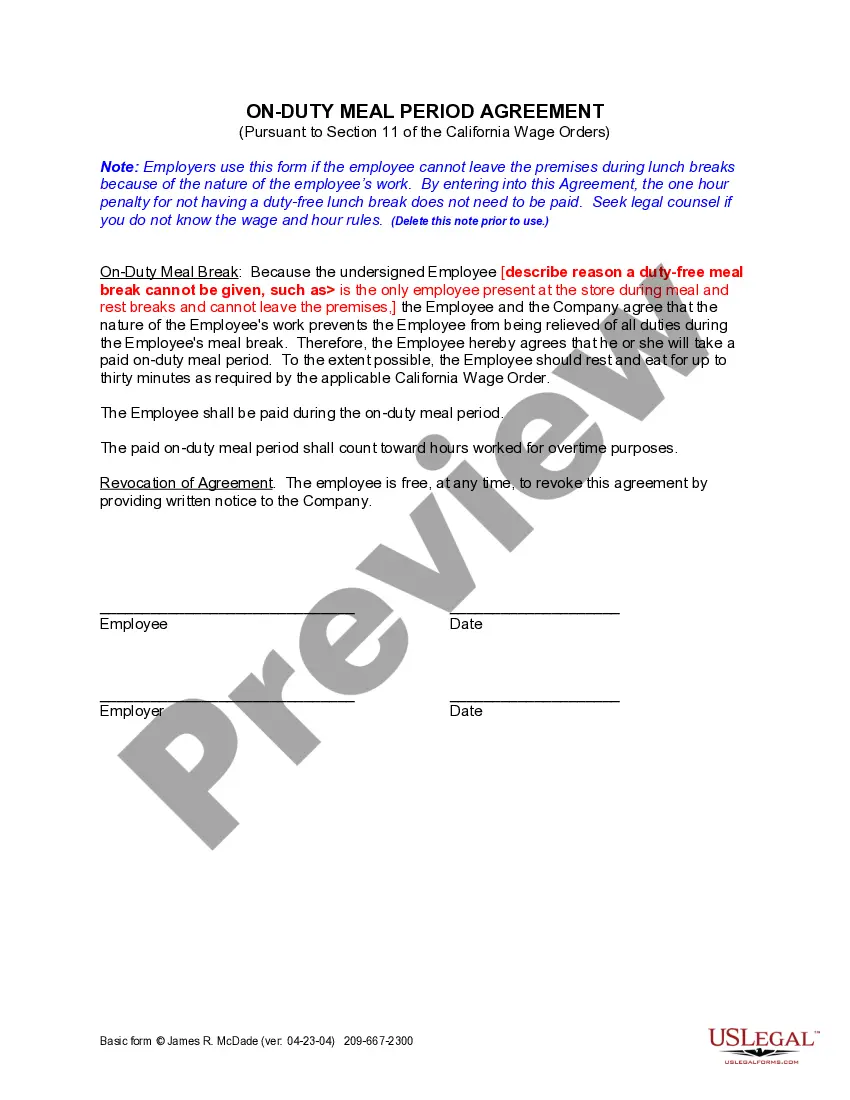
California Meal Ca With Time
Description
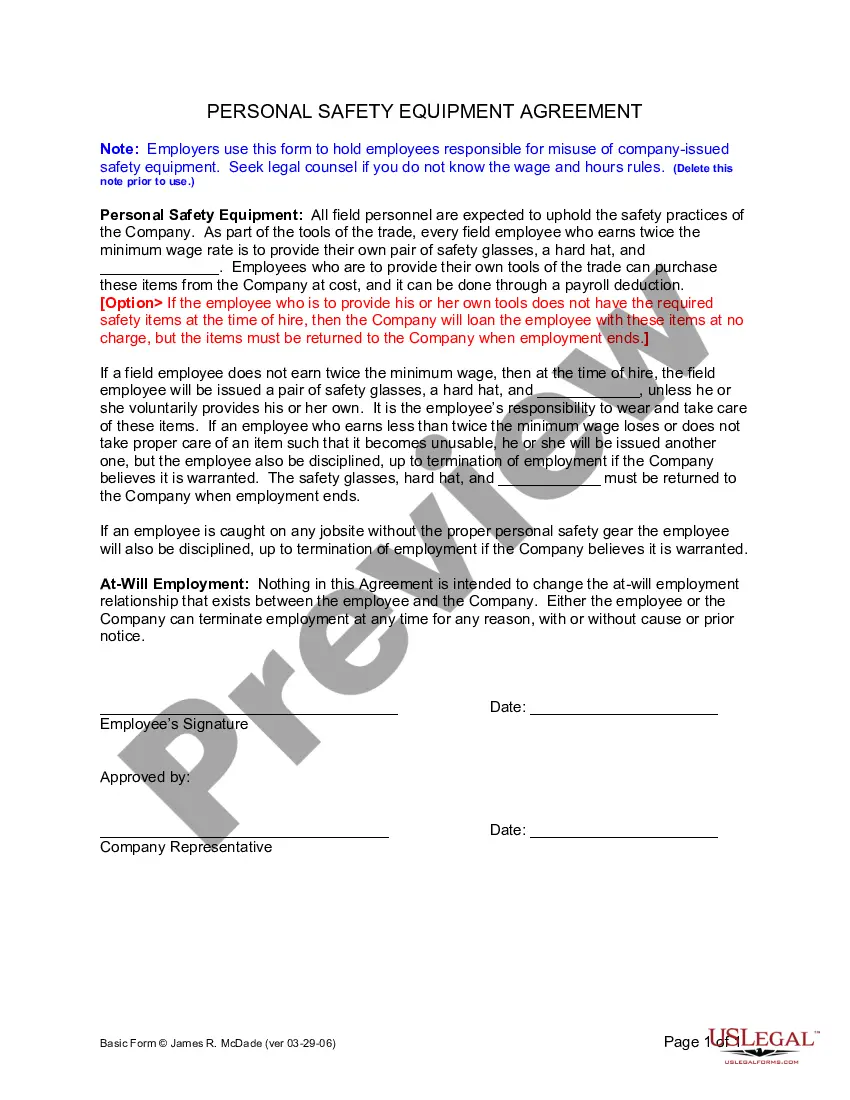
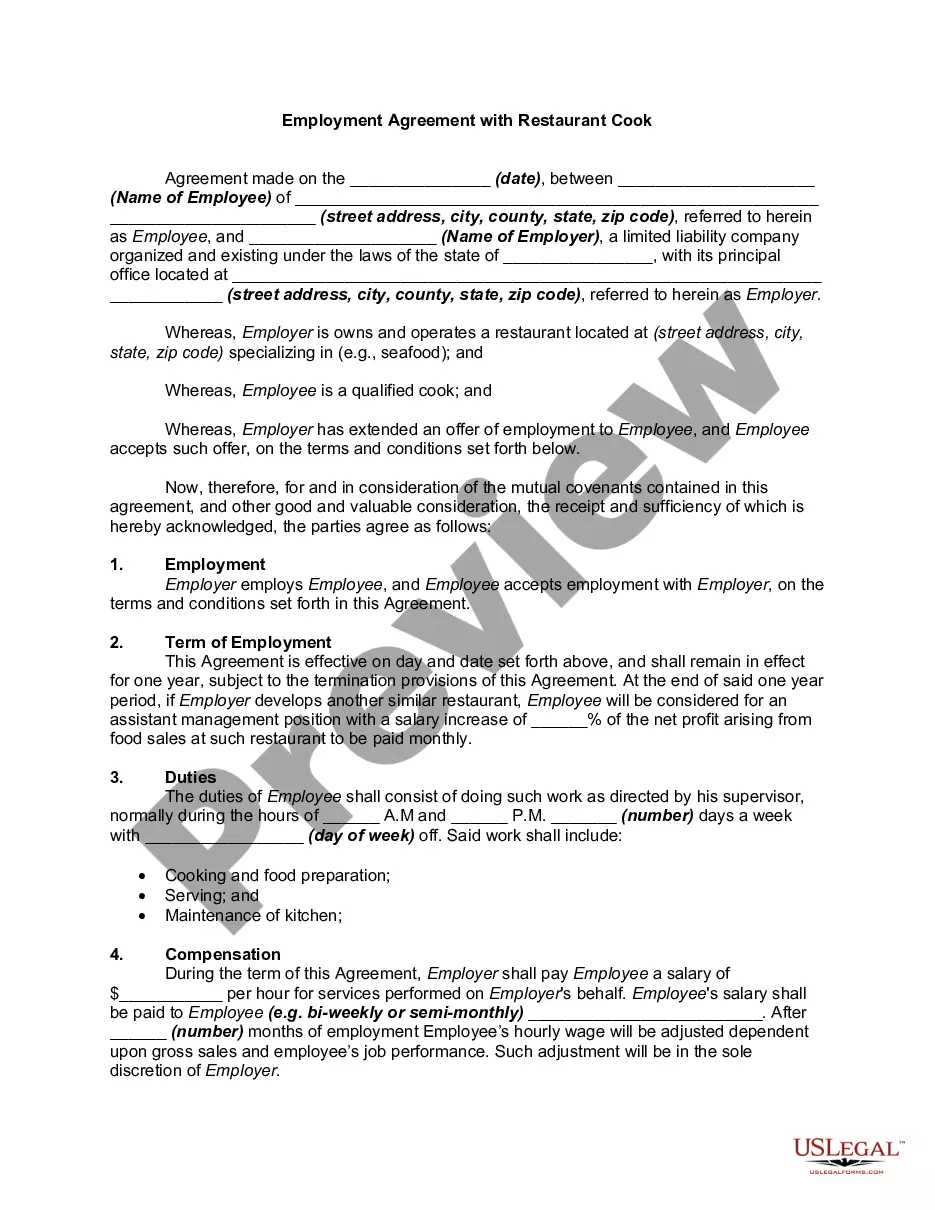
Get your form ready online
Our built-in tools help you complete, sign, share, and store your documents in one place.
Make edits, fill in missing information, and update formatting in US Legal Forms—just like you would in MS Word.
Download a copy, print it, send it by email, or mail it via USPS—whatever works best for your next step.
Sign and collect signatures with our SignNow integration. Send to multiple recipients, set reminders, and more. Go Premium to unlock E-Sign.
If this form requires notarization, complete it online through a secure video call—no need to meet a notary in person or wait for an appointment.
We protect your documents and personal data by following strict security and privacy standards.

Make edits, fill in missing information, and update formatting in US Legal Forms—just like you would in MS Word.

Download a copy, print it, send it by email, or mail it via USPS—whatever works best for your next step.

Sign and collect signatures with our SignNow integration. Send to multiple recipients, set reminders, and more. Go Premium to unlock E-Sign.

If this form requires notarization, complete it online through a secure video call—no need to meet a notary in person or wait for an appointment.

We protect your documents and personal data by following strict security and privacy standards.
Looking for another form?







How to fill out California On Duty Meal Period Agreement?
Whether for commercial reasons or personal matters, every individual inevitably encounters legal issues at some point in their life.
Filling out legal forms requires meticulous care, starting with selecting the correct form template.
Once downloaded, you can fill out the form using editing software or print it and complete it manually. With a vast US Legal Forms collection available, you will never waste time searching for the correct template online. Utilize the library’s straightforward navigation to locate the right template for any circumstance.
- Obtain the template you require using the search bar or the catalogue browsing.
- Review the form’s details to ensure it aligns with your situation, state, and county.
- Click on the form’s preview to inspect it.
- If it is the incorrect form, return to the search function to locate the California Meal Ca With Time example you require.
- Download the file if it meets your requirements.
- If you possess a US Legal Forms account, simply click Log in to access previously saved templates in My documents.
- If you haven’t created an account yet, you can download the form by clicking Buy now.
- Choose the suitable pricing option.
- Complete the account registration form.
- Select your payment method: use a credit card or PayPal account.
- Choose the desired file format and download the California Meal Ca With Time.
Form popularity
FAQ
To avoid meal penalties in California, it’s vital to clearly communicate your break preferences with your employer and ensure they are following legal guidelines. Understanding the California meal ca with time requirements can help you navigate your work schedule effectively. Always take scheduled breaks, even when your shift is shorter. Familiarizing yourself with your employer's policies can also prevent misunderstandings.
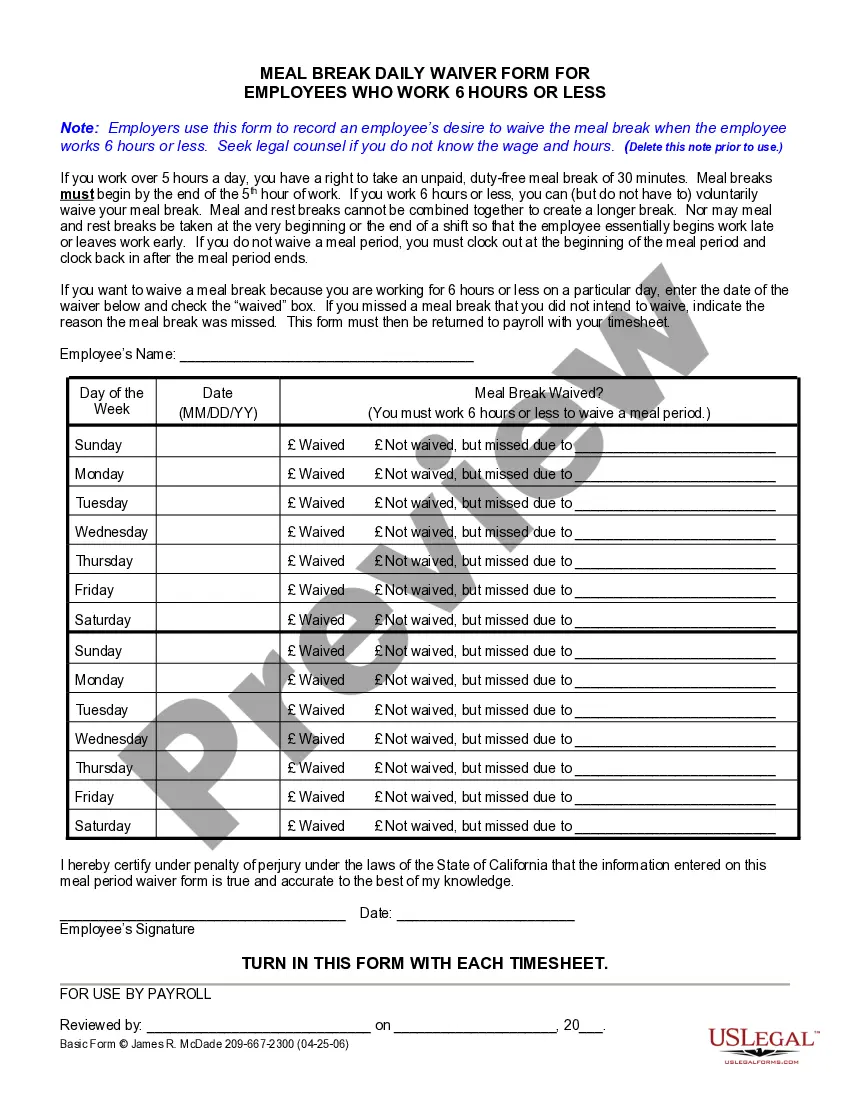
According to California labor laws, you can skip a lunch break if your shift is only 6 hours long. However, it's always prudent to take short breaks to maintain your efficiency. California meal ca with time rules encourage breaks even when not mandatory to promote well-being. Always be aware of your workplace policies and maintain open communication with your employer regarding break times.
The meal rule in California mandates that employees are entitled to a 30-minute meal break for every five hours of work. If an employee works ten hours or more, they should receive a second meal break. Employers must relieve employees of all duties during these meal periods, allowing for uninterrupted rest. Familiarizing yourself with the California meal ca with time is crucial to comply with labor laws.
The 7 day rule in California refers to the requirement that employers must provide employees with a meal period if they work more than five hours. According to California law, if an employee works more than ten hours, they must receive a second meal period. This ensures that workers take necessary breaks to recharge during their shifts, promoting a healthy work environment. Understanding the California meal ca with time is essential for both employees and employers.
It is not required for you to take this meal break. If you have worked less than 6 hours in a day, you can agree to forego your meal break. You can also agree to take your meal break while on duty. This means that you still have to work while eating, but you do not have to clock out.
California employment law requires employers to give non-exempt employees (which means ?hourly? employees) one 10-minute rest break for every four hours of work. This break is paid and must be ?uninterrupted? ? meaning the boss can't ask the employee to do any work during the break.
Employees are protected by meal break laws in California. California employees who work over 5 hours in a day are entitled to a meal break of at least 30 minutes that must start before the end of the fifth hour of their shift.
Meal Breaks This break is unpaid, uninterrupted, and must begin before the end of your fifth hour of work. This break can be waived if your work day isn't longer than 6 hours. If you work more than 10 hours in one workday, you must receive a second 30-minute unpaid meal break.
Most California workers must receive the following breaks: An uninterrupted 30-minute unpaid meal break when working more than five hours in a day. An additional 30-minute unpaid meal break when working more than 12 hours in a day. A paid 10-minute rest period for every four hours worked.