Break Rooms For Employees
Description
Get your form ready online
Our built-in tools help you complete, sign, share, and store your documents in one place.
Make edits, fill in missing information, and update formatting in US Legal Forms—just like you would in MS Word.
Download a copy, print it, send it by email, or mail it via USPS—whatever works best for your next step.
Sign and collect signatures with our SignNow integration. Send to multiple recipients, set reminders, and more. Go Premium to unlock E-Sign.
If this form requires notarization, complete it online through a secure video call—no need to meet a notary in person or wait for an appointment.
We protect your documents and personal data by following strict security and privacy standards.

Make edits, fill in missing information, and update formatting in US Legal Forms—just like you would in MS Word.

Download a copy, print it, send it by email, or mail it via USPS—whatever works best for your next step.

Sign and collect signatures with our SignNow integration. Send to multiple recipients, set reminders, and more. Go Premium to unlock E-Sign.

If this form requires notarization, complete it online through a secure video call—no need to meet a notary in person or wait for an appointment.

We protect your documents and personal data by following strict security and privacy standards.
Looking for another form?








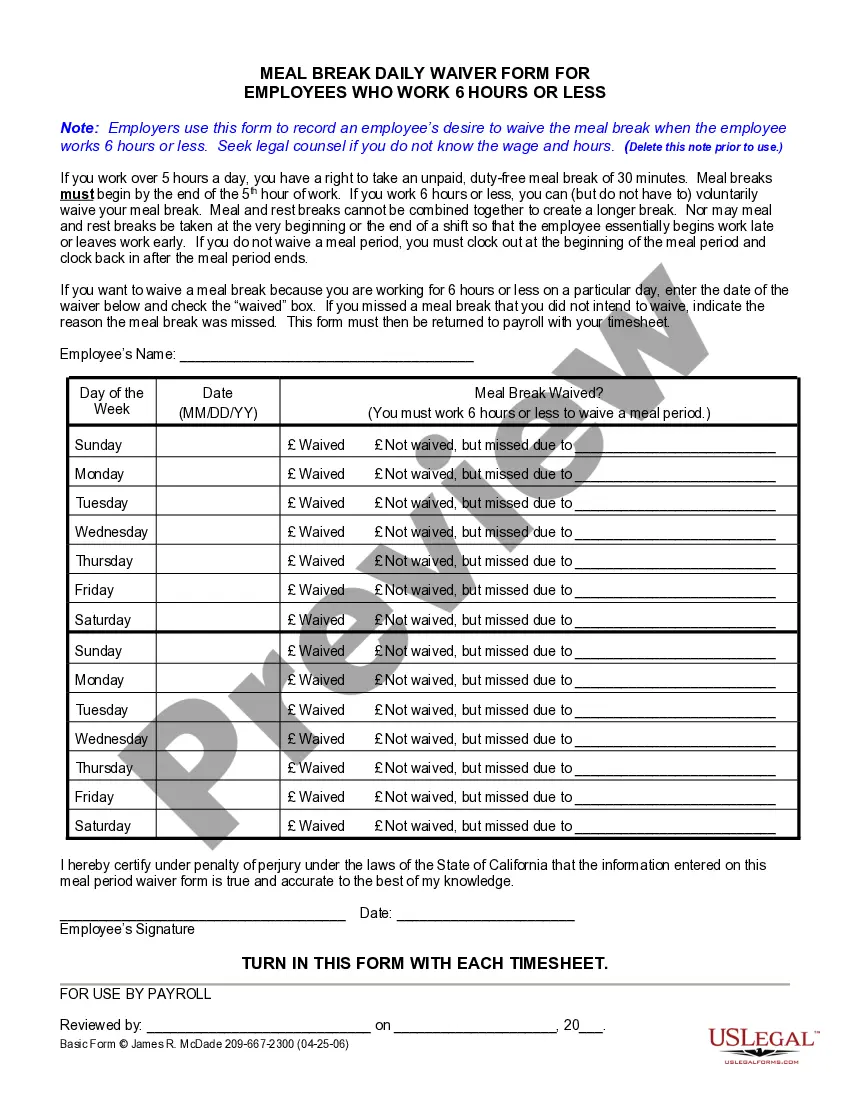
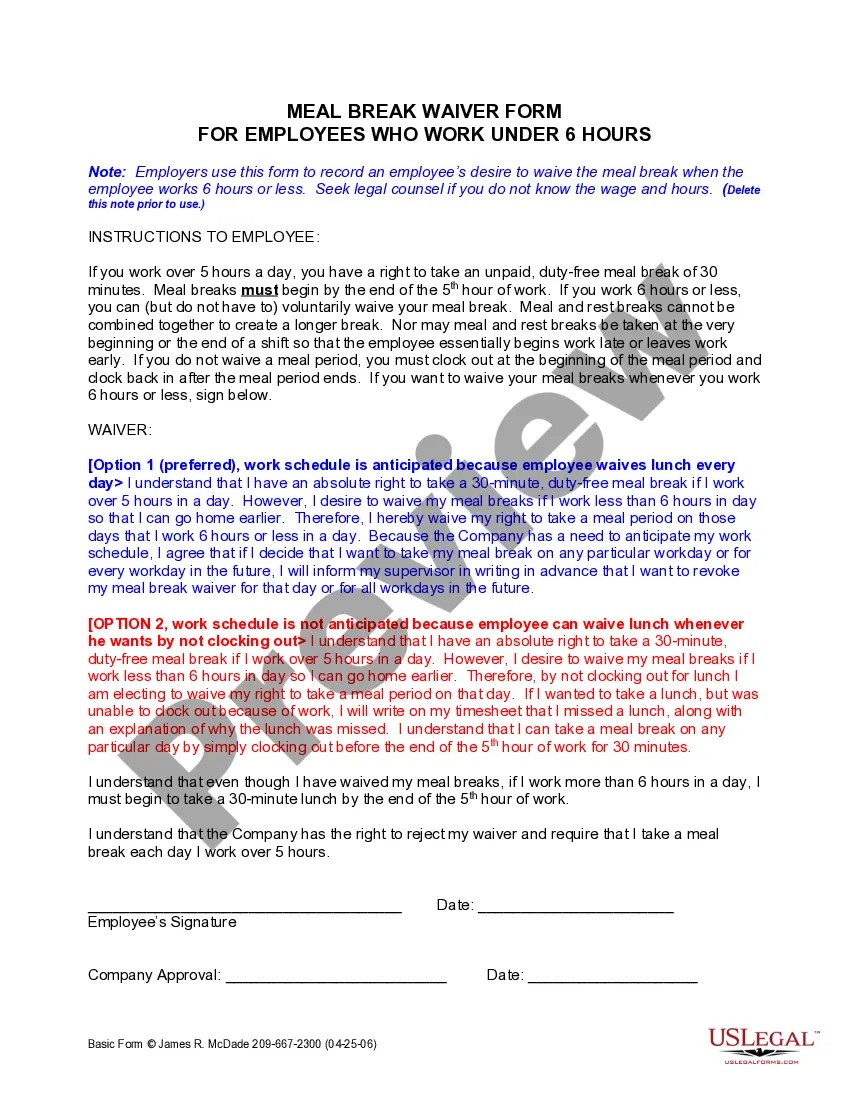
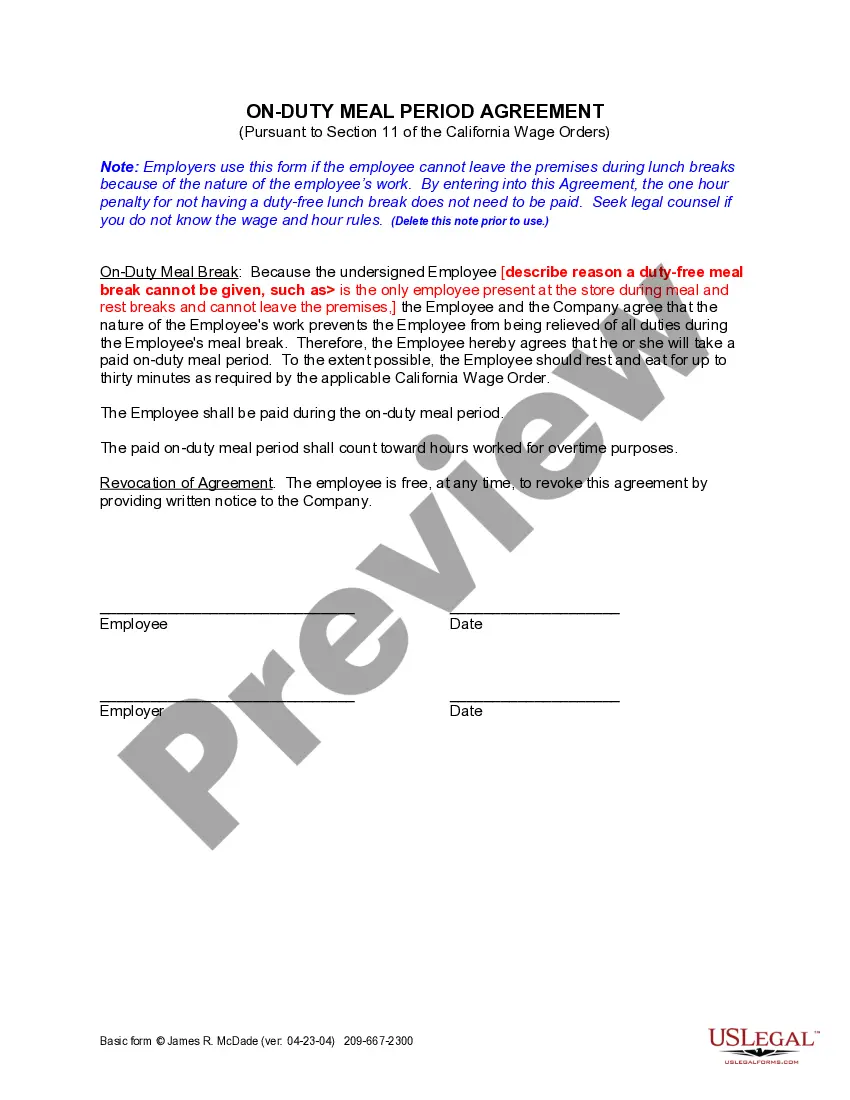
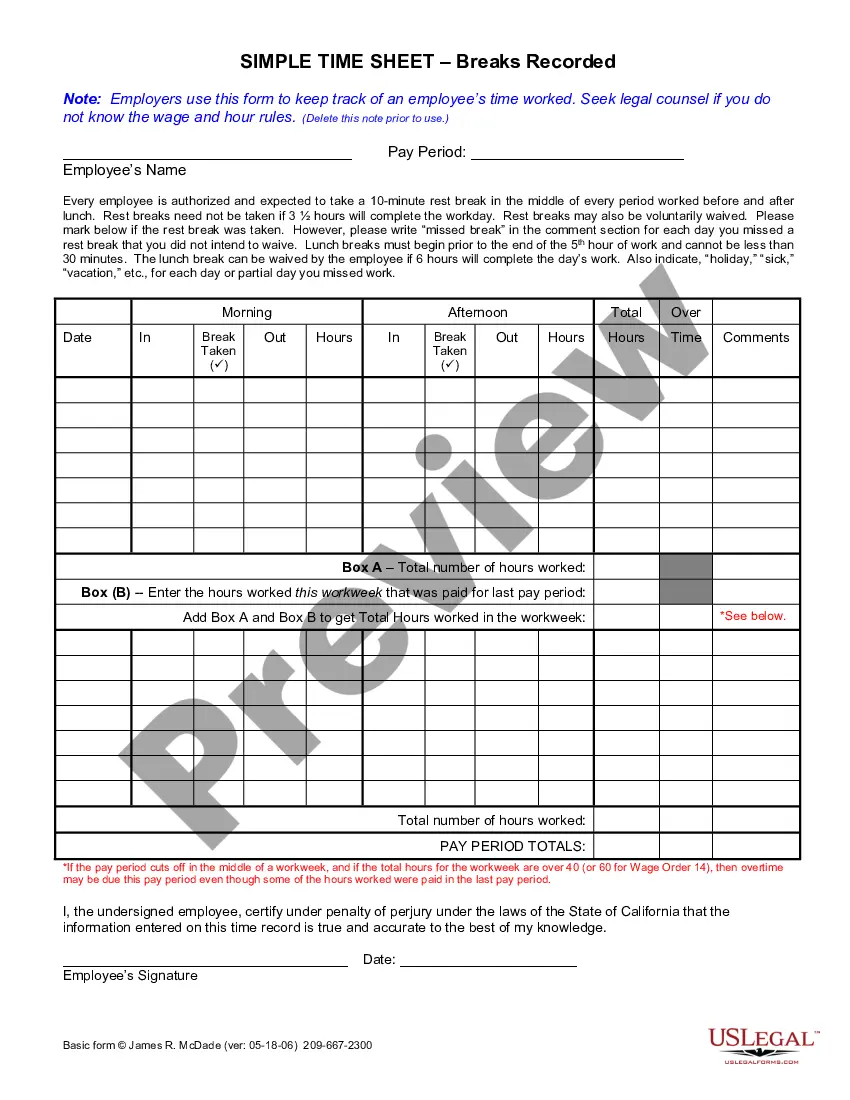
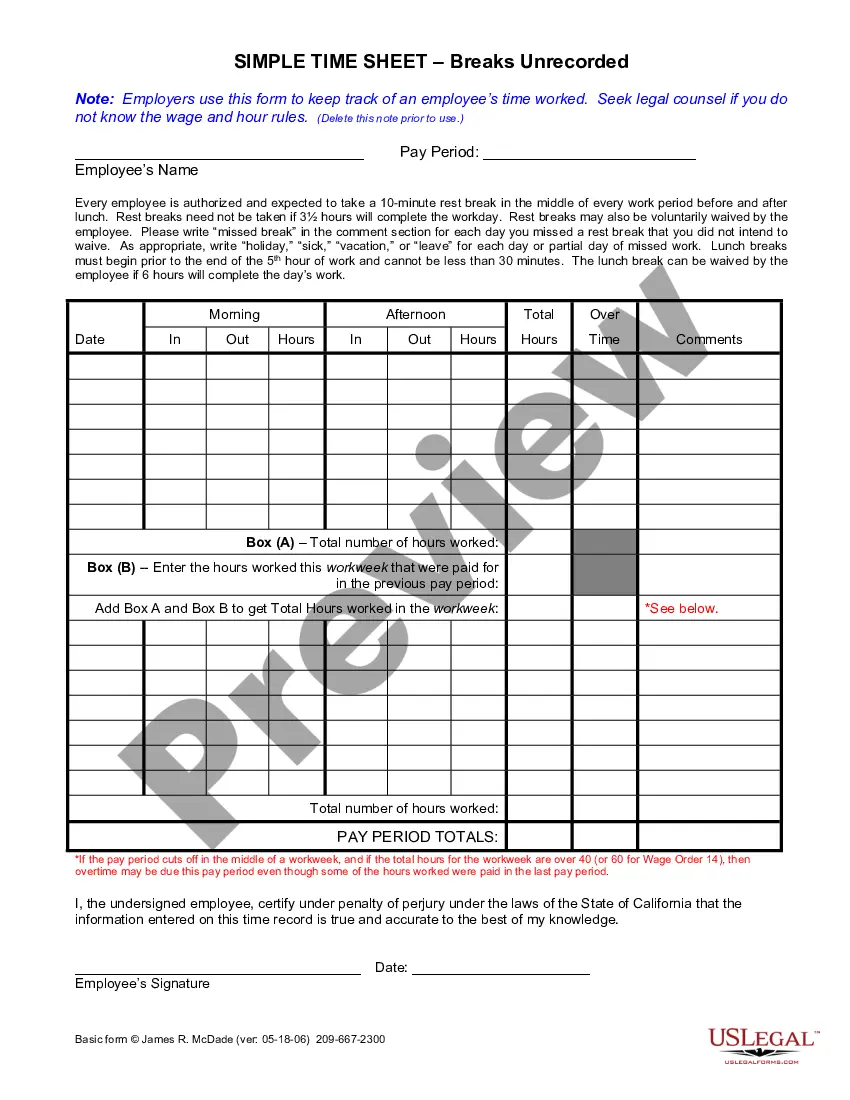
How to fill out California Meal Break Daily Waiver For 6 Hour Employees?
- Sign in to your existing US Legal Forms account. Ensure your subscription is active; renew if necessary.
- Preview the available legal templates specifically for break rooms for employees. Confirm that the chosen form fits your jurisdiction's requirements.
- Use the search functionality if you need a different template. It's crucial that the selected form aligns with your business needs.
- Click the 'Buy Now' button next to your selected document and choose your preferred subscription plan. Register for an account if you're a new user.
- Complete your transaction by entering your payment details or using PayPal.
- Download the form to your device. You can always access it later from the 'My Forms' section of your account.
In conclusion, US Legal Forms offers an extensive collection of over 85,000 legal templates, making it easy to find exactly what you need for creating compliant break rooms for employees. With access to expert guidance, you can ensure the documents are completed accurately.
Start enhancing your workplace today by exploring the benefits of US Legal Forms!
Form popularity
FAQ
An employee break room is a dedicated space within the workplace where employees can relax and recharge during their breaks. This area typically includes seating, tables, and sometimes amenities like vending machines or coffee makers. Break rooms for employees not only foster relaxation but also enhance social interaction among coworkers. Providing such a space can lead to improved morale and workplace satisfaction.
OSHA does not have a specific requirement for break rooms for employees. However, they do emphasize the importance of providing a safe and conducive environment for employees to take breaks. Having designated break rooms can improve employee well-being and productivity. Therefore, while not mandatory, break rooms for employees offer significant benefits.
There is no federal law making it illegal for employers to lack a break room. However, not providing adequate break spaces can affect employee morale and productivity. By offering break rooms for employees, organizations can boost employee satisfaction and improve retention rates, which ultimately benefits the company’s overall success.
Setting up a break room involves choosing a suitable location and ensuring it is well-equipped to meet employees' needs. Consider providing comfortable seating, a coffee machine, snacks, and games or relaxation strategies like plants. The goal is to create a welcoming space that encourages employees to take breaks, making break rooms for employees an integral part of enhancing their work experience.
Your employer is not obligated by federal law to provide a break room; however, state laws may vary. Many employers offer this space to ensure employees can rest and refresh, which is crucial for productivity. Establishing break rooms for employees can contribute to a positive work environment and is regarded as a best practice by many companies.
OSHA does not specifically require employers to provide break rooms; however, it does recommend making sure that employees have access to rest areas during their shifts, particularly in high-stress or hazardous environments. Establishing break rooms for employees can improve safety and enhance employee satisfaction. While it’s not mandatory, creating a dedicated space is considered beneficial.
While there is no federal law requiring employers to provide a lunchroom, many choose to do so to foster a positive workplace culture. A dedicated lunchroom can serve as a place for employees to relax, eat, and socialize, ultimately benefiting their productivity. Integrating break rooms for employees can significantly enhance workplace morale and communal spirit.
In Indiana, there is no state law mandating rest or meal breaks for employees. However, many employers choose to offer breaks as a best practice to promote employee wellness and productivity. The choice to establish break rooms for employees creates a welcoming environment that encourages workers to take the necessary breaks they need.
In Minnesota, labor laws require employers to provide breaks for employees, particularly during shifts lasting more than eight hours. Workers are entitled to a 30-minute unpaid meal break if they work a shift of eight hours or longer. Additionally, employers must allow reasonable breaks that can be used as time for employee rest. It's crucial to understand the state-specific regulations regarding break rooms for employees.
The purpose of employee break rooms is to provide a designated space where workers can relax and recharge during their breaks. These areas promote mental well-being and enhance productivity by allowing employees to step away from their tasks. Break rooms for employees often include amenities such as seating, snacks, and social interaction opportunities, making them essential for fostering workplace culture.