California Law For Overtime
Description
Get your form ready online
Our built-in tools help you complete, sign, share, and store your documents in one place.
Make edits, fill in missing information, and update formatting in US Legal Forms—just like you would in MS Word.
Download a copy, print it, send it by email, or mail it via USPS—whatever works best for your next step.
Sign and collect signatures with our SignNow integration. Send to multiple recipients, set reminders, and more. Go Premium to unlock E-Sign.
If this form requires notarization, complete it online through a secure video call—no need to meet a notary in person or wait for an appointment.
We protect your documents and personal data by following strict security and privacy standards.

Make edits, fill in missing information, and update formatting in US Legal Forms—just like you would in MS Word.

Download a copy, print it, send it by email, or mail it via USPS—whatever works best for your next step.

Sign and collect signatures with our SignNow integration. Send to multiple recipients, set reminders, and more. Go Premium to unlock E-Sign.

If this form requires notarization, complete it online through a secure video call—no need to meet a notary in person or wait for an appointment.

We protect your documents and personal data by following strict security and privacy standards.
Looking for another form?






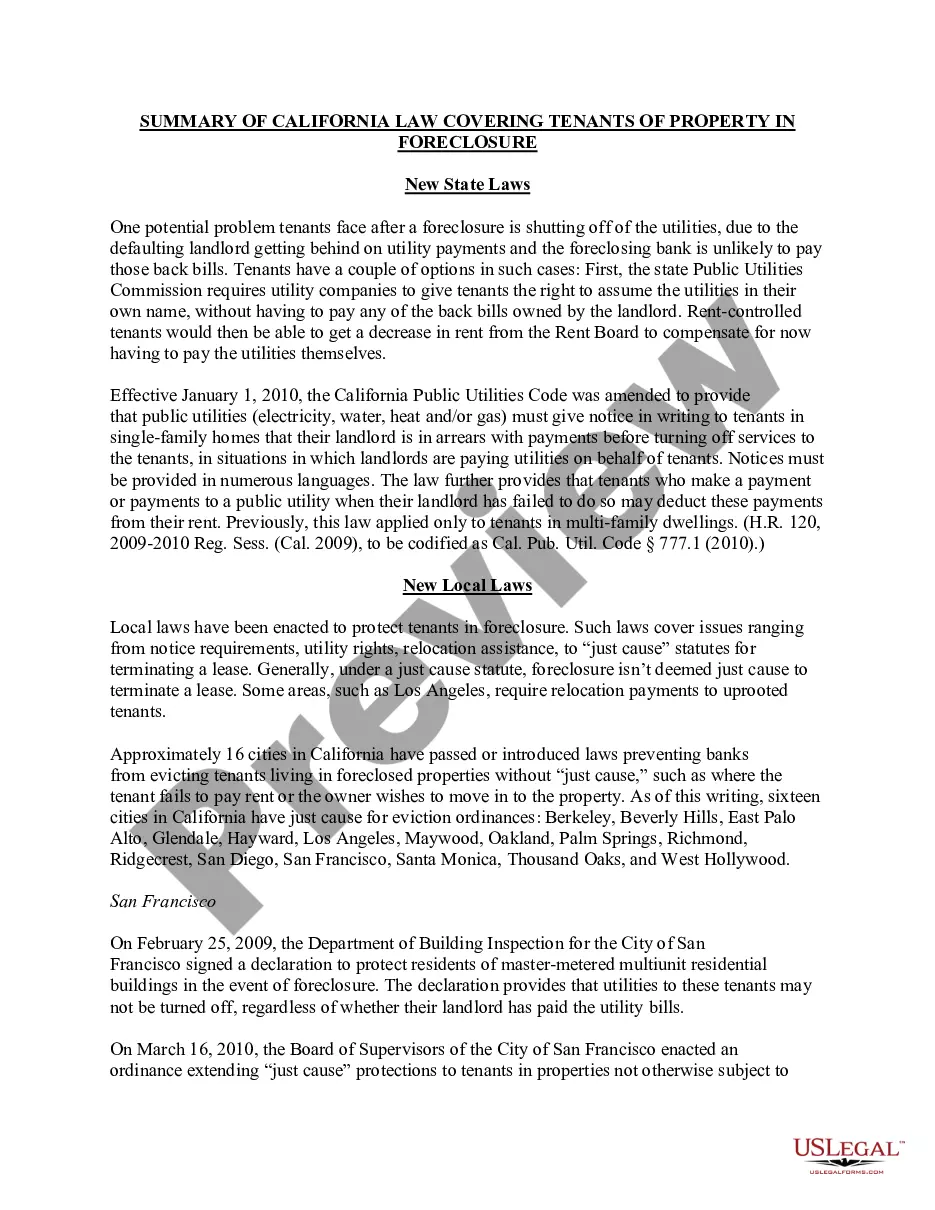
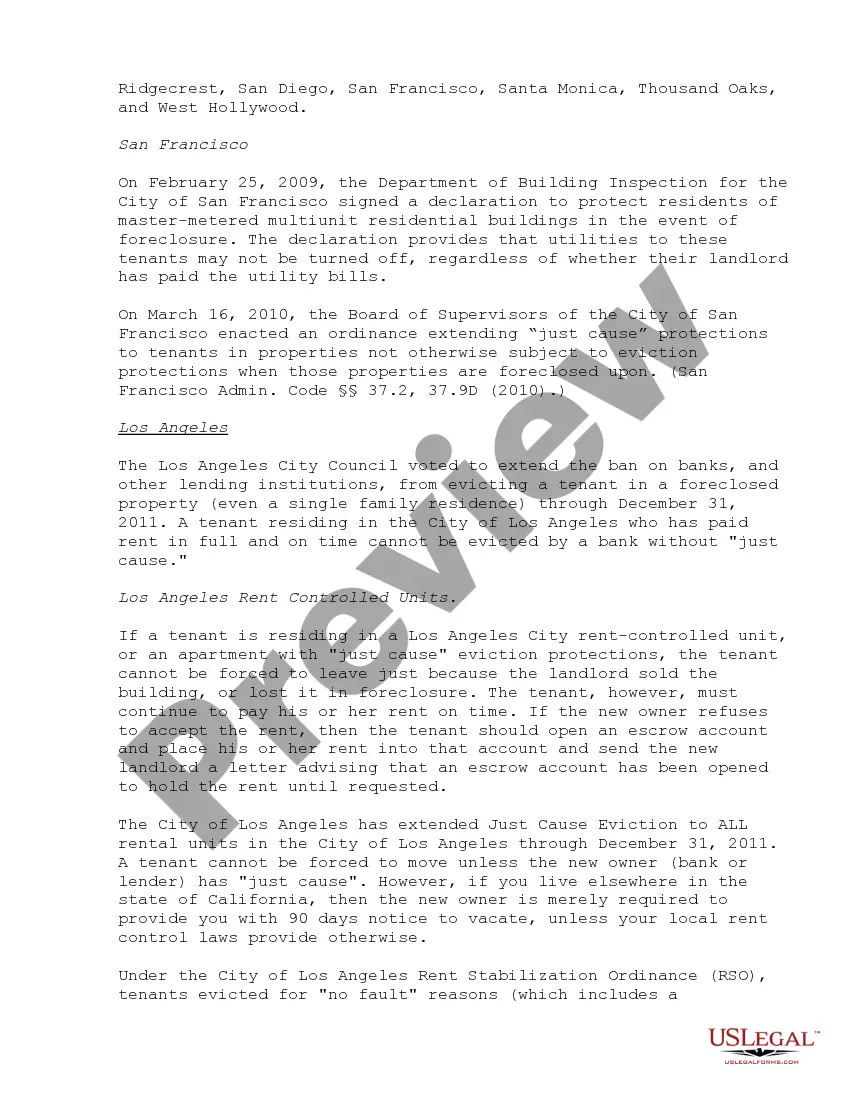
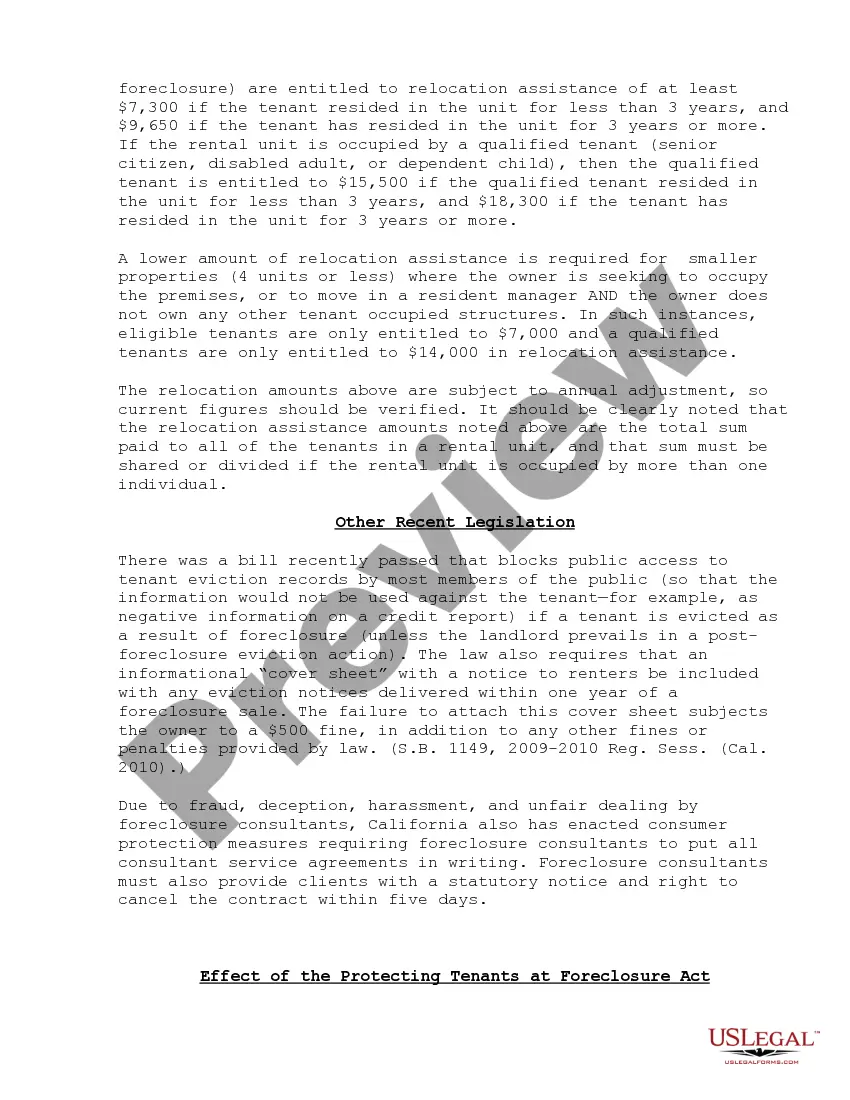
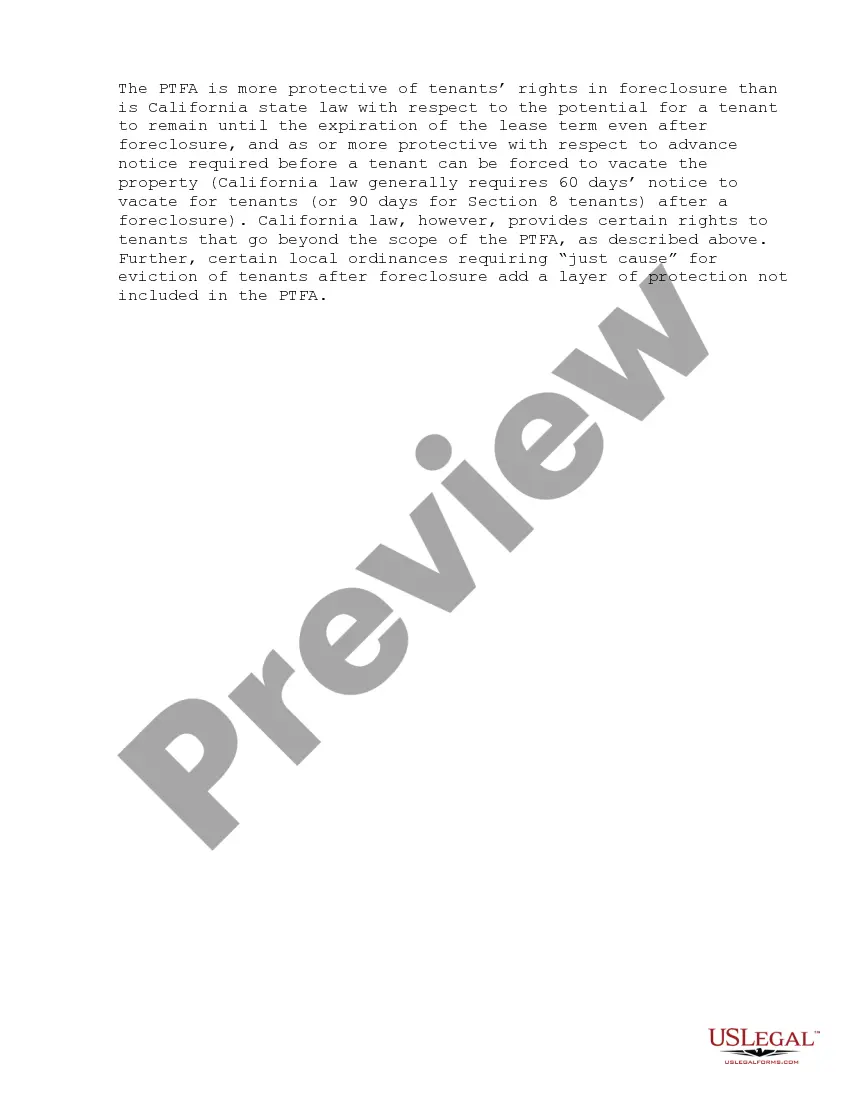
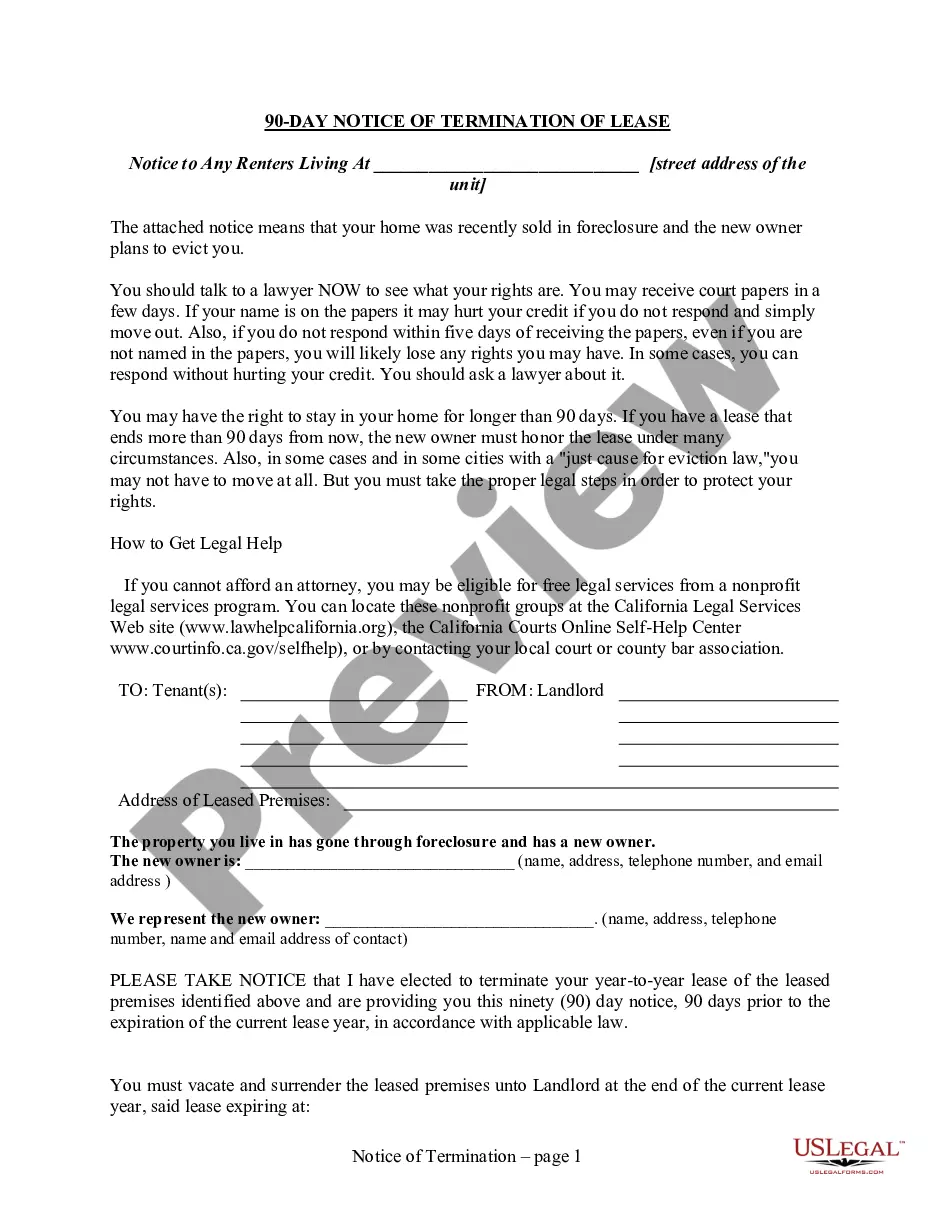
How to fill out Summary Of California Law Covering Tenants Of Property In Foreclosure?
Locating a primary source for acquiring the latest and suitable legal templates constitutes a major part of navigating bureaucracy.
Obtaining the correct legal documents requires accuracy and careful attention, which is why it is crucial to obtain samples of California Law For Overtime exclusively from credible providers, such as US Legal Forms. An incorrect template can squander your time and prolong the circumstance you are in.
Eliminate the stress that comes with your legal documentation. Explore the vast US Legal Forms library to find legal templates, verify their relevance to your needs, and download them immediately.
- Utilize the directory navigation or search bar to find your template.
- Examine the form’s details to confirm if it meets your state and locality’s criteria.
- Preview the form, if available, to ensure it is indeed the document you seek.
- Return to the search to locate the appropriate document if the California Law For Overtime does not align with your needs.
- When you are confident about the form’s applicability, download it.
- If you are a registered user, click Log in to verify and access your selected forms in My documents.
- If you do not have an account yet, click Buy now to acquire the template.
- Select the pricing plan that meets your needs.
- Proceed to registration to complete your purchase.
- Finalize your transaction by choosing a payment option (credit card or PayPal).
- Select the document format for downloading California Law For Overtime.
- After obtaining the form on your device, you can modify it using the editor or print it and complete it manually.
Form popularity
FAQ
A full work shift in California is considered to be eight hours, so any time working extended beyond the eight hours should be paid out as overtime. Hours 8-12 of a shift should be paid out at 1.5x regular wages. Anything extending beyond 12 hours will be paid out at twice the regular rate.
In California, overtime is officially counted both after 8 hours of work per day, and 40 hours per week ? ing to the California Labor Code Section 510, i.e. ? The Cunningham Law. So, for instance, if you work 9 hours on Tuesday, you are entitled to get paid for 1 hour of overtime work.
1, 2023: 9 hours per day or 50 hours per week; beginning Jan. 1, 2024: 8.5 hours per day or 45 hours per week; beginning Jan. 1, 2025: 8 hours per day or 40 hours per week, as well as double time after 12 hours in a day.
Once the workday is established by the employer, it can only be modified if the change is permanent but not made to avoid overtime pay.
The ?8 and 80? exception allows employers to pay one and one-half times the employee's regular rate for all hours worked in excess of 8 in a workday and 80 in a fourteen-day period.