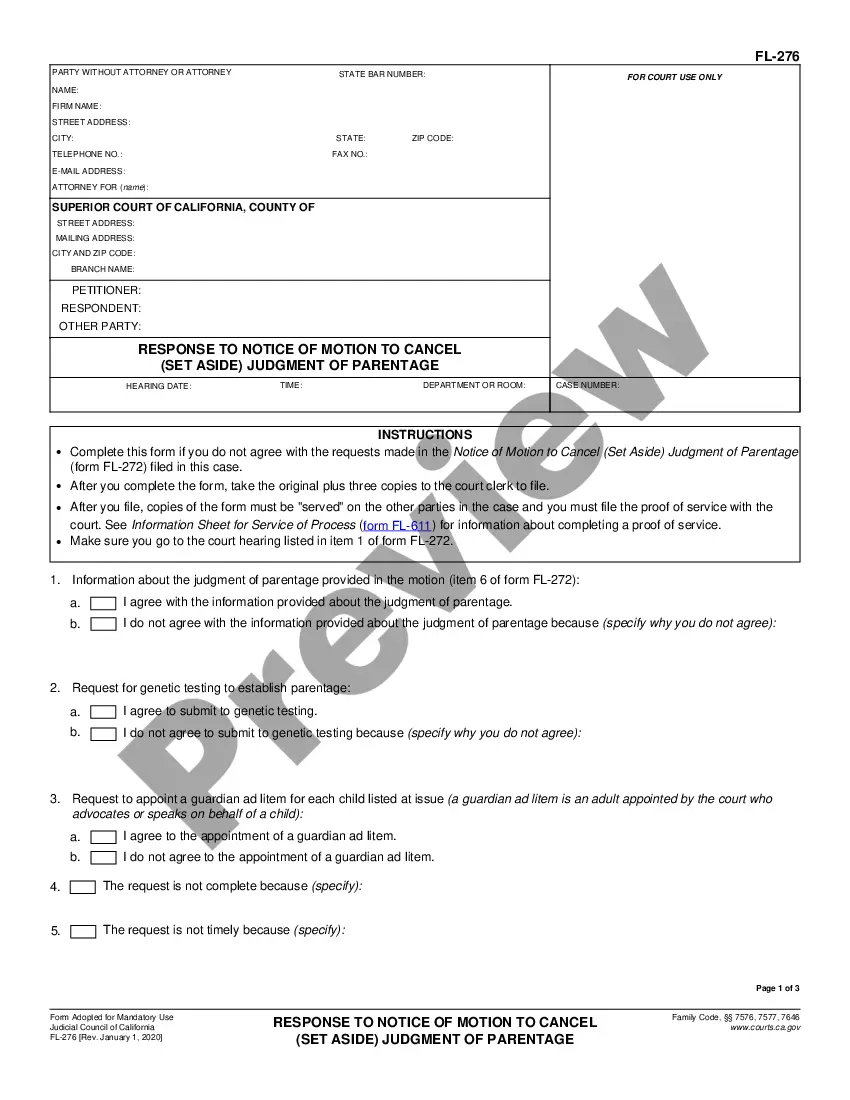
California Response Motion For Sanctions
Description
Get your form ready online
Our built-in tools help you complete, sign, share, and store your documents in one place.
Make edits, fill in missing information, and update formatting in US Legal Forms—just like you would in MS Word.
Download a copy, print it, send it by email, or mail it via USPS—whatever works best for your next step.
Sign and collect signatures with our SignNow integration. Send to multiple recipients, set reminders, and more. Go Premium to unlock E-Sign.
If this form requires notarization, complete it online through a secure video call—no need to meet a notary in person or wait for an appointment.
We protect your documents and personal data by following strict security and privacy standards.

Make edits, fill in missing information, and update formatting in US Legal Forms—just like you would in MS Word.

Download a copy, print it, send it by email, or mail it via USPS—whatever works best for your next step.

Sign and collect signatures with our SignNow integration. Send to multiple recipients, set reminders, and more. Go Premium to unlock E-Sign.

If this form requires notarization, complete it online through a secure video call—no need to meet a notary in person or wait for an appointment.

We protect your documents and personal data by following strict security and privacy standards.
Looking for another form?






Form popularity
FAQ
You can file a motion for sanctions in California when a party fails to comply with court orders or makes unreasonable discovery requests. Timing is essential; initiating the motion promptly after the misconduct is crucial for a favorable outcome. If you find yourself needing to file a California response motion for sanctions, utilizing comprehensive legal resources can enhance your chances of success. US Legal Forms offers various tools and templates to guide you through this process.
The grounds for terminating sanctions in California include neglect, repeated failure to comply with discovery obligations, or other misconduct during litigation. These grounds are serious, and they require a solid understanding of court procedures to address effectively. Crafting a well-supported California response motion for sanctions can help protect your rights in such situations. Legal platforms like US Legal Forms provide templates that can assist you in formulating an appropriate response.
Rule 3.1112 F of the California Rules of Court dictates the requirements for filing and serving documents in court. It emphasizes that all documents must be properly formatted and serve in a timely manner. Understanding these specifics can significantly streamline your California response motion for sanctions. For detailed examples and templates, consider exploring resources such as US Legal Forms.
In California, you generally have 15 days to respond to a motion after it has been served to you. This timeline ensures that you have ample opportunity to prepare your California response motion for sanctions. Keeping to this deadline is crucial, as failing to respond on time may result in a default judgment against you. Therefore, always be aware of the timelines associated with your case.
A 128.7 motion in California allows parties to request sanctions against someone who files frivolous motions or fails to comply with legal procedures. This mechanism protects against abuse of the legal system. Crafting a thoughtful California response motion for sanctions may help you navigate these situations effectively.
The 45 days motion to compel pertains to situations where a party fails to comply with discovery requests. If a response does not arrive within this period, a party may file a motion to compel for the court's intervention. In such cases, addressing any potential sanctions requires a strong California response motion for sanctions.
As with other motions, you typically have 15 days to respond to a motion to compel in California. Responding promptly is vital to preserving your position, especially if sanctions are at stake. By focusing on your California response motion for sanctions, you can present compelling arguments to the court.
A motion notice in California must include the date, time, and location of the hearing, along with a brief description of the motion's purpose. Proper notification ensures all parties have adequate time to prepare their responses. A correctly drafted notice is necessary to support your California response motion for sanctions.
Generally, you have 15 days to respond to a motion to compel in California, similar to other motions. This timeframe is crucial, as a well-prepared response directly impacts the court's decision. Prompt action ensures your California response motion for sanctions is also timely and effective.
California law requires parties to meet and confer before filing a motion to compel discovery. This process aims to resolve disputes amicably and avoid court intervention when possible. Therefore, ensuring you address any concerns regarding your California response motion for sanctions is essential during this meeting.
