Unlawful Detainer Forms With Damages
Description

Get your form ready online
Our built-in tools help you complete, sign, share, and store your documents in one place.
Make edits, fill in missing information, and update formatting in US Legal Forms—just like you would in MS Word.
Download a copy, print it, send it by email, or mail it via USPS—whatever works best for your next step.
Sign and collect signatures with our SignNow integration. Send to multiple recipients, set reminders, and more. Go Premium to unlock E-Sign.
If this form requires notarization, complete it online through a secure video call—no need to meet a notary in person or wait for an appointment.
We protect your documents and personal data by following strict security and privacy standards.

Make edits, fill in missing information, and update formatting in US Legal Forms—just like you would in MS Word.

Download a copy, print it, send it by email, or mail it via USPS—whatever works best for your next step.

Sign and collect signatures with our SignNow integration. Send to multiple recipients, set reminders, and more. Go Premium to unlock E-Sign.

If this form requires notarization, complete it online through a secure video call—no need to meet a notary in person or wait for an appointment.

We protect your documents and personal data by following strict security and privacy standards.
Looking for another form?






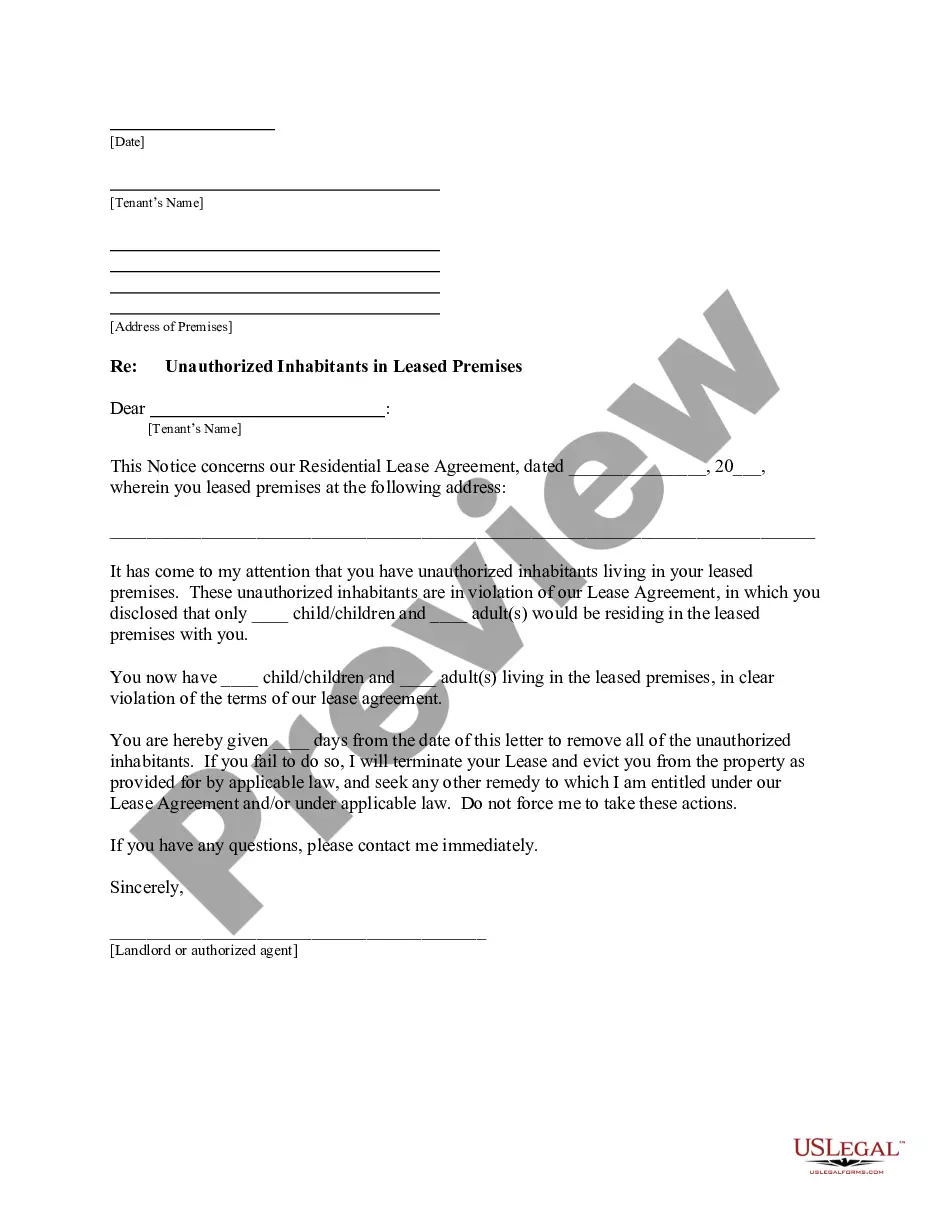

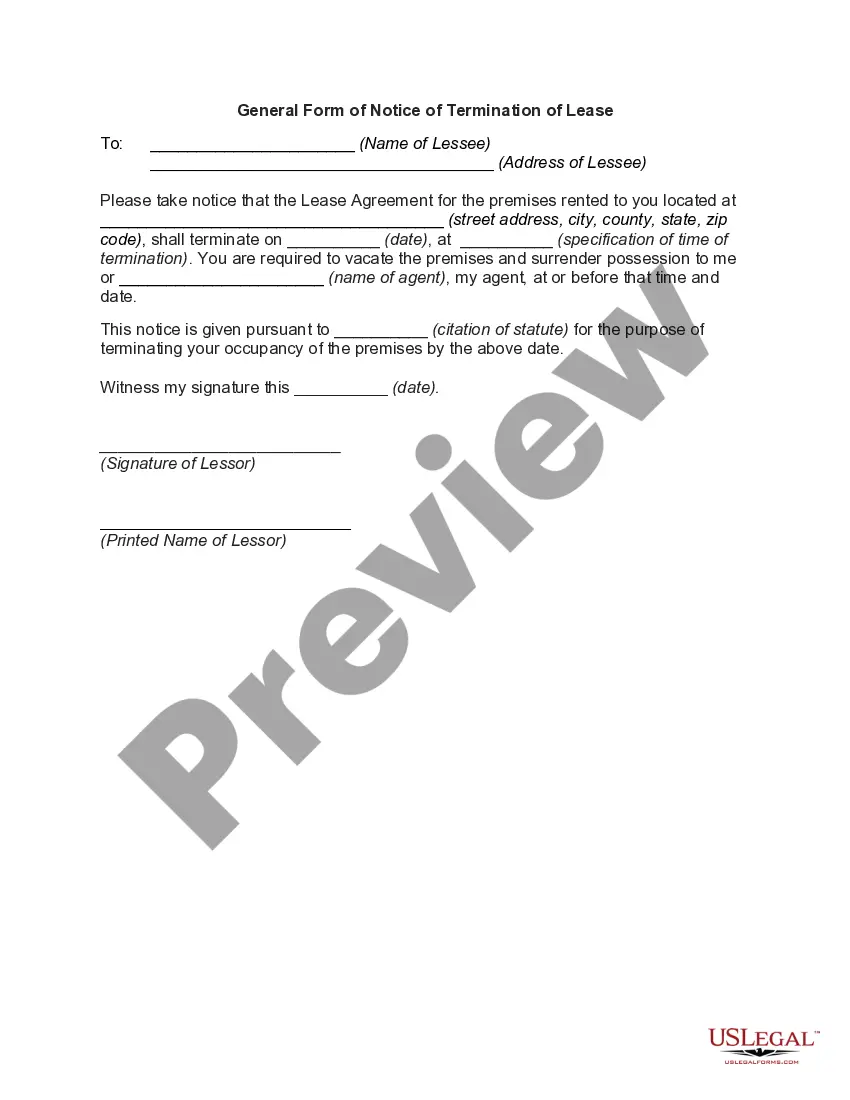
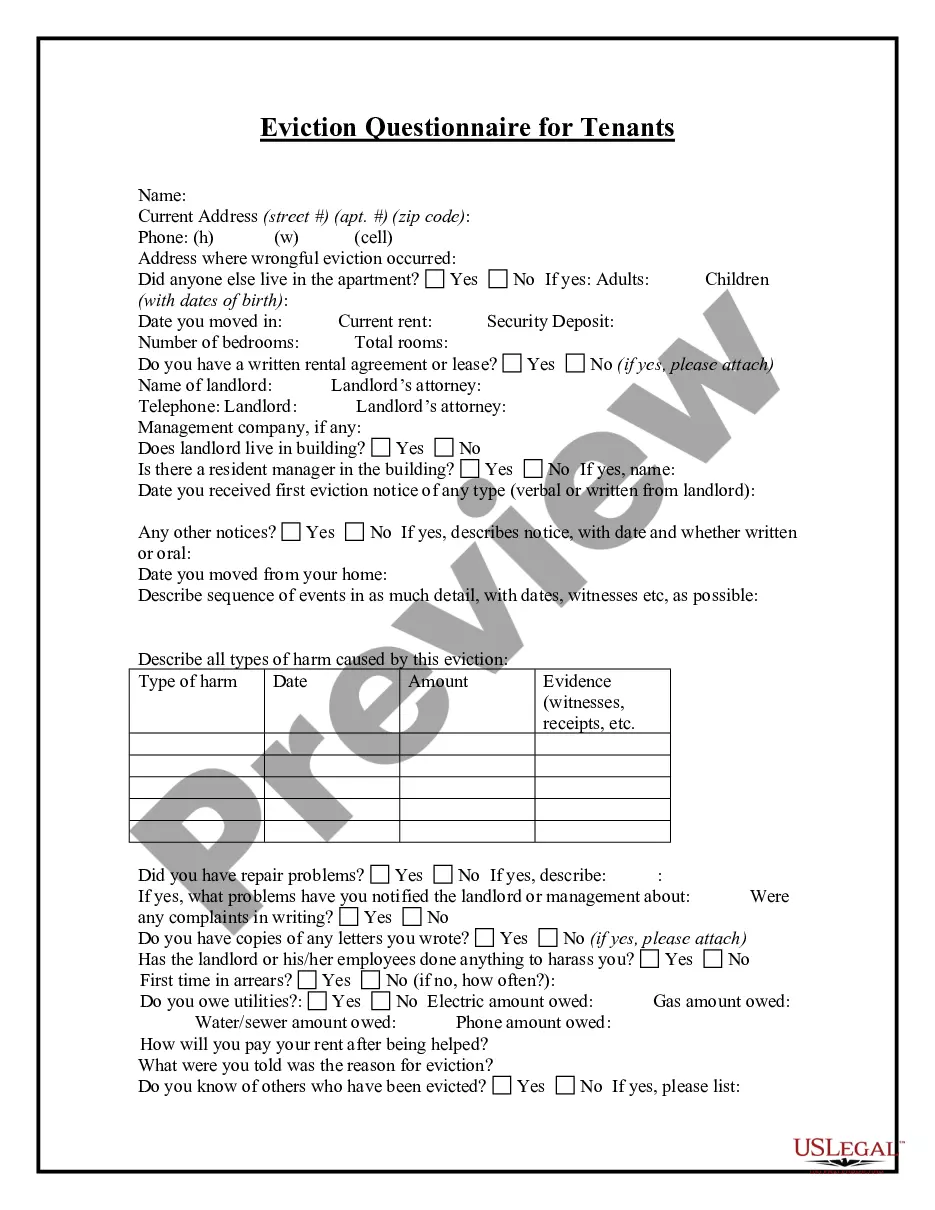
How to fill out California Landlord Tenant Eviction / Unlawful Detainer Forms Package?
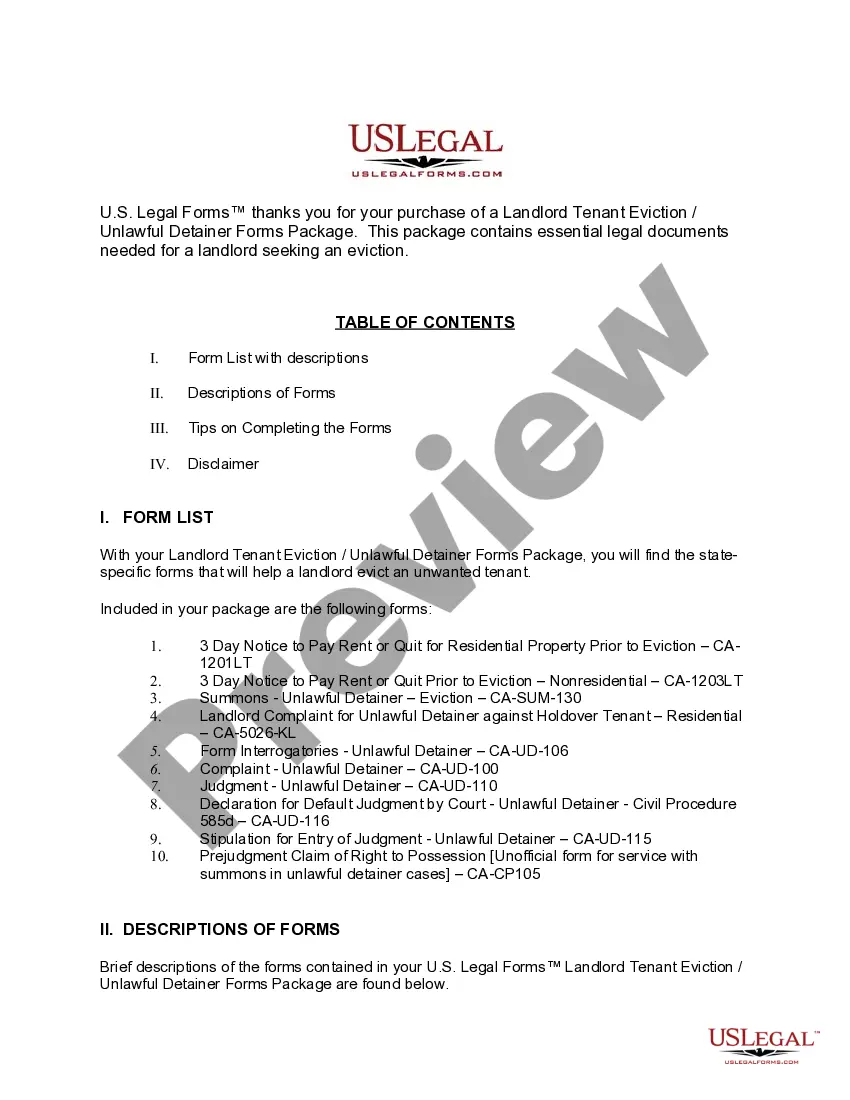
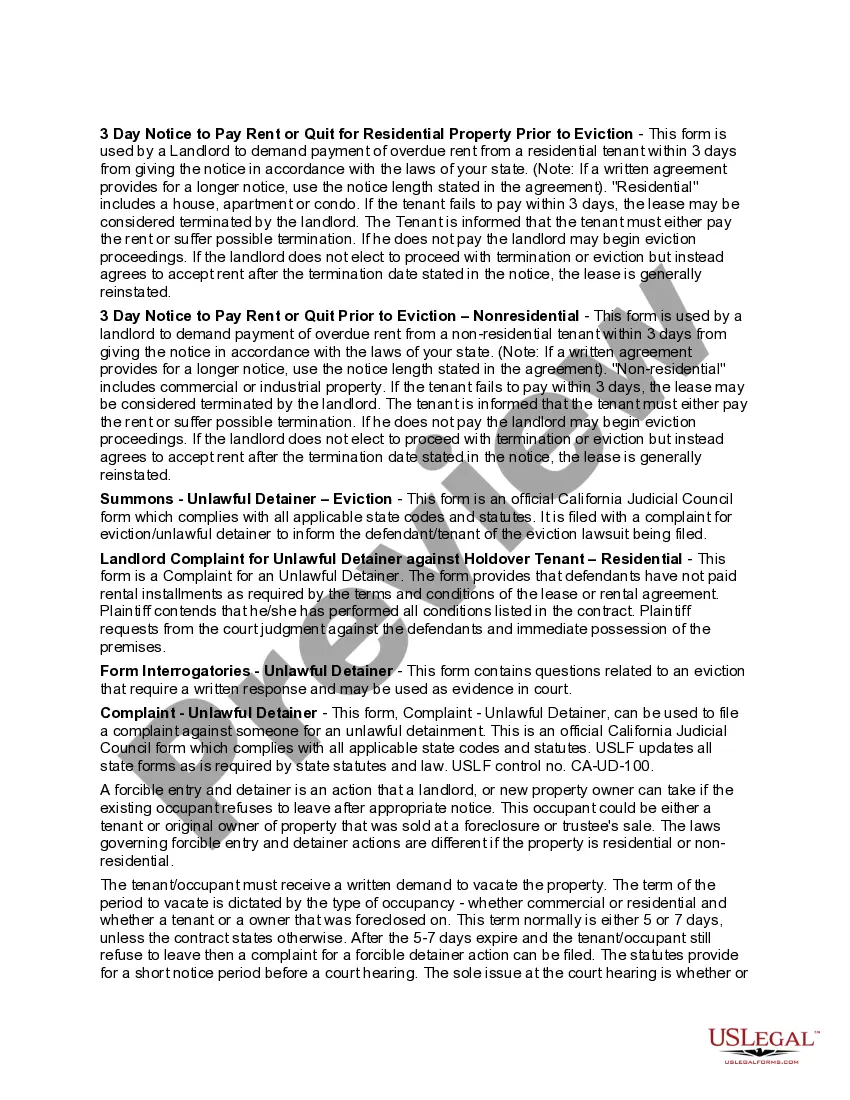
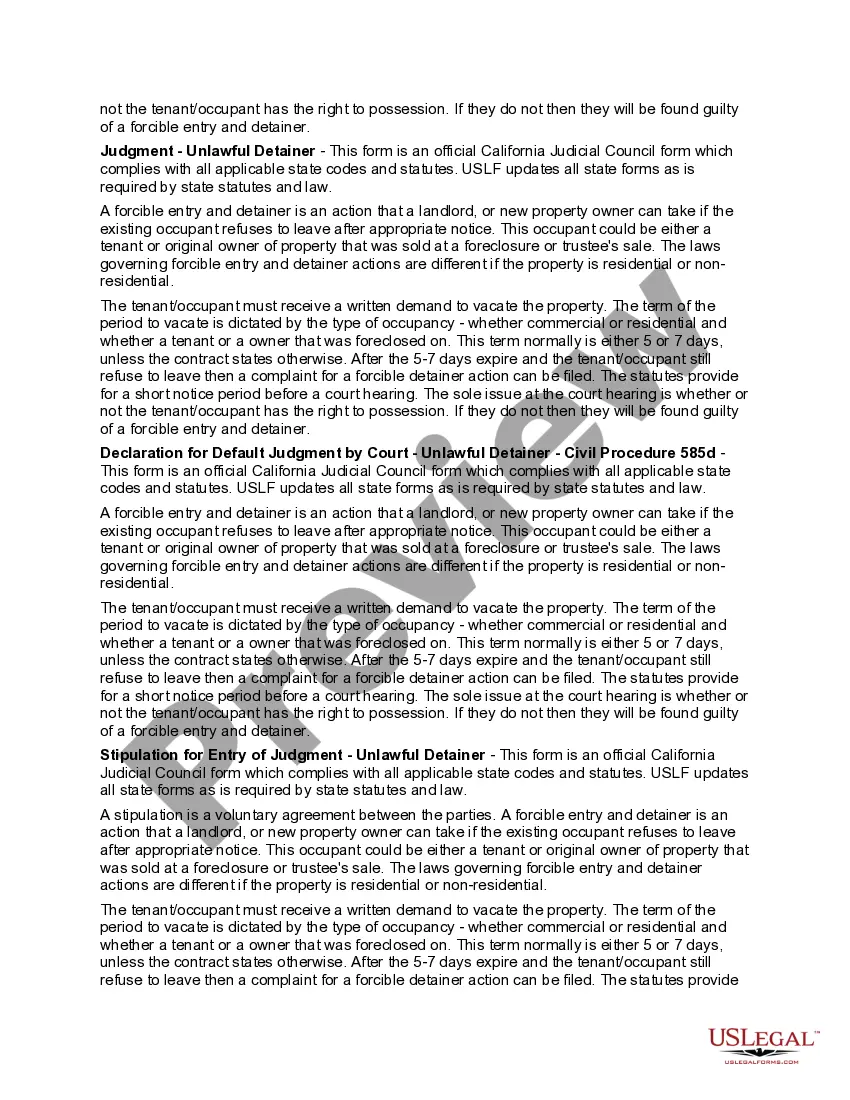
Drafting legal documents from scratch can sometimes be daunting. Some cases might involve hours of research and hundreds of dollars spent. If you’re searching for a simpler and more affordable way of preparing Unlawful Detainer Forms With Damages or any other forms without the need of jumping through hoops, US Legal Forms is always at your fingertips.
Our virtual library of more than 85,000 up-to-date legal documents covers virtually every aspect of your financial, legal, and personal affairs. With just a few clicks, you can quickly access state- and county-compliant templates diligently prepared for you by our legal specialists.
Use our platform whenever you need a trusted and reliable services through which you can easily locate and download the Unlawful Detainer Forms With Damages. If you’re not new to our services and have previously created an account with us, simply log in to your account, select the form and download it away or re-download it at any time in the My Forms tab.
Not registered yet? No worries. It takes minutes to register it and explore the catalog. But before jumping straight to downloading Unlawful Detainer Forms With Damages, follow these recommendations:
- Review the form preview and descriptions to make sure you are on the the form you are looking for.
- Check if form you choose conforms with the regulations and laws of your state and county.
- Pick the best-suited subscription option to get the Unlawful Detainer Forms With Damages.
- Download the file. Then fill out, certify, and print it out.
US Legal Forms has a good reputation and over 25 years of expertise. Join us now and turn document execution into something easy and streamlined!
Form popularity
FAQ
5 Tips to Fighting an Unlawful Detainer (Eviction) Know Your Rights. It goes without saying, but take some time to know your rights as a tenant. ... Keep Good Records. ... Make Sure Notice is Proper. ... Service of the Unlawful Detainer. ... Talking to an Attorney. ... Managing Partner ? Lipton Legal Group, A PC ? Beverly Hills, CA.
But, your landlord can still require you to move out for one of the ?no-fault? reasons listed in the law. If your landlord evicts you for one of these reasons, they must first give you one month's rent or waive one month's rent to help you move out.
You must fill out an Answer, serve the plaintiff, and file your Answer form with the court. Generally, this is due within 30 days after you were served. If you don't, the plaintiff can ask for a default. If there's a default, the court won't let you file an Answer and can decide the case without you.
To respond to the eviction case, you start with filling out an Answer or other response forms. Then, you file them with the court. This gives you the chance to tell the judge if there are any legal reasons your landlord can't evict you and tell your side of the story at a court trial.
Respond to the eviction case by filing a written response with the court very quickly. This means you're going to participate in the lawsuit and fight the eviction. Talk with your landlord and try to come up with an agreement where you can stay in your home.