California Landlord Eviction For Renters
Description
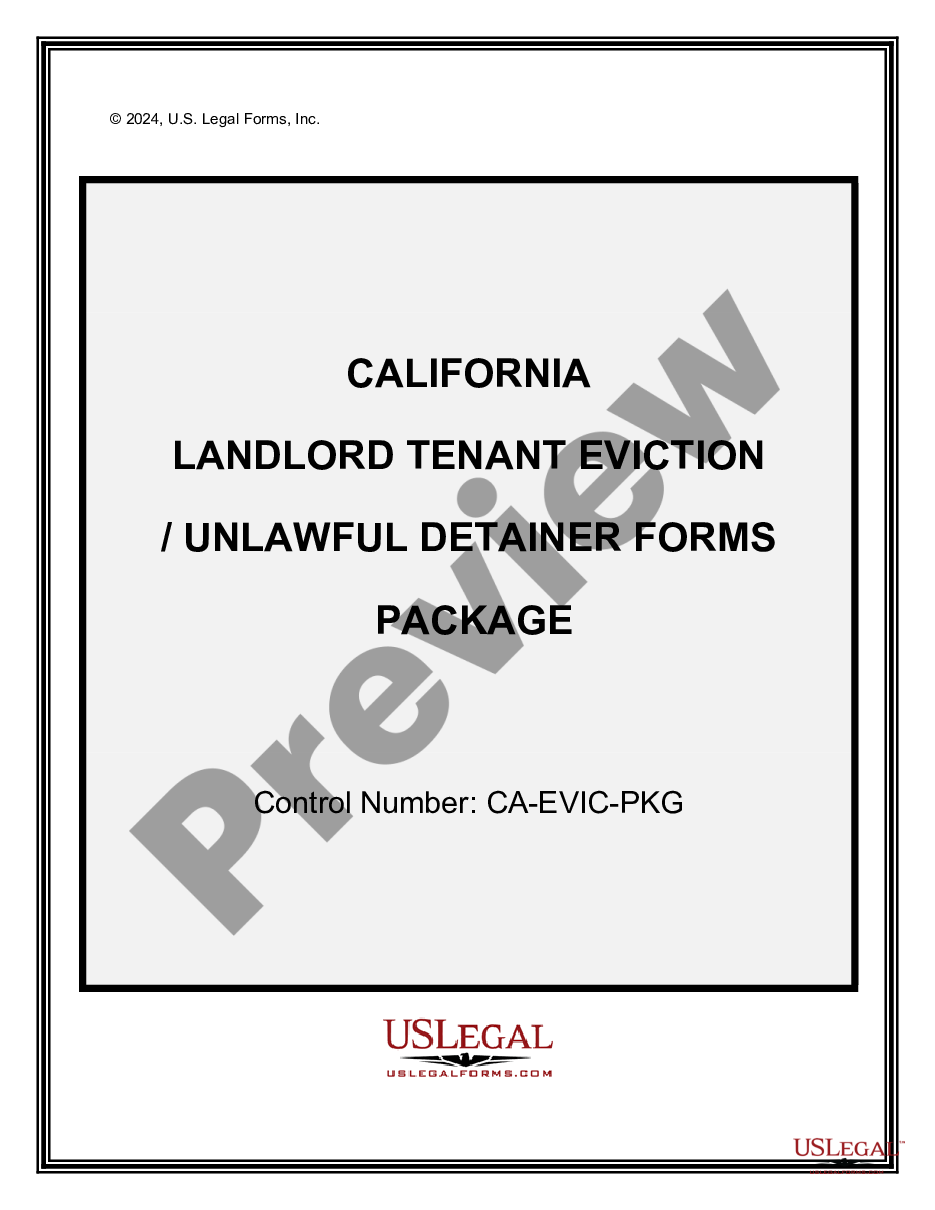
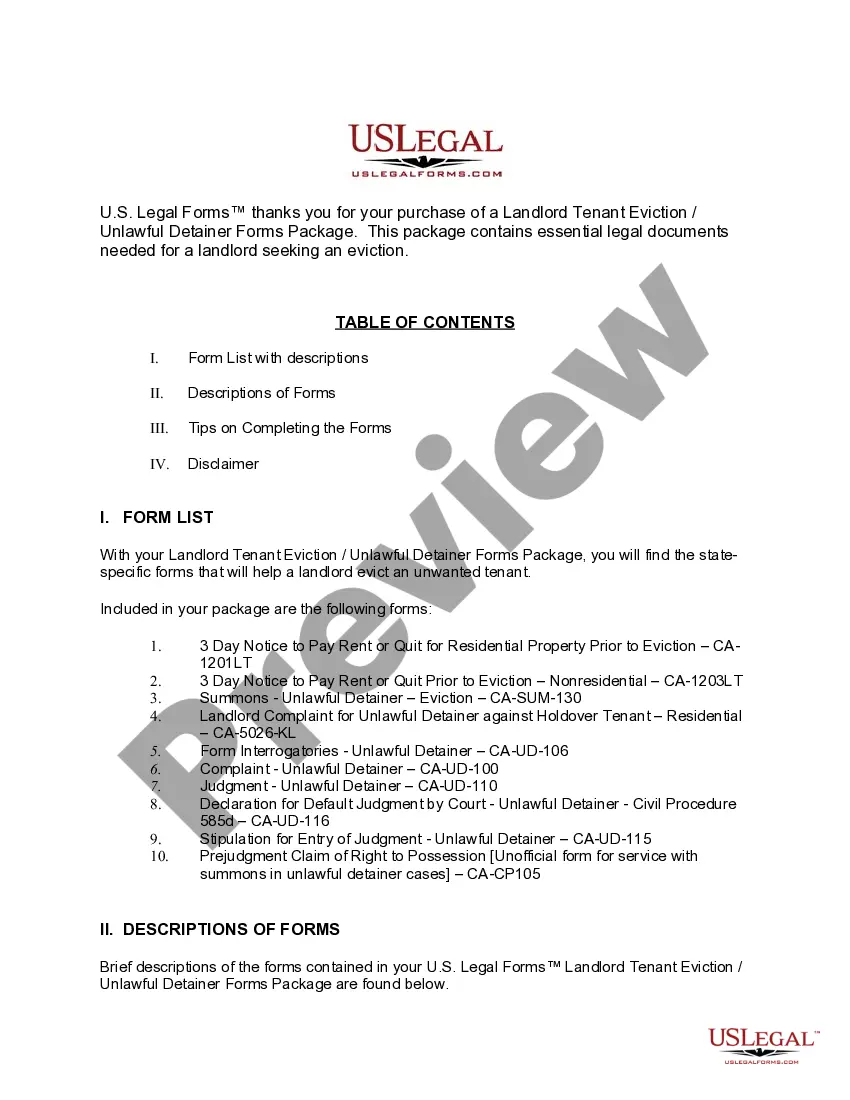
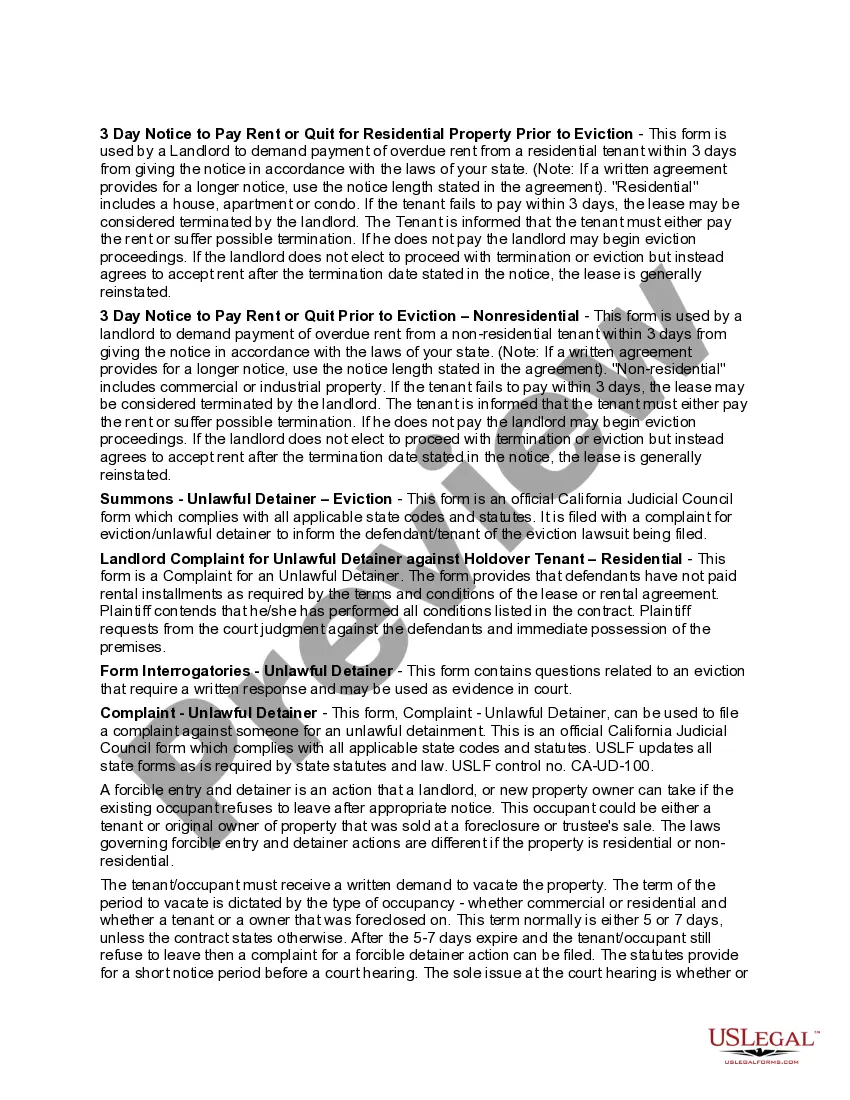
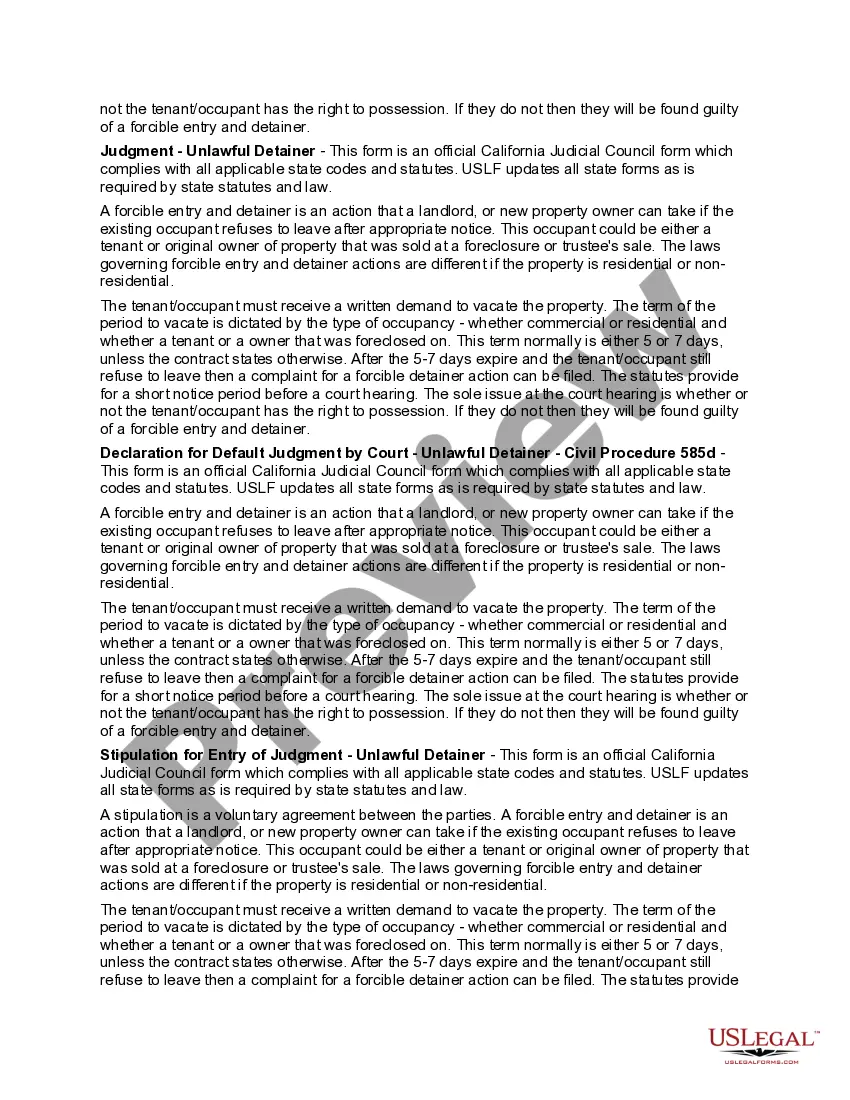
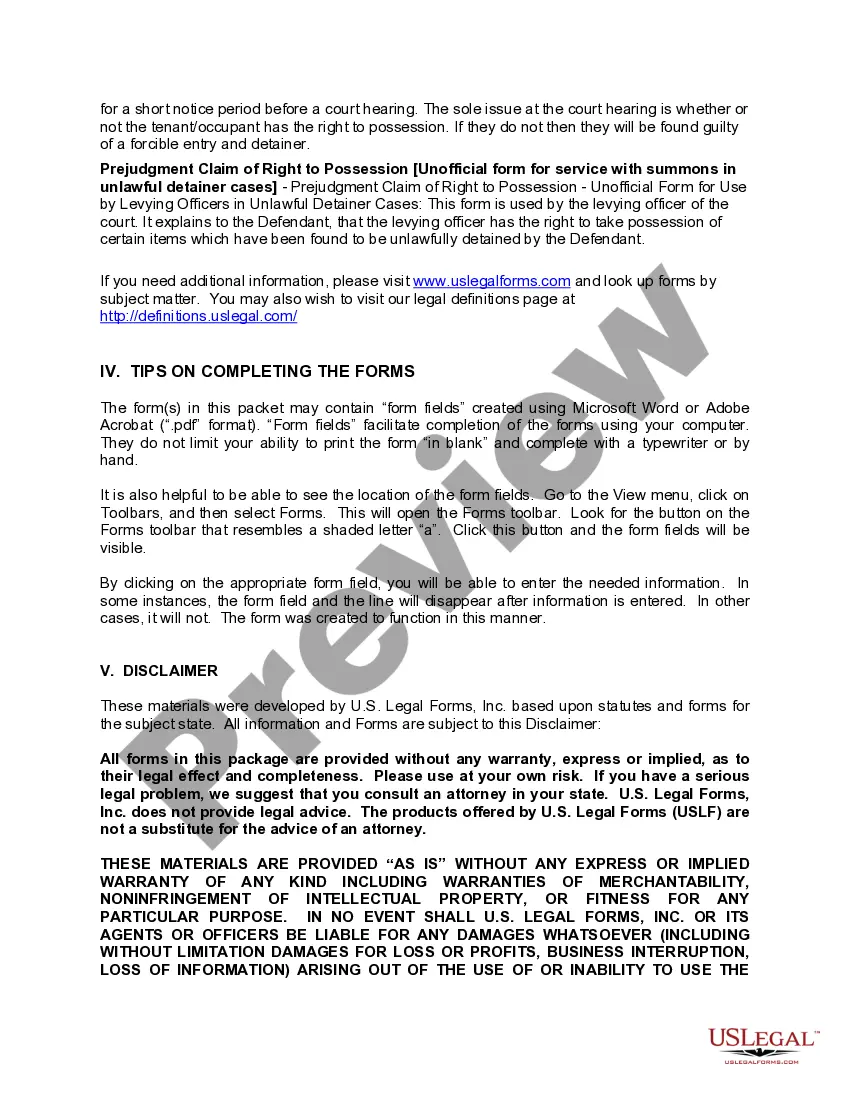

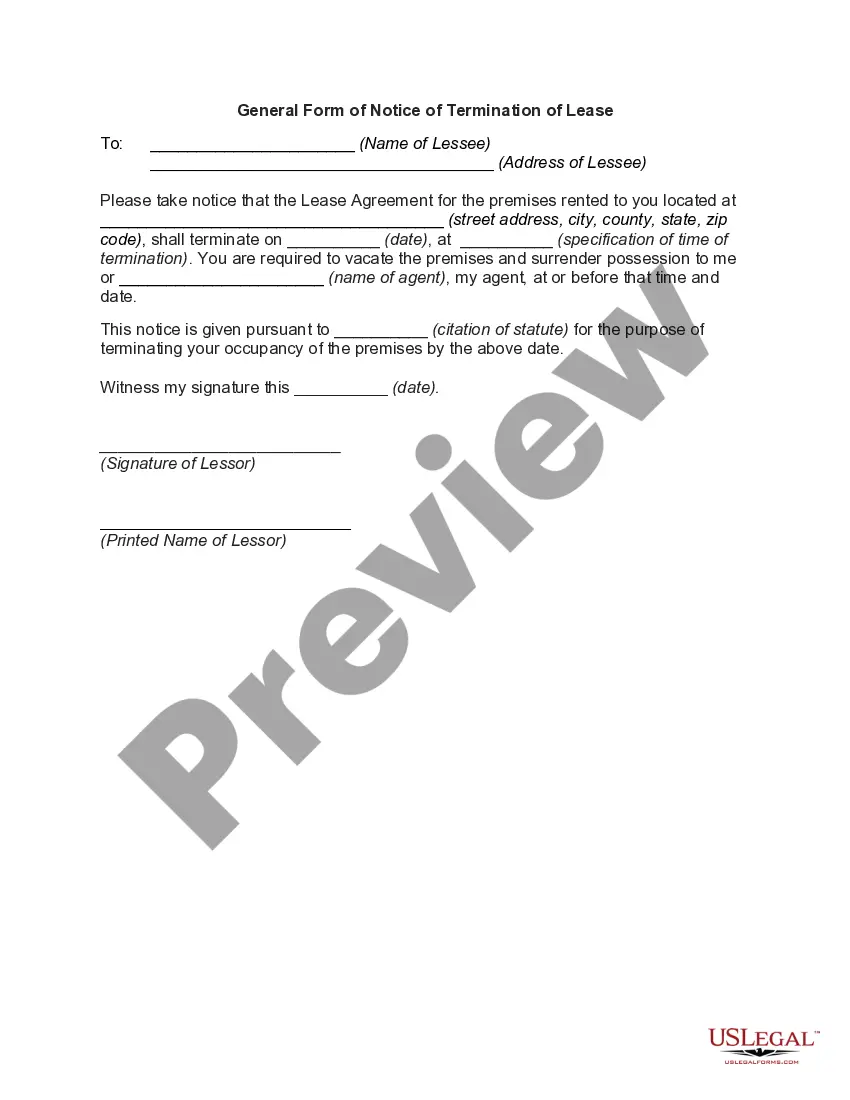
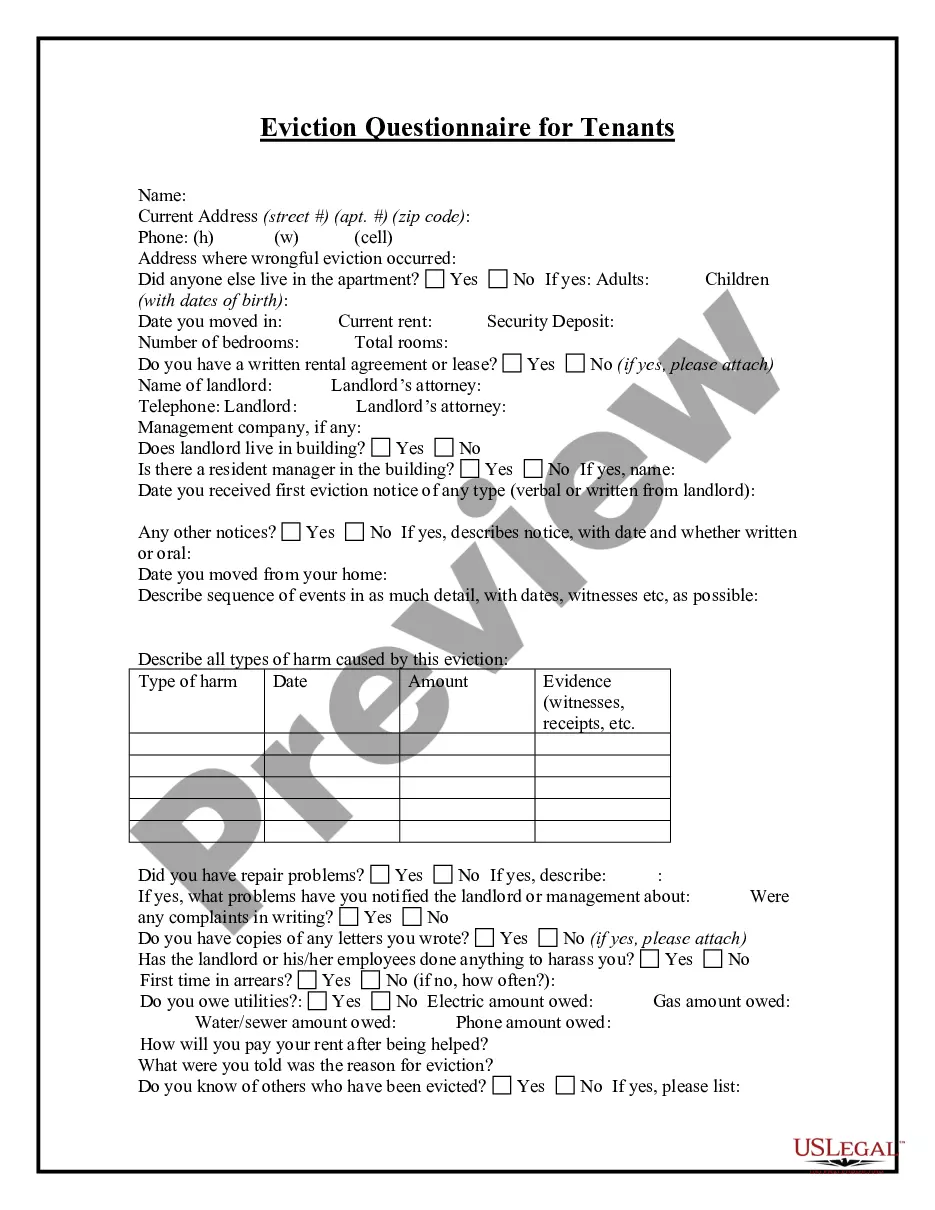
Get your form ready online
Our built-in tools help you complete, sign, share, and store your documents in one place.
Make edits, fill in missing information, and update formatting in US Legal Forms—just like you would in MS Word.
Download a copy, print it, send it by email, or mail it via USPS—whatever works best for your next step.
Sign and collect signatures with our SignNow integration. Send to multiple recipients, set reminders, and more. Go Premium to unlock E-Sign.
If this form requires notarization, complete it online through a secure video call—no need to meet a notary in person or wait for an appointment.
We protect your documents and personal data by following strict security and privacy standards.

Make edits, fill in missing information, and update formatting in US Legal Forms—just like you would in MS Word.

Download a copy, print it, send it by email, or mail it via USPS—whatever works best for your next step.

Sign and collect signatures with our SignNow integration. Send to multiple recipients, set reminders, and more. Go Premium to unlock E-Sign.

If this form requires notarization, complete it online through a secure video call—no need to meet a notary in person or wait for an appointment.

We protect your documents and personal data by following strict security and privacy standards.
Looking for another form?







How to fill out California Landlord Tenant Eviction / Unlawful Detainer Forms Package?
Whether for corporate reasons or personal affairs, individuals inevitably encounter legal circumstances at some point during their lives.
Completing legal documents requires meticulous care, beginning with selecting the correct form template.
Once it is downloaded, you can complete the form using editing software or print it and finish it manually. With an extensive US Legal Forms collection available, you don't have to waste time searching for the right template online. Utilize the library’s straightforward navigation to locate the appropriate document for any circumstance.
- Locate the template you require by using the search bar or browsing the catalog.
- Review the details of the form to confirm it aligns with your situation, state, and county.
- Click on the form’s preview to examine it.
- If it is the wrong document, return to the search tool to find the California Landlord Eviction For Renters template you need.
- Obtain the template if it meets your specifications.
- If you already possess a US Legal Forms account, simply click Log in to access previously saved forms in My documents.
- If you do not yet have an account, you can acquire the form by clicking Buy now.
- Select the appropriate pricing option.
- Fill out the account registration form.
- Choose your payment method: you can use a credit card or PayPal account.
- Select the file format you desire and download the California Landlord Eviction For Renters.
Form popularity
FAQ
Anti-harassment and retaliation protections during the Resolution's protection periods. Starting April 1, 2023, landlords are required to serve tenants with a written 30-Day Notice prior to filing an eviction based on nonpayment of rent for rent accrued between July 1, 2022 and March 31, 2023.
A tenant in California can absolutely win an unlawful detainer case if they can prove in court that there is no legal ground for the eviction or if the landlord has not followed the correct procedure for the eviction.
How the eviction process works The landlord gives the tenant a written Notice to do something by a deadline. For example, a Notice might say to fix a problem or move out by a certain date. ... The Landlord starts an eviction case in court. ... The tenant has a few days to file a response in court. ... The judge makes a decision.
The Notice must be in writing and include: The date the tenancy will end ("be terminated") Detailed reason(s) for the eviction. That if the tenant doesn't move out within 90 days the owner may start a court case to evict them and that they can give their side of the story then.
One of the new rules is that landlords can only evict tenants for valid reasons. These valid reasons include non-payment of rent or violating the lease agreement. Landlords must follow these rules in order to legally evict tenants. Another regulation is the implementation of an extended notice period for evictions.