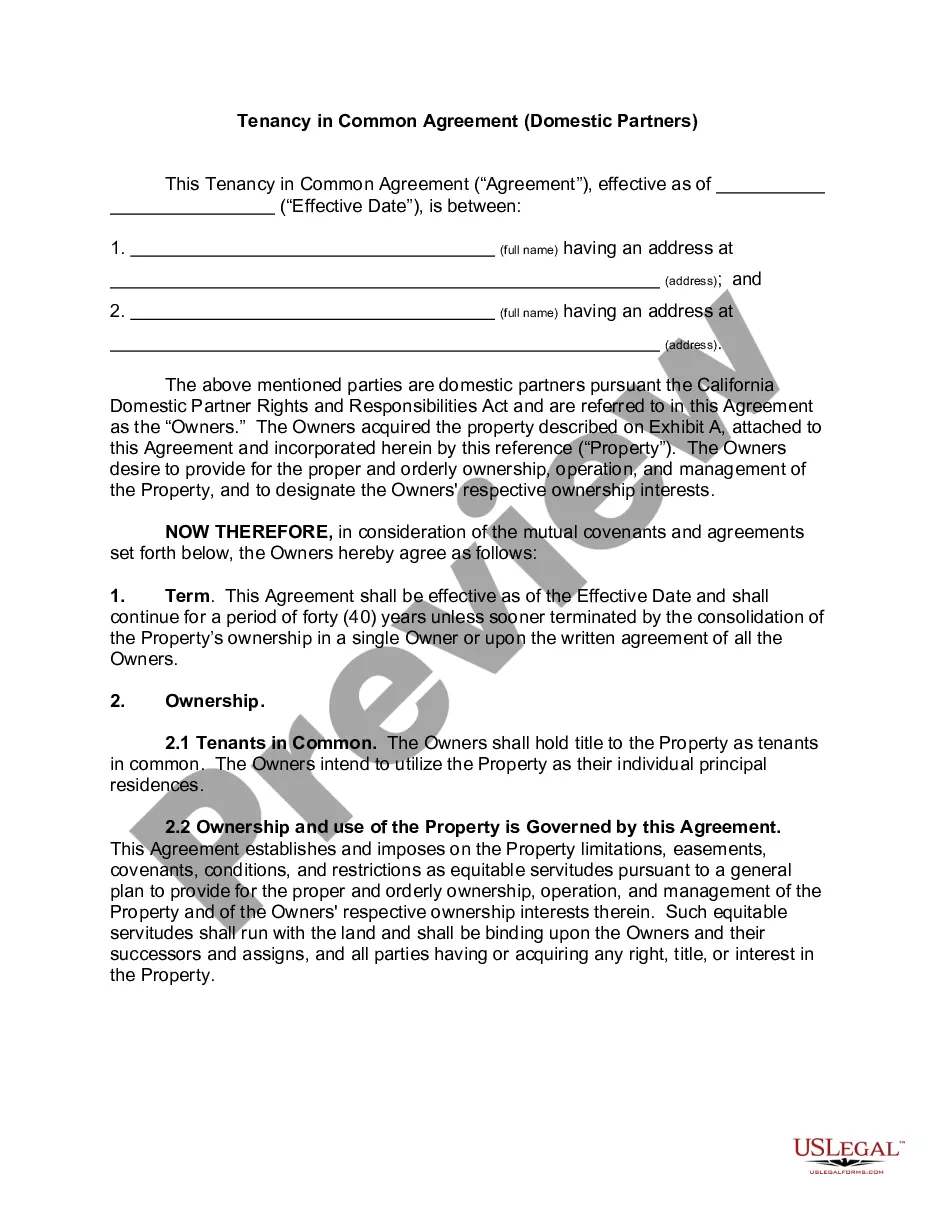
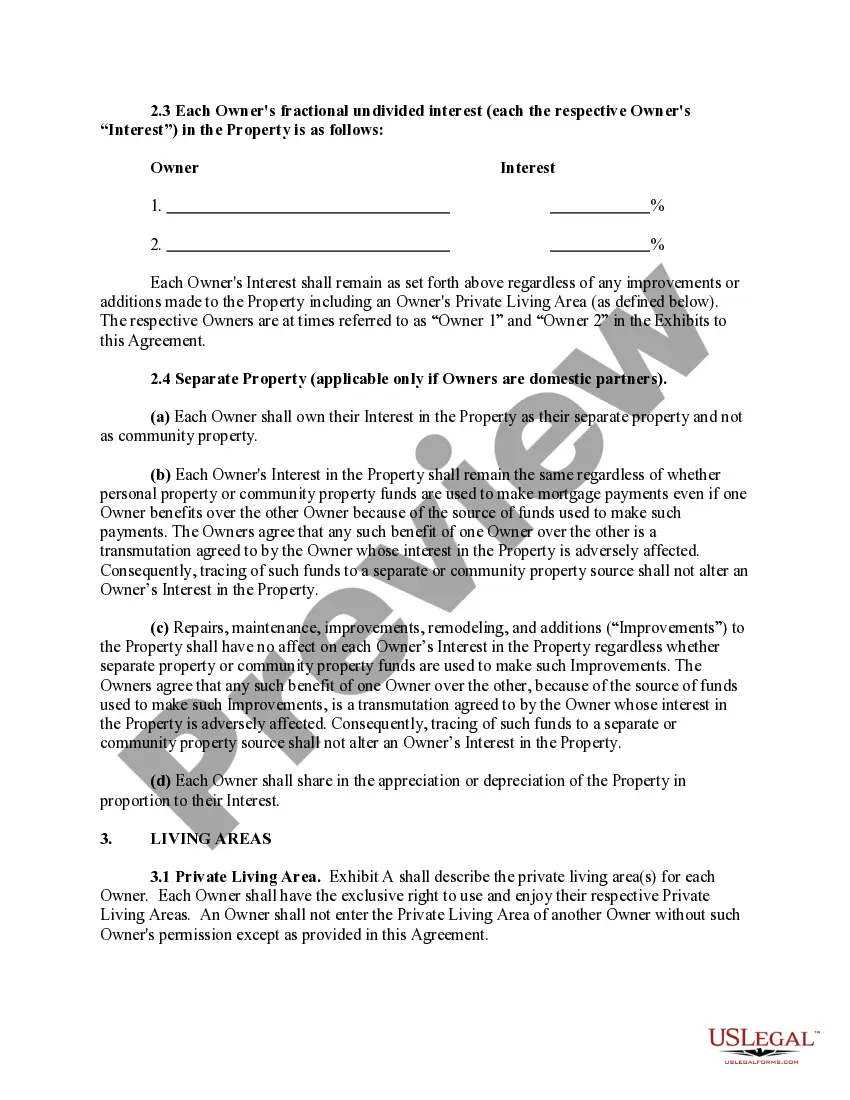
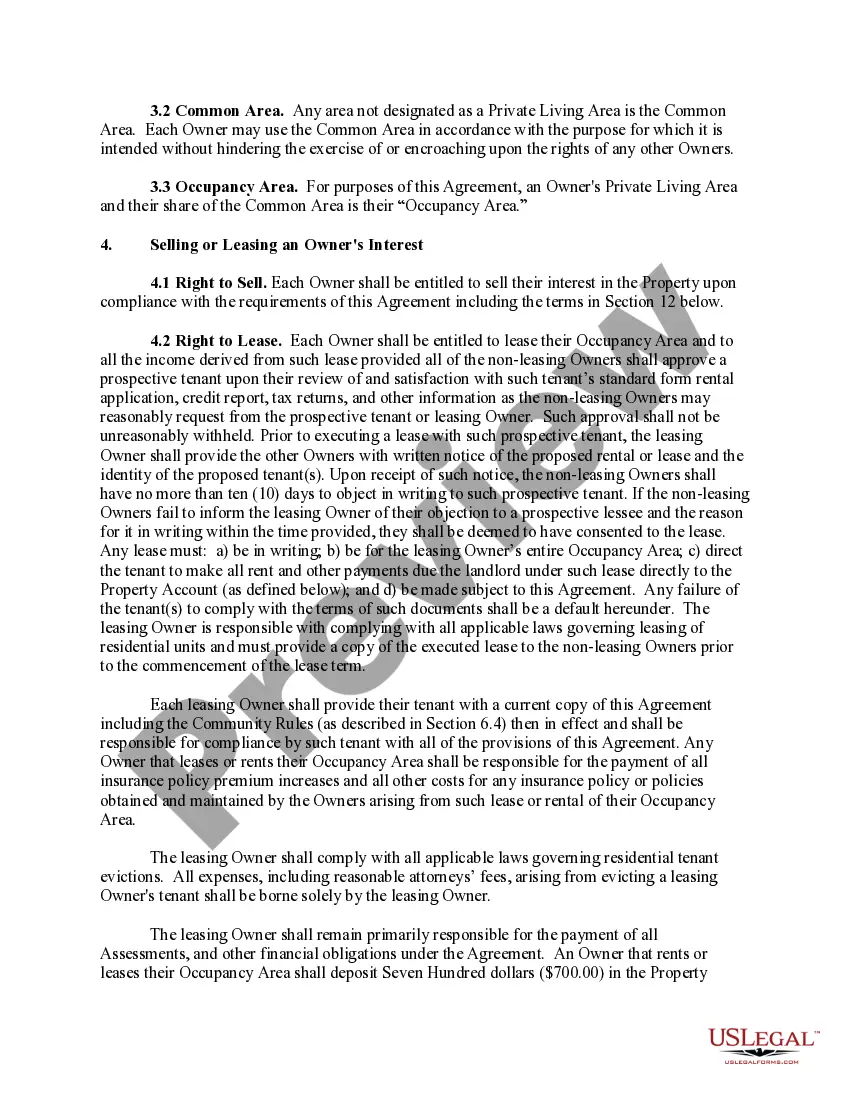
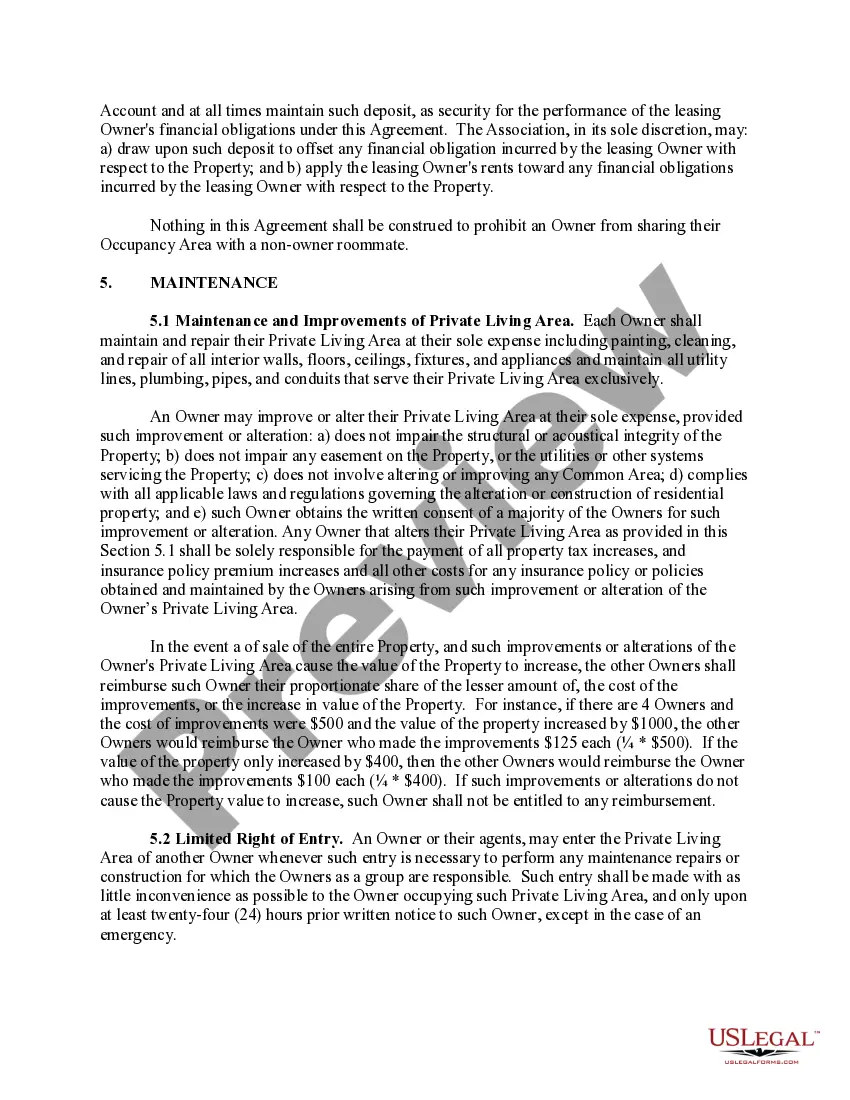
Tenancy In Common Agreement Form
Description
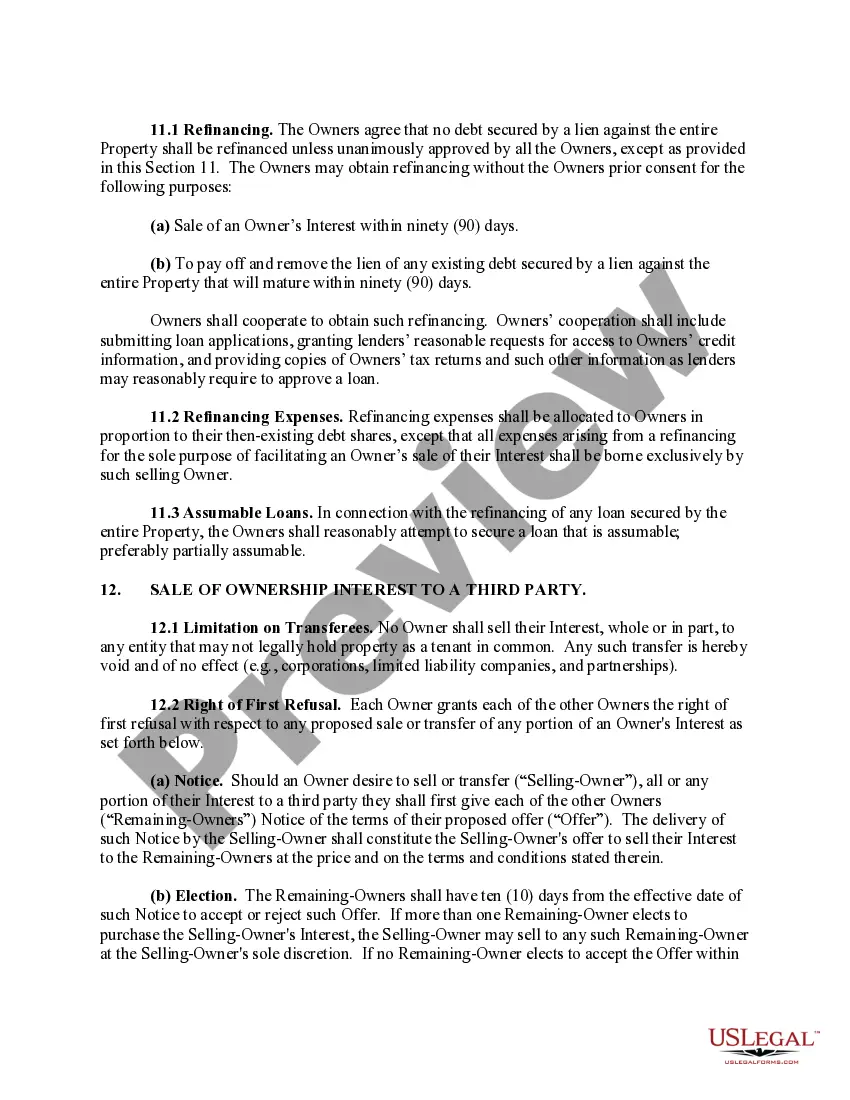
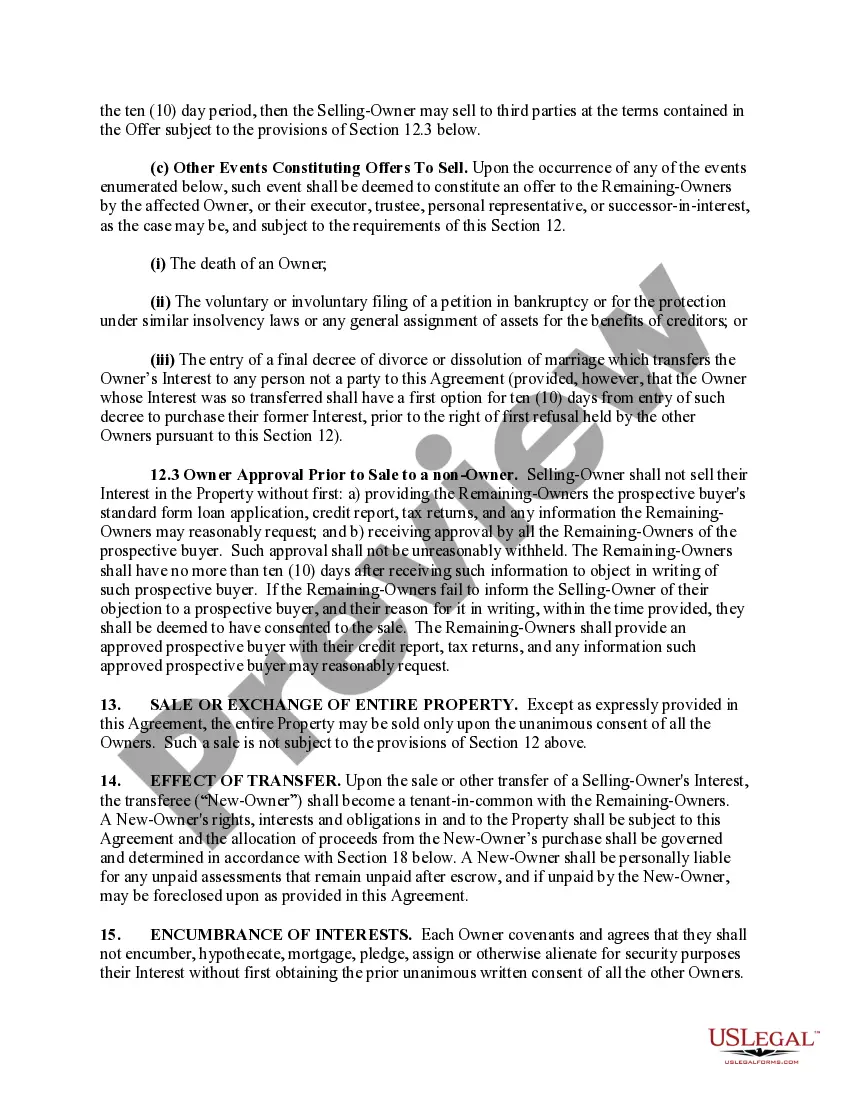

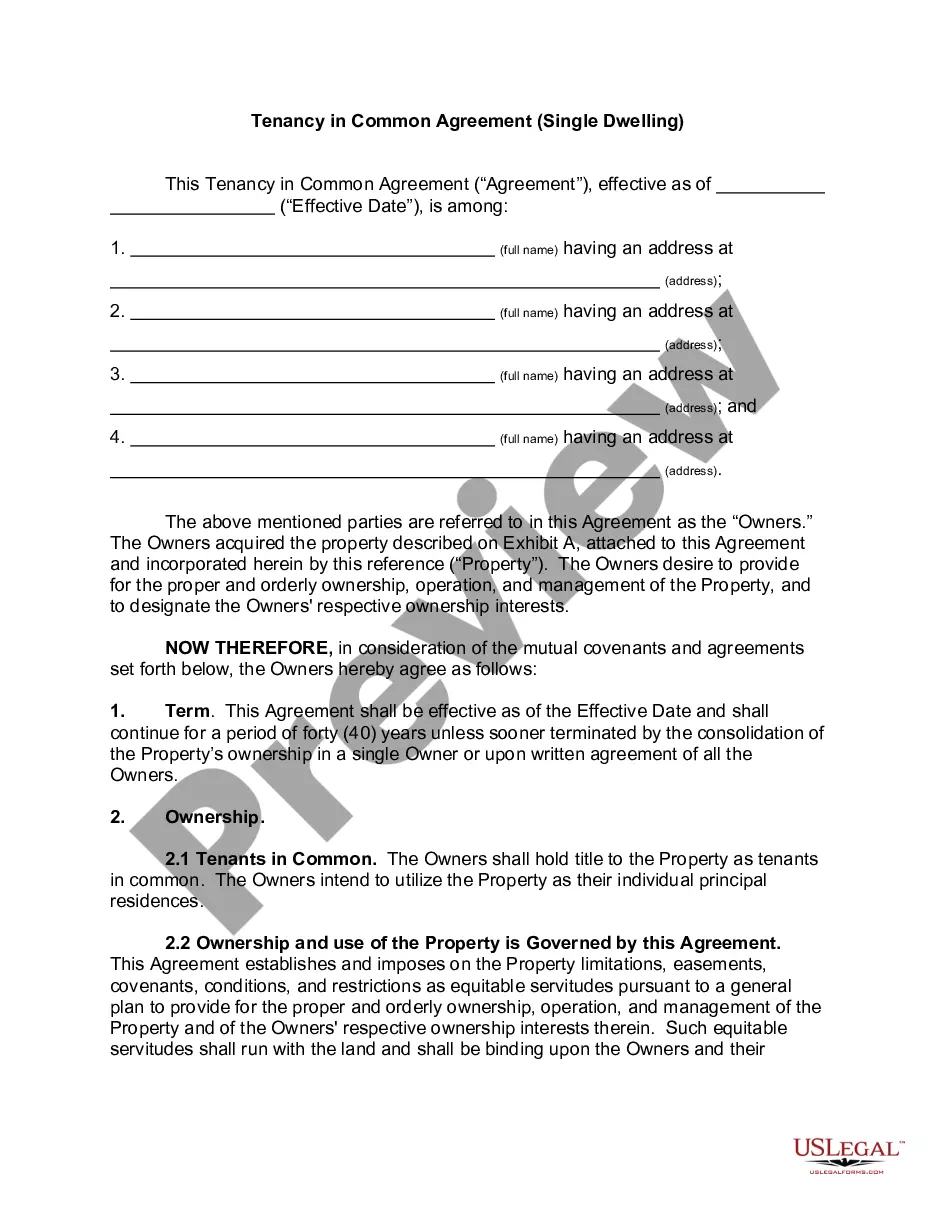
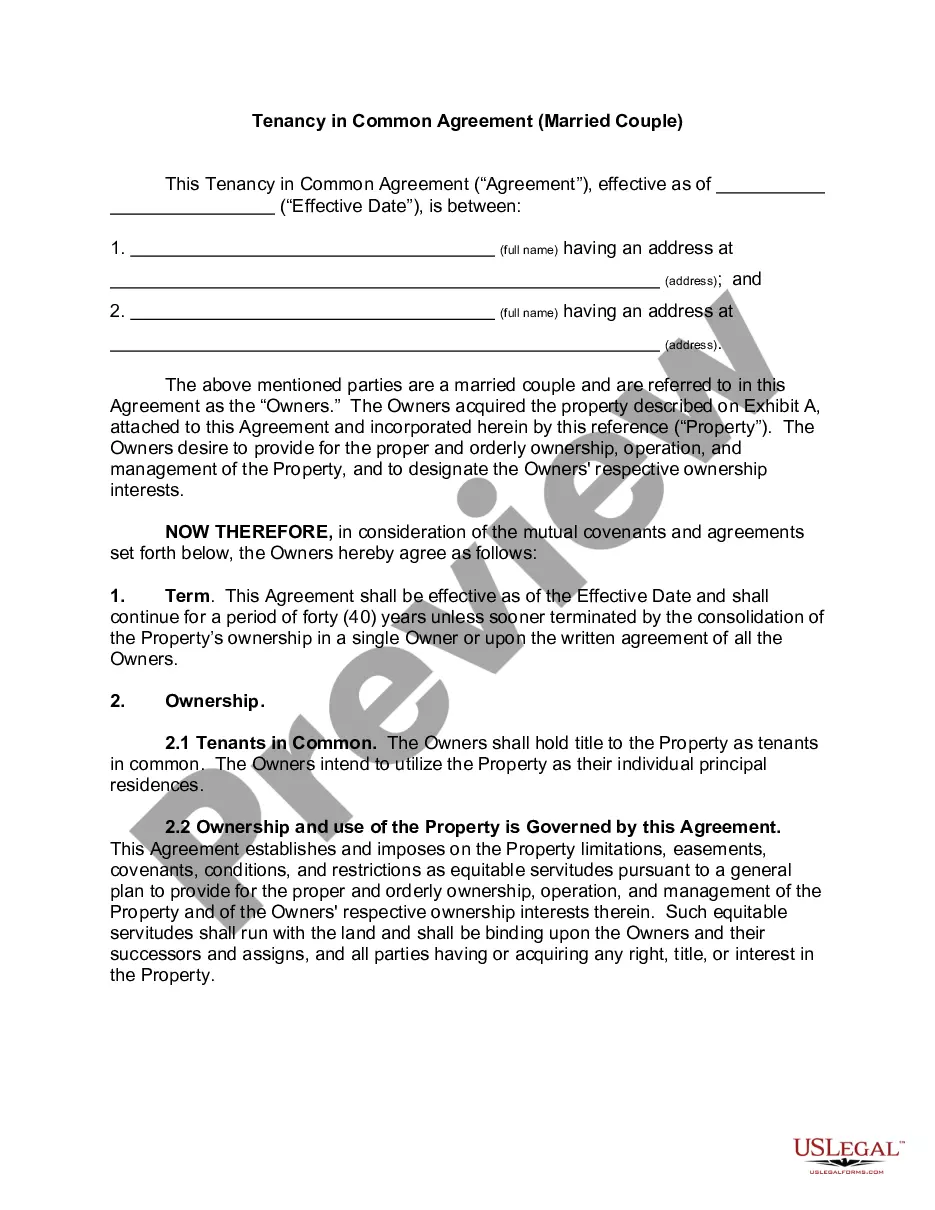
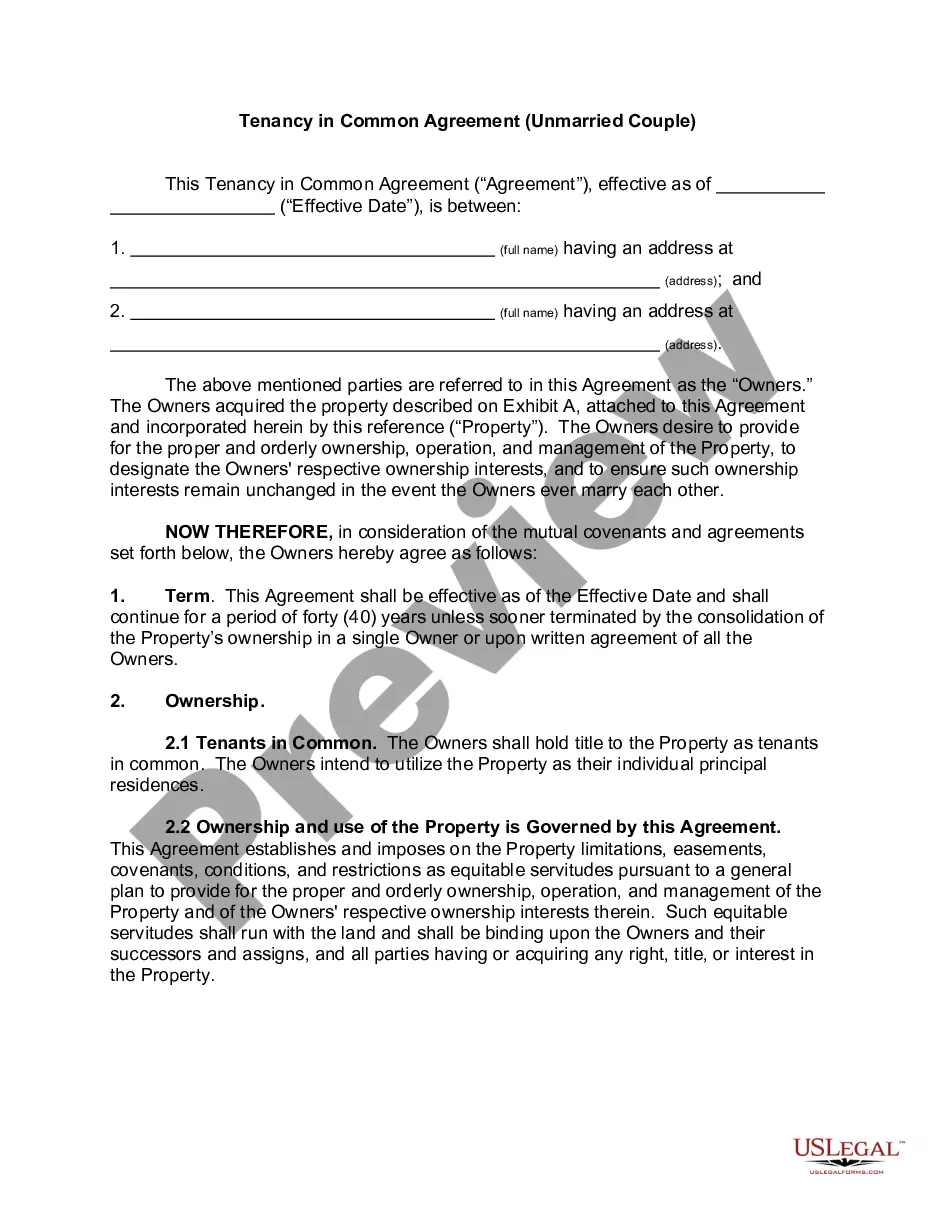
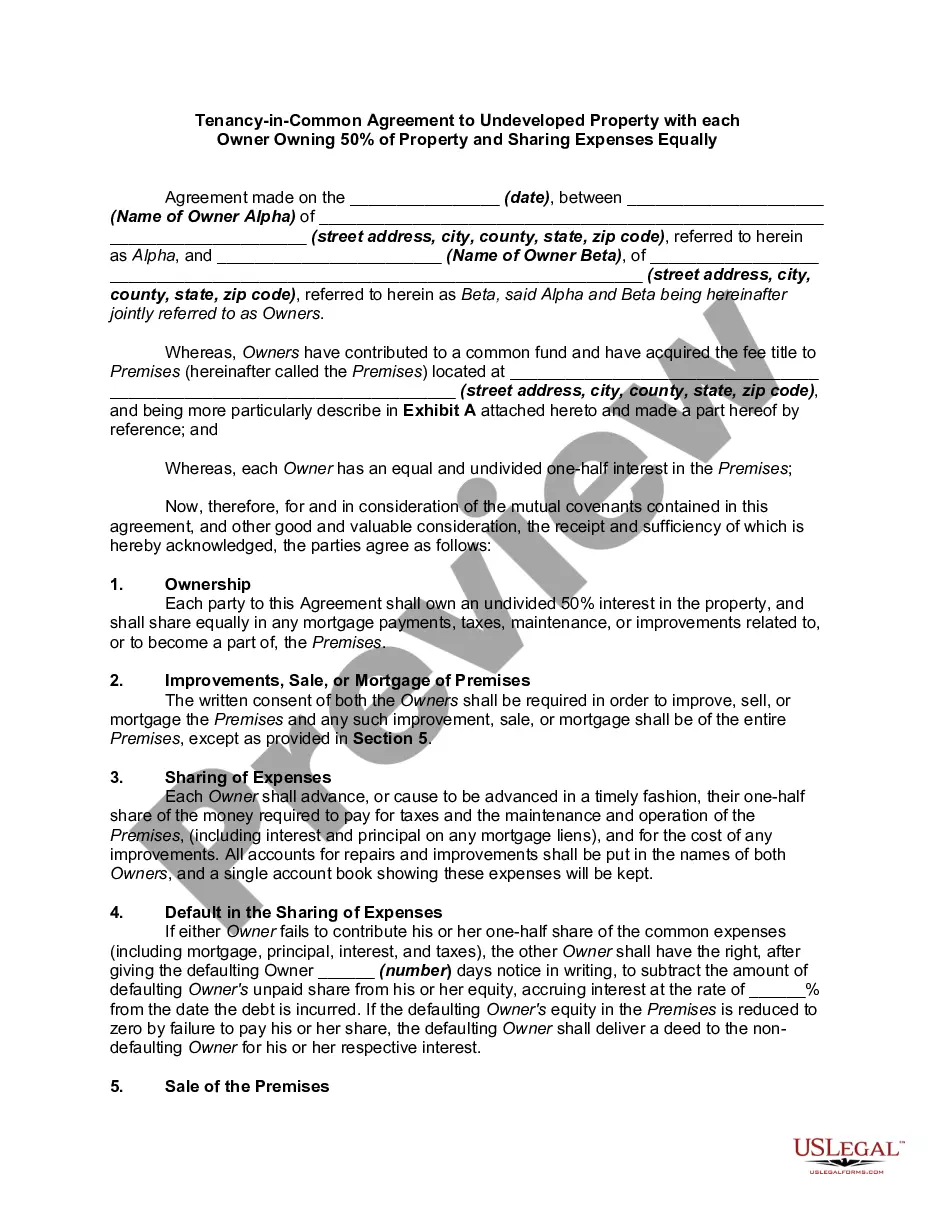
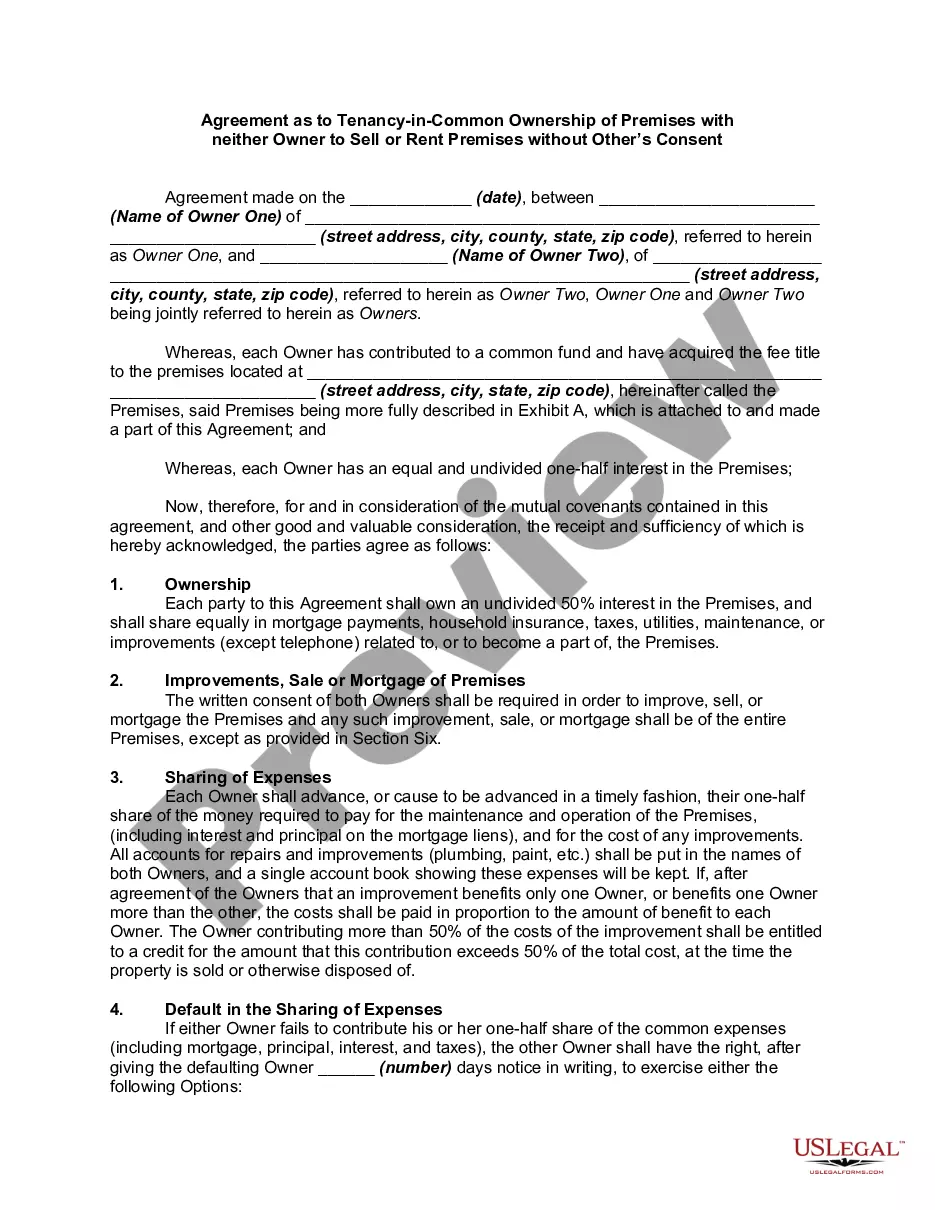
Get your form ready online
Our built-in tools help you complete, sign, share, and store your documents in one place.
Make edits, fill in missing information, and update formatting in US Legal Forms—just like you would in MS Word.
Download a copy, print it, send it by email, or mail it via USPS—whatever works best for your next step.
Sign and collect signatures with our SignNow integration. Send to multiple recipients, set reminders, and more. Go Premium to unlock E-Sign.
If this form requires notarization, complete it online through a secure video call—no need to meet a notary in person or wait for an appointment.
We protect your documents and personal data by following strict security and privacy standards.

Make edits, fill in missing information, and update formatting in US Legal Forms—just like you would in MS Word.

Download a copy, print it, send it by email, or mail it via USPS—whatever works best for your next step.

Sign and collect signatures with our SignNow integration. Send to multiple recipients, set reminders, and more. Go Premium to unlock E-Sign.

If this form requires notarization, complete it online through a secure video call—no need to meet a notary in person or wait for an appointment.

We protect your documents and personal data by following strict security and privacy standards.
Looking for another form?

How to fill out California Tenancy In Common Agreement - Single Dwelling - Domestic Partners?
How to obtain expert legal documents adhering to your state regulations and create the Tenancy In Common Agreement Form without hiring an attorney.
Numerous online services offer templates to address various legal situations and formalities.
However, it may take time to determine which of the presented samples meet both your use case and legal requirements.
If you do not possess an account with US Legal Forms, then follow the instructions below.
- US Legal Forms is a recognized service that helps you find official documents arranged in accordance with the latest state law updates and reduces expenses on legal assistance.
- US Legal Forms is not a typical online repository. It consists of over 85,000 verified templates for different business and life circumstances.
- All documents are categorized by field and state to streamline your search process and make it more convenient.
- Additionally, it integrates with powerful solutions for PDF editing and eSignature, allowing users with a Premium subscription to swiftly fill out their documents online.
- It requires minimal time and effort to obtain the necessary paperwork.
- If you already have an account, Log In and ensure your subscription is active.
- Download the Tenancy In Common Agreement Form using the appropriate button next to the file name.
Form popularity
FAQ
If you hold the property as tenants in common this means that each owner has a distinct share in the property. In the absence of any statement to the contrary, it is presumed you hold in equal shares. Alternatively, it may have been specified what share of the property belongs to each owner, e.g. 70/30.
If you would like to share things unequally; if you want to ensure that if you break up, you can make a relatively clean and painless exit; if you want to leave your share to other beneficiaries after your death; or, if you want to protect your share of the value in your home from being swallowed up by your partners
When the property is sold, each owner receives their share of the sale proceeds. This allows any disparity in financial contributions to be recognised, keeping each person's share separate from the others. That is why tenants in common is often preferred by friends or family members who are buying a property together.
Where a property is owned as joint tenants, when one of the owners die the property automatically pass to the surviving owner, regardless of what the Will of the deceased owner says. This is known as a 'right of survivorship'. This is the most common way a property is owned by husband and wife or civil partners.