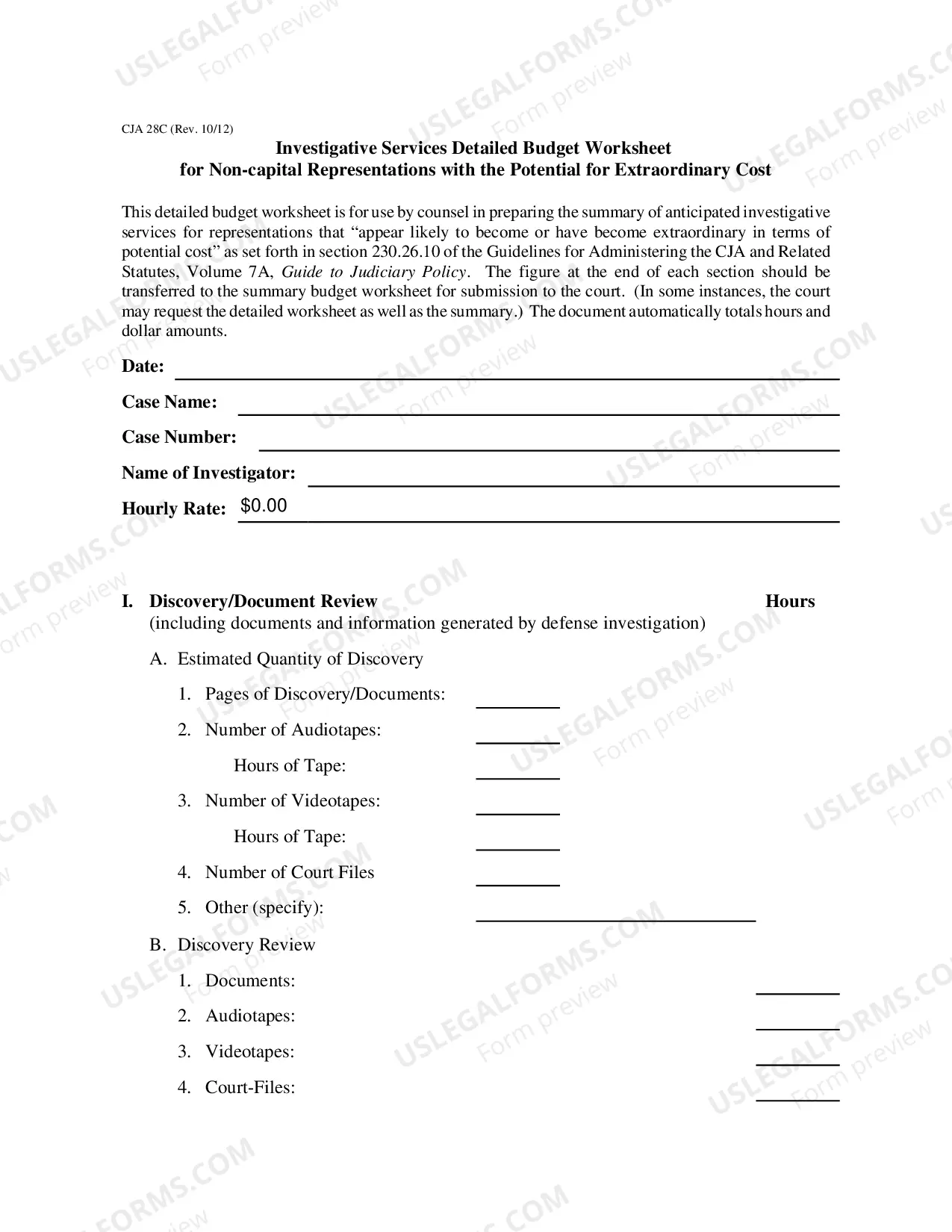
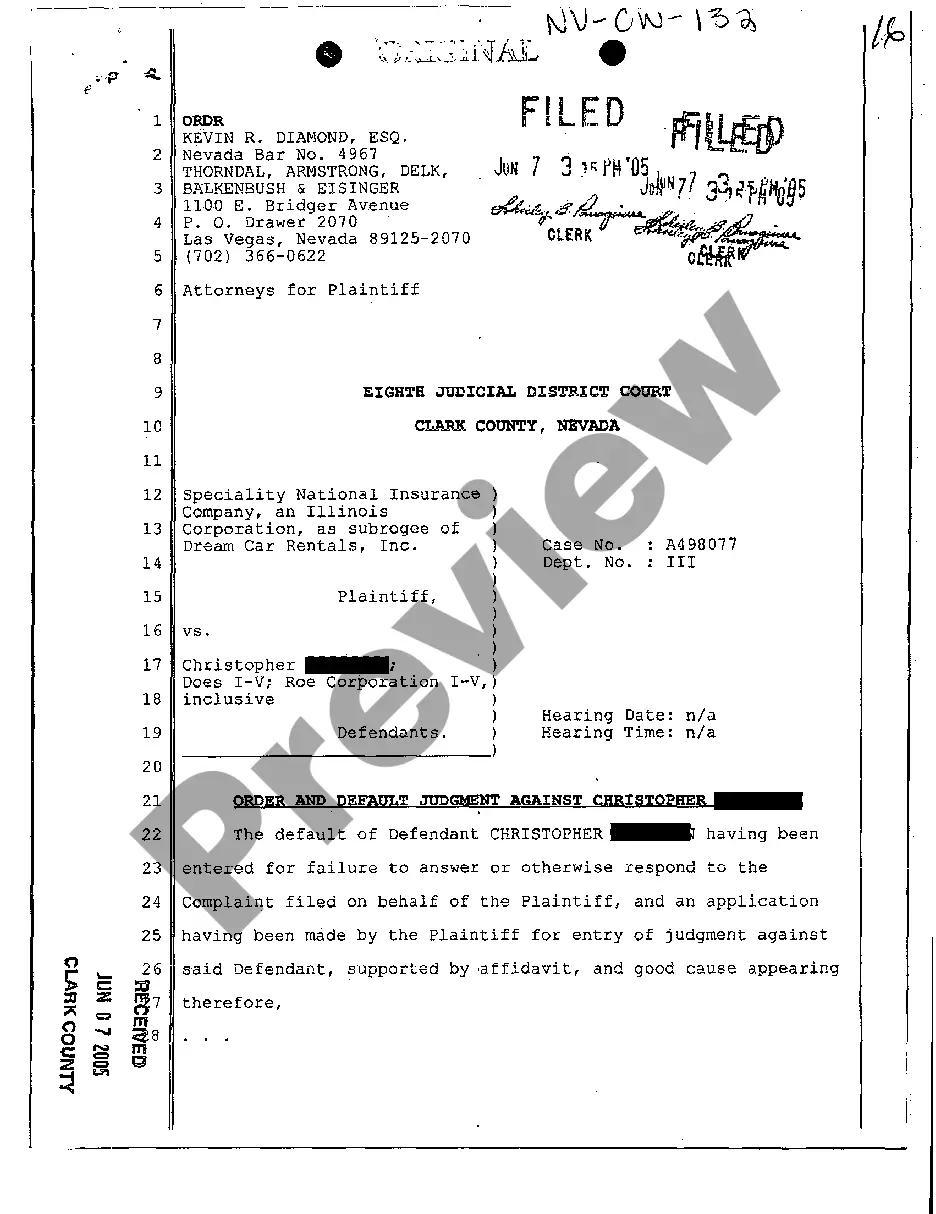
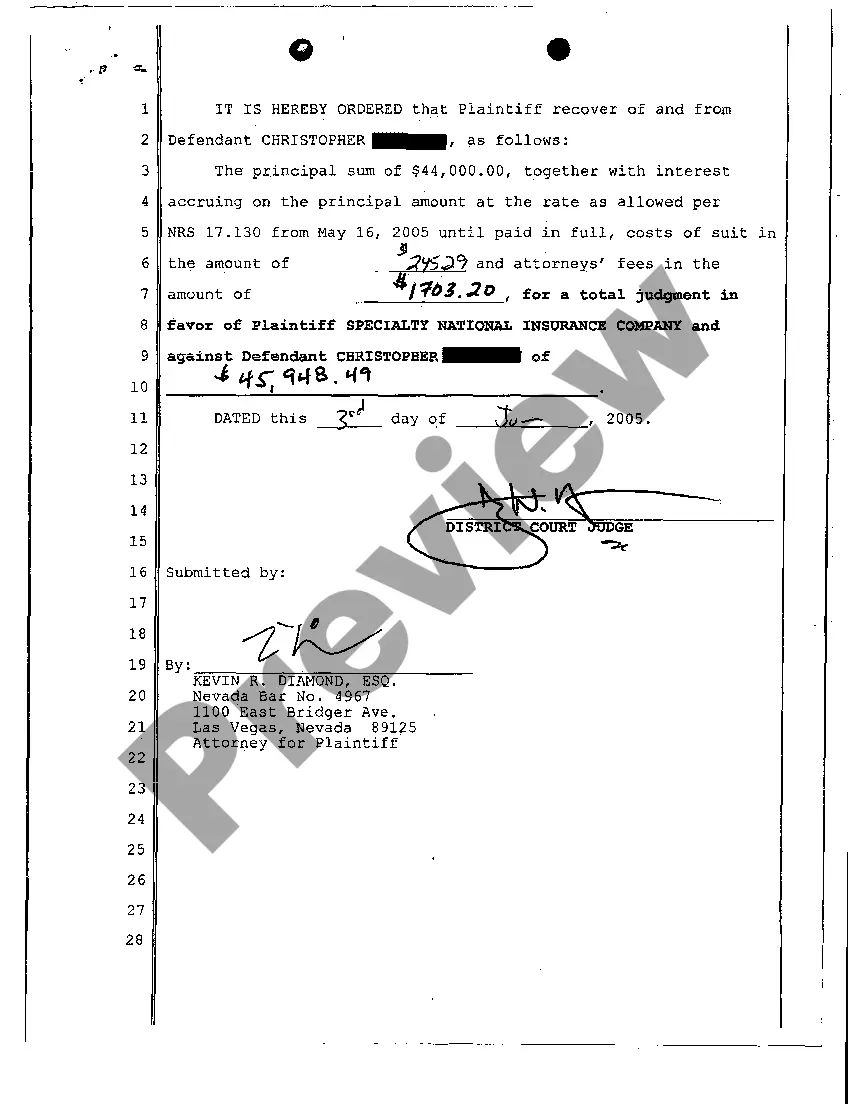
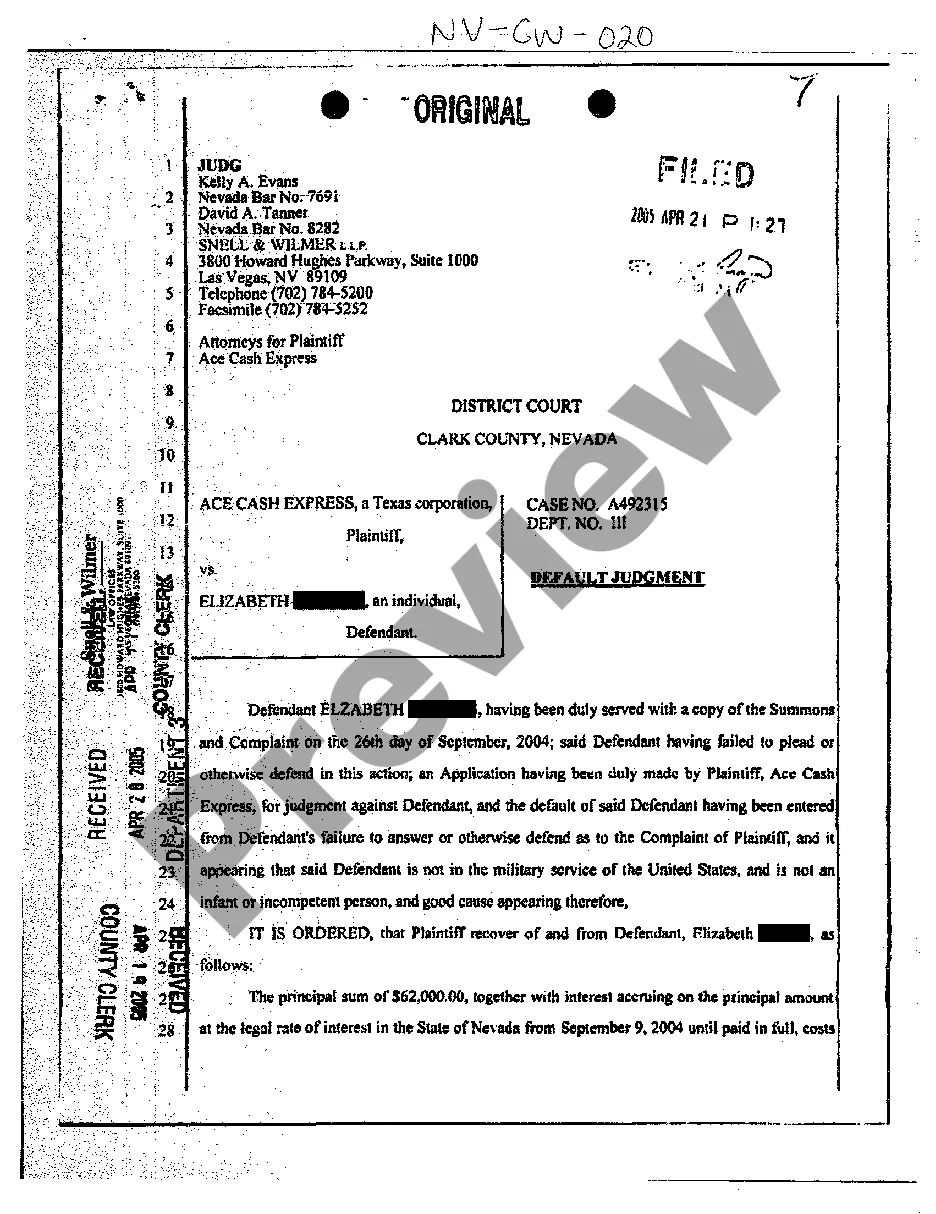
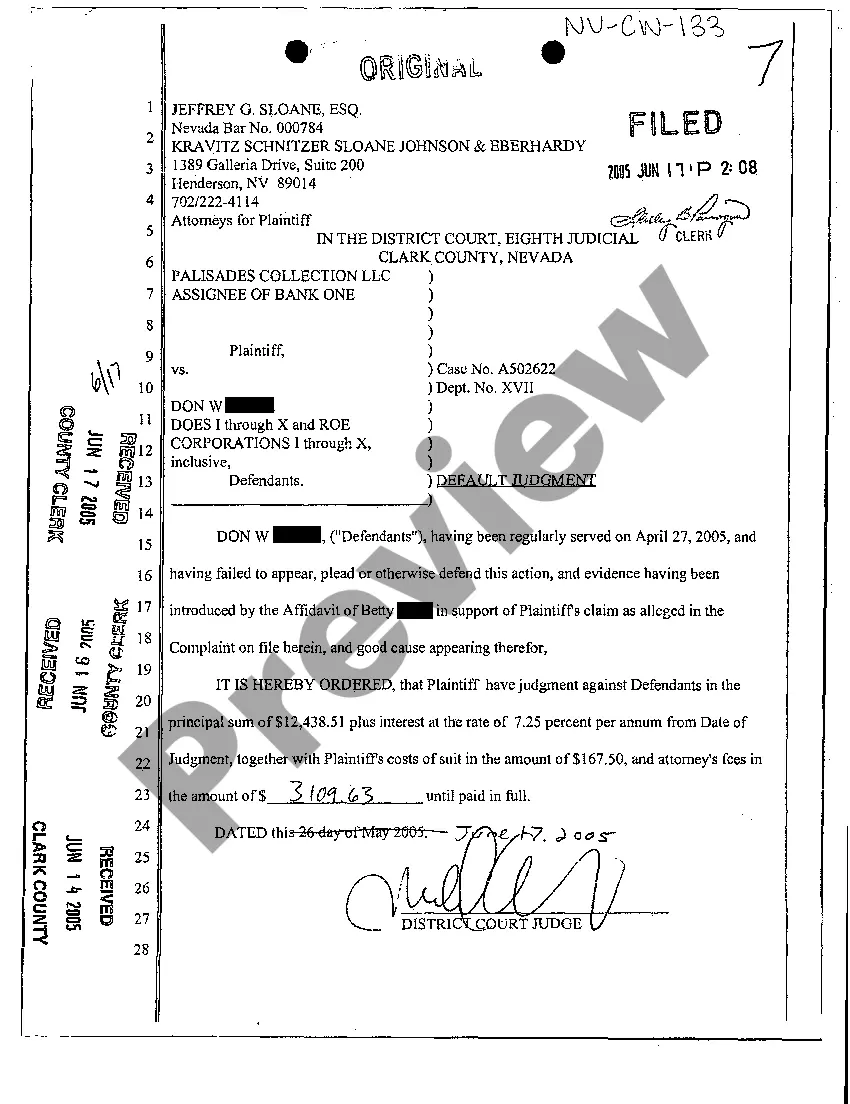
Nevada Order and Default Judgment Against Defendant
Notarization requirements for this form
Notarization is generally not required for this form. However, certain states or situations might demand it. You can complete notarization online through US Legal Forms, powered by Notarize, using a verified video call available anytime.
Form popularity
FAQ
A simple default doesn't mean you legally owe a certain amount of money. A default judgment identifies the amount you owe the plaintiff. You don't want this to happen because a default judgment makes you a judgment debtor. Plaintiff may use all sorts of legal procedures to legally take your money and property.
Your judgment might be for money, repossession, eviction, foreclosure, or any number of things. In any case, your rights at this point would be the same as if you had gone to trial and won. A Motion to Vacate is one way by which a defendant can avoid enforcement of a default judgment.
If you do not think the default judgment was appropriately entered against you, you must file a motion with the court asking the judge to set aside (void or nullify) the judgment. If the judge grants your motion, the case starts back up again.
First, you can ask the court to set aside the default judgment and give you an opportunity to contest it. Next, you can settle the debt with the debt buyer for an amount less than what the default judgment is for. And finally you can eliminate the default judgment completely by filing for bankruptcy.
If a notice of motion for setting aside or variation of a judgment or order is filed within 14 days after the judgment or order is entered, the court may set aside or vary the judgment or order under r 36.16(1) as if the judgment or order had not been entered: r 36.16(3A).
Typically, a court's rules governing enforcement of default judgments include procedures for wage garnishments, attachment of bank accounts and seizure of assets. The plaintiff can usually pursue more than one of these enforcement mechanisms simultaneously.
In effect, you're found guilty because you never entered a defense. Default judgments are sometimes called automatic judgments because of how fast they can happen. Next up could be wage garnishment or a bank account levy, which allows a creditor to remove money from your bank accounts to repay the debt.
You cannot appeal this kind of judgment and have a new trial until you vacate the default judgment, that is, until you have the judgment removed or erased. To vacate a default judgment, do the following:Get the form called Notice of Motion to Vacate Judgment from the small claims clerk.