California Tenant Form Application Without Lease
Description

Get your form ready online
Our built-in tools help you complete, sign, share, and store your documents in one place.
Make edits, fill in missing information, and update formatting in US Legal Forms—just like you would in MS Word.
Download a copy, print it, send it by email, or mail it via USPS—whatever works best for your next step.
Sign and collect signatures with our SignNow integration. Send to multiple recipients, set reminders, and more. Go Premium to unlock E-Sign.
If this form requires notarization, complete it online through a secure video call—no need to meet a notary in person or wait for an appointment.
We protect your documents and personal data by following strict security and privacy standards.

Make edits, fill in missing information, and update formatting in US Legal Forms—just like you would in MS Word.

Download a copy, print it, send it by email, or mail it via USPS—whatever works best for your next step.

Sign and collect signatures with our SignNow integration. Send to multiple recipients, set reminders, and more. Go Premium to unlock E-Sign.

If this form requires notarization, complete it online through a secure video call—no need to meet a notary in person or wait for an appointment.

We protect your documents and personal data by following strict security and privacy standards.
Looking for another form?









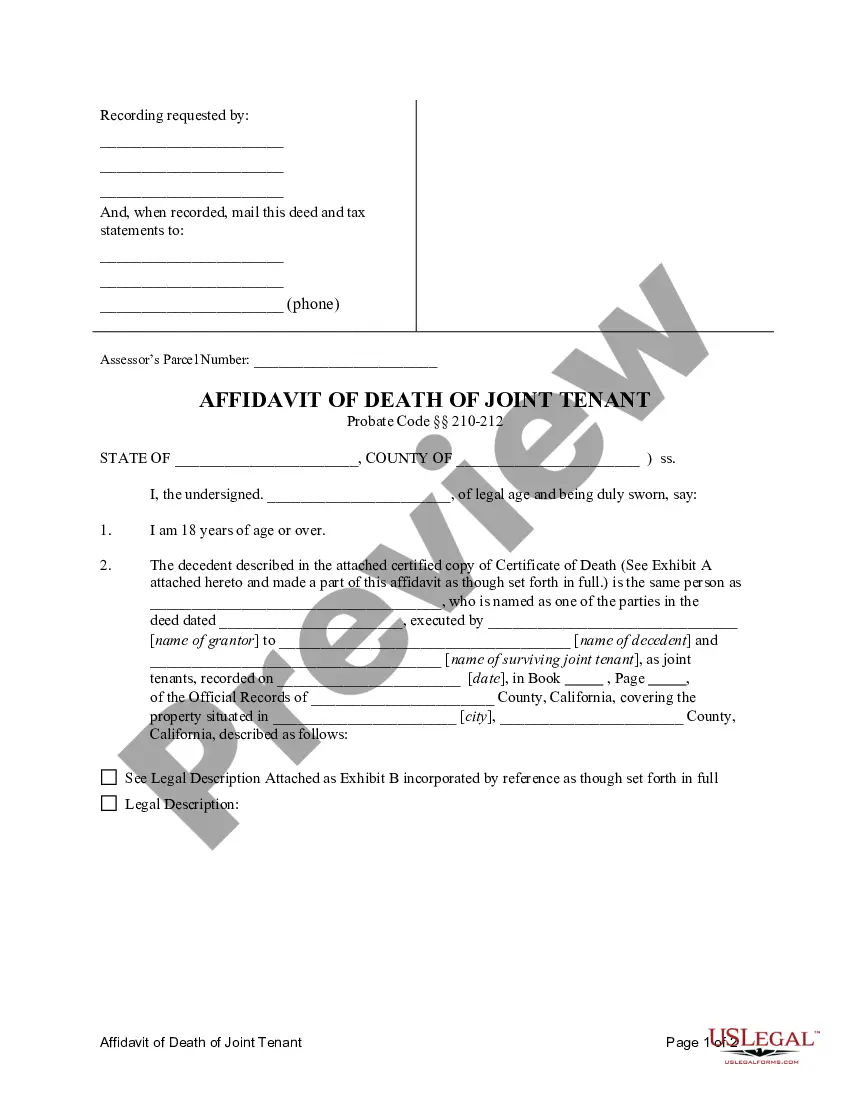
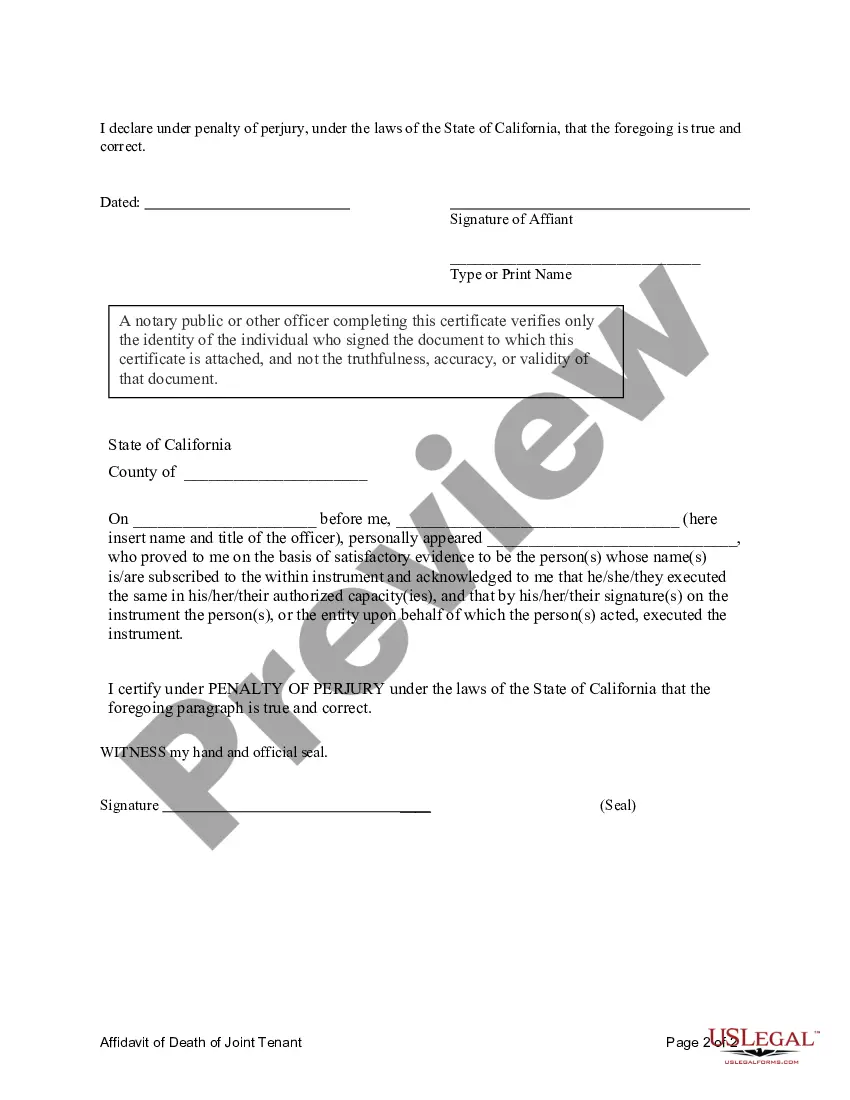
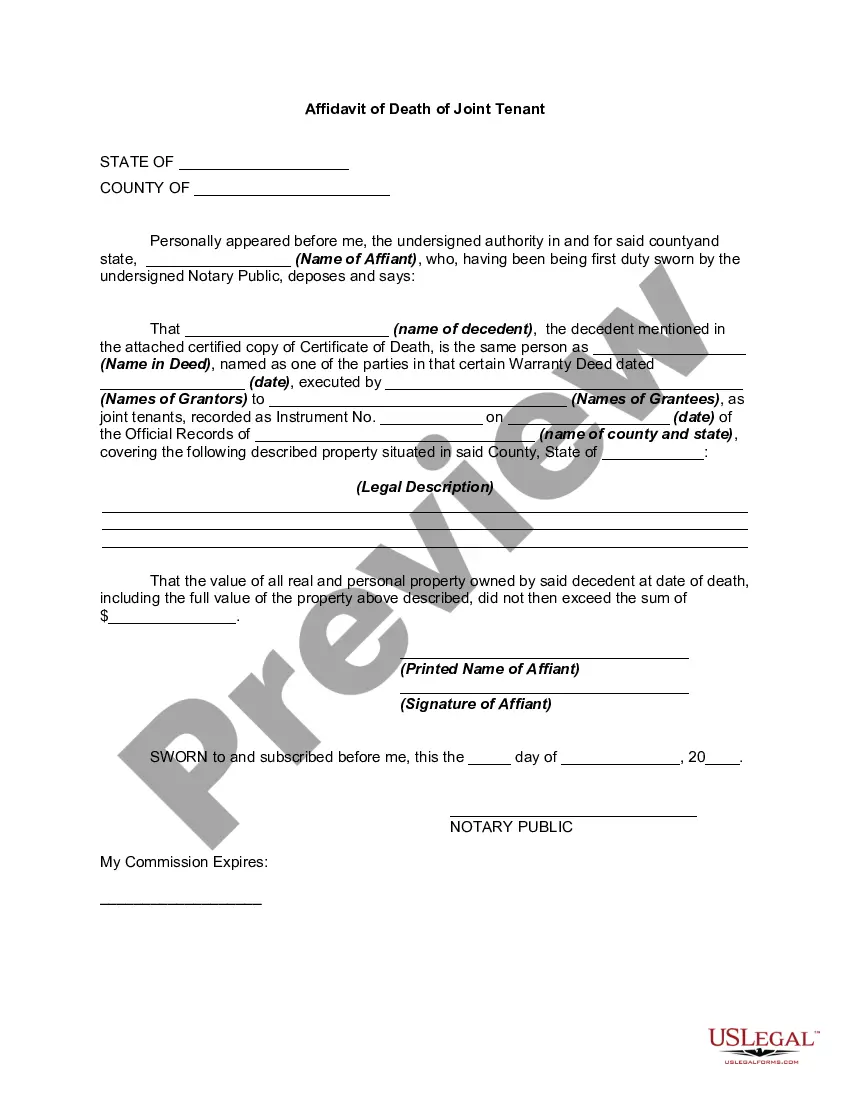
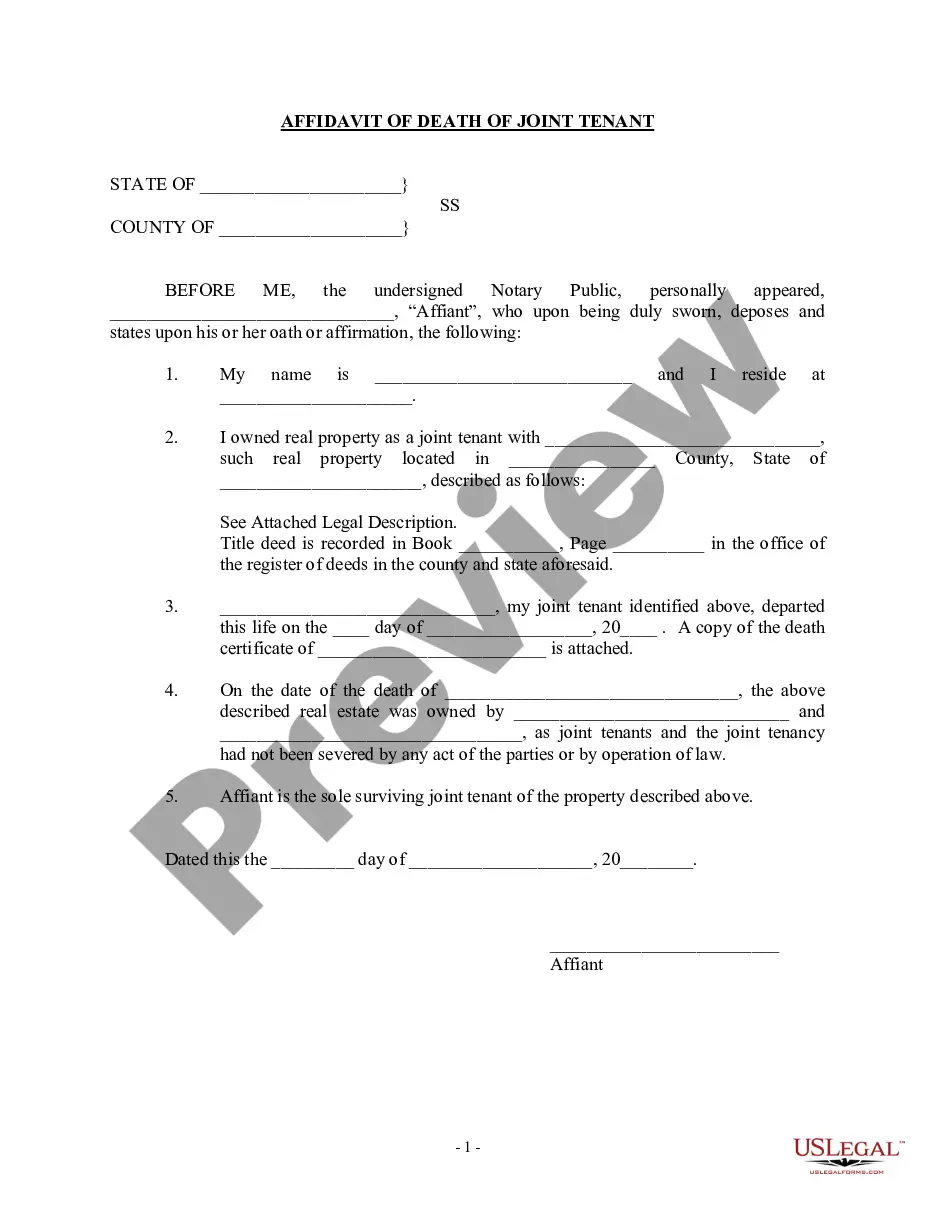
How to fill out California Affidavit Of Death Of Joint Tenant?
Legal oversight can be perplexing, even for the most informed professionals.
When you seek a California Tenant Form Application Without Lease and lack the time to devote to finding the correct and current version, the process can be stress-inducing.
US Legal Forms caters to any needs you might have, from personal to organizational documentation, all in one location.
Employ advanced tools to complete and oversee your California Tenant Form Application Without Lease.
Here are the steps to follow after obtaining the form you require: Validate that this is the correct form by previewing it and reviewing its description. Confirm that the template is accepted in your state or county. Click Buy Now when you are prepared. Choose a monthly subscription option. Select the file format you need, and Download, fill out, eSign, print, and submit your documents. Enjoy the US Legal Forms online library, supported by 25 years of expertise and reliability. Transform your daily document management into a seamless and user-friendly experience today.
- Access a valuable resource library of articles, guides, and materials relevant to your situation and requirements.
- Conserve time and energy searching for the documentation you need, and use US Legal Forms’ sophisticated search and Preview function to find the California Tenant Form Application Without Lease and obtain it.
- If you possess a membership, Log In to your US Legal Forms account, search for the document, and download it.
- Check your My documents section to see the documents you have previously acquired and organize your files as desired.
- If this is your first experience with US Legal Forms, create a free account and gain unlimited access to all benefits of the repository.
- A comprehensive online form repository can be transformative for anyone wishing to manage these circumstances effectively.
- US Legal Forms stands as a frontrunner in online legal documents, boasting over 85,000 state-specific legal forms accessible to you at any time.
- With US Legal Forms, you can find state- or county-specific legal and business documents.
Form popularity
FAQ
Even without a written and signed lease agreement between a landlord and a tenant, California law considers this tenancy to have a ?verbal agreement.? This type of agreement defaults to a month-to-month agreement and both landlord and tenants are subject to California Civil Code.
You can have a tenancy even if you do not have a written tenancy agreement, as long as it's clear that you agreed to rent the home based on an agreement in writing or even verbally. You can agree a tenancy agreement by email or message, or in conversation with the landlord or letting agent.
If you want to evict a month-to-month tenant in California, you will have to give them a 30-day notice if they've been living in your dwellings for under a year, or a 60-day notice if they've been living in your unit for over a year.
Tenants without leases are also protected under California's rent control laws. If you are renting month-to-month without a lease agreement, you still have the right to receive notice before any changes are made to your rental agreement. This includes changes to your rent amount or other terms of your tenancy.
The tenancy agreement should include: the names of all people involved. the rental price and how it's paid. information on how and when the rent will be reviewed. the deposit amount and how it will be protected. when the deposit can be fully or partly withheld, for example to repair damage caused by tenants.