Demand Letter Vs Statement Of Claim
Description

Get your form ready online
Our built-in tools help you complete, sign, share, and store your documents in one place.
Make edits, fill in missing information, and update formatting in US Legal Forms—just like you would in MS Word.
Download a copy, print it, send it by email, or mail it via USPS—whatever works best for your next step.
Sign and collect signatures with our SignNow integration. Send to multiple recipients, set reminders, and more. Go Premium to unlock E-Sign.
If this form requires notarization, complete it online through a secure video call—no need to meet a notary in person or wait for an appointment.
We protect your documents and personal data by following strict security and privacy standards.

Make edits, fill in missing information, and update formatting in US Legal Forms—just like you would in MS Word.

Download a copy, print it, send it by email, or mail it via USPS—whatever works best for your next step.

Sign and collect signatures with our SignNow integration. Send to multiple recipients, set reminders, and more. Go Premium to unlock E-Sign.

If this form requires notarization, complete it online through a secure video call—no need to meet a notary in person or wait for an appointment.

We protect your documents and personal data by following strict security and privacy standards.
Looking for another form?
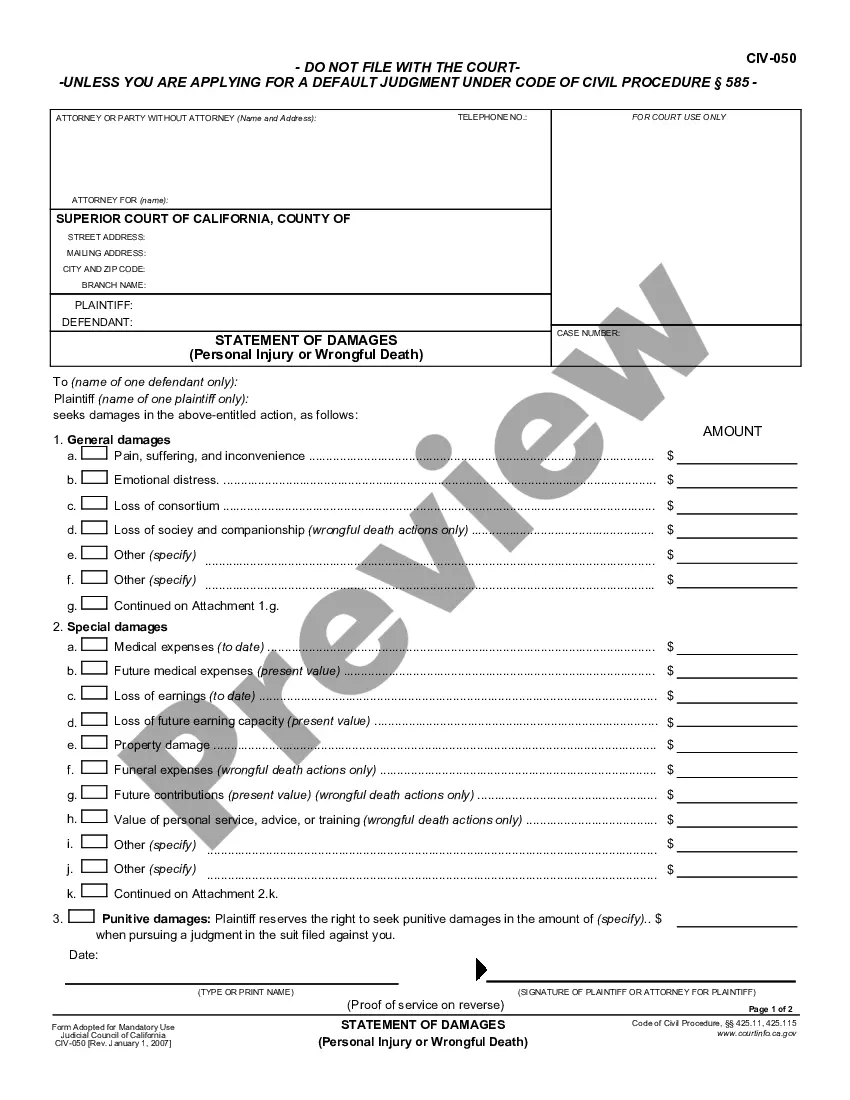
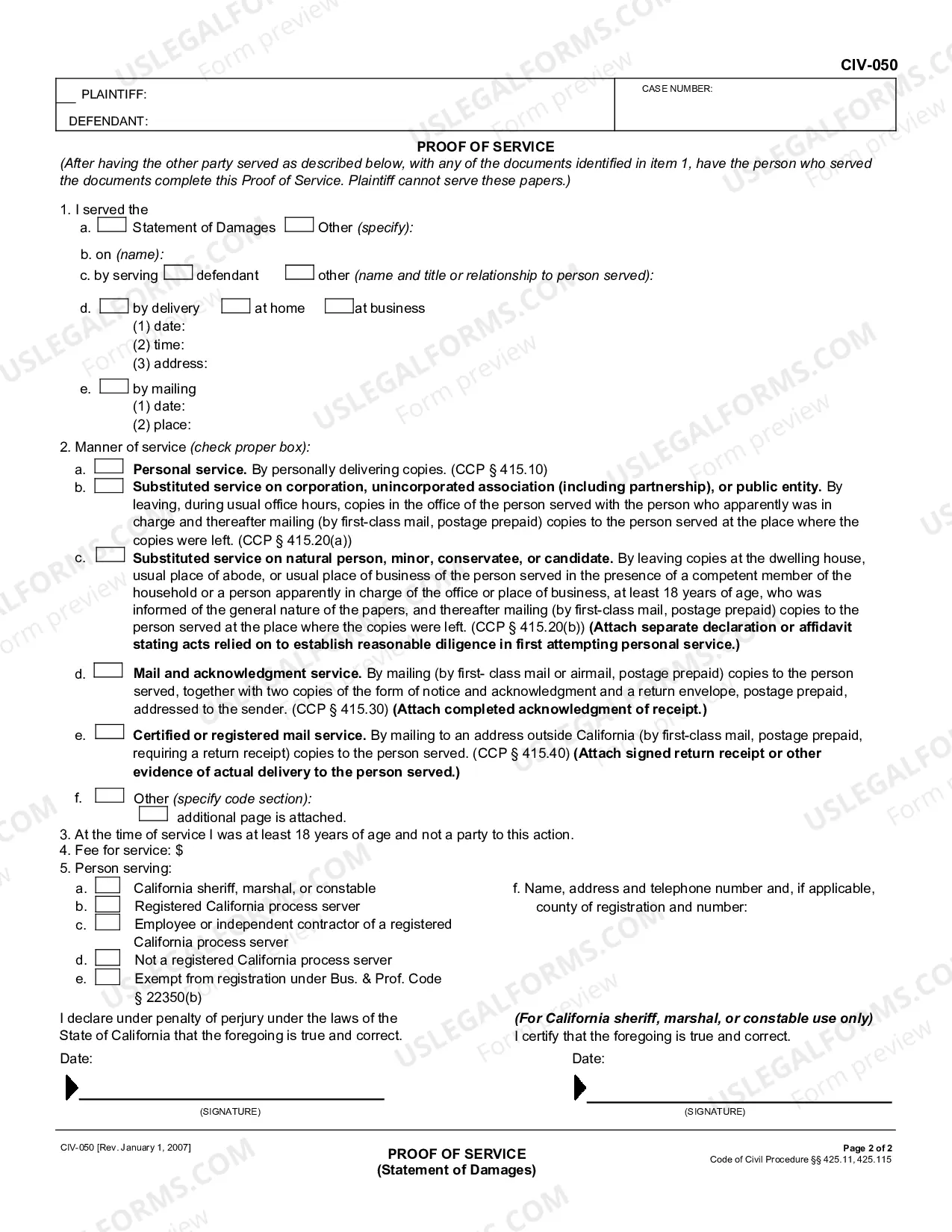
How to fill out California Statement Of Damages For Personal Injury Or Wrongful Death?
The Demand Letter Compared To Statement Of Claim displayed on this page is a versatile legal template created by expert attorneys in compliance with federal and state regulations.
For over 25 years, US Legal Forms has offered individuals, companies, and lawyers more than 85,000 authenticated, state-specific documents for any business and personal needs. It’s the quickest, easiest, and most reliable method to obtain the forms you require, as the service ensures the utmost level of data protection and anti-virus security.
Fill out and sign the documents. Print the template to complete it manually. Alternatively, use an online multifunctional PDF editor to quickly and accurately fill out and sign your form with a valid signature. Download your documents again. Access the same document again whenever necessary. Open the My documents tab in your profile to redownload any previously saved forms. Register for US Legal Forms to access verified legal templates for all of life's situations.
- Search for the document you need and review it.
- Browse the file you searched and preview it or read the form description to confirm it meets your requirements. If it doesn't, use the search function to find the correct one. Click Buy Now once you have found the template you require.
- Register and Log In.
- Select the pricing plan that works best for you and create an account. Use PayPal or a credit card for a quick payment. If you already possess an account, Log In and check your subscription to proceed.
- Obtain the editable template.
- Choose the format you prefer for your Demand Letter Compared To Statement Of Claim (PDF, Word, RTF) and save the document on your device.
Form popularity
FAQ
Using an Angry Tone. Writing in an angry tone or personally attacking the other party is the worst thing you can do in a demand letter. If you let your emotions speak, you'll only invite the receiver to respond in the same tone.
Your demands are unreasonable or too high. You included threats or disparaging language in your demand letter. Your case is complex, and the other person needs more time to consider your demands. They think the issue will go away on its own, and you won't take legal action.
In other words, your demand letter should do the following: It should provide a basic explanation of what happened in your accident, it should explain why the defendant bears responsibility for your damages, and it should clearly state what the potential defendant needs to do in order to settle your claim (resolve your ...
An effective demand statement is one that clearly communicates our expectations while treating the other party with respect. As the course of a negotiation progresses, we tend to learn more about what the other party needs and wants.
Frequently Asked Questions (FAQ) Type your letter. ... Concisely review the main facts. ... Be polite. ... Write with your goal in mind. ... Ask for exactly what you want. ... Set a deadline. ... End the letter by stating you will promptly pursue legal remedies if the other party does not meet your demand. Make and keep copies.