Legal Documents For Estate Planning
Description

Get your form ready online
Our built-in tools help you complete, sign, share, and store your documents in one place.
Make edits, fill in missing information, and update formatting in US Legal Forms—just like you would in MS Word.
Download a copy, print it, send it by email, or mail it via USPS—whatever works best for your next step.
Sign and collect signatures with our SignNow integration. Send to multiple recipients, set reminders, and more. Go Premium to unlock E-Sign.
If this form requires notarization, complete it online through a secure video call—no need to meet a notary in person or wait for an appointment.
We protect your documents and personal data by following strict security and privacy standards.

Make edits, fill in missing information, and update formatting in US Legal Forms—just like you would in MS Word.

Download a copy, print it, send it by email, or mail it via USPS—whatever works best for your next step.

Sign and collect signatures with our SignNow integration. Send to multiple recipients, set reminders, and more. Go Premium to unlock E-Sign.

If this form requires notarization, complete it online through a secure video call—no need to meet a notary in person or wait for an appointment.

We protect your documents and personal data by following strict security and privacy standards.
Looking for another form?









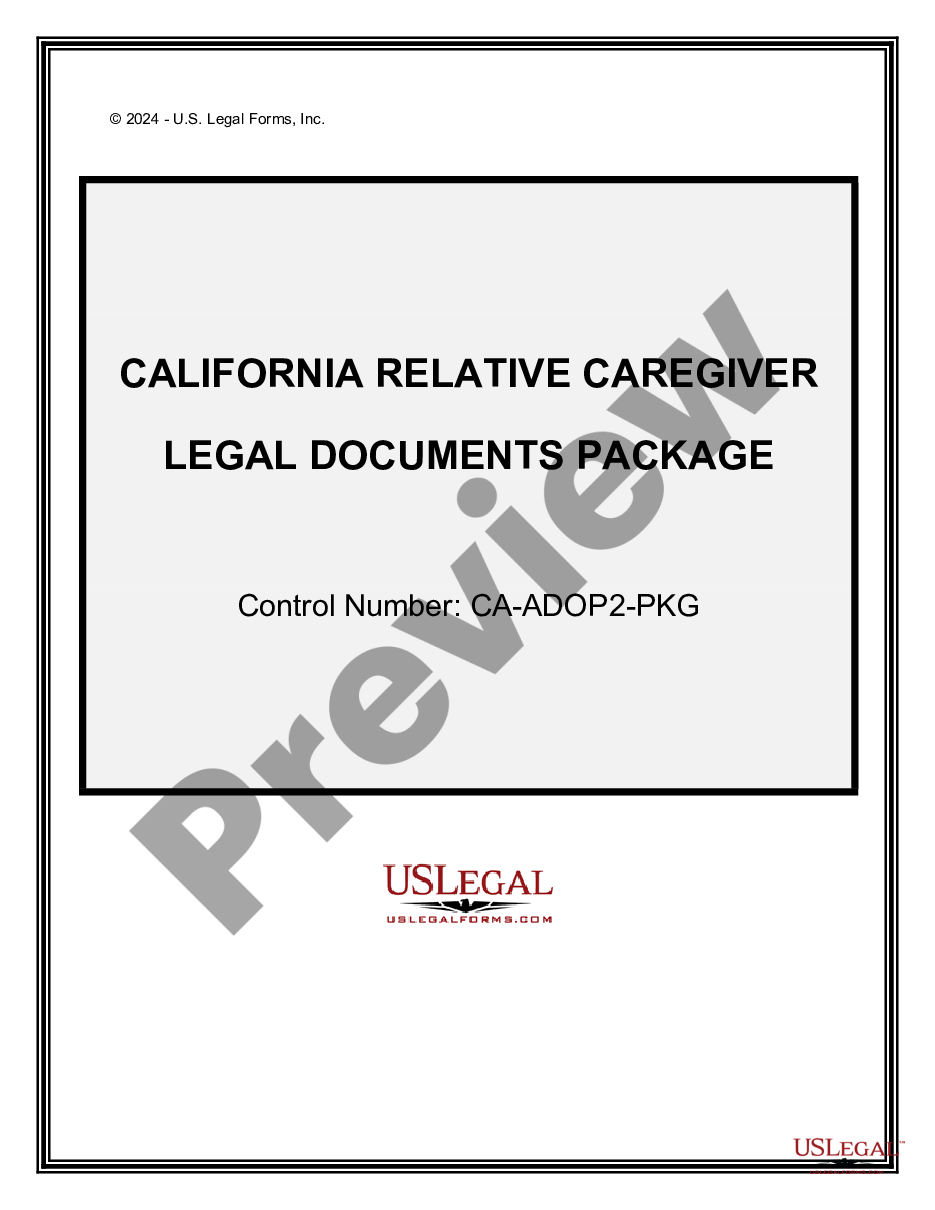
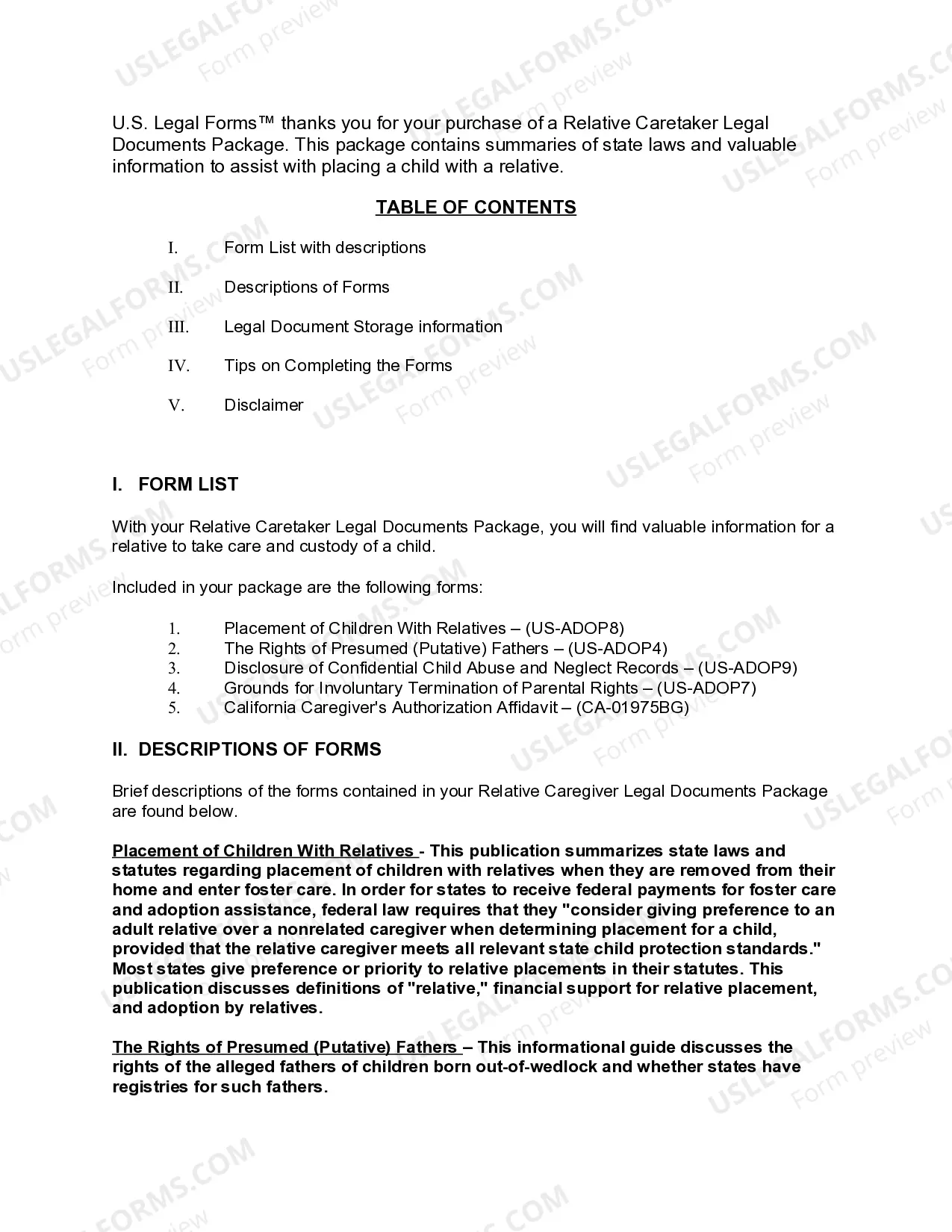
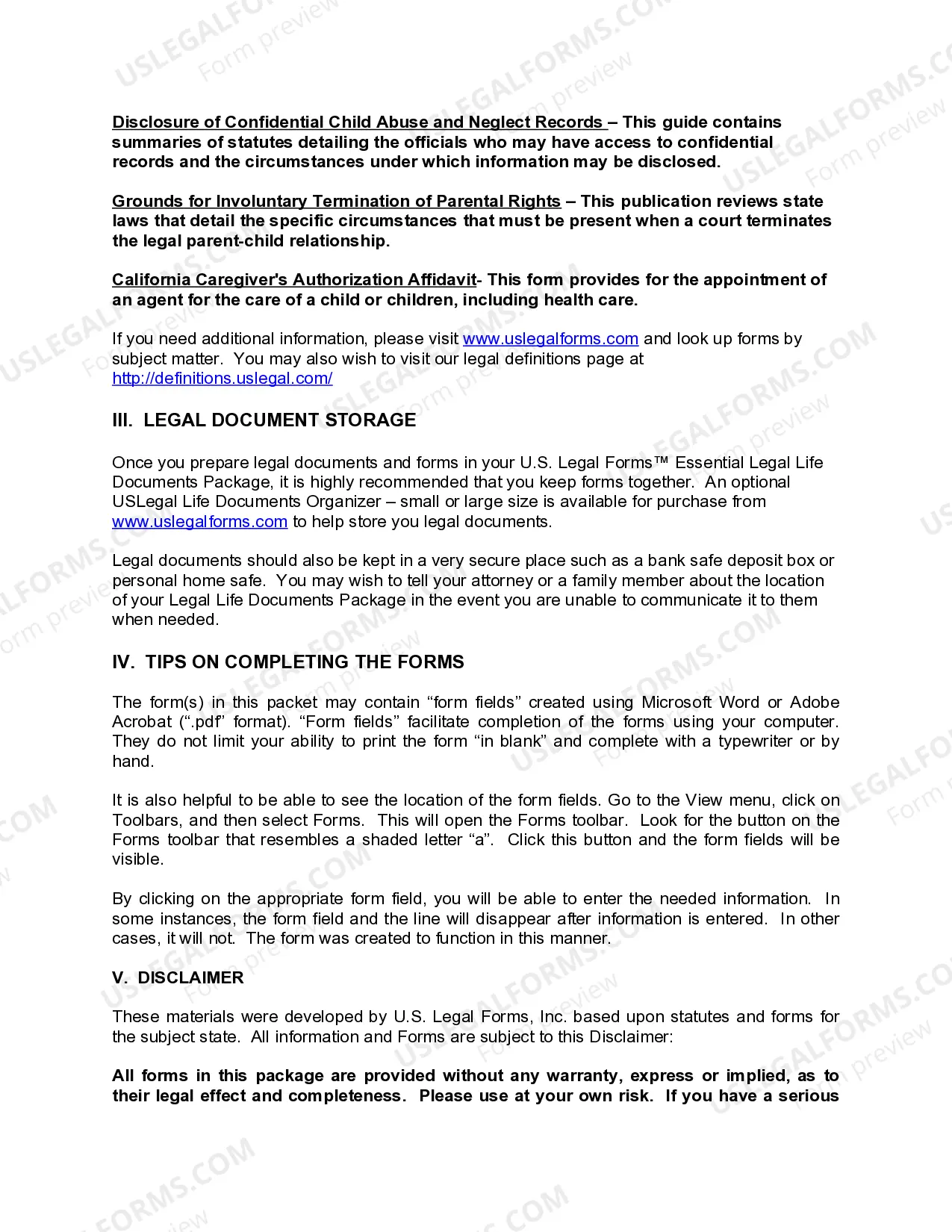
How to fill out California Relative Caretaker Legal Documents Package?
- Begin by checking the Preview mode and read the form description to confirm it meets your requirements.
- If necessary, utilize the Search tab to find an alternative template that better suits your needs.
- Click the Buy Now button next to your chosen document and select a subscription plan that works for you.
- Complete your purchase by entering your payment information via credit card or PayPal.
- Download the form to your device, and access it anytime through the My Forms section in your profile.
Once you complete these steps, you'll have all the necessary legal documents for estate planning at your fingertips. US Legal Forms not only simplifies the process but also ensures that users are backed by expert assistance, which can be vital for creating precise and legally sound documents.
Take advantage of the extensive resources available through US Legal Forms today, and empower yourself with the legal documentation you need for effective estate planning.
Form popularity
FAQ
Creating legal documents for estate planning requires specific information to address your unique situation. You need to compile a list of all your assets, including property, bank accounts, and investments. Additionally, information about liabilities, such as debts and mortgages, is crucial. Finally, you will need details about your family and chosen beneficiaries to ensure your wishes are clearly outlined.
The estate planning process generally involves several key steps to ensure your legal documents for estate planning are comprehensive. First, assess your assets and liabilities. Next, determine your goals for distribution. Third, decide on beneficiaries and guardians. Then, select an executor for your estate. After that, draft your estate planning documents, such as wills and trusts. Review and revise your plans regularly, and finally, ensure the legal documents for estate planning are properly executed.
To create effective legal documents for estate planning, an estate planner typically requires personal information about you and your family members. This includes details about your assets, debts, and wishes regarding their distribution after your passing. Additionally, the planner may need names and contact information for your beneficiaries and any appointed guardians for dependents.
The four foundational documents of an estate plan typically include a will, a durable power of attorney, a healthcare directive, and a trust. A will outlines asset distribution, while a durable power of attorney designates a person to manage your finances if you are unable. A healthcare directive specifies medical preferences, and a trust can provide asset protection. U.S. Legal Forms offers an array of legal documents for estate planning, helping you streamline these essential components.
The 5 or 5 rule involves the ability for beneficiaries to withdraw up to $5,000 or 5% of a trust's assets each year. This rule serves as a method for beneficiaries to access funds while maintaining the integrity of the trust. It enables a balance between immediate resource availability and long-term planning for your estate. Utilize U.S. Legal Forms to find the right legal documents for estate planning, ensuring compliance with these rules.
The 5 and 5 rule primarily relates to gift tax exclusions and annual exemption limits. Under this rule, an individual can gift a maximum of $15,000 per year to any number of recipients without incurring taxes, and if a gift exceeds that amount, it is considered part of the taxable estate. It’s important to grasp these limits to maximize your estate planning strategy. U.S. Legal Forms provides guidance on legal documents for estate planning, helping you navigate these regulations effectively.
The biggest mistake many parents make when establishing a trust fund is not funding it properly. A trust is only effective if it holds assets, so failing to transfer properties, bank accounts, or investments into the trust can render it useless. Ensuring the proper funding of your trust can provide better financial security for your beneficiaries. With U.S. Legal Forms, you can access resources to properly manage and set up effective legal documents for estate planning.
One crucial document for estate planning is the will. This legal document outlines how you want your assets distributed after your passing. By having a will, you ensure your wishes are respected, and you can help alleviate confusion among your loved ones. U.S. Legal Forms offers various legal documents for estate planning, including customizable will templates to meet your specific needs.
Choosing between a trust and a will depends on your specific needs. A trust offers advantages such as avoiding probate, which can speed up the distribution process and maintain privacy. Conversely, a will is often simpler and may be sufficient for smaller estates. Consider your situation carefully, or consult US Legal Forms to find the right legal documents for estate planning that fit your needs.
The two key legal documents for estate planning are the will and the trust. A will outlines your wishes regarding asset distribution after you pass away, while a trust can manage your assets during your lifetime and after your death. Together, these documents ensure your estate is handled according to your wishes, providing peace of mind for you and your loved ones. You can easily create these legal documents for estate planning through platforms like US Legal Forms.