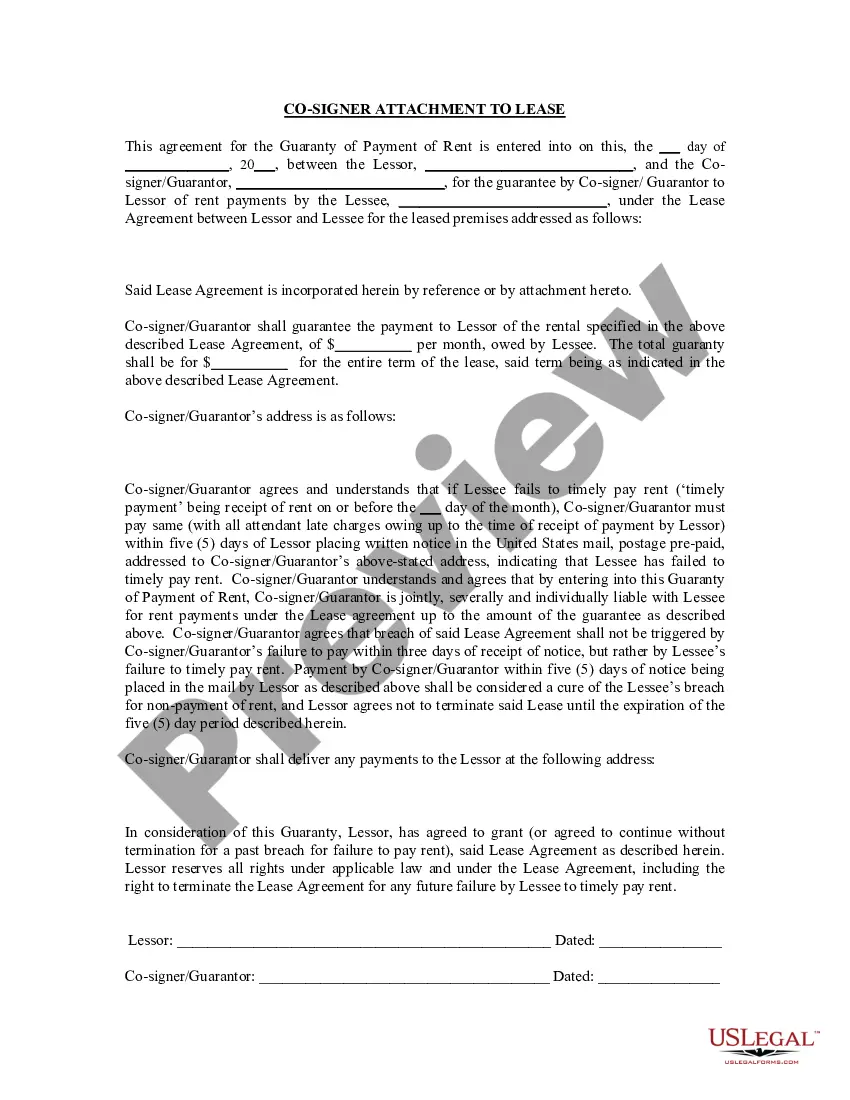
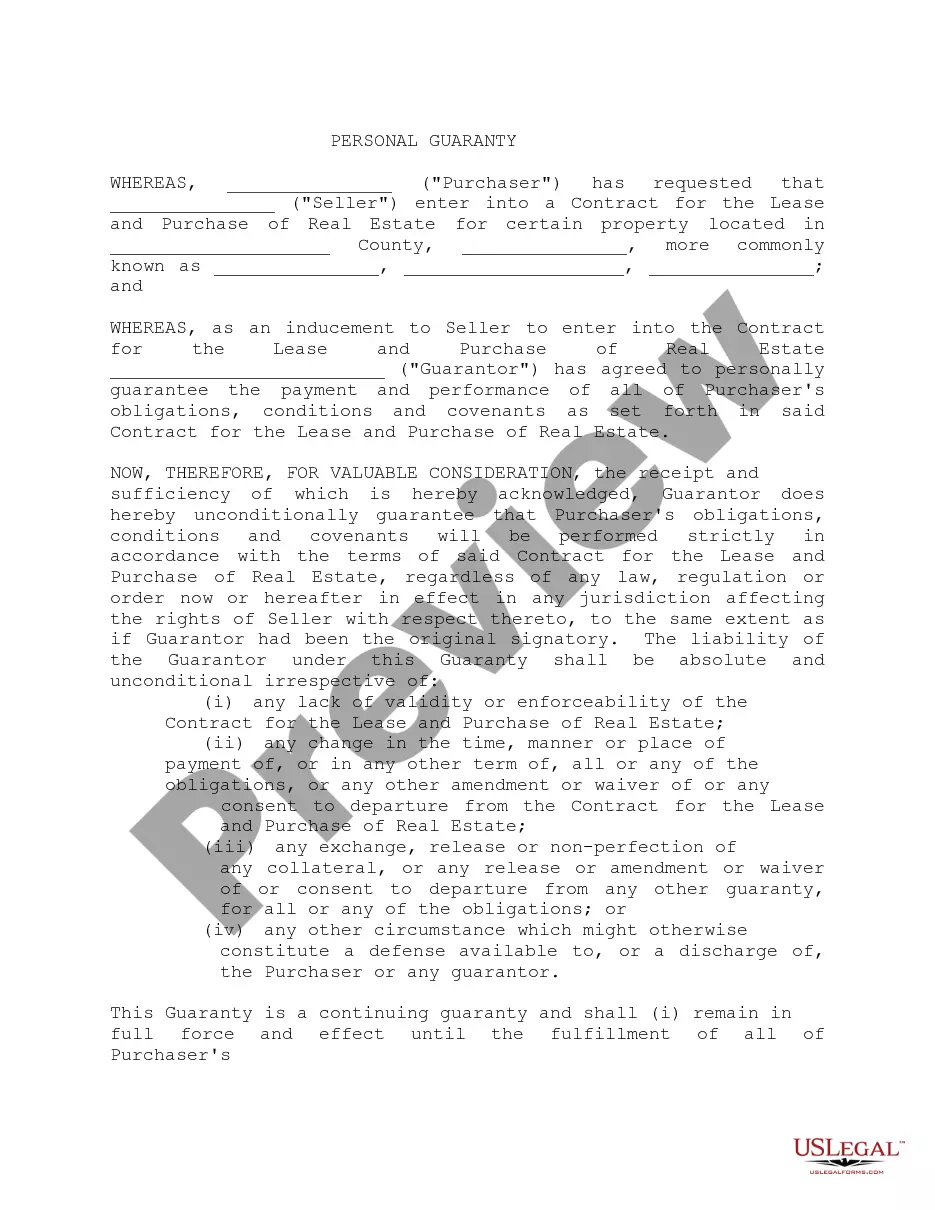
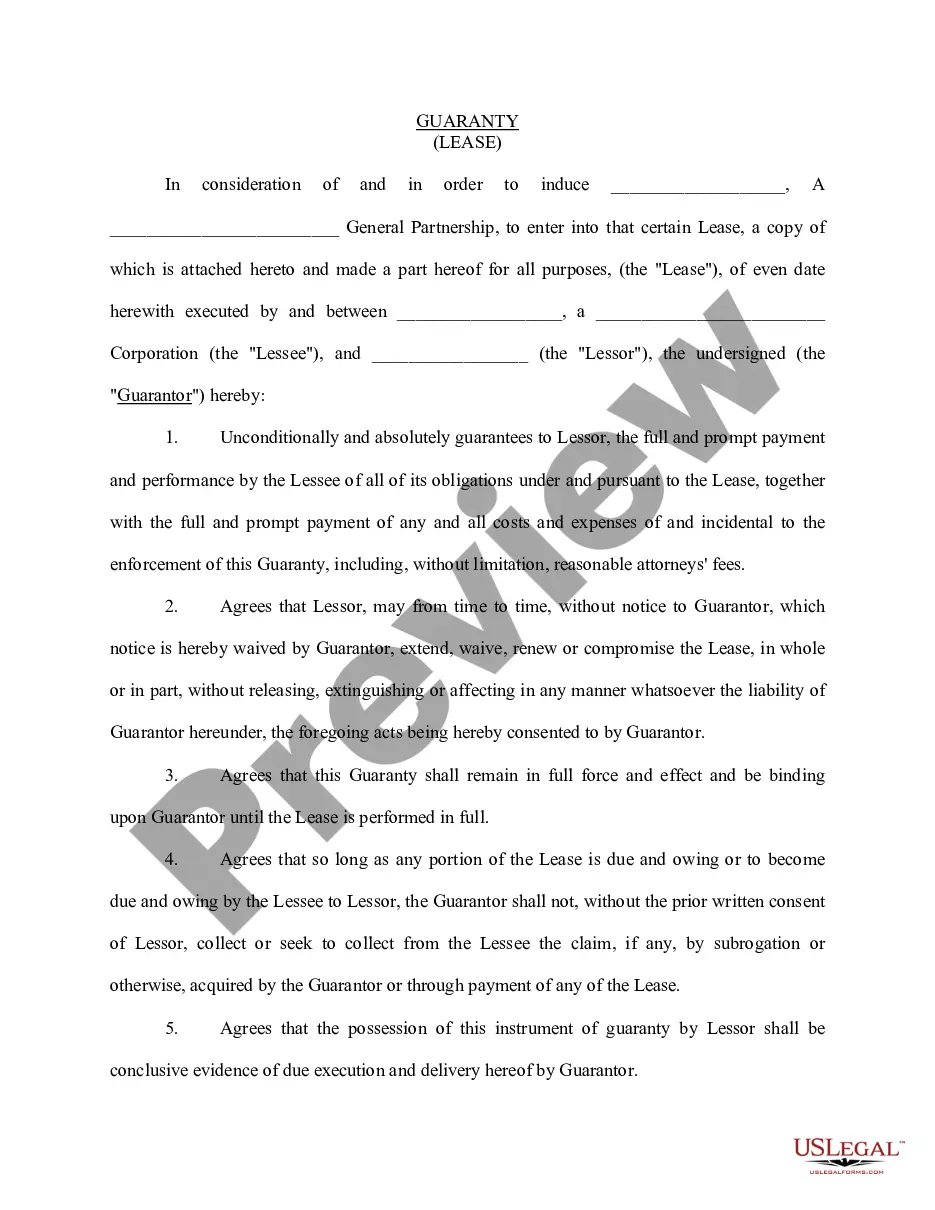
Guarantor For Commercial Lease Agreement
Description
Get your form ready online
Our built-in tools help you complete, sign, share, and store your documents in one place.
Make edits, fill in missing information, and update formatting in US Legal Forms—just like you would in MS Word.
Download a copy, print it, send it by email, or mail it via USPS—whatever works best for your next step.
Sign and collect signatures with our SignNow integration. Send to multiple recipients, set reminders, and more. Go Premium to unlock E-Sign.
If this form requires notarization, complete it online through a secure video call—no need to meet a notary in person or wait for an appointment.
We protect your documents and personal data by following strict security and privacy standards.

Make edits, fill in missing information, and update formatting in US Legal Forms—just like you would in MS Word.

Download a copy, print it, send it by email, or mail it via USPS—whatever works best for your next step.

Sign and collect signatures with our SignNow integration. Send to multiple recipients, set reminders, and more. Go Premium to unlock E-Sign.

If this form requires notarization, complete it online through a secure video call—no need to meet a notary in person or wait for an appointment.

We protect your documents and personal data by following strict security and privacy standards.
Looking for another form?










How to fill out California Guaranty Attachment To Lease For Guarantor Or Cosigner?
Creating legal documents from the ground up can occasionally be overwhelming.
Some situations may require extensive research and significant financial investment.
If you’re looking for a simpler and more economical method of producing Guarantor For Commercial Lease Agreement or any other documents without unnecessary complications, US Legal Forms is always available to assist you.
Our online archive of more than 85,000 current legal forms encompasses nearly every aspect of your financial, legal, and personal needs. With just a few clicks, you can swiftly access state- and county-compliant documents meticulously crafted for you by our legal professionals.
Examine the document preview and descriptions to confirm that you’ve located the form you need. Ensure that the template you select adheres to the regulations and laws of your state and county. Pick the appropriate subscription option to obtain the Guarantor For Commercial Lease Agreement. Download the document, then fill it out, sign it, and print it. US Legal Forms has a solid reputation and over 25 years of experience. Join us today and make document processing easy and efficient!
- Utilize our site whenever you require dependable services to quickly find and download the Guarantor For Commercial Lease Agreement.
- If you’re familiar with our services and have previously established an account with us, simply Log In to your account, find the template, and download it, or re-download it later from the My documents section.
- Don’t have an account? No problem. Registering takes minimal time, and navigating the catalog is straightforward.
- Before proceeding with downloading the Guarantor For Commercial Lease Agreement, follow these guidelines.
Form popularity
FAQ
While a commercial lease does not always need a guarantor, many landlords prefer including one due to the added security it brings. Having a guarantor can facilitate the leasing process, especially if the primary tenant lacks sufficient credit history. Ultimately, whether you include a guarantor for a commercial lease agreement will depend on the terms set by the landlord and your unique situation. Engaging with uslegalforms can help clarify your obligations and streamline the leasing process.
The guarantor of a commercial lease is a person or organization that agrees to cover the lease obligations in case the primary tenant defaults. Often, this role is filled by someone with financial oversight or a strong credit profile, such as a business owner. This provides additional security for the landlord and contributes to the overall success of the leasing process. Identifying the right guarantor for a commercial lease agreement can enhance leasing prospects.
To utilize a guarantor on a lease, begin by discussing the arrangement with your potential guarantor and ensuring they are willing to accept such responsibility. Next, include their details in the lease agreement and clarify their obligations regarding payment and lease terms. You may need to provide some documentation about the guarantor’s financial standing, as this will reassure the landlord. Resources like uslegalforms can assist you in drafting a thorough lease agreement that properly includes a guarantor for a commercial lease agreement.
When deciding who should be listed as a guarantor, consider individuals or entities with strong financial stability and a good credit score. This can range from business partners to family members who are willing to support your lease agreement. It’s essential that the selected guarantor understands their obligations and is prepared to act if necessary. Selecting the right guarantor for a commercial lease agreement can lead to more favorable leasing conditions and enhance your landlord’s confidence.
The guarantor on a commercial lease is essentially a party that agrees to uphold the lease's terms and conditions, ensuring that rent and other financial obligations are met. This person or business acts as a safety net for the landlord, providing financial security. Typically, a guarantor is someone with substantial financial resources, such as a business owner or an individual with strong credit, who is willing to take on this responsibility. Understanding who can be a guarantor for a commercial lease agreement can aid in securing a better lease deal.
Having a guarantor on a commercial lease is not always mandatory, but it can be highly beneficial. Many landlords may require a guarantor for commercial leases, especially when leasing to new businesses or tenants with a limited credit history. Including a guarantor for a commercial lease agreement builds trust and eases the landlord's concerns about financial risk. Ultimately, whether a guarantor is necessary will depend on the specific terms set by the landlord.
To guarantee a commercial lease, you must sign a personal guarantee or secure a professional guarantor. Review the lease terms carefully, and ensure you understand your responsibilities. An effective way to reduce risk is to find a reliable guarantor for a commercial lease agreement that can provide peace of mind. This approach can make negotiating lease terms easier.
To add a guarantor to a lease, first discuss your intentions with the landlord. Both parties should agree and document the arrangement in the lease agreement. Sometimes, landlords require financial information about the guarantor to assess their credibility. Utilizing a guarantor for a commercial lease agreement strengthens your position as a tenant.
A personal guarantee on a commercial lease is often required, especially for startups or those with limited credit history. It means you agree to be personally liable for fulfilling the lease obligations. If you prefer not to take on this risk, you may seek a guarantor for a commercial lease agreement to alleviate this requirement. Discussing terms with your landlord can clarify expectations.
A commercial lease guarantor is an individual or entity that agrees to cover lease payments if the primary tenant defaults. This arrangement provides landlords with added security, reducing their risk. By having a guarantor for a commercial lease agreement, you enhance your credibility and reassure landlords. It's an important option for many business owners seeking to lease a commercial space.