Notice Needed For Rent Increase
Description



Get your form ready online
Our built-in tools help you complete, sign, share, and store your documents in one place.
Make edits, fill in missing information, and update formatting in US Legal Forms—just like you would in MS Word.
Download a copy, print it, send it by email, or mail it via USPS—whatever works best for your next step.
Sign and collect signatures with our SignNow integration. Send to multiple recipients, set reminders, and more. Go Premium to unlock E-Sign.
If this form requires notarization, complete it online through a secure video call—no need to meet a notary in person or wait for an appointment.
We protect your documents and personal data by following strict security and privacy standards.

Make edits, fill in missing information, and update formatting in US Legal Forms—just like you would in MS Word.

Download a copy, print it, send it by email, or mail it via USPS—whatever works best for your next step.

Sign and collect signatures with our SignNow integration. Send to multiple recipients, set reminders, and more. Go Premium to unlock E-Sign.

If this form requires notarization, complete it online through a secure video call—no need to meet a notary in person or wait for an appointment.

We protect your documents and personal data by following strict security and privacy standards.
Looking for another form?









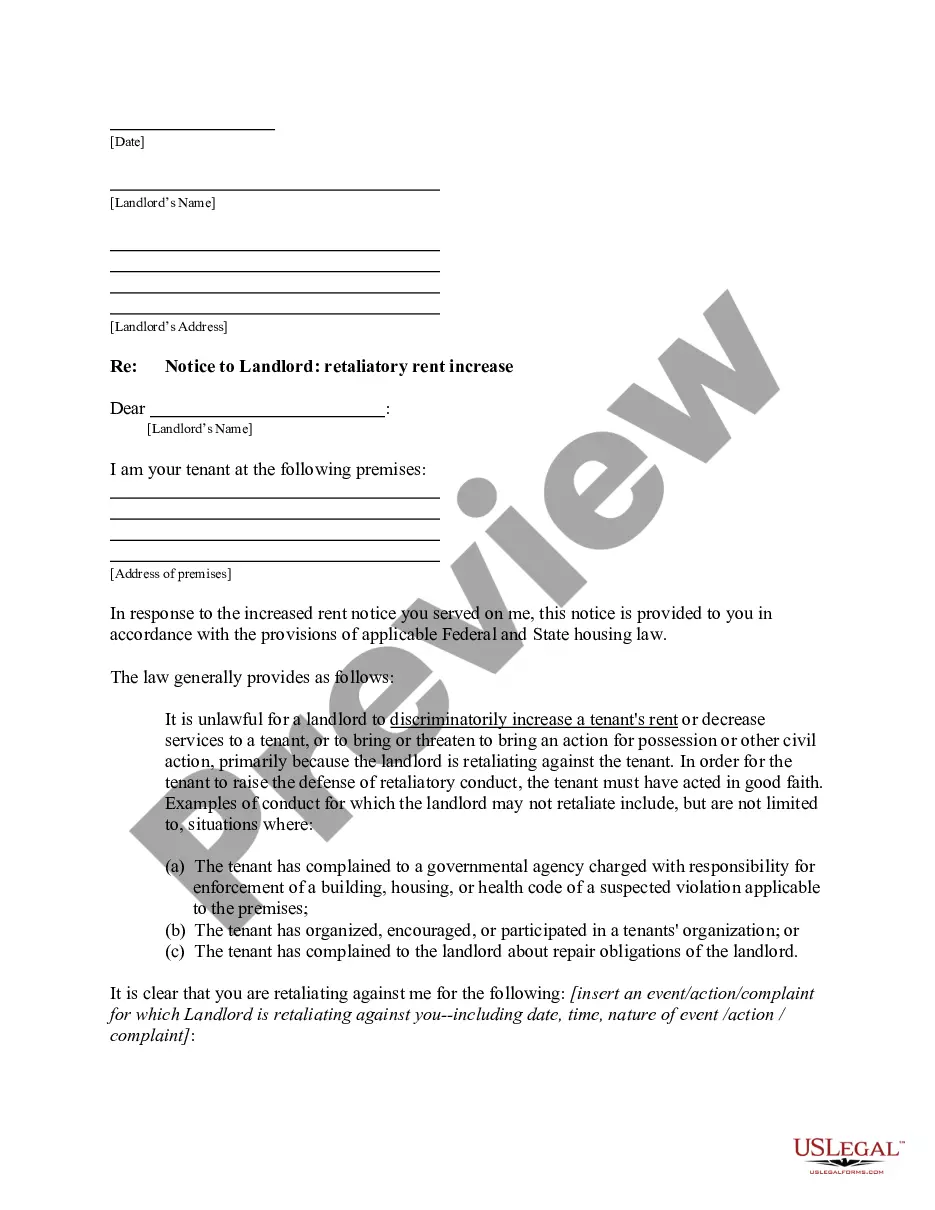
How to fill out California Letter From Tenant To Landlord Containing Notice To Landlord To Withdraw Retaliatory Rent Increase?
- If you are already a US Legal Forms user, log into your account and download the notice template directly to your device. Ensure your subscription remains active; if not, renew it based on your payment preferences.
- If you are new to US Legal Forms, start by exploring the extensive collection of legal forms. Check the Preview mode and form descriptions to select a template that fits your requirements and aligns with your local jurisdiction.
- Use the Search tab to find alternative templates if necessary. If discrepancies arise in your initial selection, locate another one that meets your needs and proceed forward.
- After you've found the appropriate document, click on the Buy Now button to select your desired subscription plan. Make sure to register for an account to access the entire library.
- Complete the payment process by providing your credit card information or utilizing your PayPal account for the subscription.
- Once your purchase is finalized, download the chosen form to your device. You can find it anytime in the My Forms section of your account.
In conclusion, utilizing US Legal Forms not only simplifies the process of generating a notice needed for rent increase but also ensures that you have access to essential legal resources. By following these straightforward steps, you can easily secure the necessary templates to stay compliant and protected in your landlord-tenant interactions.
Ready to streamline your notice creation process? Visit US Legal Forms today and explore a vast library of legal templates!
Form popularity
FAQ
Failing to give a 30 day notice means you may not comply with your lease agreement. In many cases, this can delay any planned rent increase or even lead to negotiations with your landlord. It's always better to communicate proactively to maintain a positive relationship.
If you leave belongings behind when you move, the landlord may see them as abandoned property. Typically, they may dispose of these items after a notice needed for rent increase or an eviction process, depending on local laws. To avoid complications, it’s best to remove all personal items before leaving.
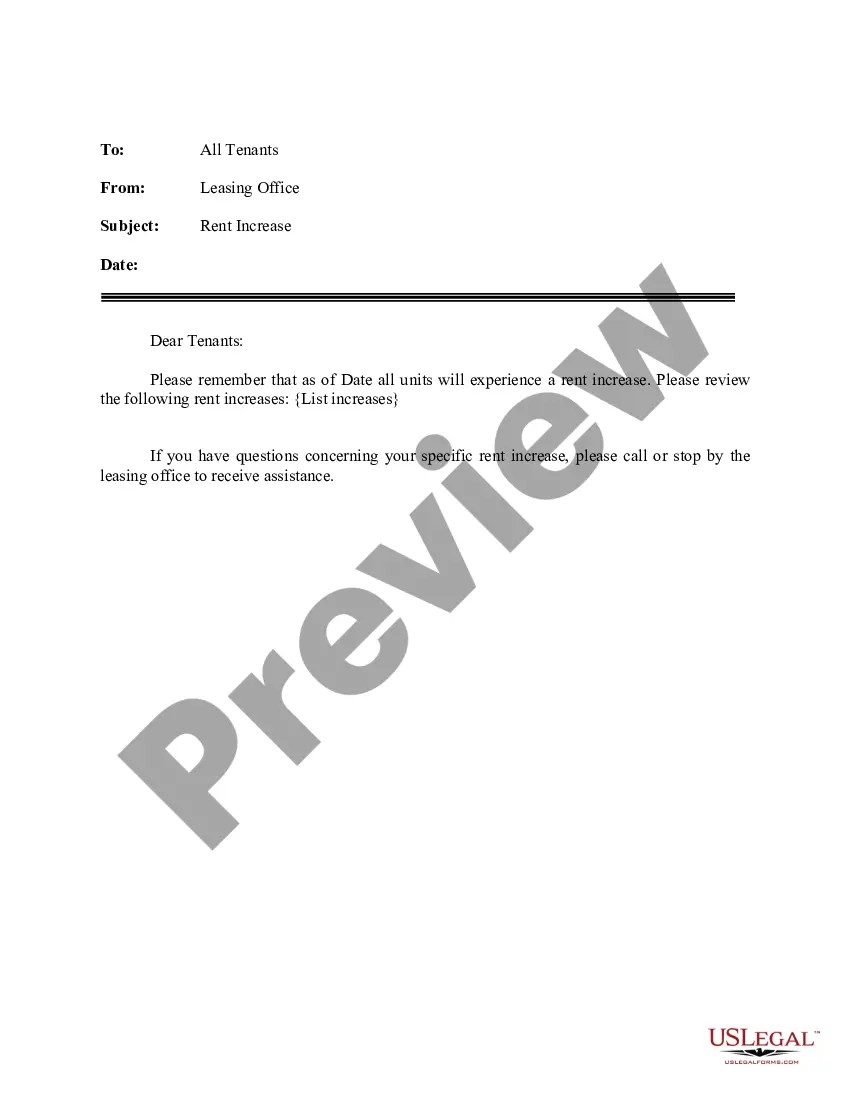
To serve a rent increase notice in California, landlords should provide written notification that includes the details of the increase and complies with state laws. The notice needed for rent increase must be delivered personally or sent via certified mail. Additionally, ensuring that you adhere to local regulations can prevent misunderstandings and disputes.
In Vermont, the rules for eviction involve specific procedures that landlords must follow. Typically, a landlord must provide adequate notice before initiating eviction, often requiring a notice needed for rent increase if applicable. Familiarizing yourself with Vermont's regulations can help both tenants and landlords navigate this process more smoothly.
If you don't provide a 30 day notice needed for rent increase, you may face legal complications. Your landlord might be unable to enforce the rent increase effectively, which can lead to disputes. Tenants typically have the right to continue paying their current rent until proper notice is delivered.
In Ohio, there is no official maximum for how much a landlord can increase rent. However, landlords must provide adequate notice for rent increase, typically at least 30 days before the new rate takes effect. Tenants should keep an eye on market trends and local rental prices, as these can impact whether a rent increase feels reasonable or excessive.
Ohio does not have a statewide limit on rent increases, allowing landlords to adjust rent based on factors like market demand. However, proper notice for rent increase is required to ensure compliance with local regulations. Tenants should familiarize themselves with their lease agreements and local laws to understand any specific rules that may apply.
When you wish to ask your landlord for a rent increase, approach them with a clear and polite request. Prepare your case by presenting reasons, such as improvements made to the property or similar rental prices in the area. It's important to provide written notice for rent increase, as this ensures that your request is documented and can be reviewed appropriately.
The average rent increase in Ohio varies by location, but residents can expect a range between 2% to 5% annually. Landlords often implement these increases based on market conditions and property expenses. It’s essential to receive timely notice for rent increase to ensure tenants can plan their budgets accordingly, as adhering to the required notice period keeps both parties informed.
The maximum rent increase a landlord can impose varies by state and local law, so it is essential to research your area’s regulations. Generally, landlords must provide adequate notice, often 30 to 60 days, before implementing a rent increase. Understanding the notice needed for rent increase in your jurisdiction is crucial to protect your rights as a tenant. For detailed guidance and tailored forms, consider utilizing the uslegalforms platform, which offers resources customized for your situation.