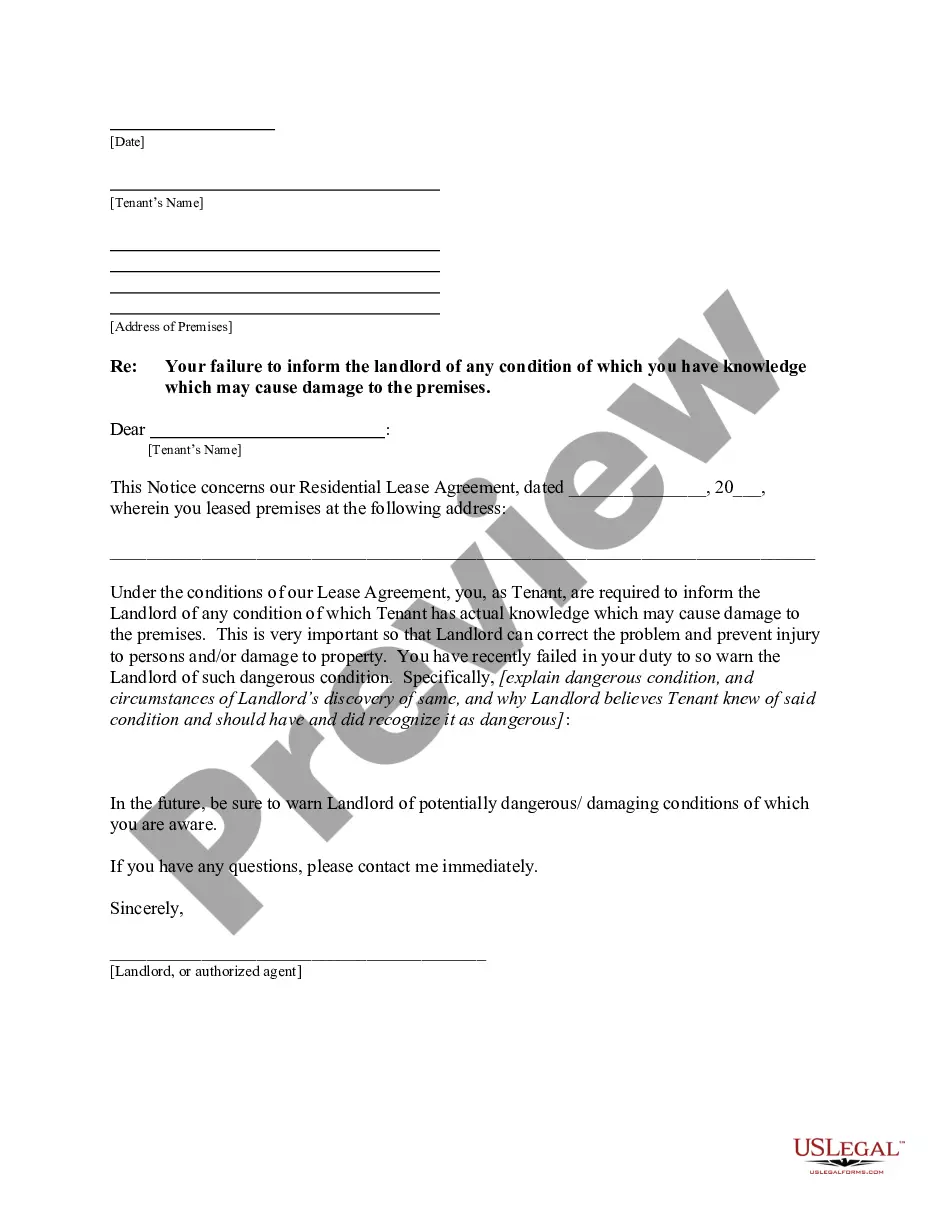
California Letter Tenant For Damages
Description

Get your form ready online
Our built-in tools help you complete, sign, share, and store your documents in one place.
Make edits, fill in missing information, and update formatting in US Legal Forms—just like you would in MS Word.
Download a copy, print it, send it by email, or mail it via USPS—whatever works best for your next step.
Sign and collect signatures with our SignNow integration. Send to multiple recipients, set reminders, and more. Go Premium to unlock E-Sign.
If this form requires notarization, complete it online through a secure video call—no need to meet a notary in person or wait for an appointment.
We protect your documents and personal data by following strict security and privacy standards.

Make edits, fill in missing information, and update formatting in US Legal Forms—just like you would in MS Word.

Download a copy, print it, send it by email, or mail it via USPS—whatever works best for your next step.

Sign and collect signatures with our SignNow integration. Send to multiple recipients, set reminders, and more. Go Premium to unlock E-Sign.

If this form requires notarization, complete it online through a secure video call—no need to meet a notary in person or wait for an appointment.

We protect your documents and personal data by following strict security and privacy standards.
Looking for another form?








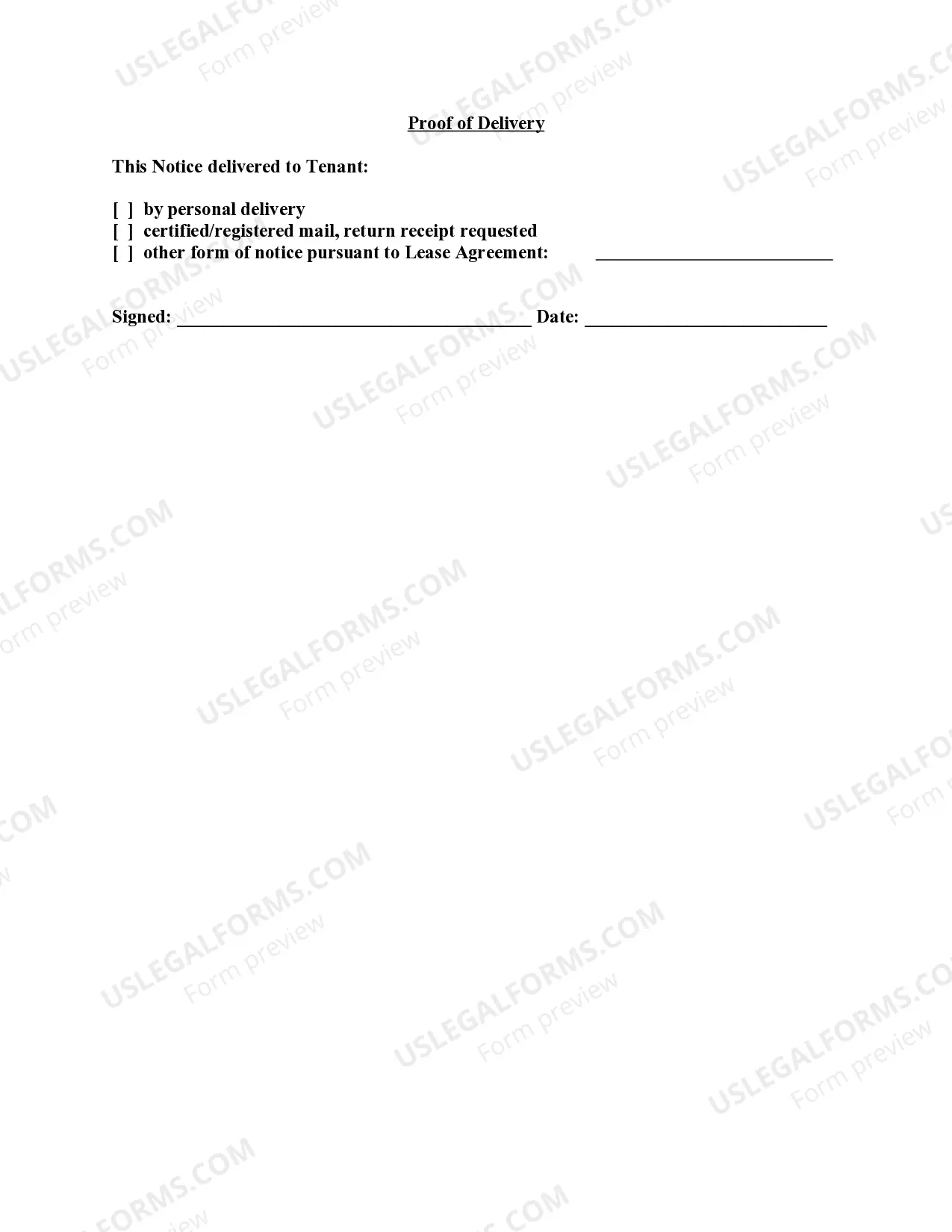
How to fill out California Letter From Landlord To Tenant As Notice To Tenant To Inform Landlord Of Tenant's Knowledge Of Condition Causing Damage To Premises?
Regardless of whether it's for commercial purposes or personal issues, everyone encounters legal scenarios at some stage in their life. Completing legal forms requires meticulous attention, starting from choosing the appropriate template.
For example, if you select an incorrect version of a California Letter Tenant For Damages, it will be declined upon submission. Hence, it's crucial to have a dependable source for legal documents, such as US Legal Forms.
With an extensive US Legal Forms catalog available, you need not waste time searching for the correct sample online. Utilize the library's straightforward navigation to find the suitable template for any situation.
- Acquire the sample you require by utilizing the search bar or catalog browsing.
- Review the details of the form to ensure it aligns with your situation, state, and county.
- Click on the form's preview to examine it.
- If it is the wrong form, return to the search option to find the California Letter Tenant For Damages template you require.
- Download the template if it fulfills your criteria.
- If you possess a US Legal Forms profile, simply click Log in to access previously stored templates in My documents.
- If you haven't created an account yet, you can obtain the form by clicking Buy now.
- Choose the appropriate pricing option.
- Complete the profile registration form.
- Select your payment method: use a credit card or PayPal account.
- Select the document format you prefer and download the California Letter Tenant For Damages.
- Once saved, you can fill out the form using editing software or print it and complete it manually.
Form popularity
FAQ
Categorizing loan agreements by type of facility usually results in two primary categories: term loans, which are repaid in set installments over the term, or. revolving loans (or overdrafts) where up to a maximum amount can be withdrawn at any time, and interest is paid from month to month on the drawn amount.
A personal loan agreement is a legally binding contract that defines the expectations for both a borrower and a lender. It can be drawn up with an official lender, like a bank or credit union, or used in a more informal situation, such as with a friend who's lending you an amount of money.
Loan agreements typically include covenants, value of collateral involved, guarantees, interest rate terms and the duration over which it must be repaid. Default terms should be clearly detailed to avoid confusion or potential legal court action.
A loan agreement, sometimes used interchangeably with terms like note payable, term loan, IOU, or promissory note, is a binding contract between a borrower and a lender that formalizes the loan process and details the terms and schedule associated with repayment.
Loan agreements typically include covenants, value of collateral involved, guarantees, interest rate terms and the duration over which it must be repaid. Default terms should be clearly detailed to avoid confusion or potential legal court action.
A Promissory note is essentially an unconditional written promise to repay a loan or other debts, at a fixed or determinable future date. Although it is legally enforceable, a promissory note is less formal than a loan agreement and is suitable where smaller sums of money are involved.
A secured loan uses an asset you own as collateral; the lender can take the asset if you don't repay the loan. An unsecured loan requires no collateral. They usually have higher interest rates than secured loans because they are riskier for lenders.
For a personal loan agreement to be enforceable, it must be documented in writing, as well as signed and dated by all parties involved. It's also a good idea to have the document notarized or signed by a witness.