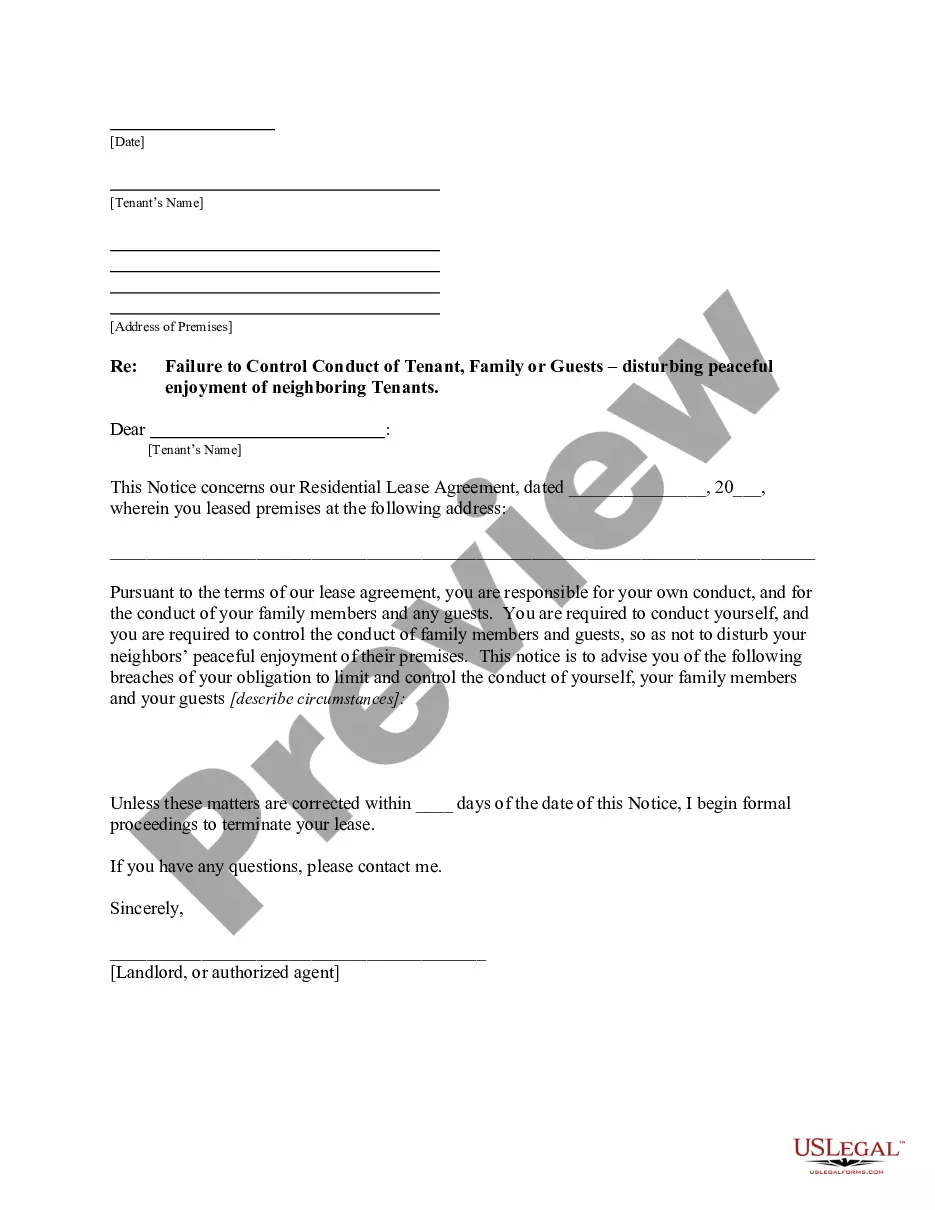
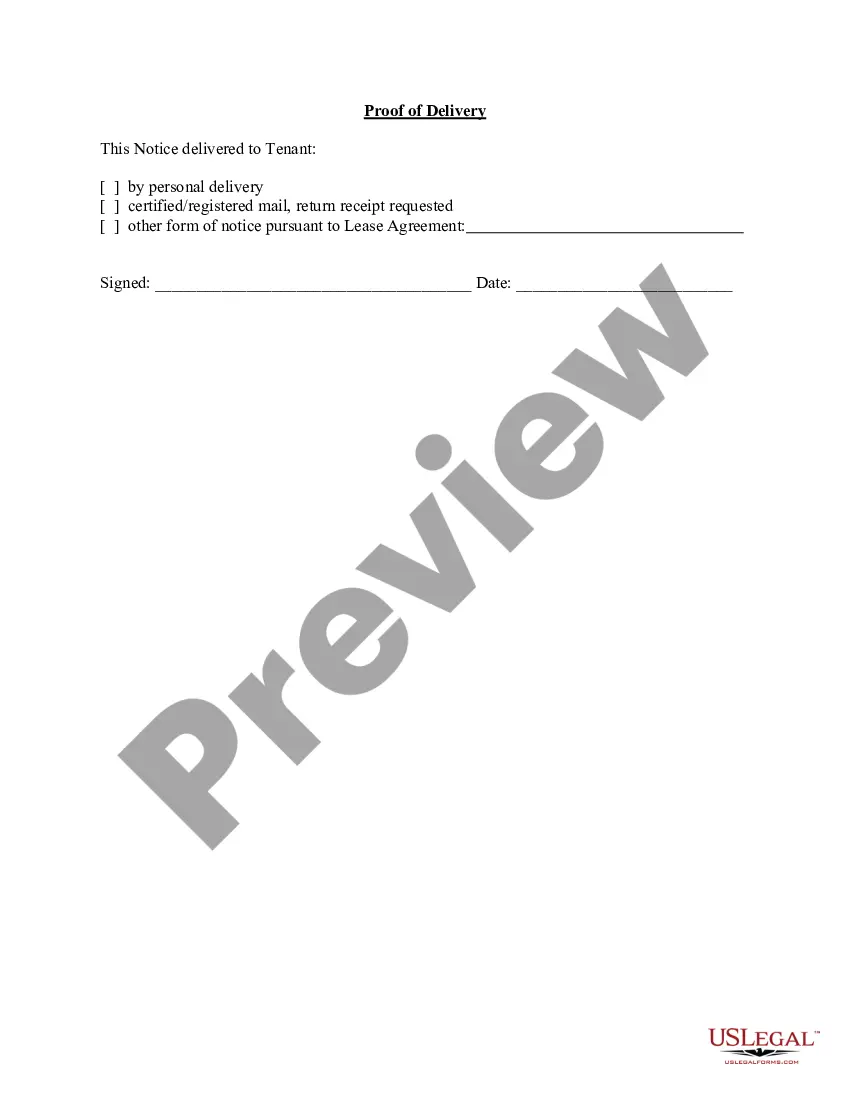
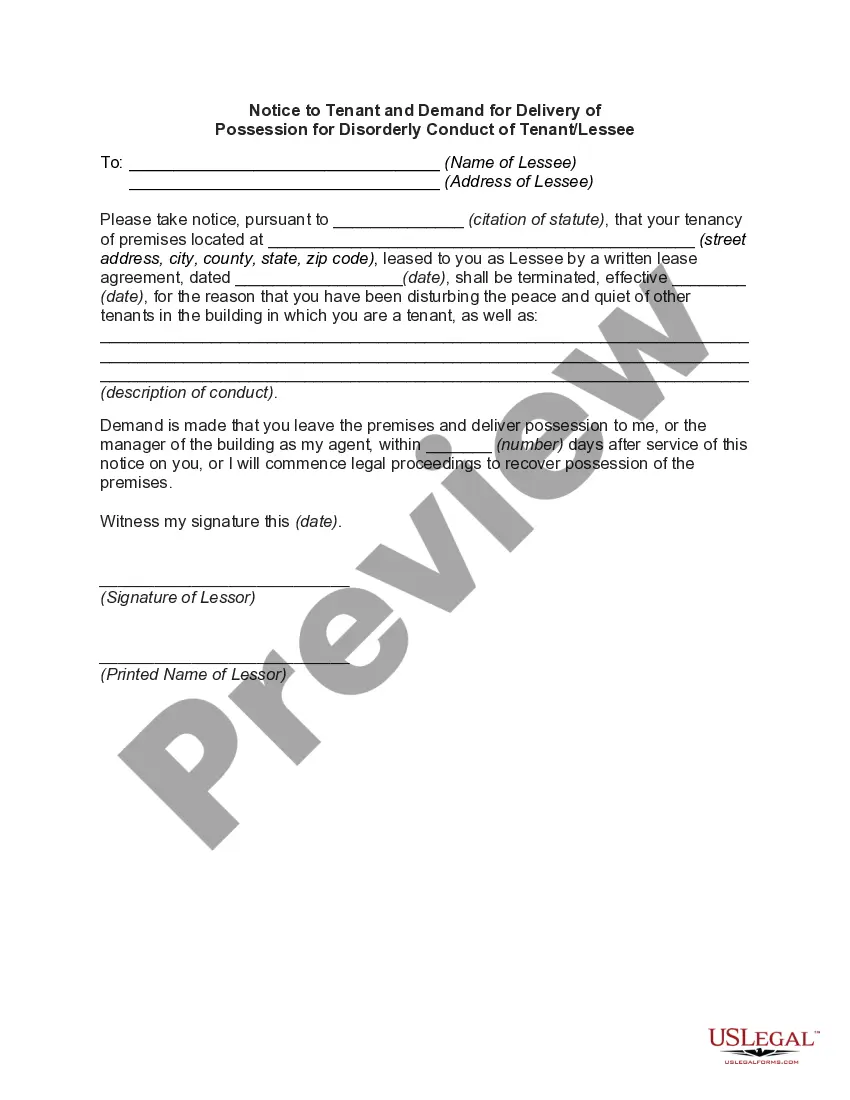
Tenant Nuisance Letter With Reason
Description


Get your form ready online
Our built-in tools help you complete, sign, share, and store your documents in one place.
Make edits, fill in missing information, and update formatting in US Legal Forms—just like you would in MS Word.
Download a copy, print it, send it by email, or mail it via USPS—whatever works best for your next step.
Sign and collect signatures with our SignNow integration. Send to multiple recipients, set reminders, and more. Go Premium to unlock E-Sign.
If this form requires notarization, complete it online through a secure video call—no need to meet a notary in person or wait for an appointment.
We protect your documents and personal data by following strict security and privacy standards.

Make edits, fill in missing information, and update formatting in US Legal Forms—just like you would in MS Word.

Download a copy, print it, send it by email, or mail it via USPS—whatever works best for your next step.

Sign and collect signatures with our SignNow integration. Send to multiple recipients, set reminders, and more. Go Premium to unlock E-Sign.

If this form requires notarization, complete it online through a secure video call—no need to meet a notary in person or wait for an appointment.

We protect your documents and personal data by following strict security and privacy standards.
Looking for another form?

How to fill out California Letter From Landlord To Tenant As Notice To Tenant Of Tenant's Disturbance Of Neighbors' Peaceful Enjoyment To Remedy Or Lease Terminates?
- Log into your US Legal Forms account if you're an existing user. If not, create a new account to access the documents.
- Search for the tenant nuisance letter template in the extensive online library that features over 85,000 legal forms.
- Preview the template to ensure it fits your requirements and complies with local regulations.
- Purchase the selected template by choosing your subscription plan and completing the registration process.
- Provide payment details through your credit card or PayPal account to finalize the purchase.
- Download the completed tenant nuisance letter template to your device and store it for future reference under 'My Forms'.
Following these straightforward steps will help ensure you have the right tools to address tenant issues professionally and legally.
Leverage US Legal Forms today to access the documents you need. Start your journey towards effective property management!
Form popularity
FAQ
When writing a letter to your landlord about noisy neighbors, start by clearly stating the specific issues you are facing and include dates and times of disturbances. Be concise but detailed, and express how this noise affects your quality of life. A well-structured tenant nuisance letter with reason will help your landlord understand the severity of the situation and the need for action.
A breach of quiet enjoyment occurs when a tenant's ability to peacefully use their rental property is disrupted by the landlord or other tenants. This may include excessive noise, harassment, or inadequate property conditions. If you experience such disturbances, consider drafting a tenant nuisance letter with reason to formally address the breach with the landlord.
To file a complaint against a neighbor in Texas, observe the local laws regarding nuisances and document any incidents thoroughly. You can start by discussing the issue with your neighbor directly. If the situation does not improve, you may want to draft a tenant nuisance letter with reason, which clearly states your concerns and request for peace.
In Texas, to file a nuisance complaint, first document the disruptive behavior and gather evidence, such as photographs or witness statements. Then, submit your concern to your landlord or local authorities, providing a detailed tenant nuisance letter with reason. This letter should outline the specifics of the nuisance and request resolution.
A nuisance complaint is a formal report made by a tenant regarding disruptive behavior from neighbors or the property itself. This could involve noise complaints, safety hazards, or issues affecting overall living conditions. Writing a tenant nuisance letter with reason can help clarify your complaint and aid in resolving the issue.
A variety of actions can be deemed a nuisance, such as excessive noise, poor property maintenance, or illegal activities. For example, loud parties or aggressive pets can disturb neighbors. Understanding what constitutes a nuisance is important, and if you're affected, writing a tenant nuisance letter with reason can help communicate your concerns effectively.
Nuisance behavior refers to activities that significantly disrupt the peace and enjoyment of others in their living environment. Common examples include loud noises, offensive smells, or dangerous activities. If you encounter such behavior, consider documenting it and preparing a tenant nuisance letter with reason to formally address the issue with your landlord.
A breach of quiet enjoyment in California occurs when a landlord or other tenants significantly disrupt your ability to peacefully use your home. Factors include excessive noise, property damage, or harassment. If you find yourself in this situation, employing a tenant nuisance letter with reason can be an effective way to communicate your rights and seek a solution.
Nuisance in California can refer to actions that significantly interfere with the use and enjoyment of property. This might include loud noises, disruptive behavior, or other disturbances. It is essential to document any incidents and consider sending a tenant nuisance letter with reason to the offending party to address these concerns formally.
In California, a tenant nuisance generally involves behavior that disrupts the peace and safety of other tenants. This can include excessive noise, illegal activities, or harassment. Understanding what qualifies as a nuisance can help tenants formulate a tenant nuisance letter with reason, clearly outlining the issues and seeking resolution.