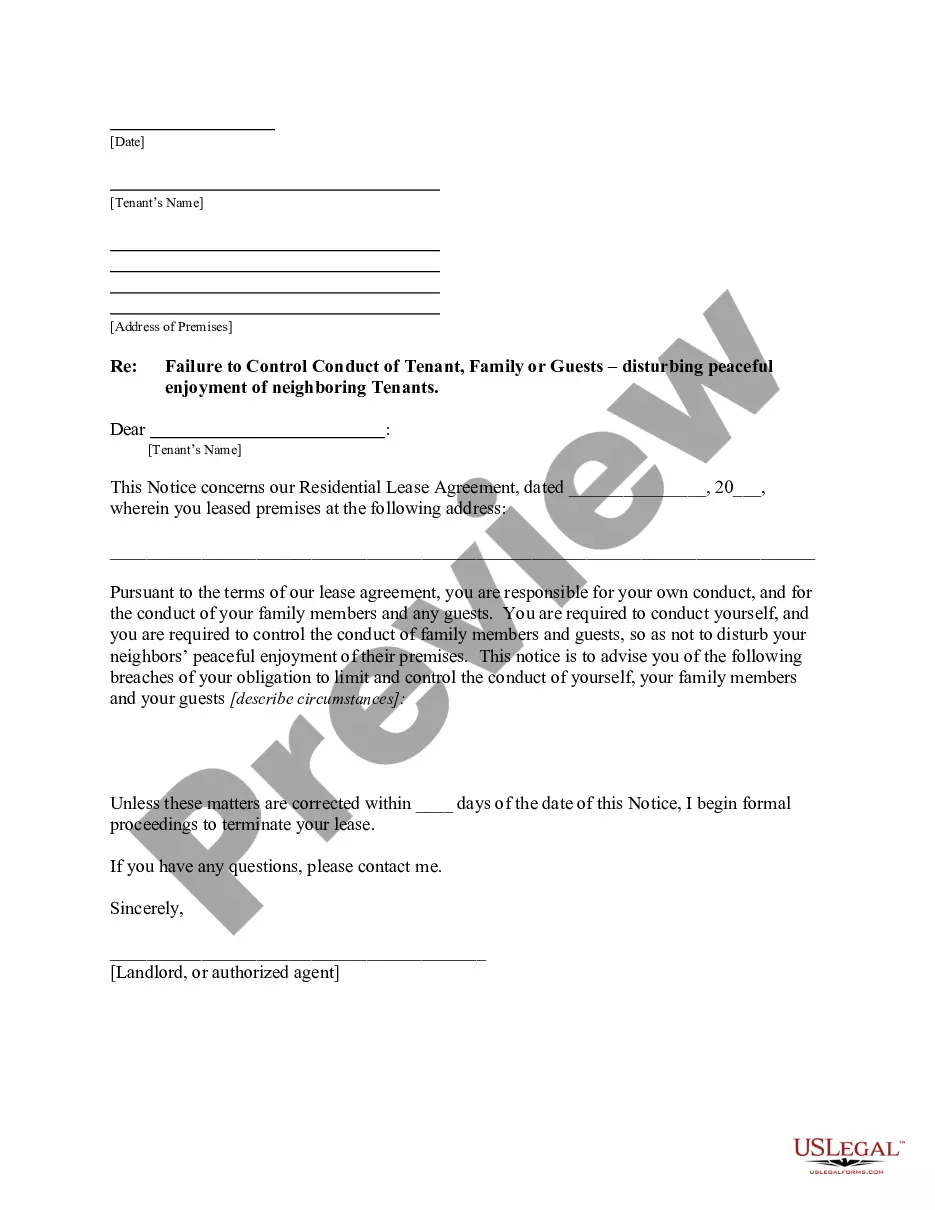
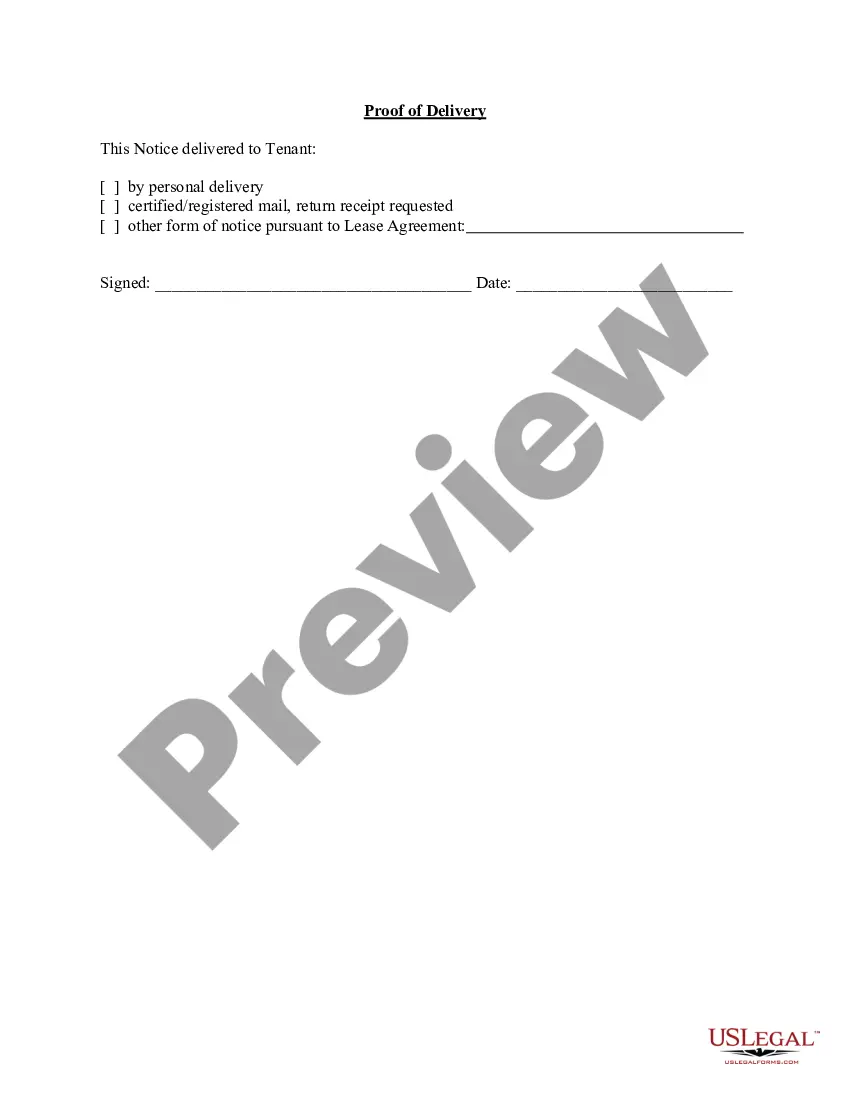
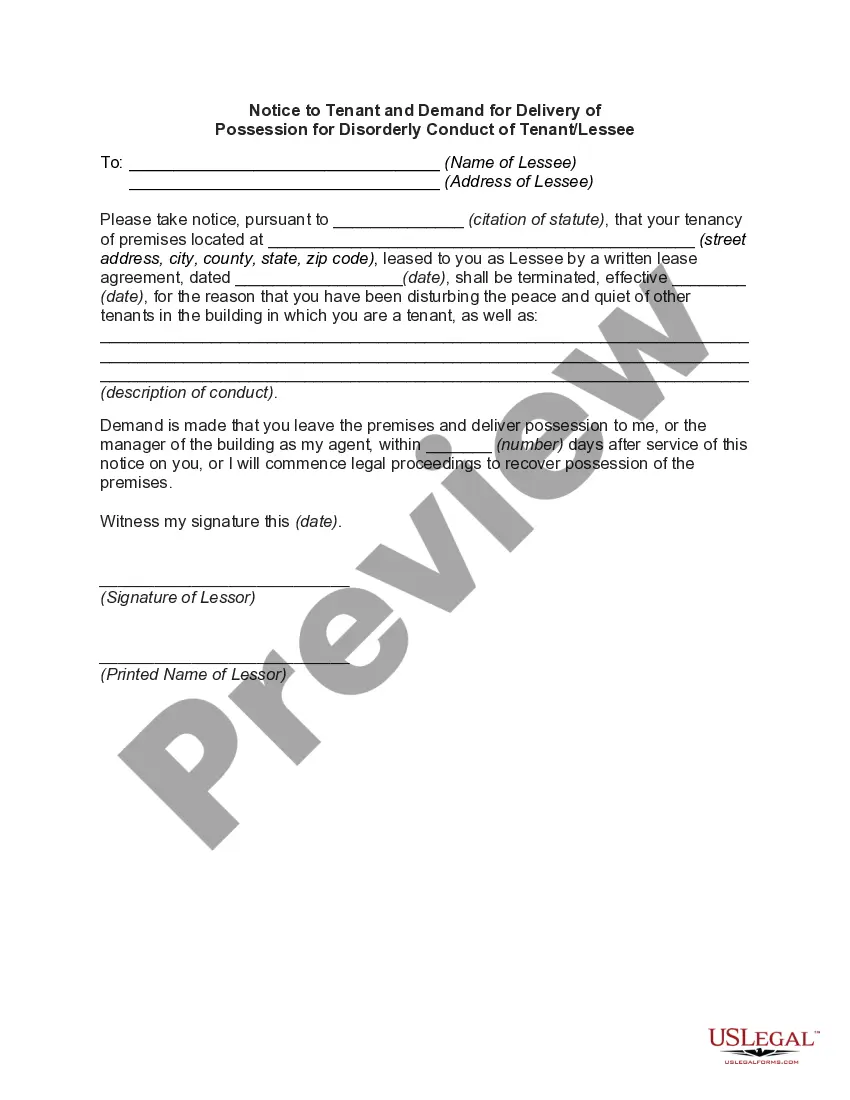
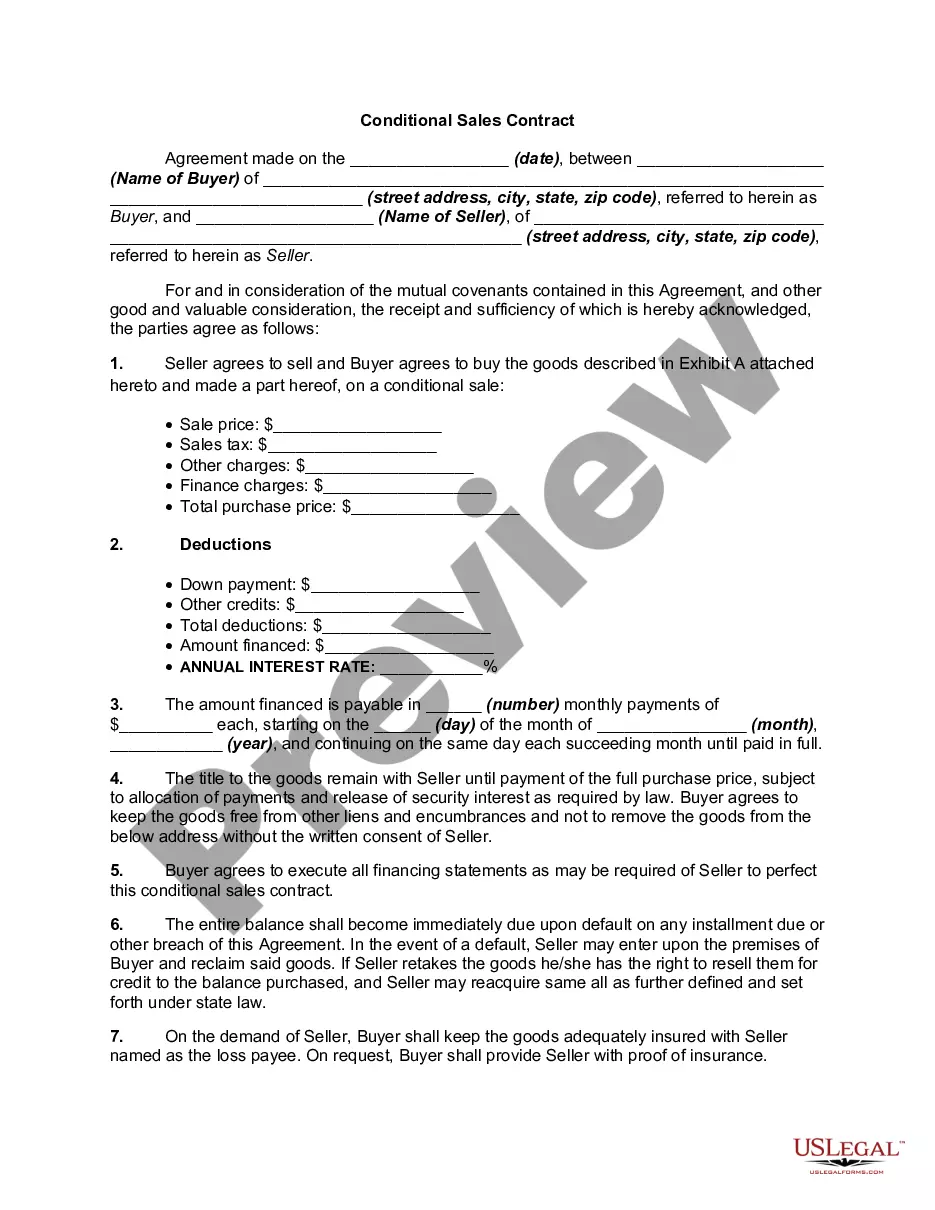
Nuisance Lease Agreement
Description


Get your form ready online
Our built-in tools help you complete, sign, share, and store your documents in one place.
Make edits, fill in missing information, and update formatting in US Legal Forms—just like you would in MS Word.
Download a copy, print it, send it by email, or mail it via USPS—whatever works best for your next step.
Sign and collect signatures with our SignNow integration. Send to multiple recipients, set reminders, and more. Go Premium to unlock E-Sign.
If this form requires notarization, complete it online through a secure video call—no need to meet a notary in person or wait for an appointment.
We protect your documents and personal data by following strict security and privacy standards.

Make edits, fill in missing information, and update formatting in US Legal Forms—just like you would in MS Word.

Download a copy, print it, send it by email, or mail it via USPS—whatever works best for your next step.

Sign and collect signatures with our SignNow integration. Send to multiple recipients, set reminders, and more. Go Premium to unlock E-Sign.

If this form requires notarization, complete it online through a secure video call—no need to meet a notary in person or wait for an appointment.

We protect your documents and personal data by following strict security and privacy standards.
Looking for another form?


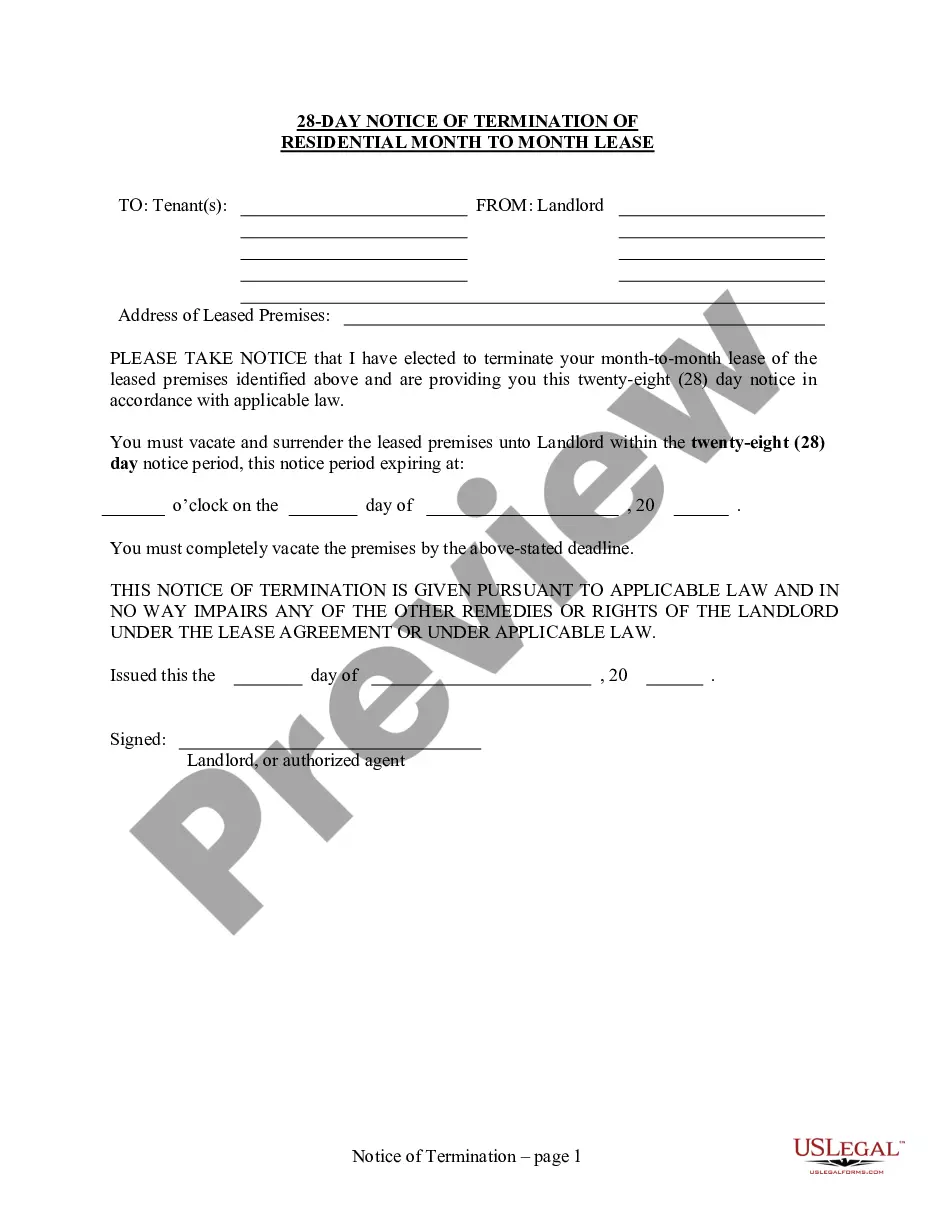
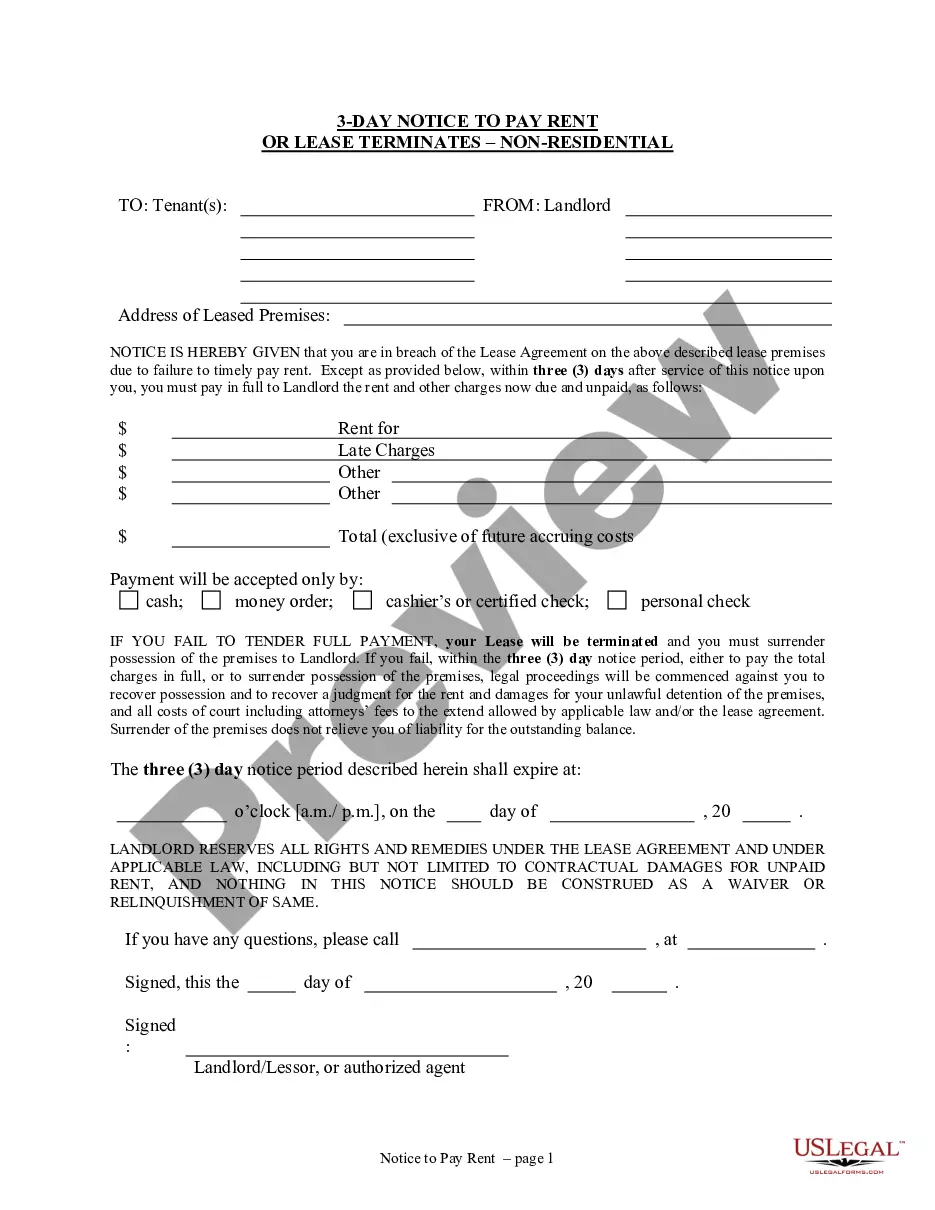
How to fill out California Letter From Landlord To Tenant As Notice To Tenant Of Tenant's Disturbance Of Neighbors' Peaceful Enjoyment To Remedy Or Lease Terminates?
- If you're a returning user, log into your account and locate the nuisance lease agreement. Ensure your subscription remains active before downloading the document.
- For first-time users, begin by exploring the Preview mode. Review the description of the nuisance lease agreement to confirm it aligns with your local jurisdiction requirements.
- Use the Search function if you need to look for an alternative form. If you discover discrepancies, this feature will assist you in finding the correct document.
- Proceed to purchase the agreement by clicking the Buy Now button. Select a suitable subscription plan for your needs, and create an account to access US Legal Forms' vast resources.
- Complete your payment using your credit card or PayPal. Once your transaction is successful, you will gain access to your documents.
- Download the nuisance lease agreement to your device. After saving the file, you can always find it later in the My Forms section of your profile.
In conclusion, US Legal Forms provides an extensive repository of legal documents, ensuring efficiency and ease in acquiring specifically tailored agreements like the nuisance lease agreement. With over 85,000 forms directly accessible and the ability to consult with experts, you can be confident that your paperwork will meet all legal requirements.
Get started today and streamline your legal document process with US Legal Forms!
Form popularity
FAQ
You can often break your lease if loud neighbors disrupt your peace consistently. Make sure to document all noise disturbances and notify your landlord immediately. With the protections offered by a nuisance lease agreement, you have a stronger legal foundation to seek a resolution or terminate your lease due to ongoing disturbances.
Yes, you can break your lease due to loud neighbors if their behavior disrupts your ability to enjoy your living space. The key is to document the disturbances and communicate with your landlord about the violations. If necessary, a nuisance lease agreement can help clarify your rights and outline the steps you can take for resolution.
The quiet enjoyment law in North Carolina ensures that tenants have the right to live in their rented homes without intrusive disturbances. This law protects tenants from nuisances that compromise their comfort, such as excessive noise. If you face this issue, you may want to look into a nuisance lease agreement, which could provide options for resolution.
When contemplating breaking a lease, citing a nuisance lease agreement can be effective. For instance, persistent loud noises from neighbors or unaddressed maintenance issues can justify your departure. It is vital to document these issues, as they strengthen your case when discussing a lease termination with your landlord.
Yes, excessive noise can be considered a violation of the lease agreement. Many leases include clauses regarding noise levels that disrupt the peace of other tenants. If noise becomes a nuisance, you may have grounds to address this issue under a nuisance lease agreement.
The nuisance clause in a contract refers to specific provisions that prohibit actions or conditions that could disrupt the peace or use of property. This can include restrictions on noise, odors, and other disturbances. Familiarizing yourself with this clause in any relevant nuisance lease agreement can be beneficial for both landlords and tenants to maintain a harmonious living or working environment.
Yes, a landlord can be held liable for nuisance tenants in North Carolina if the landlord fails to take appropriate action to address the issue. If a tenant's behavior violates the terms outlined in the lease agreement, such as through a nuisance lease agreement clause, landlords may be legally obligated to intervene. It is vital for landlords to remain proactive in managing their properties to avoid liability.
A nuisance complaint generally involves claims related to disturbances that affect the enjoyment or use of property. Common examples include continuous loud noises, unlawful activities, or unkempt grounds. If you find yourself facing a nuisance complaint, referencing your nuisance lease agreement can help clarify the expectations and responsibilities of both parties involved.
The nuisance clause in a commercial lease typically outlines behaviors or conditions that can be deemed disruptive to others in the vicinity. This may include excessive noise, offensive smells, or hazardous situations. Understanding this clause is vital for businesses to ensure compliance and maintain good relationships with neighbors.
Yes, you may be able to break a lease due to noisy neighbors if the noise constitutes a nuisance as defined within your lease agreement. It is essential to document incidents and communicate clearly with your landlord. If the nuisance persists despite attempts to resolve it, a nuisance lease agreement might provide the legal basis you need to terminate your lease.