Tenants Rights To Rent
Description


Get your form ready online
Our built-in tools help you complete, sign, share, and store your documents in one place.
Make edits, fill in missing information, and update formatting in US Legal Forms—just like you would in MS Word.
Download a copy, print it, send it by email, or mail it via USPS—whatever works best for your next step.
Sign and collect signatures with our SignNow integration. Send to multiple recipients, set reminders, and more. Go Premium to unlock E-Sign.
If this form requires notarization, complete it online through a secure video call—no need to meet a notary in person or wait for an appointment.
We protect your documents and personal data by following strict security and privacy standards.

Make edits, fill in missing information, and update formatting in US Legal Forms—just like you would in MS Word.

Download a copy, print it, send it by email, or mail it via USPS—whatever works best for your next step.

Sign and collect signatures with our SignNow integration. Send to multiple recipients, set reminders, and more. Go Premium to unlock E-Sign.

If this form requires notarization, complete it online through a secure video call—no need to meet a notary in person or wait for an appointment.

We protect your documents and personal data by following strict security and privacy standards.
Looking for another form?







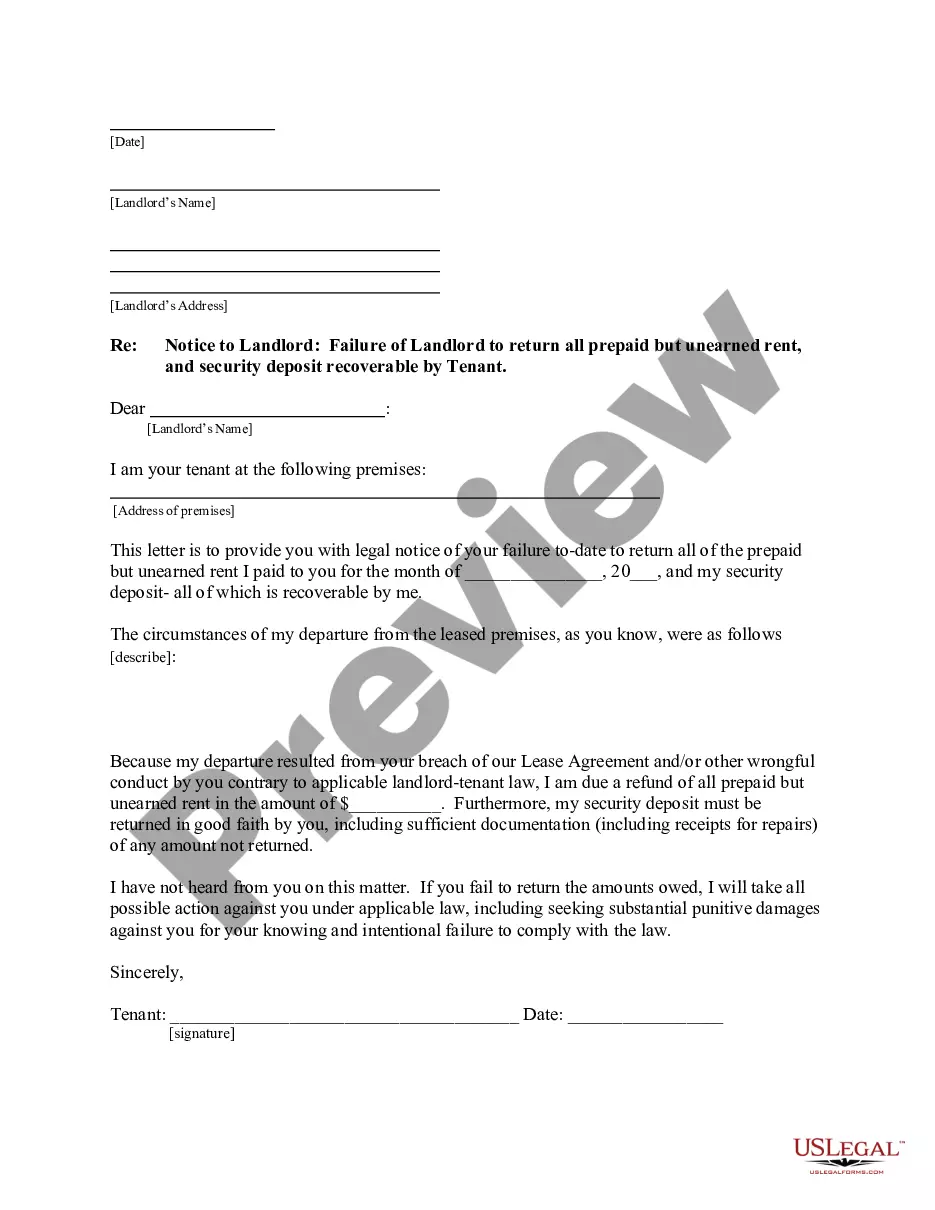
How to fill out California Letter From Tenant To Landlord For Failure Of Landlord To Return All Prepaid And Unearned Rent And Security Recoverable By Tenant?
- Begin by visiting the US Legal Forms website and create an account if you're a new user.
- Access the preview mode to review various forms related to tenants' rights. Make sure to select one that aligns with your jurisdiction.
- If necessary, use the search function to find additional templates that suit your specific needs.
- Purchase the selected document by clicking 'Buy Now' and choose your subscription plan.
- Complete the payment through either your credit card or PayPal account. Save the transaction confirmation.
- Once paid, download your form and save it to your device for easy access. You can also find it under 'My Forms' in your profile anytime.
By following these crucial steps, you can ensure that your legal documents are accurate and tailored to your situation. US Legal Forms not only provides legal documents but also supports users with expert assistance for precise form completion.
Start exploring your tenants' rights today with US Legal Forms and empower yourself with the knowledge you need!
Form popularity
FAQ
In Georgia, landlords must provide at least a 60-day written notice for month-to-month leases if they want a tenant to vacate. For lease agreements that are specifically outlined, different timelines may apply based on the lease terms. Understanding these notice requirements is essential to protect your tenants rights to rent and avoid unexpected disruptions.
Renters in Georgia have several key rights, including the right to a safe and habitable living environment. They also have rights against discrimination, ensuring fair treatment regardless of race, religion, or family status. Familiarizing yourself with these tenants rights to rent can empower you as a renter to advocate for yourself effectively.
Landlords in Georgia are generally not responsible for tenant injuries that occur due to tenant negligence or misuse of the property. Additionally, they are not liable for damages caused by natural disasters unless they have neglected necessary repairs. Understanding the limits of landlord responsibilities can clarify your tenants rights to rent and ensure a stable living environment.
In Georgia, a landlord cannot force a tenant to leave the property without following proper legal procedures. This includes not changing locks or shutting off utilities without prior notice. It is important for tenants to understand their rights within the context of tenants rights to rent, as this ensures they remain protected against unlawful eviction.
In South Carolina, tenants can generally withhold rent if the landlord fails to meet important safety and habitability standards, which can often include issues like mold or lack of heat. However, it’s crucial for tenants to understand their rights and responsibilities regarding such actions. Consulting legal resources, including platforms like USLegalForms, can provide clarification on tenants rights to rent and help navigate the situation properly.
When telling a tenant to move out, approach the situation with empathy and respect. Schedule a time to discuss the matter face-to-face or through a letter, clearly explaining your reasons while acknowledging their tenants rights to rent. Offering assistance or a timeline can help ease the transition for both parties.
To fill out a landlord application, you need to provide basic information such as your name, property details, and rental history. Include your contact information and any relevant financial details that demonstrate your ability to manage property. Being aware of tenants rights to rent will help you create a fair and transparent application process.
Writing a notice letter to your tenant requires clarity and professionalism. Start with your name and the date, and then clearly specify the lease issue or action required. Remind them politely of their tenants rights to rent, and provide them with options or next steps if necessary.
To write a quick notice to a tenant, keep it concise and to the point. Begin with the date and address, followed by a clear statement of the notice purpose. Use straightforward language and remind them of their tenants rights to rent, while ensuring that your message is effective yet respectful.
To write a notice letter for moving out, start by including your name, address, and the date. Clearly state your intent to vacate, the date ofYour planned move, and express appreciation for the landlord's support during your stay. Remember, adhering to your tenants rights to rent means giving appropriate notice according to your lease terms.