Tenant Forms For Landlord
Description
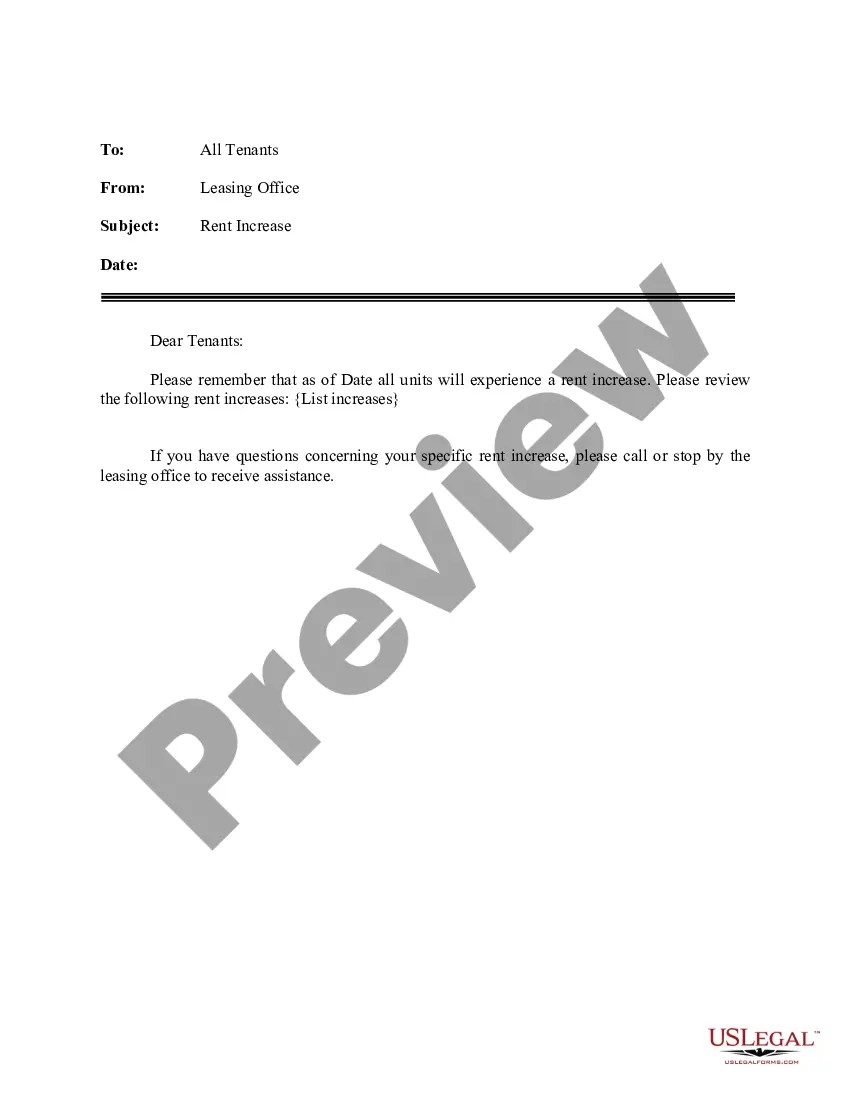


Get your form ready online
Our built-in tools help you complete, sign, share, and store your documents in one place.
Make edits, fill in missing information, and update formatting in US Legal Forms—just like you would in MS Word.
Download a copy, print it, send it by email, or mail it via USPS—whatever works best for your next step.
Sign and collect signatures with our SignNow integration. Send to multiple recipients, set reminders, and more. Go Premium to unlock E-Sign.
If this form requires notarization, complete it online through a secure video call—no need to meet a notary in person or wait for an appointment.
We protect your documents and personal data by following strict security and privacy standards.

Make edits, fill in missing information, and update formatting in US Legal Forms—just like you would in MS Word.

Download a copy, print it, send it by email, or mail it via USPS—whatever works best for your next step.

Sign and collect signatures with our SignNow integration. Send to multiple recipients, set reminders, and more. Go Premium to unlock E-Sign.

If this form requires notarization, complete it online through a secure video call—no need to meet a notary in person or wait for an appointment.

We protect your documents and personal data by following strict security and privacy standards.
Looking for another form?




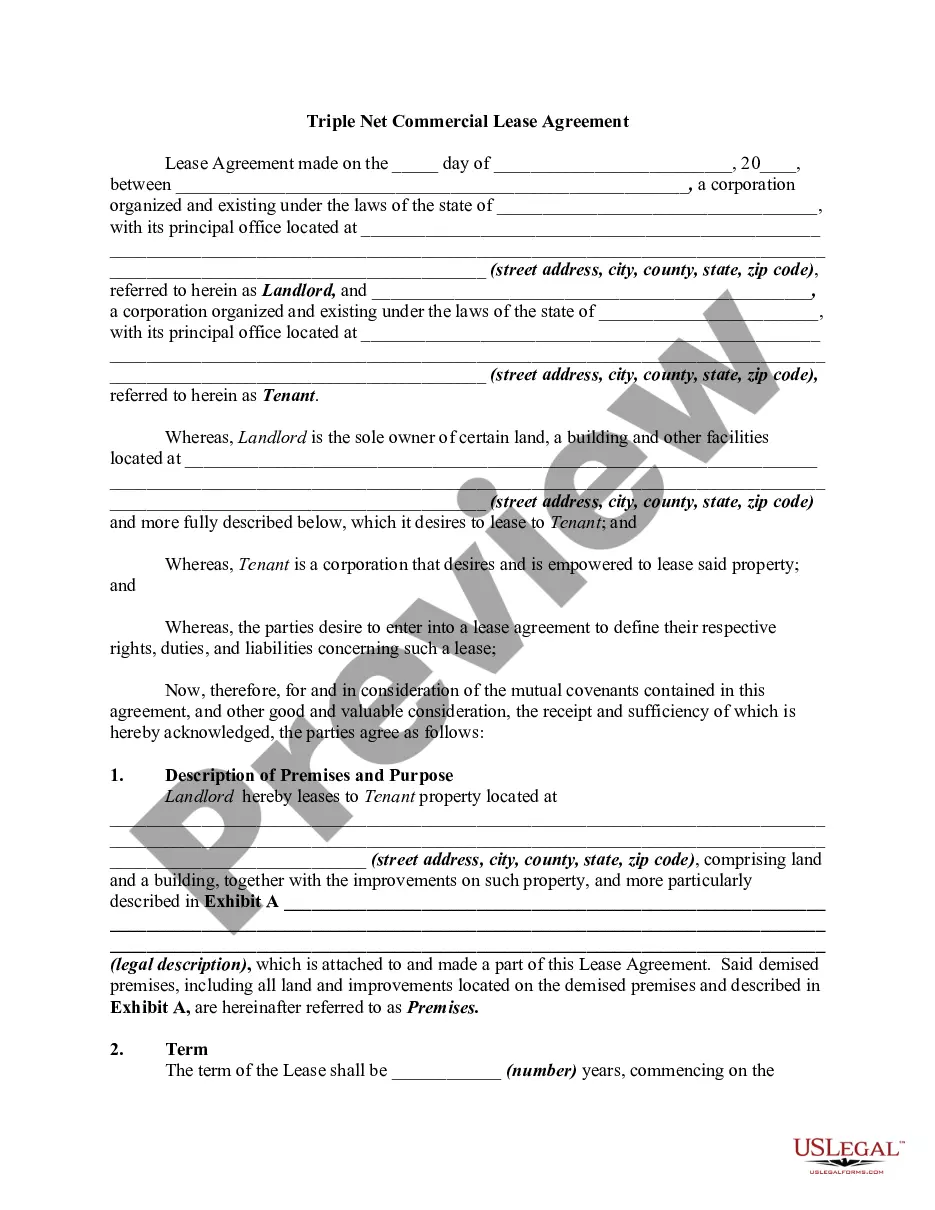

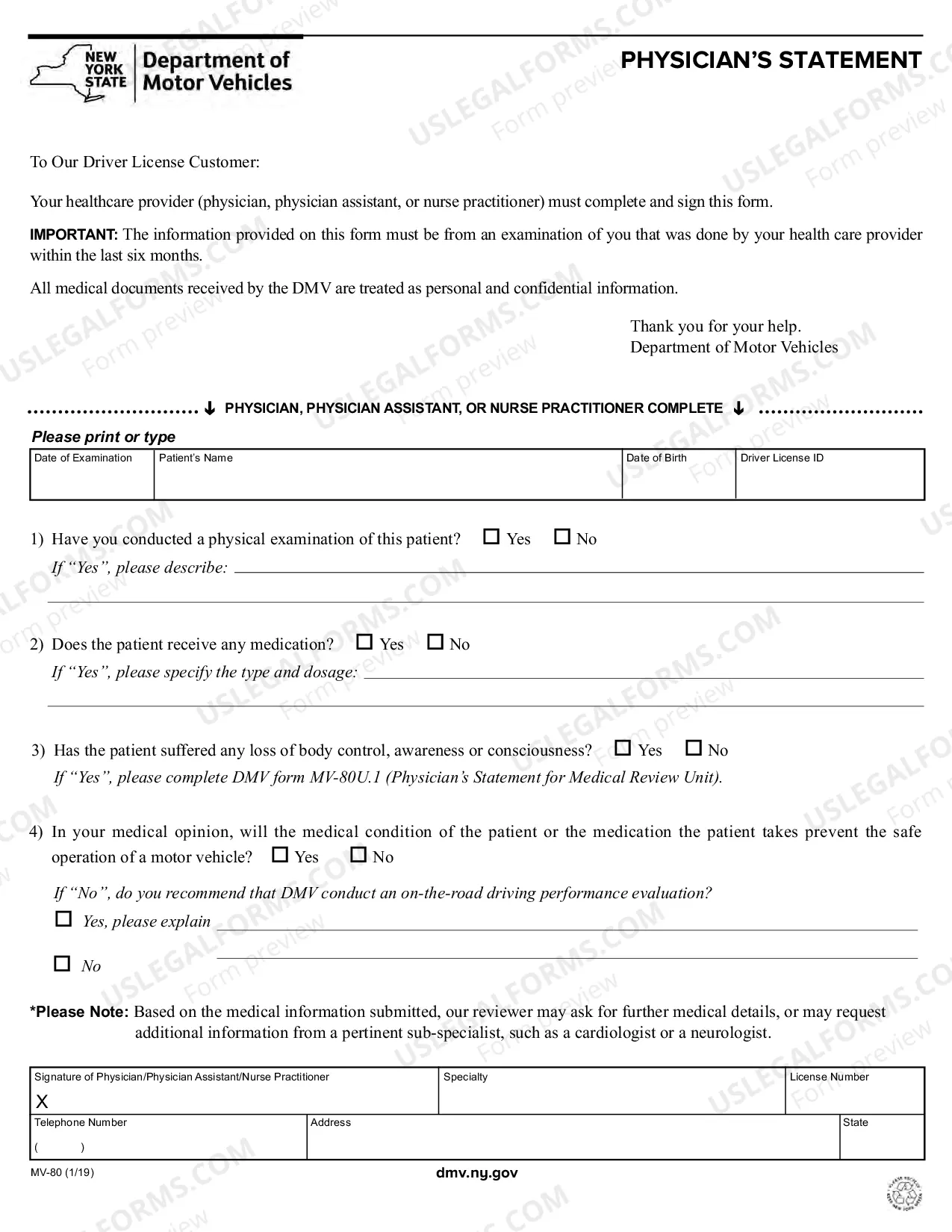
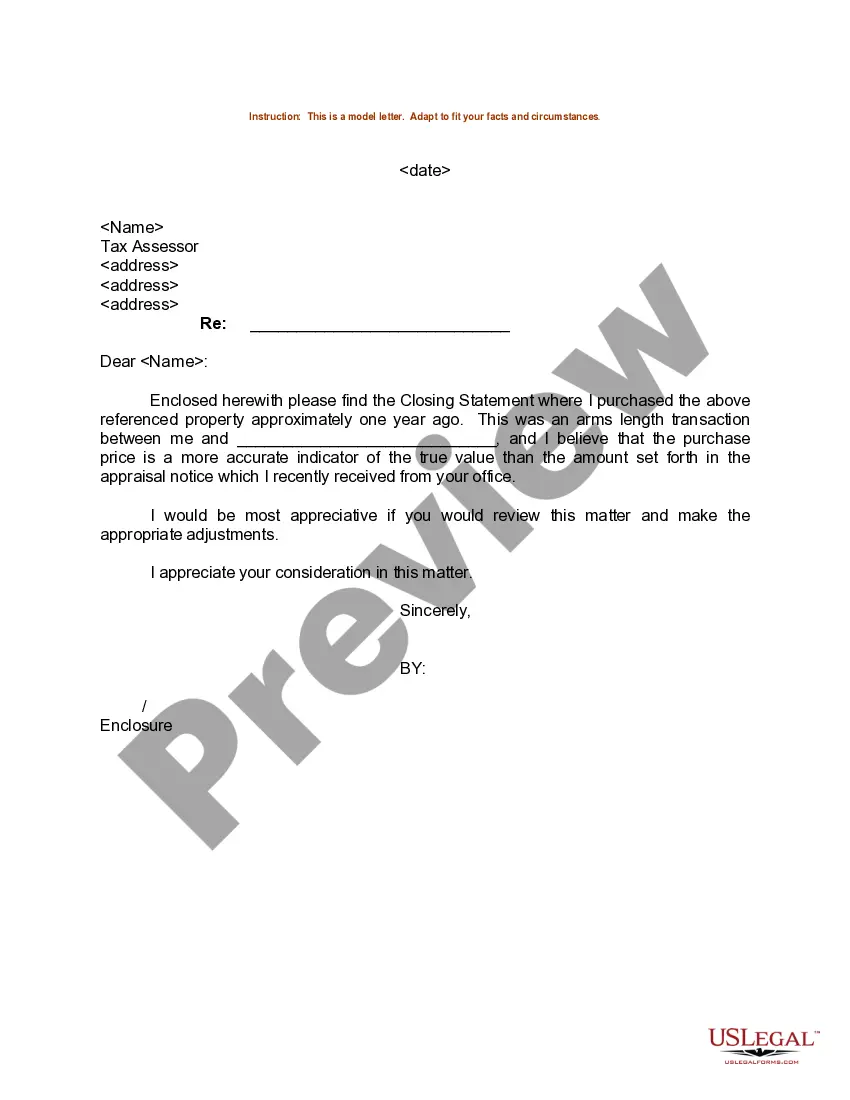

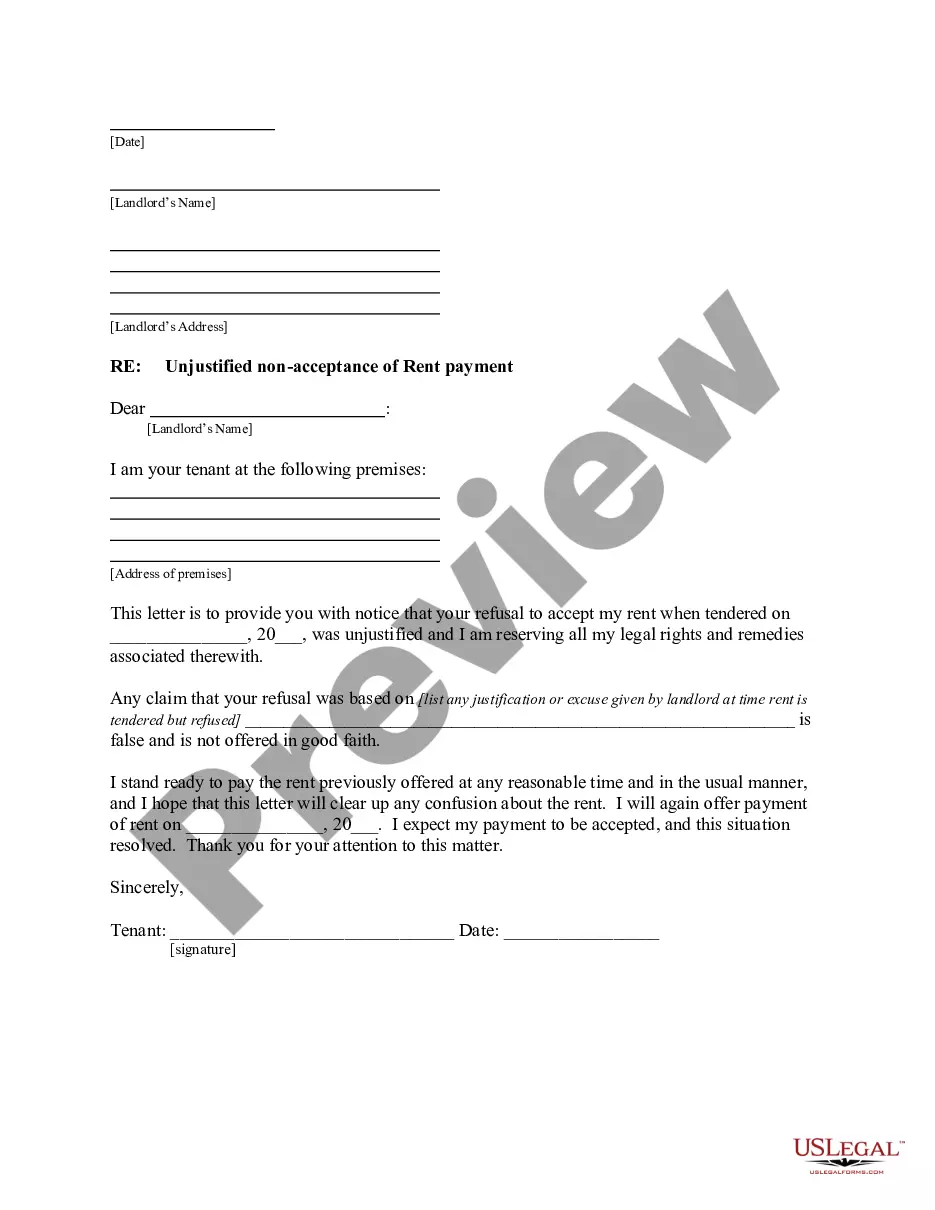
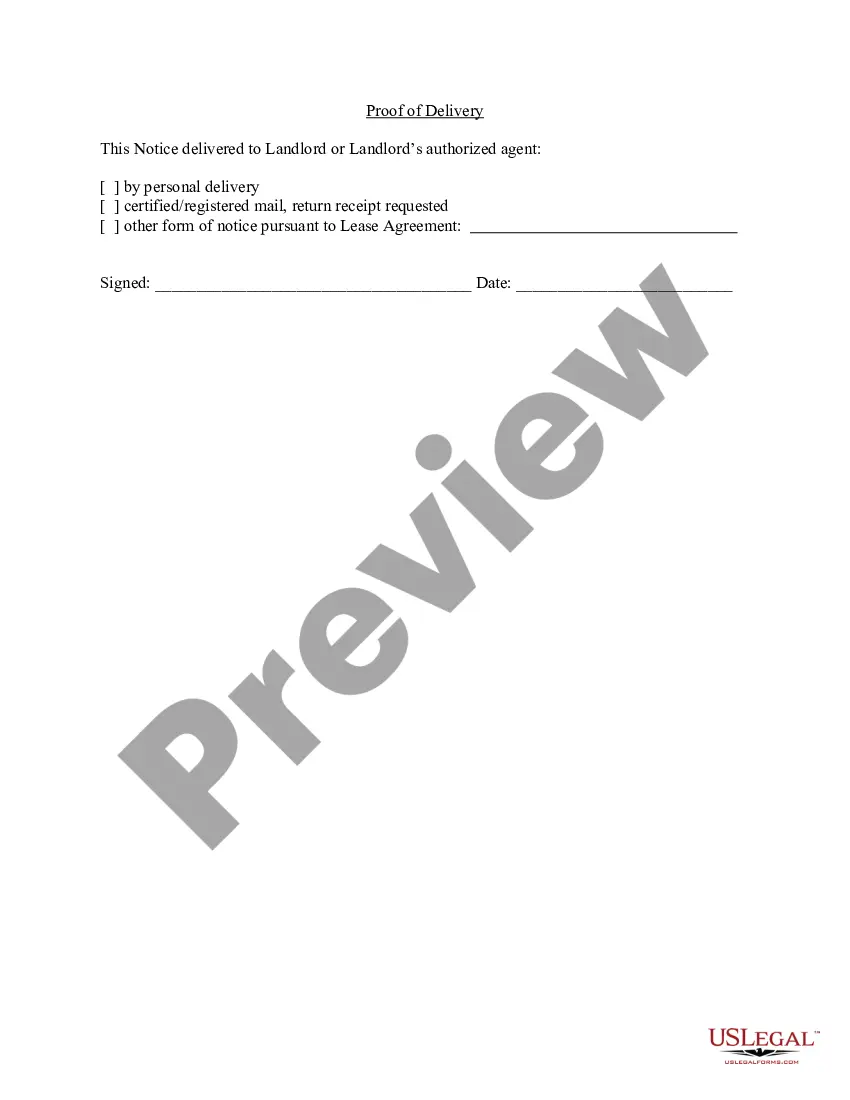
How to fill out California Letter From Tenant To Landlord Containing Notice To Cease Unjustified Nonacceptance Of Rent?
- If you're a returning user, log in to your account and download your desired template, ensuring your subscription is active. If it's expired, renew it per your payment plan.
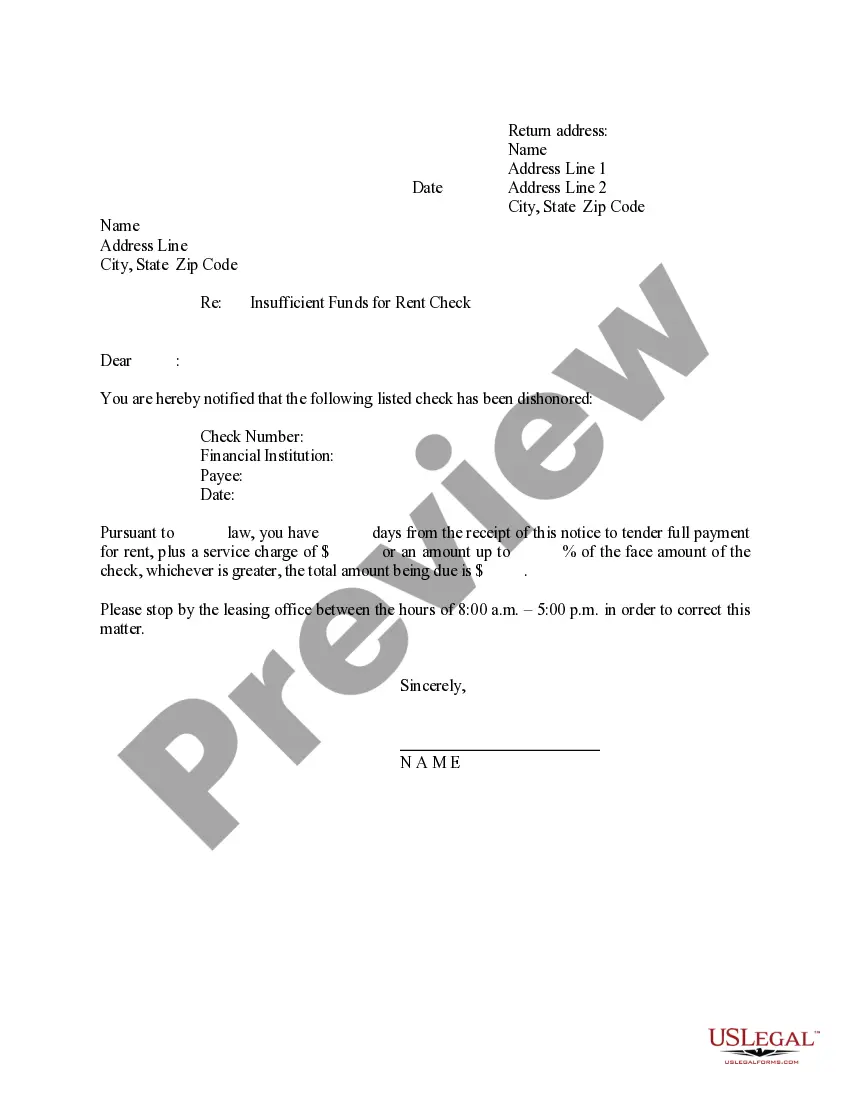
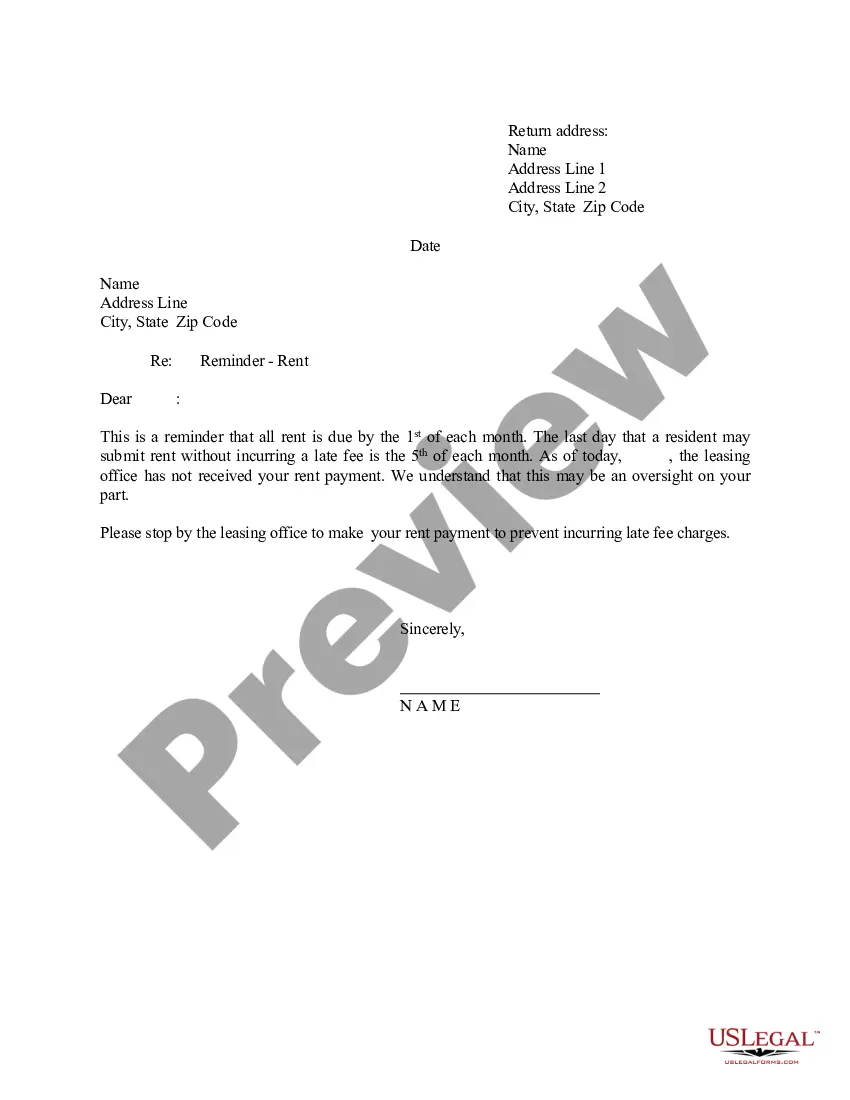
- For first-time users, start by browsing the Preview mode and description of forms to ensure that you select the appropriate one that aligns with your local jurisdiction requirements.
- If you encounter any discrepancies, utilize the Search tab above to explore additional templates that may suit your needs.
- Proceed to purchase your document by clicking the Buy Now button and selecting your preferred subscription plan. You'll need to create an account to access the extensive library of resources.
- Complete your purchase by entering your credit card information or using your PayPal for subscription payment.
- Finally, download your selected form and store it on your device. You can revisit it anytime through the My Forms section of your profile.
In conclusion, US Legal Forms simplifies the process of obtaining tenant forms for landlords with its vast library of over 85,000 fillable and editable legal documents. By providing access to premium experts for guidance, you can ensure your documents are accurate and legally sound.
Start using US Legal Forms today to streamline your rental property management!
Form popularity
FAQ
A tenancy document is a legal paper that formally details the relationship and obligations between a tenant and a landlord. It typically includes information such as rental terms, security deposits, and property conditions. To create effective tenancy documents, landlords can rely on tenant forms for landlords, allowing for smooth and legally sound rental arrangements.
The most common tenancy agreement is the month-to-month lease, which allows tenants to rent the property for one month at a time. This type of agreement offers flexibility for both landlords and tenants, making it easier to make changes if needed. However, it is important to use comprehensive tenant forms for landlords to ensure all aspects of the rental terms are clearly outlined.
A tenancy agreement is a formal contract between a landlord and a tenant that specifies the terms of renting a property. This document outlines details such as the duration of the lease, rent amount, and responsibilities of both parties. Utilizing standard tenant forms for landlords ensures that all necessary legal provisions are included in the tenancy agreement.
Landlords in California must provide several disclosures, including information about lead-based paint, mold issues, and any known criminal activity in the neighborhood. Additionally, they must inform tenants of their rights regarding security deposits and rental agreements. These disclosures help establish transparency, making tenant forms for landlords vital for both parties in the rental process.
A tenant is an individual who occupies a rental property, while tenancy refers to the legal relationship created by the rental agreement between the landlord and tenant. Essentially, the tenant is the person living in the property, whereas tenancy describes the status and terms of their rental arrangement. Understanding these distinctions is important when using tenant forms for landlords.
In California, landlords are not legally required to provide a receipt for rent payments unless the tenant requests one. However, providing a receipt can be beneficial for record-keeping purposes. Having proof of payment protects both the landlord and the tenant, making tenant forms for landlords an essential tool in managing rental transactions.
A tenancy form is a legal document that outlines the terms and conditions of a rental agreement between a landlord and a tenant. These forms help establish rights and responsibilities for both parties, ensuring clarity in the rental process. Landlords often utilize tenant forms to create binding agreements that also safeguard their interests.
Most landlords utilize a combination of credit checks, criminal history assessments, and rental history evaluations to form a complete picture of a potential tenant. This multi-faceted approach helps ensure that landlords choose responsible renters. By incorporating effective tenant forms for landlord criteria, landlords can streamline their screening process and maintain high occupancy standards.
Poor rental history may include late payments, prior evictions, or unresolved disputes with past landlords. Such issues can raise red flags for prospective landlords. Using comprehensive tenant forms for landlord purposes can help clarify rental histories and provide a detailed overview of a tenant's past behavior.
Landlords often check rental history through tenant screenings, which involve contacting previous landlords and conducting background checks. These steps reveal a tenant's payment history, lease violations, or any issues that may arise. An organized system that includes tenant forms for landlord purposes can simplify this process and improve overall efficiency.