Tenant Landlord Law For Tenants
Description


Get your form ready online
Our built-in tools help you complete, sign, share, and store your documents in one place.
Make edits, fill in missing information, and update formatting in US Legal Forms—just like you would in MS Word.
Download a copy, print it, send it by email, or mail it via USPS—whatever works best for your next step.
Sign and collect signatures with our SignNow integration. Send to multiple recipients, set reminders, and more. Go Premium to unlock E-Sign.
If this form requires notarization, complete it online through a secure video call—no need to meet a notary in person or wait for an appointment.
We protect your documents and personal data by following strict security and privacy standards.

Make edits, fill in missing information, and update formatting in US Legal Forms—just like you would in MS Word.

Download a copy, print it, send it by email, or mail it via USPS—whatever works best for your next step.

Sign and collect signatures with our SignNow integration. Send to multiple recipients, set reminders, and more. Go Premium to unlock E-Sign.

If this form requires notarization, complete it online through a secure video call—no need to meet a notary in person or wait for an appointment.

We protect your documents and personal data by following strict security and privacy standards.
Looking for another form?


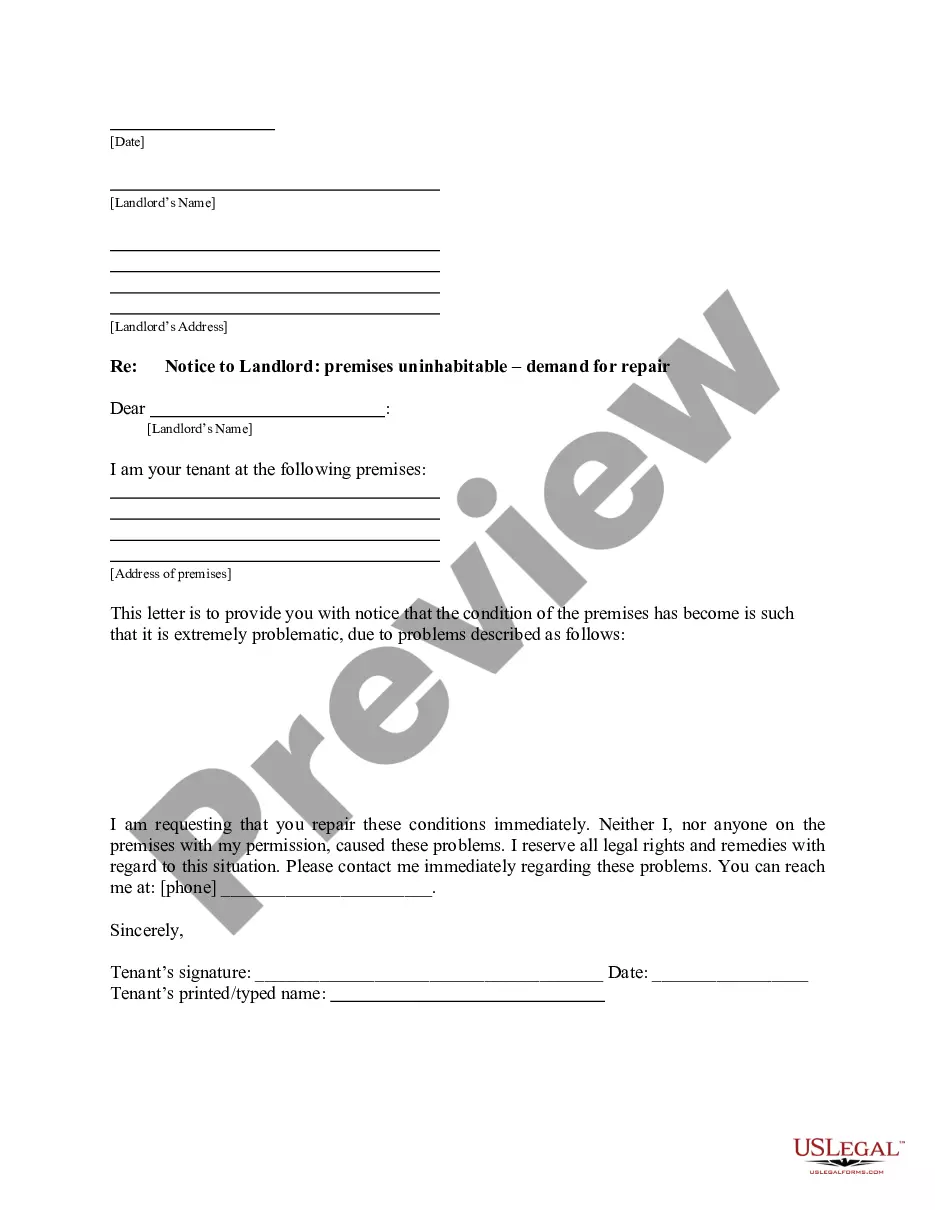
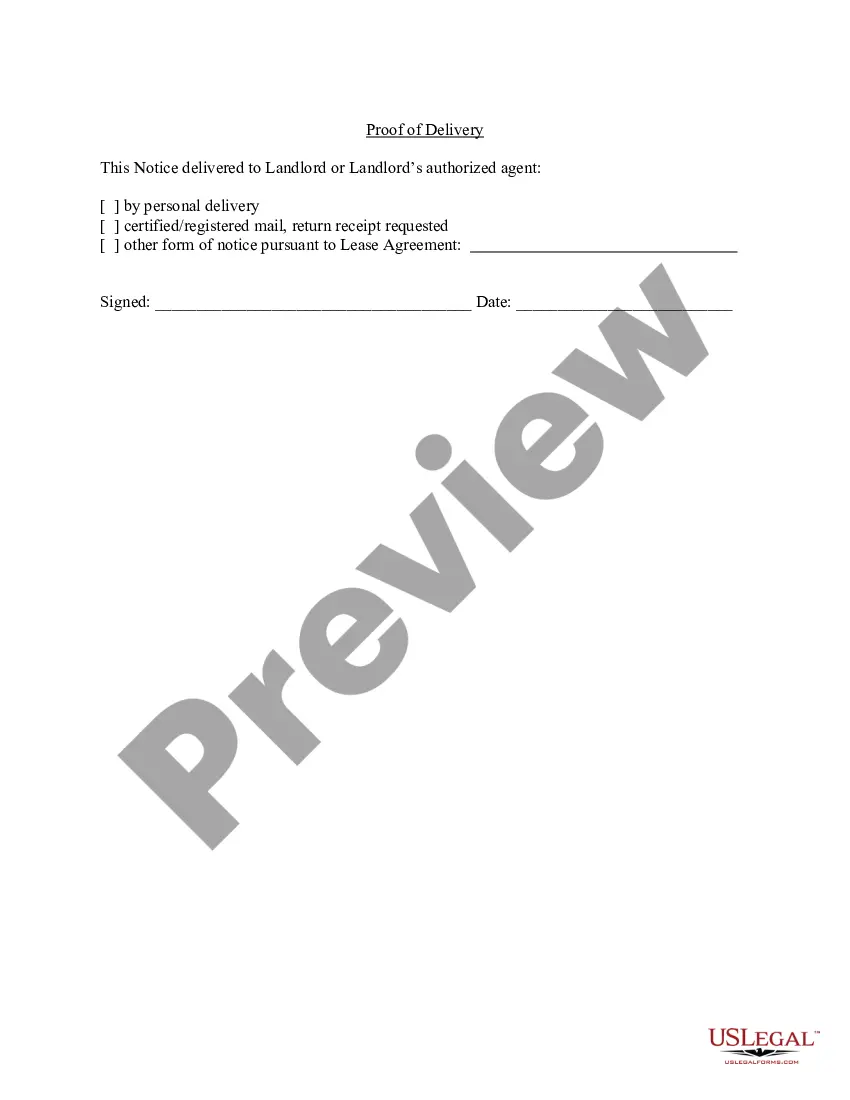
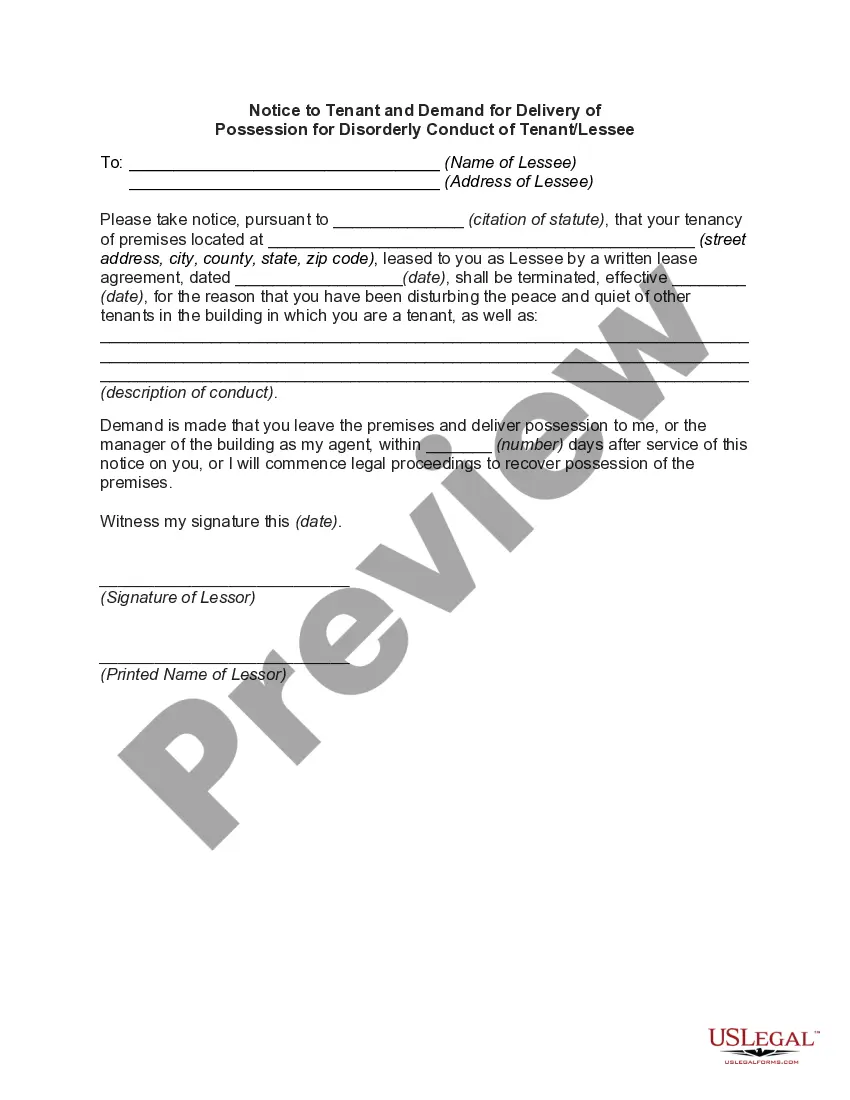
How to fill out California Letter From Tenant To Landlord Containing Notice That Premises In Uninhabitable In Violation Of Law And Demand Immediate Repair?
- If you're an existing user, log in to your account and download the specific form template you need by clicking the Download button. Ensure your subscription is active; if not, renew it based on your chosen payment plan.
- For first-time users, begin by reviewing the Preview mode and form description to confirm that the selected document meets your requirements and local jurisdiction standards.
- If you spot any discrepancies, utilize the Search tab above to find an alternative template that better fits your needs.
- Once you have found the correct document, click the Buy Now button to select your preferred subscription plan. Registration is required to access the resources in the library.
- Proceed to make your purchase by entering your credit card details or using your PayPal account for the subscription payment.
- Finally, download your legal form and save it onto your device. You can also access it anytime in the My Forms section of your profile.
With US Legal Forms, you gain access to a vast collection of over 85,000 forms, which is more than any competitor at a comparable cost. Each form is easy to fill out, ensuring that both tenants and attorneys can navigate legal matters efficiently.
Don't let legal complexities overwhelm you. Start utilizing US Legal Forms today to secure your tenant rights with precision and confidence!
Form popularity
FAQ
In New Jersey, you have several crucial rights as a tenant under tenant landlord law for tenants. You have the right to a habitable living space, meaning the property must meet basic health and safety standards. You are also entitled to privacy, requiring landlords to provide notice before entering your apartment. Understanding these rights can empower you in any rental situation.
To stand out to a landlord, you may want to highlight your stability and reliability as a tenant in your application. Providing references from previous landlords can bolster your case, showing you have a history of timely payments and maintaining properties. Additionally, showcasing your financial stability, such as a steady income or good credit score, can reassure landlords that you are a responsible tenant. This aspect is vital under tenant landlord law for tenants.
In New Jersey, tenant landlord law for tenants typically requires landlords to provide a 30-day notice for month-to-month leases. For fixed-term leases, landlords must wait until the lease ends before asking you to move out. However, if you have violated the lease terms, they may issue a shorter notice depending on the situation. Always check your specific lease agreement for further details.
In New York, tenant landlord law for tenants prohibits landlords from engaging in retaliatory actions against tenants, such as raising rent or evicting them for asserting their rights. Additionally, landlords cannot deny essential services, like heat and hot water, or enter your apartment without proper notice. These protections help ensure that you can enjoy your living space without fear of unlawful actions from your landlord.
In tenant landlord law for tenants, a tenant typically does not hold responsibility for normal wear and tear of the property. Instead, tenants must maintain the unit in a clean and undamaged state. It is also not a tenant’s role to make major repairs to the property, which is generally the landlord's duty. Understanding these responsibilities can help you navigate your rental agreement more effectively.
In New York, the amount of time a landlord must provide for a tenant to move out varies based on the situation. Generally, a landlord can give a 30-day notice for month-to-month tenants, while more extended periods may apply in different circumstances. Knowing the specifics of tenant landlord law for tenants is vital to ensure your rights are respected during this process. If you're uncertain, platforms like uslegalforms can guide you through the rental laws applicable to your case.
In Missouri, the minimum notice a landlord can give a tenant depends on the lease agreement duration. For month-to-month leases, a landlord must provide at least 30 days' notice. For fixed-term leases, notice requirements may differ and should be specified in the lease. Understanding tenant landlord law for tenants helps ensure you’re prepared and informed about your responsibilities.
Renters in Missouri have several rights under tenant landlord law for tenants. This includes the right to a habitable living environment, protection against discrimination, and the right to privacy in your rental home. Additionally, if your landlord fails to maintain the property or respects your rights, you may have grounds to take action. Being aware of these rights empowers you to stand up for yourself and seek justice.
To file a legal action against your landlord, you should first gather all relevant documentation, such as lease agreements and communication records. Then, research the appropriate court to file your complaint, as procedures can vary by jurisdiction. Understanding tenant landlord law for tenants is crucial, as it outlines your rights and responsibilities. If you're unsure how to proceed, consider consulting with a legal professional for assistance.
If you encounter issues with your landlord in Missouri, it’s essential to report them to the appropriate local housing authority. You can also contact the Missouri Attorney General's office if you believe your landlord is violating tenant landlord law for tenants. These agencies can provide guidance on your rights and help investigate any unfair practices. Remember, knowing who to turn to is the first step in resolving your housing issues.