Describe Form.
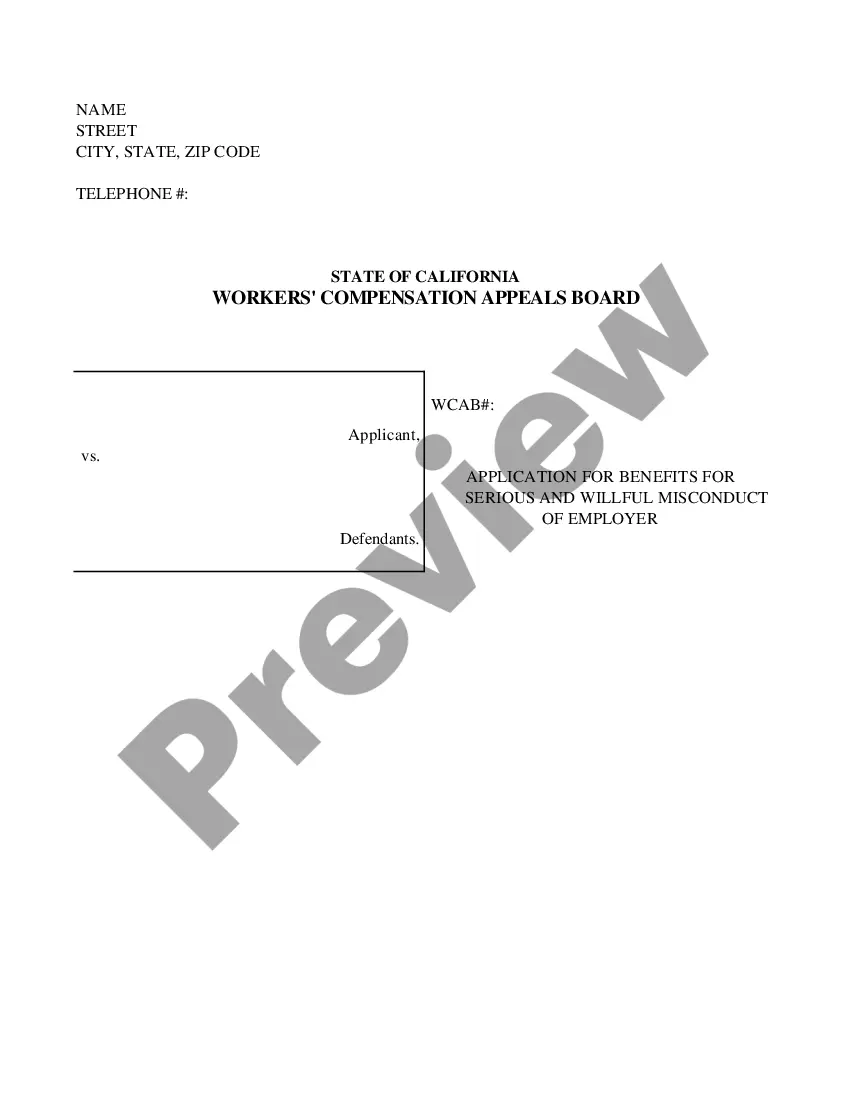
Serious And Willful Misconduct Benefits For Employees
State:
California
Control #:
CA-05-WC
Format:
PDF
Instant download
This website is not affiliated with any governmental entity
Public form
Description
Free preview
Get your form ready online
Our built-in tools help you complete, sign, share, and store your documents in one place.
Built-in online Word editor
Make edits, fill in missing information, and update formatting in US Legal Forms—just like you would in MS Word.
Export easily
Download a copy, print it, send it by email, or mail it via USPS—whatever works best for your next step.
E-sign your document
Sign and collect signatures with our SignNow integration. Send to multiple recipients, set reminders, and more. Go Premium to unlock E-Sign.
Notarize online 24/7
If this form requires notarization, complete it online through a secure video call—no need to meet a notary in person or wait for an appointment.
Store your document securely
We protect your documents and personal data by following strict security and privacy standards.

Make edits, fill in missing information, and update formatting in US Legal Forms—just like you would in MS Word.

Download a copy, print it, send it by email, or mail it via USPS—whatever works best for your next step.

Sign and collect signatures with our SignNow integration. Send to multiple recipients, set reminders, and more. Go Premium to unlock E-Sign.

If this form requires notarization, complete it online through a secure video call—no need to meet a notary in person or wait for an appointment.

We protect your documents and personal data by following strict security and privacy standards.
Looking for another form?





Form popularity
FAQ
Employers can prove willful misconduct in unemployment cases by providing evidence of the employee's intentional actions or neglect. This evidence may include testimonies, documented warnings, or records of policy violations. It is critical for employers to compile thorough documentation to illustrate the serious and willful misconduct benefits for employees in these situations, ensuring that the process is clear and justified.
Serious misconduct or willful disobedience occurs when an employee knowingly violates company policies or directives. This can encompass actions like refusing to follow reasonable instructions from supervisors or repeatedly ignoring important safety protocols. Such behavior not only affects workplace harmony but also can exclude employees from receiving serious and willful misconduct benefits for employees.
An example of serious misconduct might include theft, violence, or substance abuse during work hours. These actions can undermine workplace safety and trust, leading to immediate dismissal. When employees engage in serious misconduct, they may lose any entitlement to serious and willful misconduct benefits for employees, highlighting the importance of maintaining a safe work environment.
Serious and willful misconduct refers to actions by an employee that are not only intentional but also demonstrate a blatant disregard for the safety and well-being of themselves or others. In these cases, employees may forfeit certain benefits, like unemployment, if they engage in behavior that constitutes serious misconduct. Understanding these concepts is crucial for both employers and employees to navigate the complexities of serious and willful misconduct benefits for employees.
Just cause refers to a legitimate reason an employer has for taking disciplinary action against an employee, including misconduct. In contrast, willful misconduct indicates intentional wrongdoing that shows a blatant disregard for company policies or the law. Recognizing this difference is vital, as it can influence the serious and willful misconduct benefits for employees and their subsequent rights during termination.
Willful misconduct occurs when an employee intentionally engages in an act that disregards their obligations. This can manifest in various ways, including theft, fraud, or repeated violations of safety protocols. Understanding willful misconduct is crucial for employees, as it can impact their eligibility for serious and willful misconduct benefits in the workplace.
Terminating an employee for serious misconduct involves a structured process to ensure fairness. First, it’s essential to document the misconduct and gather evidence. Next, conduct an investigation, and if warranted, present your findings to the employee. By clearly demonstrating serious and willful misconduct, you help protect both the business and the employee's rights surrounding their benefits.
Wilful misconduct refers to intentional actions that violate company policies or laws. An example could be if an employee deliberately misuses company property, such as using a company vehicle for personal errands without permission. This behavior not only jeopardizes the company’s assets but also may affect serious and willful misconduct benefits for employees in the event of termination.
A serious and willful claim in California is a legal assertion made by an employee who has been injured due to their employer's intentional misconduct or gross negligence. This process is vital for workers seeking additional compensation under workers' compensation law. Employees pursuing serious and willful misconduct benefits must gather clear evidence to support their claims.
Wilful misconduct includes actions taken by an employee that are intentional and in violation of safety standards. It encompasses situations where an individual recklessly disregards the safety of themselves or others. This type of behavior often leads to serious and willful misconduct benefits for employees, highlighting the importance of workplace safety.
