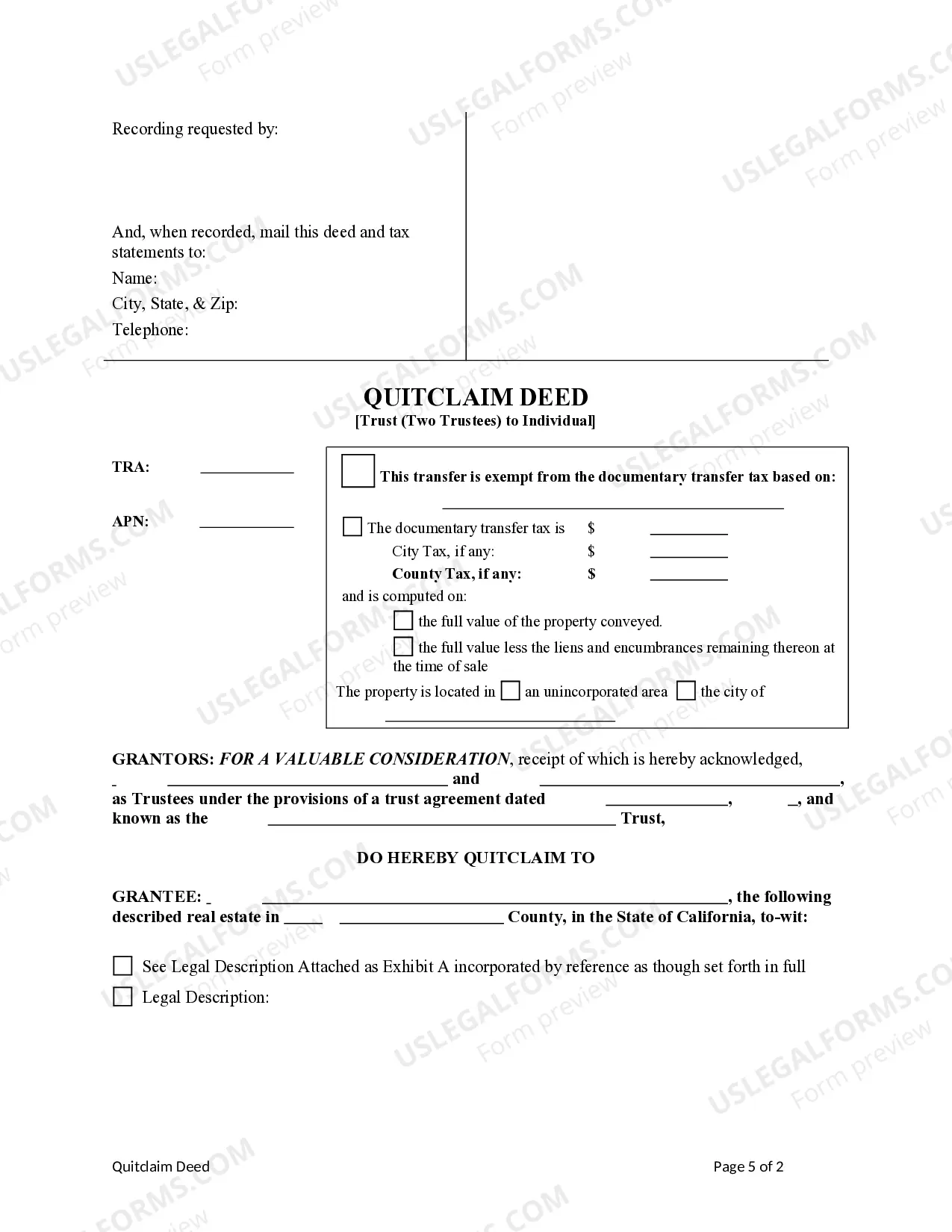
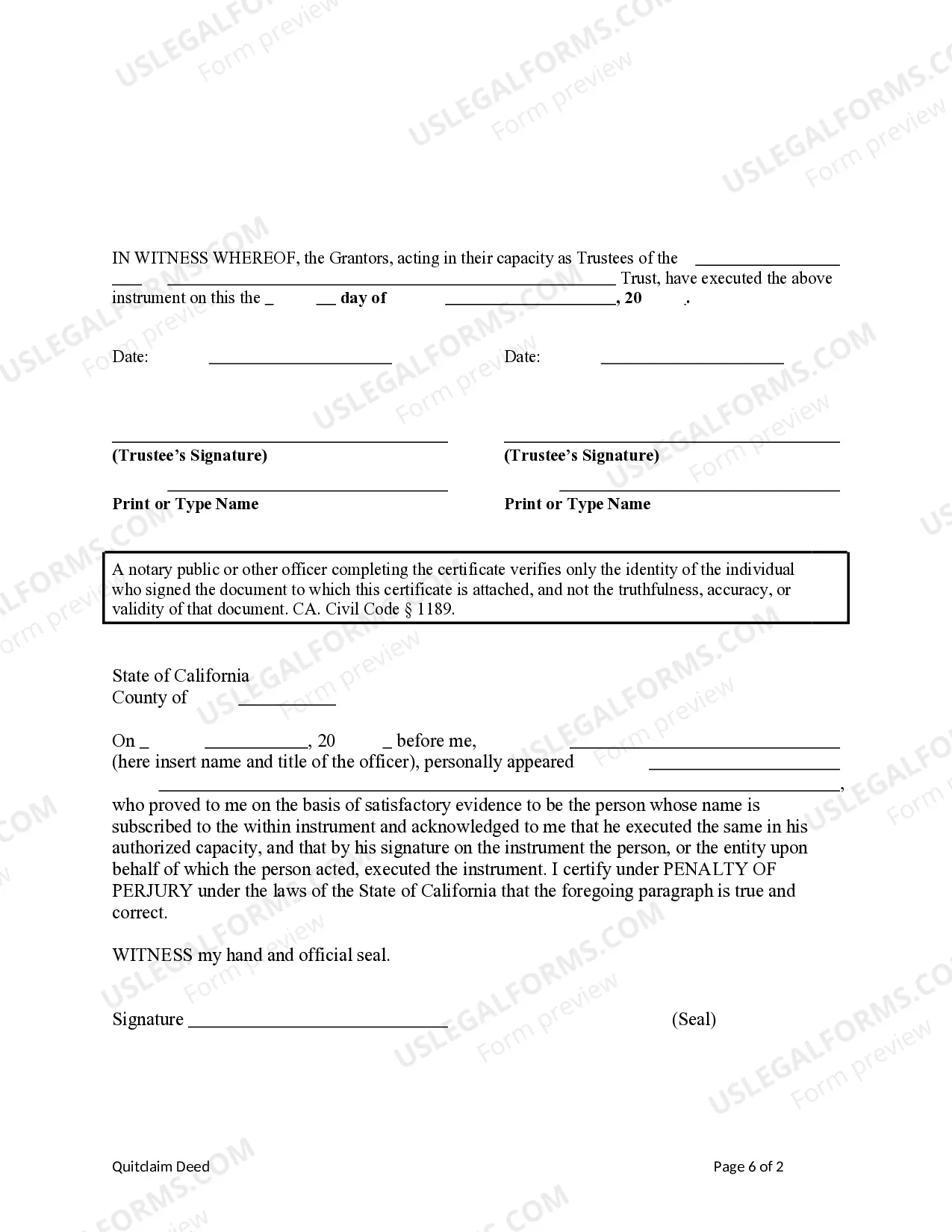
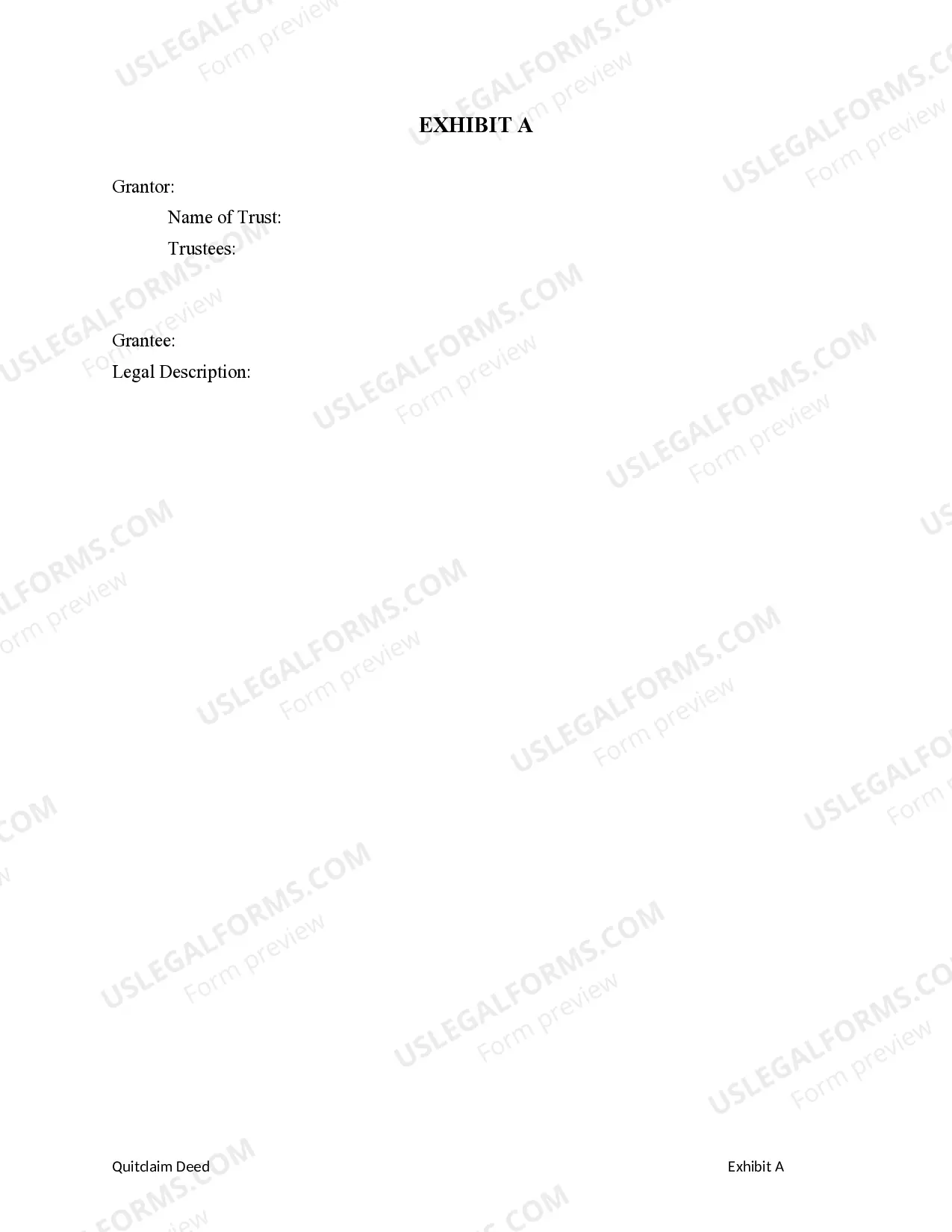
Quitclaim Deed Trustees For Beneficiaries
Description

Get your form ready online
Our built-in tools help you complete, sign, share, and store your documents in one place.
Make edits, fill in missing information, and update formatting in US Legal Forms—just like you would in MS Word.
Download a copy, print it, send it by email, or mail it via USPS—whatever works best for your next step.
Sign and collect signatures with our SignNow integration. Send to multiple recipients, set reminders, and more. Go Premium to unlock E-Sign.
If this form requires notarization, complete it online through a secure video call—no need to meet a notary in person or wait for an appointment.
We protect your documents and personal data by following strict security and privacy standards.

Make edits, fill in missing information, and update formatting in US Legal Forms—just like you would in MS Word.

Download a copy, print it, send it by email, or mail it via USPS—whatever works best for your next step.

Sign and collect signatures with our SignNow integration. Send to multiple recipients, set reminders, and more. Go Premium to unlock E-Sign.

If this form requires notarization, complete it online through a secure video call—no need to meet a notary in person or wait for an appointment.

We protect your documents and personal data by following strict security and privacy standards.
Looking for another form?






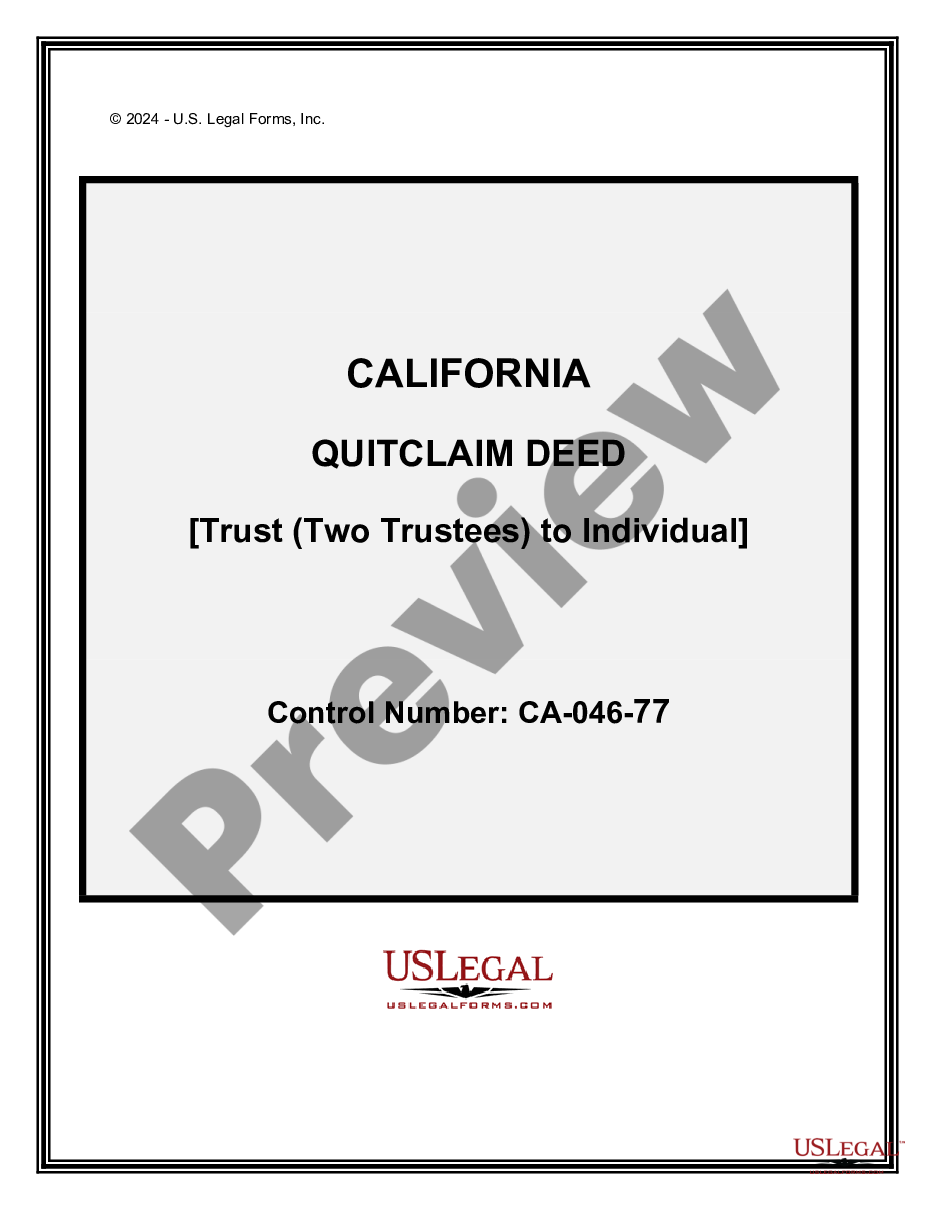
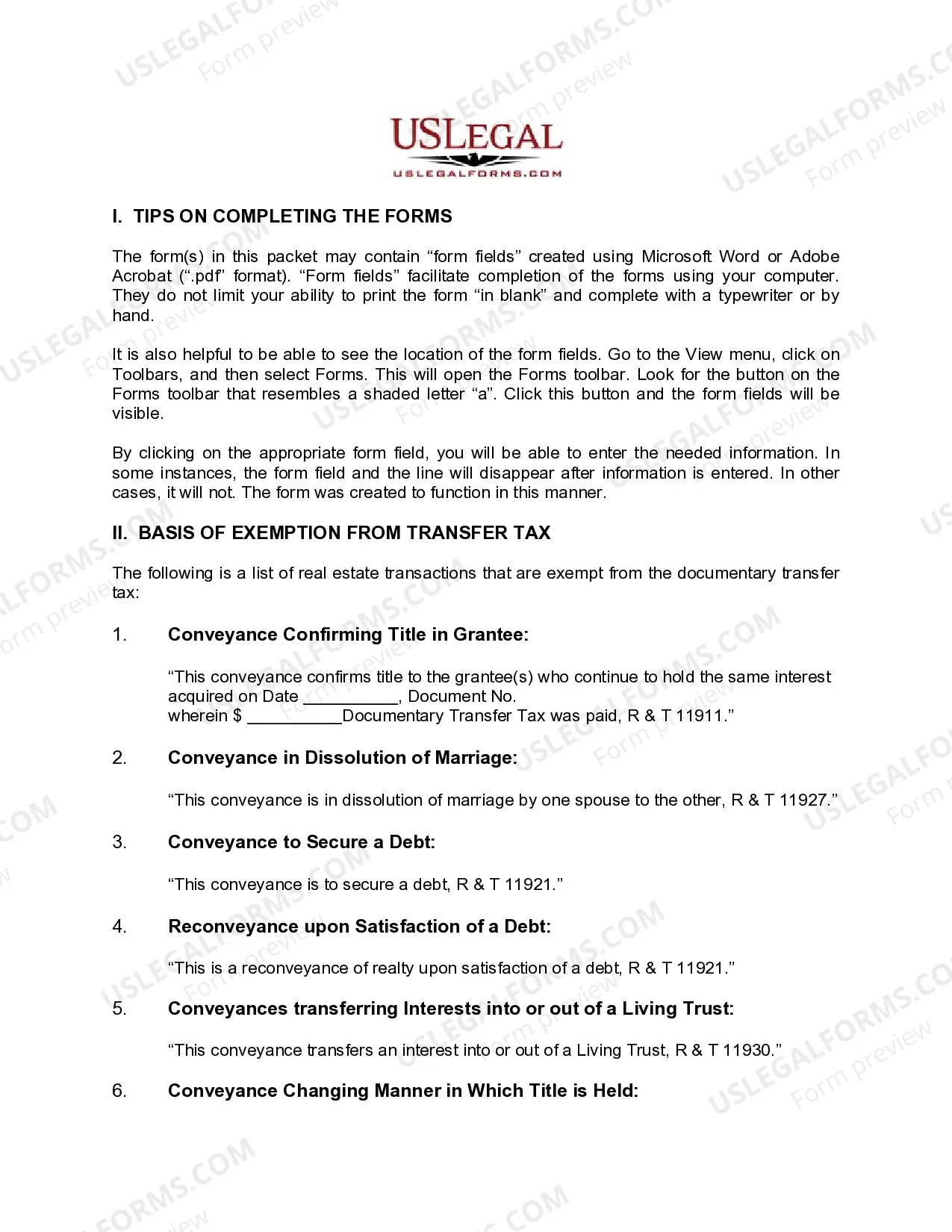
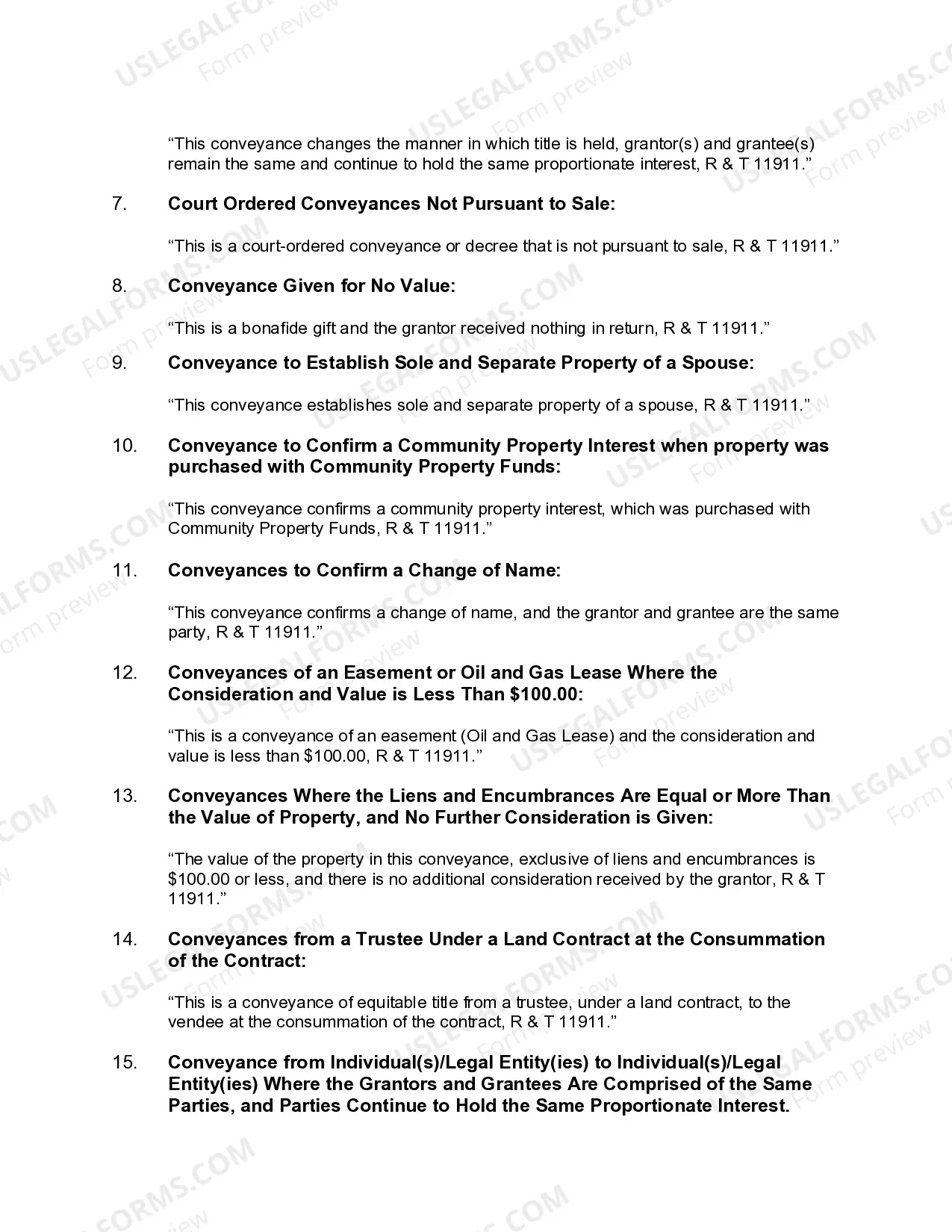
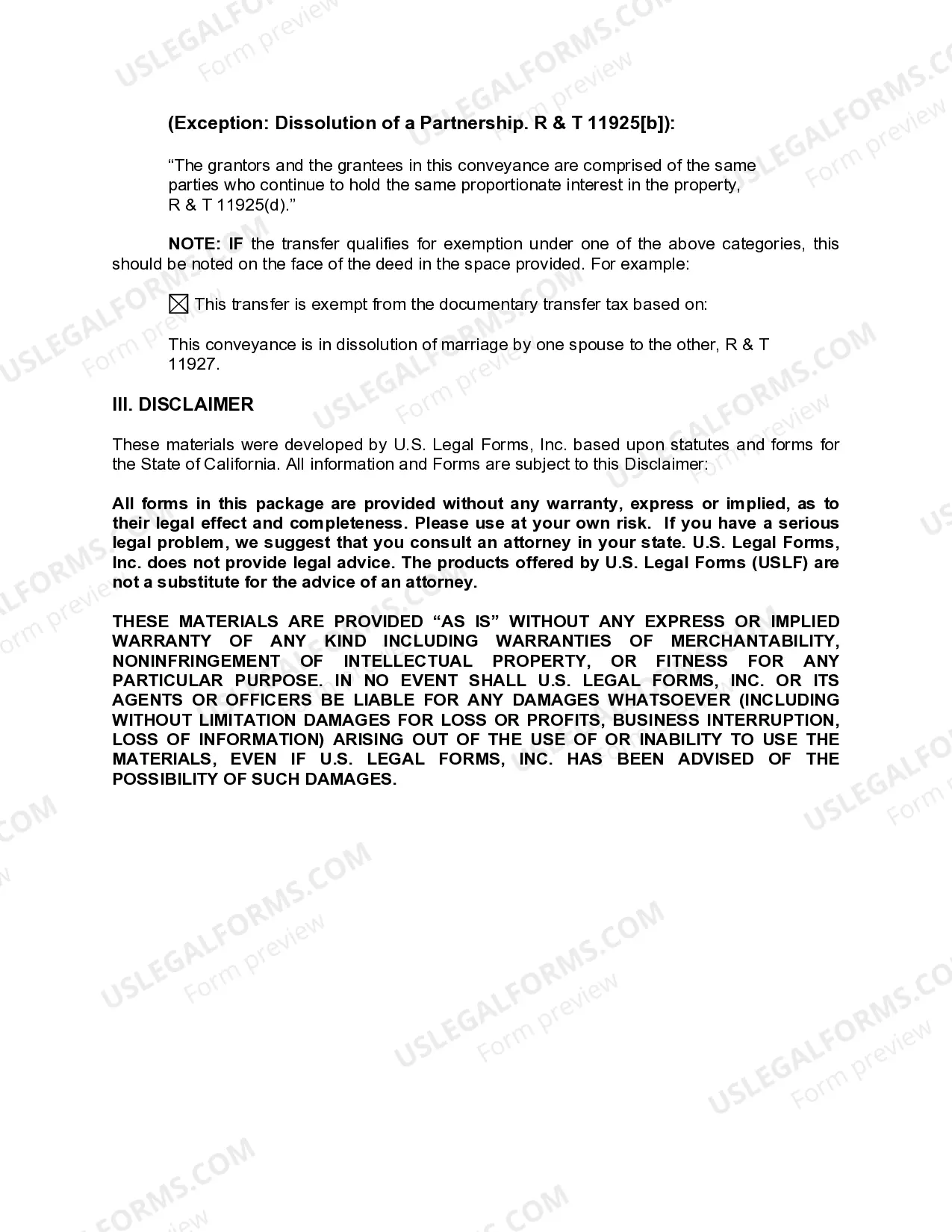
How to fill out California Quitclaim Deed - Trust (Two Trustees) To An Individual?
- If you're a returning user, log in to your US Legal Forms account and access the document library to find the required quitclaim deed template. Confirm your subscription is active.
- For new users, start by examining the Preview mode and the form description to identify the appropriate quitclaim deed that fulfills your legal requirements.
- In case you need an alternative form, utilize the Search tab to locate the correct quitclaim deed. Proceed only if it aligns with your needs.
- Make your purchase by clicking the Buy Now button and selecting your preferred subscription plan. You'll need to create an account for full access.
- Complete the payment process using your credit card or PayPal account to finalize your subscription.
- Download the quitclaim deed document to your device from the My documents section in your profile whenever you need it.
By using US Legal Forms, you gain access to a robust collection of legal templates, more extensive than competitors, ensuring your legal documentation is accurate and reliable.
Simplify your legal processes today! Visit US Legal Forms to explore their extensive library and get started on your quitclaim deed.
Form popularity
FAQ
The main difference lies in the rights conveyed. A trustee deed transfers property held in trust while ensuring that beneficiaries receive specific rights as outlined in the trust. In contrast, a quitclaim deed only transfers whatever interest the grantor has, with no assurances regarding the property's title. Understanding these distinctions can help beneficiaries navigating quitclaim deed trustees for beneficiaries utilize the appropriate deed for their needs.
In most cases, the person transferring the property, known as the grantor, executes a quitclaim deed. This deed allows the grantor to convey their interest in the property to someone else, known as the grantee, without making any guarantees about the title's validity. For quitclaim deed trustees for beneficiaries, this process can be straightforward. By utilizing resources like uslegalforms, you can ensure you understand the necessary steps to complete this transaction smoothly.
Individuals who are transferring property among family members or friends typically benefit the most from quitclaim deeds. These transactions are often faster and less costly than traditional sales. Engaging with quitclaim deed trustees for beneficiaries also helps streamline the process, ensuring a smoother transfer of property.
The main disadvantages of quitclaim deeds include the lack of protection against claims and unresolved liens against the title. Furthermore, the grantor does not guarantee the legality or validity of the transfer. Thus, it’s crucial to understand the risks and benefits when dealing with quitclaim deed trustees for beneficiaries.
Quitclaim deeds are most frequently used to transfer property between family members, such as during estate planning or divorce settlements. They provide a simplified way to handle ownership changes without extensive legal complications. However, when utilizing quitclaim deed trustees for beneficiaries, consider potential tax implications or legal liabilities.
Quitclaim deeds are often criticized because they do not provide warranties or guarantees about the title. This means that recipients may inherit unsatisfactory conditions, such as liens or claims. Therefore, evaluating the roles of quitclaim deed trustees for beneficiaries can help mitigate risks associated with these types of deeds.
When filling out a quitclaim deed, begin by accurately identifying the grantor and grantee, along with their addresses. Describe the property in detail, including its legal description and any identifying parcel numbers. For added security, it’s beneficial to consult with quitclaim deed trustees for beneficiaries to ensure the document meets all legal requirements.
In the context of a deed of trust, the trustee is a neutral party who holds the title of the property on behalf of the beneficiary. The beneficiary, usually the lender, receives the benefits of the deed, including the rights to the property as security for an obligation. Understanding the roles of quitclaim deed trustees for beneficiaries is critical in property transactions to ensure proper management of the deed.
Distributions from a trust may be taxable to beneficiaries, depending on the type of trust and the nature of the distribution. Generally, if the trust earns income, beneficiaries could be responsible for taxes on that income when it is distributed. It's important to consult with a tax professional to understand the implications fully. Trusts managed with clarity, such as using quitclaim deed trustees for beneficiaries, can help streamline the process.
One of the biggest mistakes parents make when setting up a trust fund is failing to clearly outline the distribution criteria for beneficiaries. Without specific instructions, conflicts can arise among family members. Moreover, neglecting to update the trust when life changes occur can lead to unintended issues. Utilizing tools like quitclaim deed trustees for beneficiaries can alleviate confusion during the distribution process.