Agreement For Deed Real Estate
Description
Get your form ready online
Our built-in tools help you complete, sign, share, and store your documents in one place.
Make edits, fill in missing information, and update formatting in US Legal Forms—just like you would in MS Word.
Download a copy, print it, send it by email, or mail it via USPS—whatever works best for your next step.
Sign and collect signatures with our SignNow integration. Send to multiple recipients, set reminders, and more. Go Premium to unlock E-Sign.
If this form requires notarization, complete it online through a secure video call—no need to meet a notary in person or wait for an appointment.
We protect your documents and personal data by following strict security and privacy standards.

Make edits, fill in missing information, and update formatting in US Legal Forms—just like you would in MS Word.

Download a copy, print it, send it by email, or mail it via USPS—whatever works best for your next step.

Sign and collect signatures with our SignNow integration. Send to multiple recipients, set reminders, and more. Go Premium to unlock E-Sign.

If this form requires notarization, complete it online through a secure video call—no need to meet a notary in person or wait for an appointment.

We protect your documents and personal data by following strict security and privacy standards.
Looking for another form?










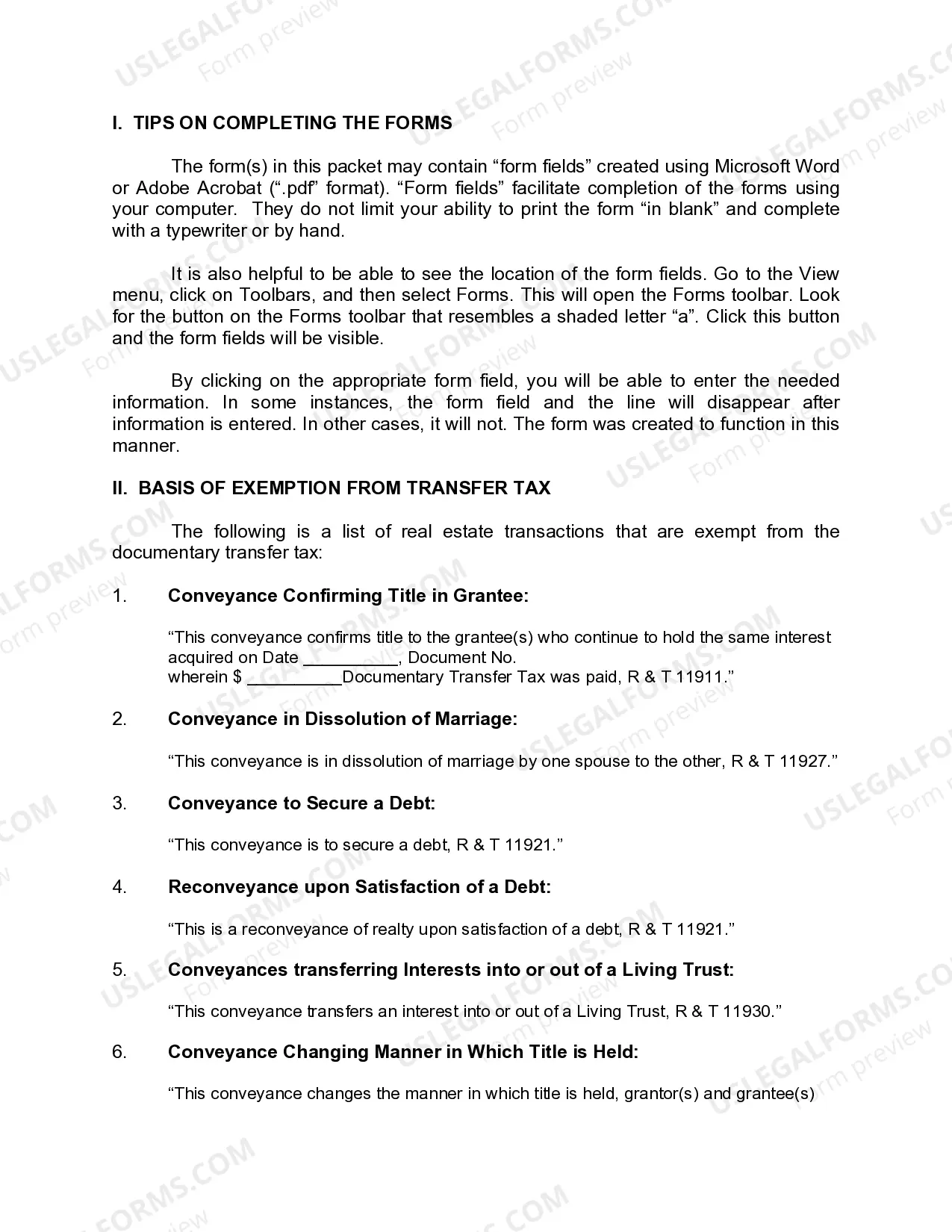
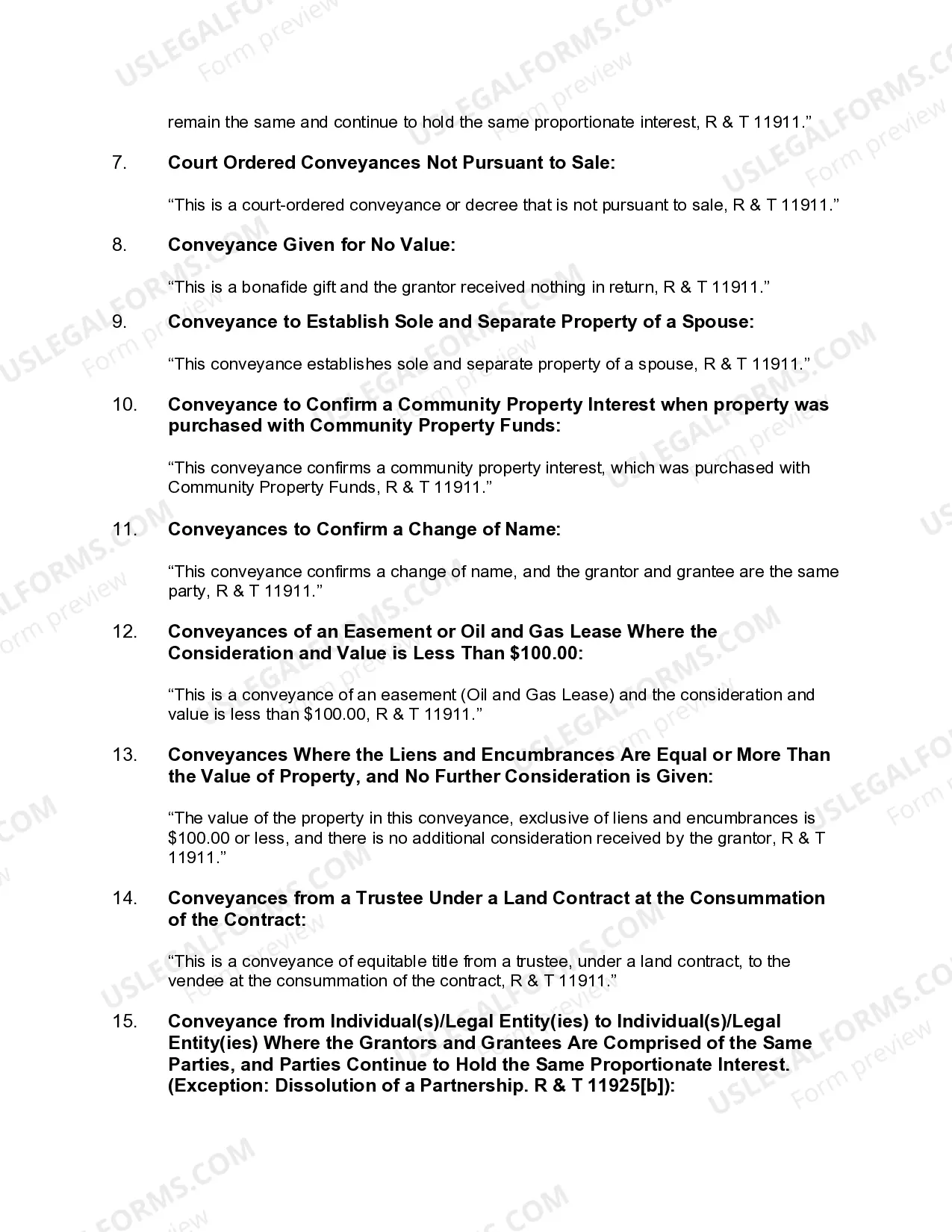
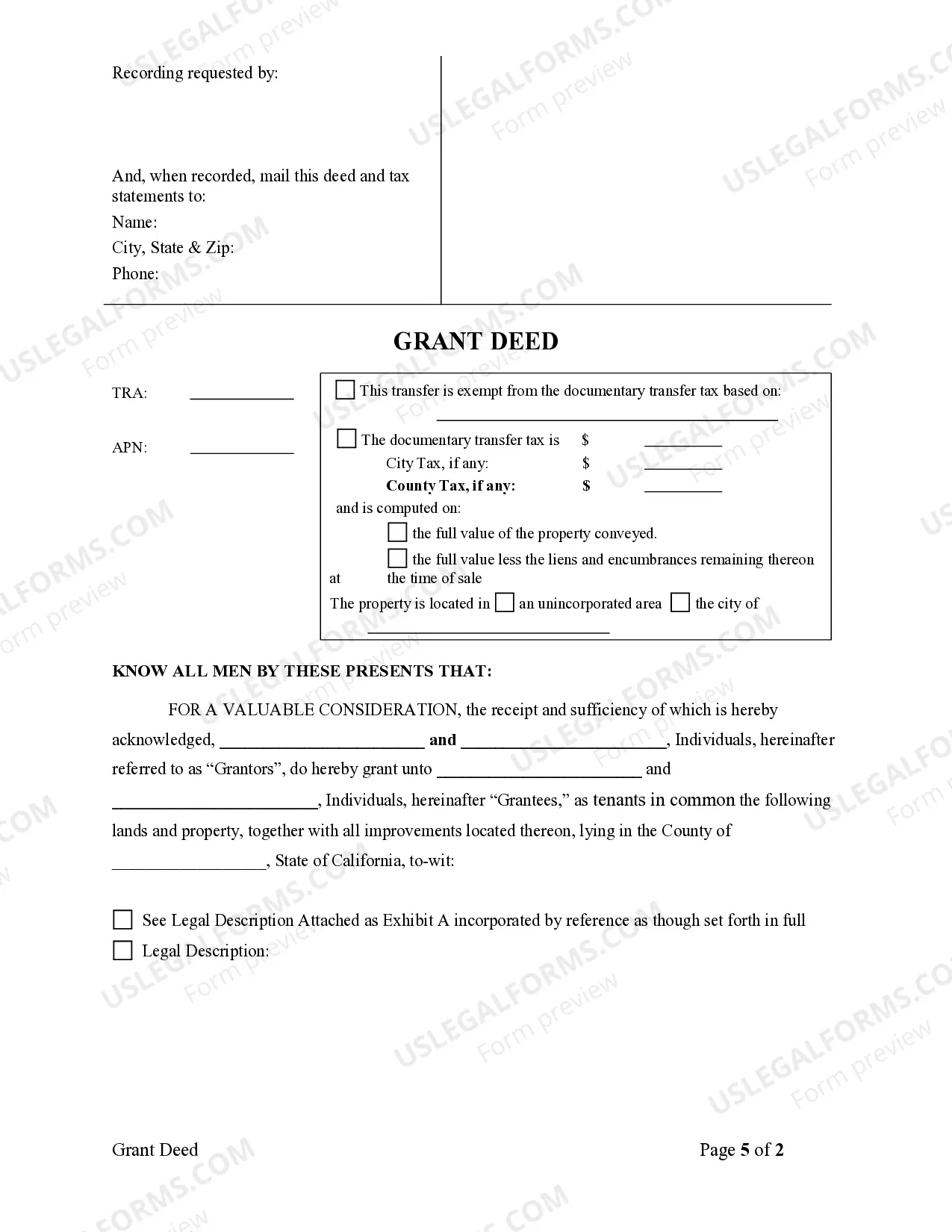
How to fill out California Grant Deed - Two Individuals To Two Individuals?
- If you're an existing user, log into your account and download the required template by clicking the Download button. Verify that your subscription is active; if not, renew it based on your payment plan.
- For new users, start by previewing the document. Review the description to ensure it matches your requirements and local jurisdiction.
- If adjustments are needed, utilize the Search tab to find the proper template that meets your specific needs before proceeding.
- Select your document for purchase by clicking the Buy Now button. Choose an appropriate subscription plan and set up an account to access the library.
- Complete your transaction. Input your payment details using either a credit card or PayPal to finalize your subscription.
- Download your form. Save it to your device for completion later, and access it at any time through the My Forms section.
In conclusion, US Legal Forms empowers you to efficiently create legally sound documents with its extensive library and expert assistance. Designed for ease of use, it ensures that you can focus on what matters most—securing your real estate agreements.
Start your journey today and explore the vast resources available to you.
Form popularity
FAQ
Real estate contracts, including an agreement for deed real estate, are often prepared by real estate attorneys or licensed professionals. In some cases, individuals can create their own agreements using online platforms like US Legal Forms that provide templates and step-by-step instructions. Regardless of who prepares it, having a legal expert review the contract can help prevent future disputes.
Using an agreement for deed real estate can come with risks, primarily that the buyer does not gain full ownership until the contract is fulfilled. This means the seller retains certain rights, including the ability to terminate the contract if payments are missed. Additionally, buyers typically bear responsibility for maintenance and repairs, making it crucial to understand all obligations before proceeding.
Typically, a real estate attorney drafts an agreement for deed real estate to ensure compliance with state laws. However, sellers and buyers can also create their own contracts using online templates or services like US Legal Forms, which provide guidance. Involving a professional is advisable to mitigate risks and protect both parties.
Two key disadvantages of a contract for deed include the risk of the buyer losing equity if they default and the seller's retained ownership until full payment occurs. Additionally, the agreement can create complications during financing or property transfer if not handled correctly. It is advisable to consult with professionals to navigate these potential issues effectively.
Yes, you can write your own real estate contract, including an agreement for deed real estate. However, it is vital to ensure that your contract complies with local laws and includes all necessary details to protect you and the other party. Using resources or templates from Uslegalforms can help simplify this process and ensure you cover all important aspects.
Typically, the buyer in an agreement for deed real estate is responsible for property taxes while they make payments. However, this may depend on the specific terms outlined in the contract. It's essential to discuss tax responsibilities with your seller to avoid any confusion and ensure compliance with local regulations.
A contract for deed is not the same as a deed. An agreement for deed real estate outlines the terms of sale between buyer and seller but does not transfer ownership until payments are complete. In contrast, a deed is a legal document that signifies ownership of the property. Understanding these distinctions is critical for both parties involved.
The average interest rate for an agreement for deed real estate varies based on market conditions and the specific deal agreed upon by both parties. Typically, these rates are competitive, reflecting the unique nature of such contracts. Conducting thorough research on current rates can provide insight into what to expect.
Yes, you can write your own agreement for deed real estate, but it requires attention to detail and legal requirements. It's wise to research your state's regulations and include crucial elements such as payment terms and property descriptions. Alternatively, using templates from resources like US Legal Forms can simplify the process and help you avoid legal pitfalls.
In an agreement for deed real estate, the buyer receives the deed when they fulfill the payment terms specified in the contract. Until the full payment is made, the seller retains the title, but once completed, the seller must formally transfer the deed to the buyer. Ensuring the proper documentation during the process is vital for a smooth transfer.