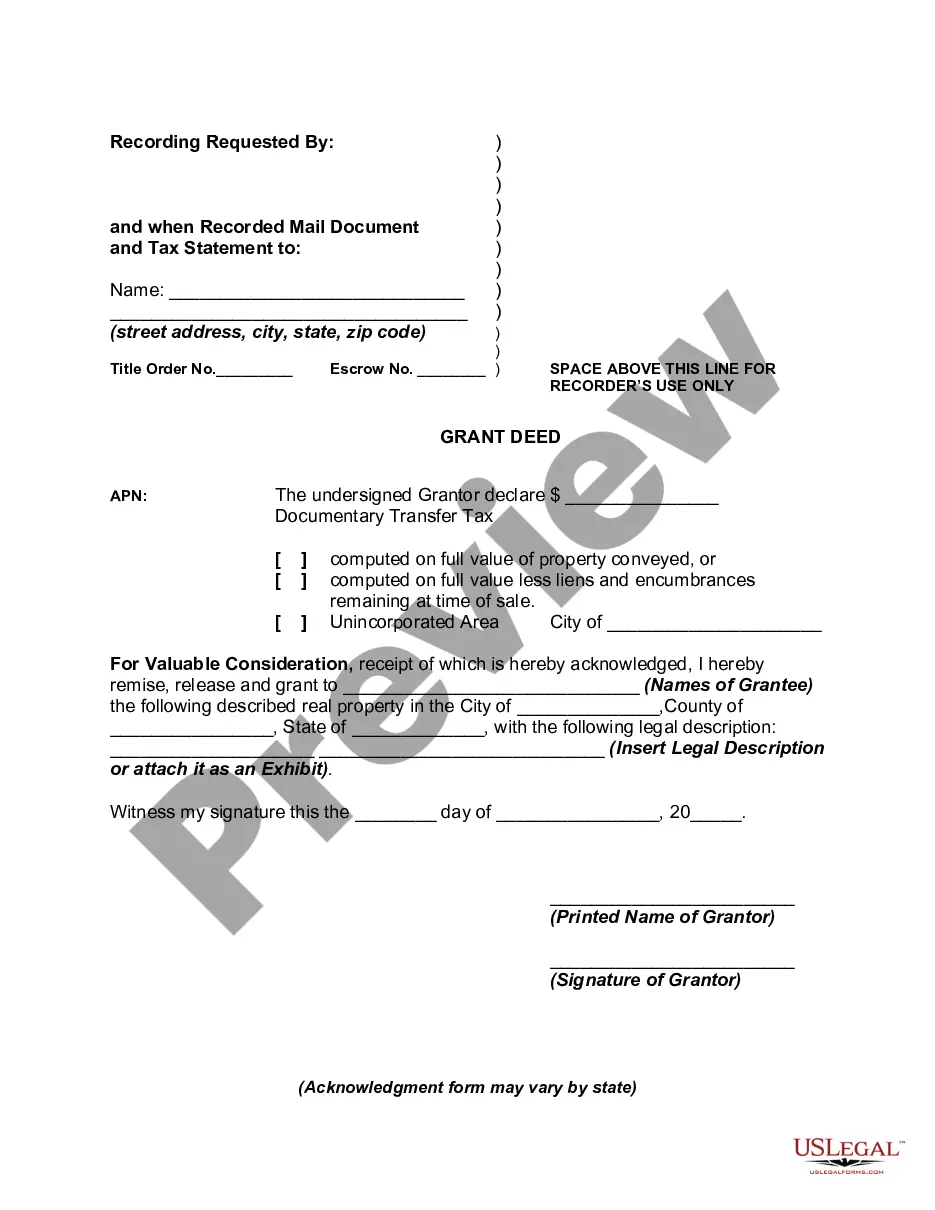
California Grant Deed For Life Estate
Description
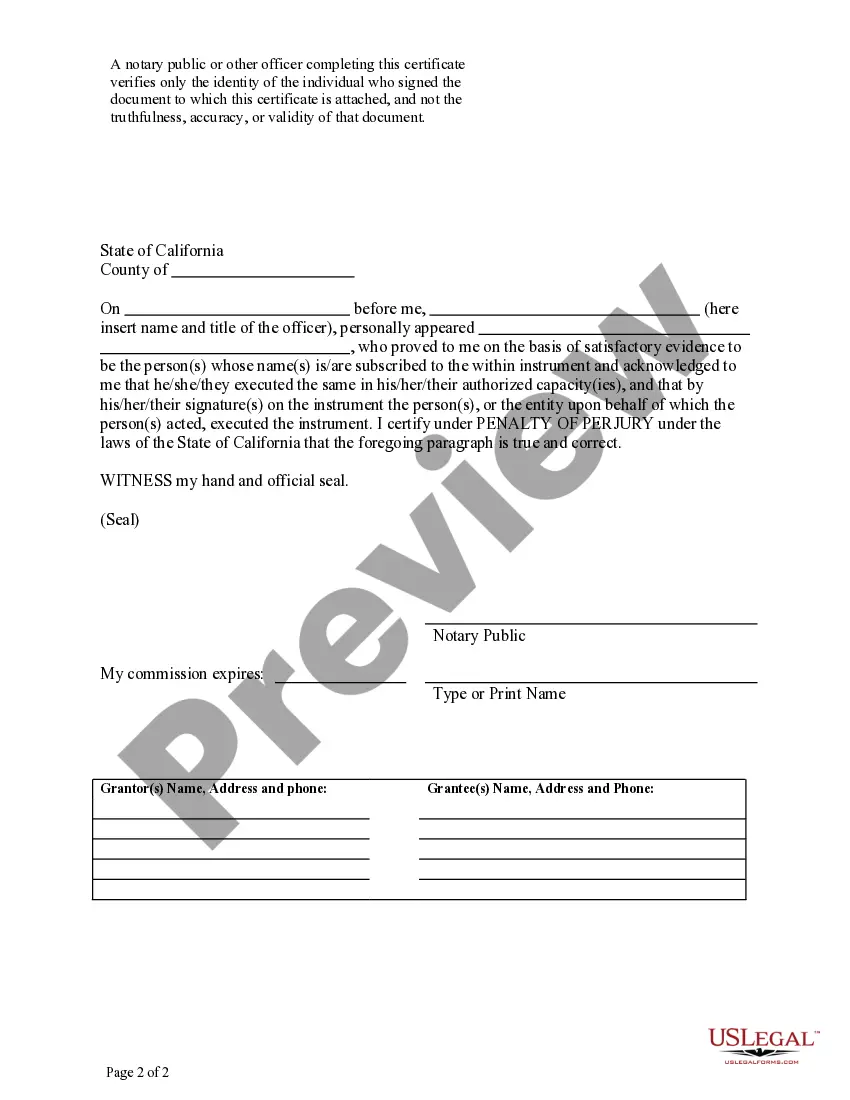
Get your form ready online
Our built-in tools help you complete, sign, share, and store your documents in one place.
Make edits, fill in missing information, and update formatting in US Legal Forms—just like you would in MS Word.
Download a copy, print it, send it by email, or mail it via USPS—whatever works best for your next step.
Sign and collect signatures with our SignNow integration. Send to multiple recipients, set reminders, and more. Go Premium to unlock E-Sign.
If this form requires notarization, complete it online through a secure video call—no need to meet a notary in person or wait for an appointment.
We protect your documents and personal data by following strict security and privacy standards.

Make edits, fill in missing information, and update formatting in US Legal Forms—just like you would in MS Word.

Download a copy, print it, send it by email, or mail it via USPS—whatever works best for your next step.

Sign and collect signatures with our SignNow integration. Send to multiple recipients, set reminders, and more. Go Premium to unlock E-Sign.

If this form requires notarization, complete it online through a secure video call—no need to meet a notary in person or wait for an appointment.

We protect your documents and personal data by following strict security and privacy standards.
Looking for another form?






How to fill out California Grant Deed?
Individuals often link legal documentation with something perplexing that solely a specialist can handle.
In a sense, this is accurate, as preparing a California Grant Deed For Life Estate necessitates extensive knowledge of specific subject matter, including local and state regulations.
However, with US Legal Forms, everything has become more straightforward: pre-prepared legal templates for any life and business scenario tailored to state laws are consolidated in a single online repository and are now accessible to all.
Log In or create an account to continue to the payment page.
- US Legal Forms offers over 85k current forms categorized by state and application area, so locating a California Grant Deed For Life Estate or any other specific document only takes a few minutes.
- Previously registered users with an active subscription must Log In to their account and select Download to retrieve the form.
- New users on the platform must first create an account and subscribe before they can save any documentation.
- Here is the step-by-step guide on how to acquire the California Grant Deed For Life Estate.
- Thoroughly review the page content to ensure it aligns with your requirements.
- Check the form description or view it through the Preview option.
- If the previous one does not meet your criteria, look for another example using the Search field above.
- Once you find the appropriate California Grant Deed For Life Estate, click Buy Now.
- Select a subscription plan that fits your needs and budget.
Form popularity
FAQ
A grant deed offers warranties that protect the buyer against unknown claims, while a quitclaim deed transfers whatever interest the seller has in the property without any warranties. This makes grant deeds a safer option for buyers looking to secure their investment. Understanding the implications of using a California grant deed for life estate versus a quitclaim deed can help you make informed decisions about your property transactions.
In California, the grant deed must be signed by the person transferring the property, known as the grantor. If there are multiple grantors, each must sign the document to validate the transfer. To ensure everything is executed correctly, you may want to consult resources available through platforms like US Legal Forms.
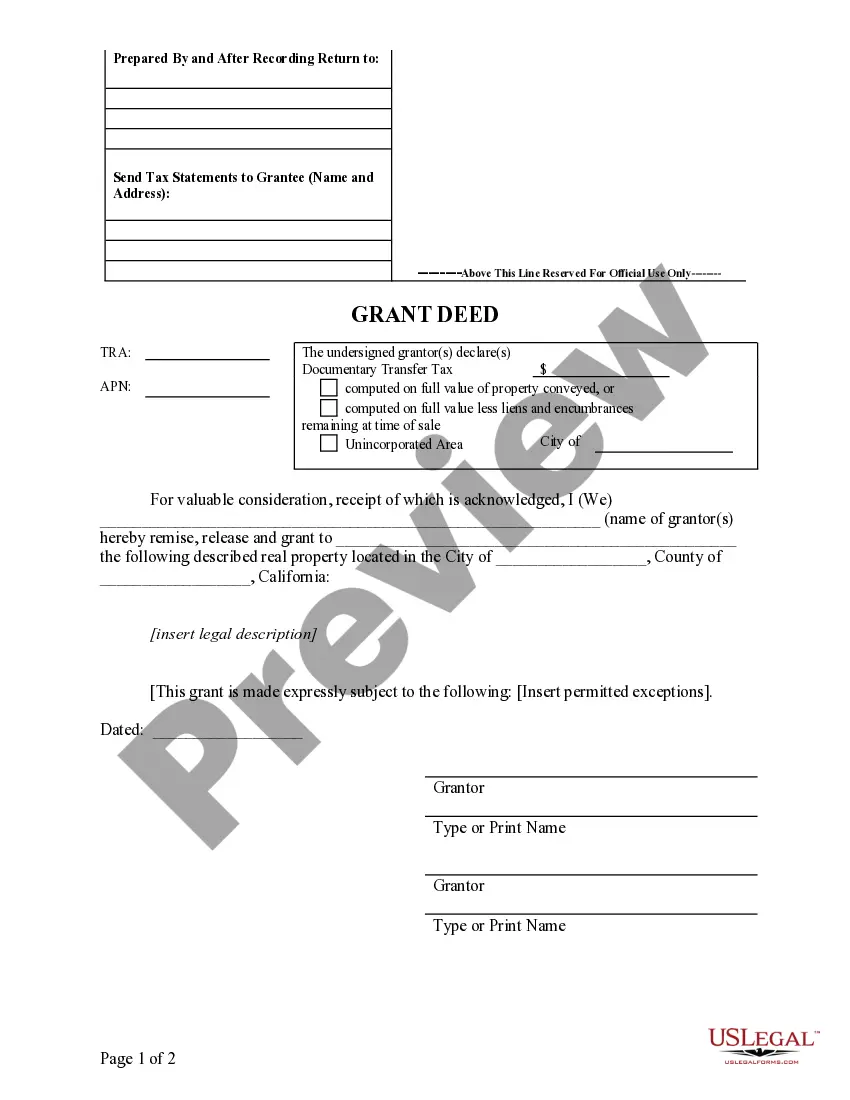
A grant deed in California real estate is a legal document that transfers title of property from one person to another. It ensures the transferor has not only the right to sell the property, but also guarantees there are no hidden claims against it. By using a grant deed for life estate, you can maintain control of the property during your lifetime while transferring ownership after your death.
Filling out a California TOD form requires careful attention to detail. Start by providing the property owner's information and the beneficiary's details. Make sure to include a valid property description and sign the form in the presence of a notary. Once completed, the form should be recorded with the county to ensure its legal effectiveness.
The step up in basis for a Transfer on Death (TOD) deed in California refers to the adjustment of the property's tax basis upon the owner's death. Beneficiaries receive a stepped-up basis, which means the property's value is reset to its fair market value at the time of the owner's death. This can significantly reduce capital gains tax if the property is sold later.
To fill out a grant deed in California, start by clearly identifying the parties involved, including the grantor and grantee. Include a legally accurate description of the property being transferred. Ensure you provide the necessary signatures and have the document notarized. Once complete, file the grant deed with the appropriate county recorder’s office.
Filling out a TOD deed in California involves several key steps. First, you need to clearly identify the property by including its legal description. Next, you will designate one or more beneficiaries who will receive the property upon your death. Finally, you must sign the deed in front of a notary, file it with the county recorder, and ensure all related documents are completed accurately.
While a TOD deed in California offers many benefits, it also comes with disadvantages. For instance, the property may still be subject to creditor claims after the owner's death, and beneficiaries cannot sell or mortgage the property until they inherit it. Additionally, if the beneficiary predeceases the owner, the property may not have a clear successor without additional planning.
Yes, Transfer on Death (TOD) deeds are still legal in California. They allow property owners to designate a beneficiary who will automatically receive the property upon the owner's death. This method provides a straightforward way to transfer property without the complications of probate.
Yes, California recognizes life estate deeds as a valid way to transfer property ownership. A life estate deed allows the original owner to retain control over the property during their lifetime, passing the property to the named beneficiaries upon their death. This can simplify the transfer process and avoid probate, making it an attractive option for many.
