Limited Liability Formation For A Bank
Description
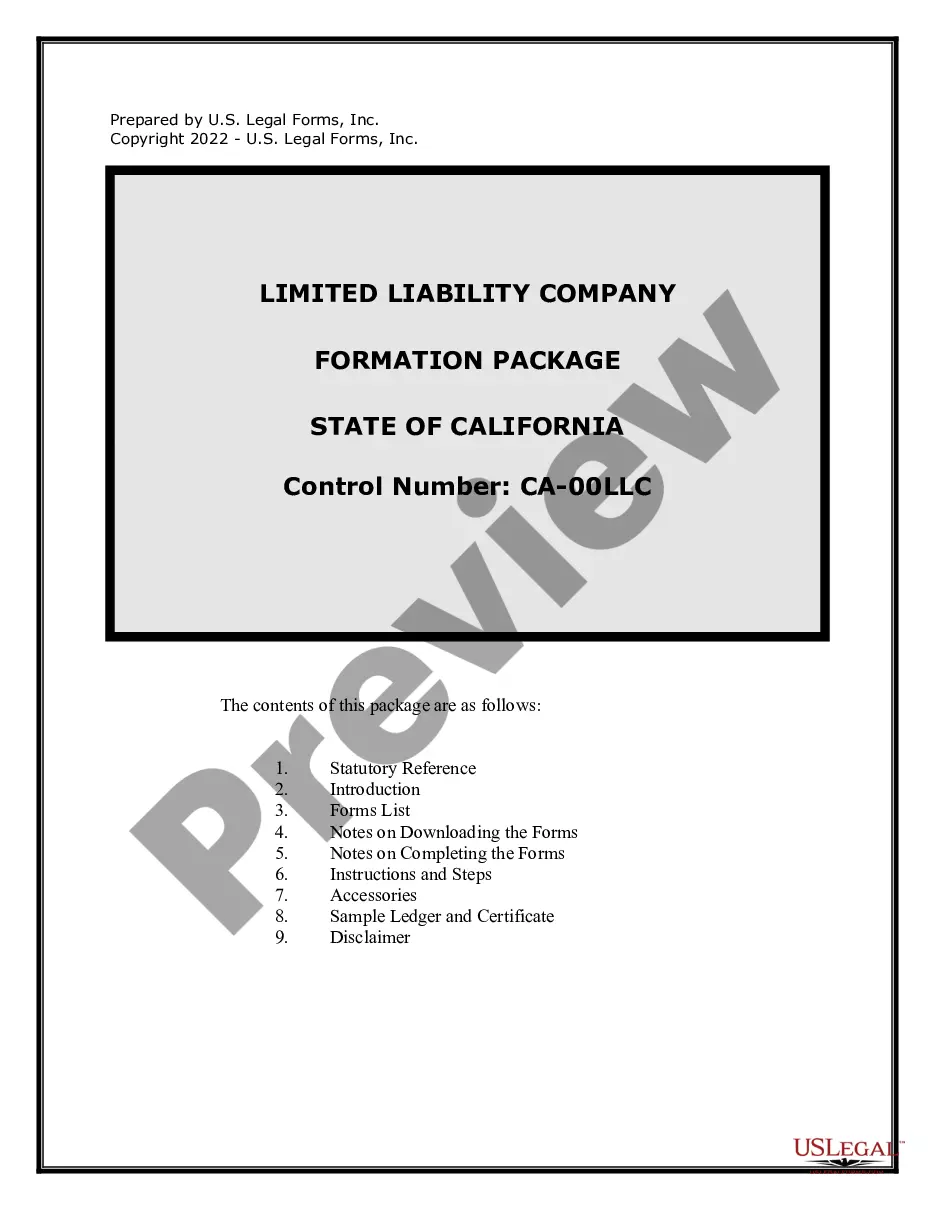
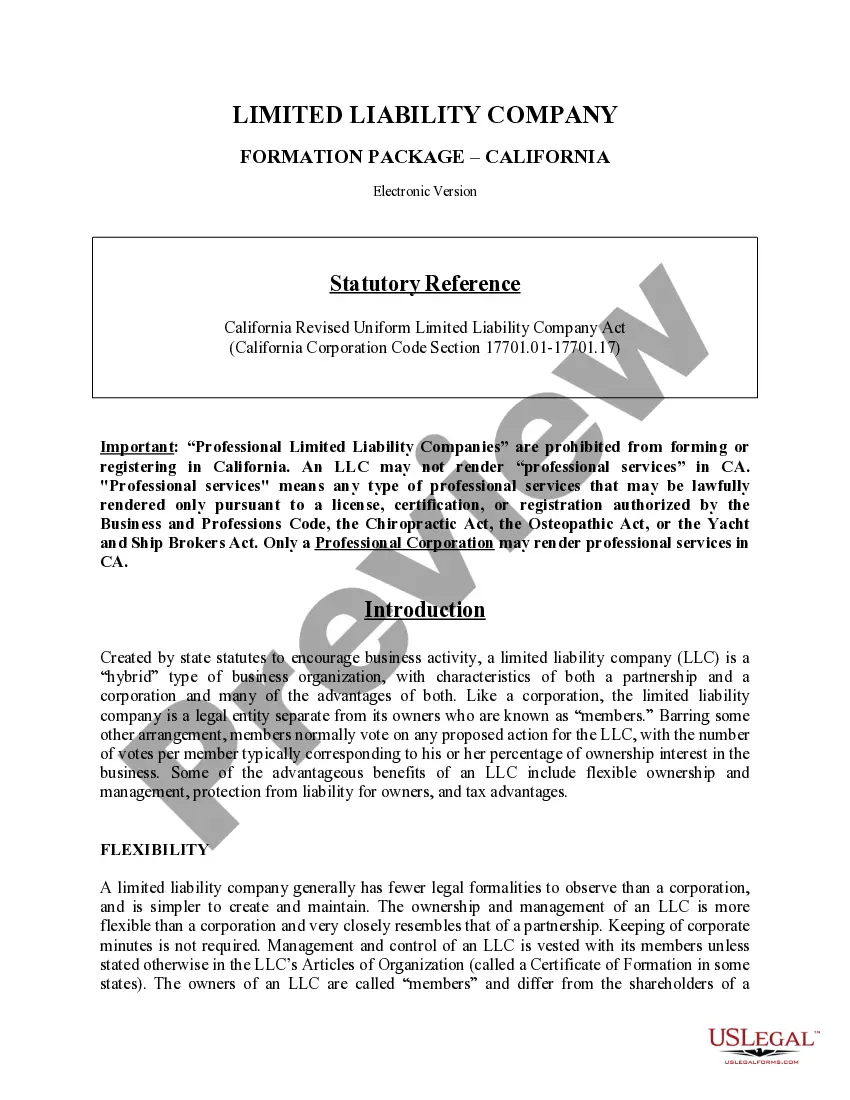
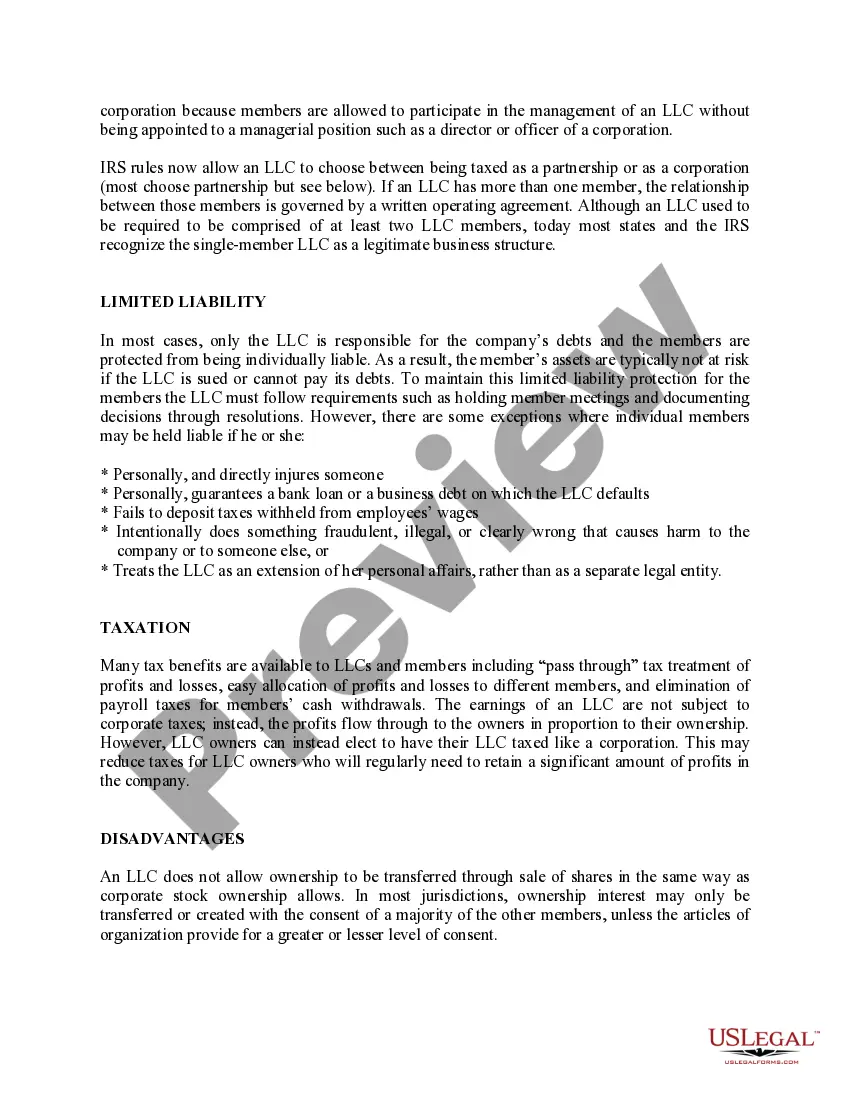
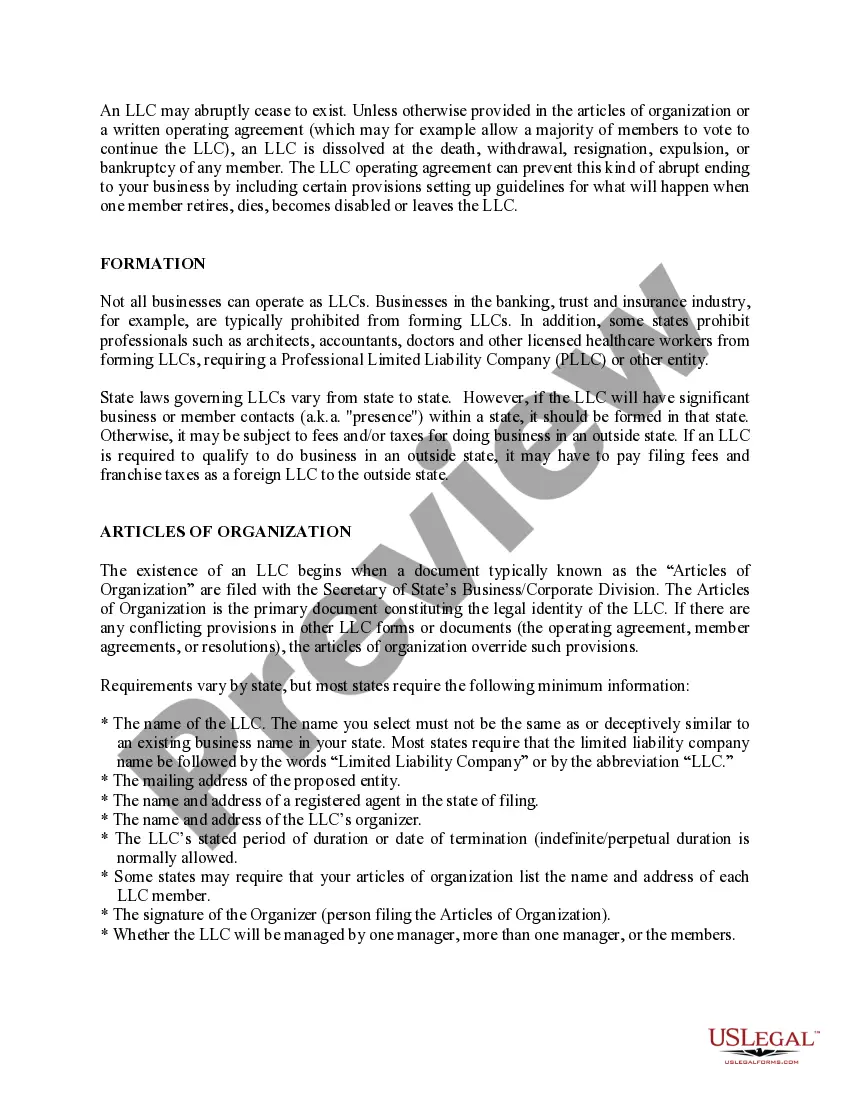

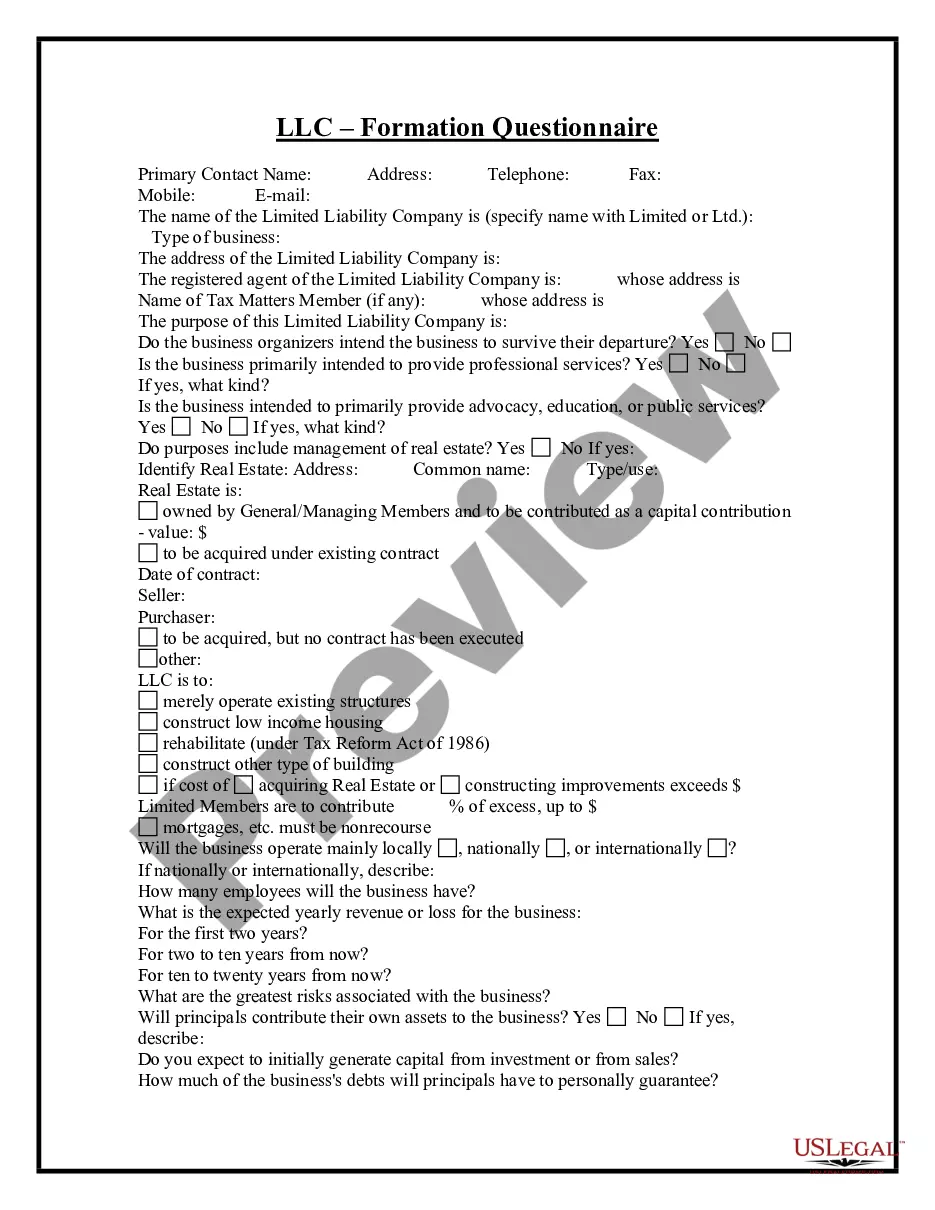
Get your form ready online
Our built-in tools help you complete, sign, share, and store your documents in one place.
Make edits, fill in missing information, and update formatting in US Legal Forms—just like you would in MS Word.
Download a copy, print it, send it by email, or mail it via USPS—whatever works best for your next step.
Sign and collect signatures with our SignNow integration. Send to multiple recipients, set reminders, and more. Go Premium to unlock E-Sign.
If this form requires notarization, complete it online through a secure video call—no need to meet a notary in person or wait for an appointment.
We protect your documents and personal data by following strict security and privacy standards.

Make edits, fill in missing information, and update formatting in US Legal Forms—just like you would in MS Word.

Download a copy, print it, send it by email, or mail it via USPS—whatever works best for your next step.

Sign and collect signatures with our SignNow integration. Send to multiple recipients, set reminders, and more. Go Premium to unlock E-Sign.

If this form requires notarization, complete it online through a secure video call—no need to meet a notary in person or wait for an appointment.

We protect your documents and personal data by following strict security and privacy standards.
Looking for another form?










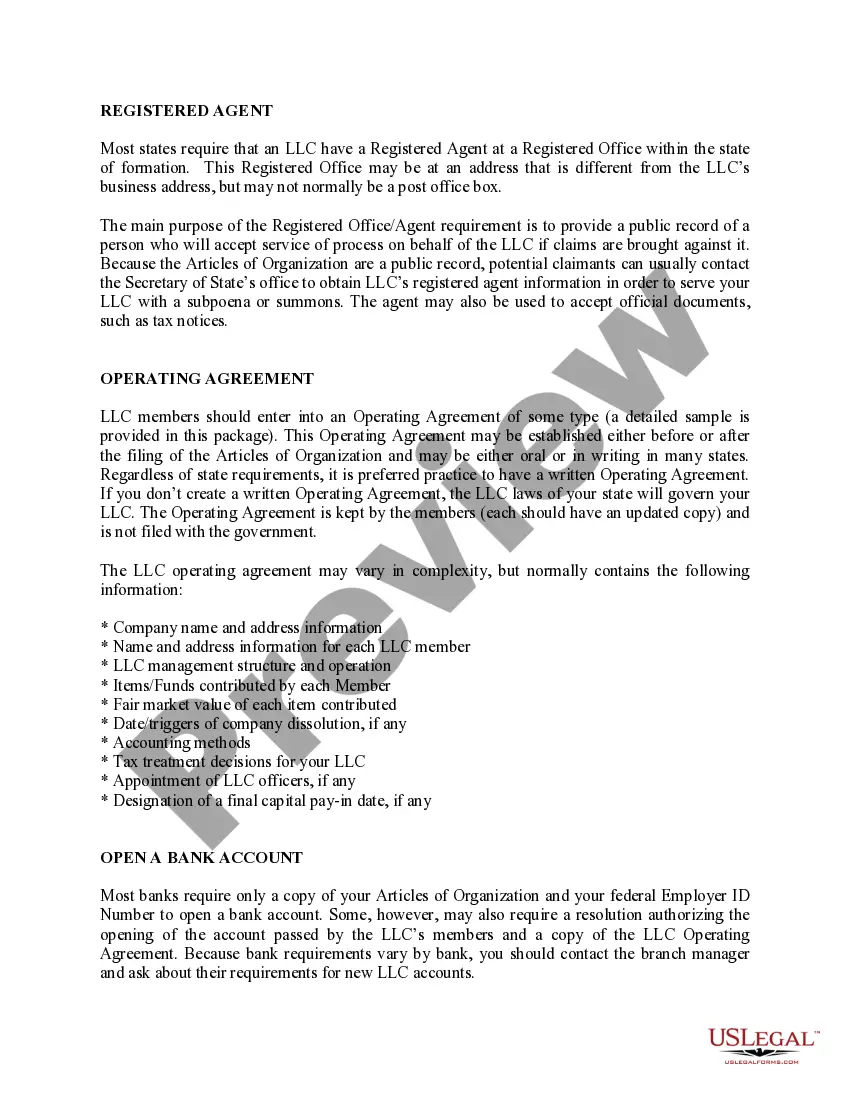
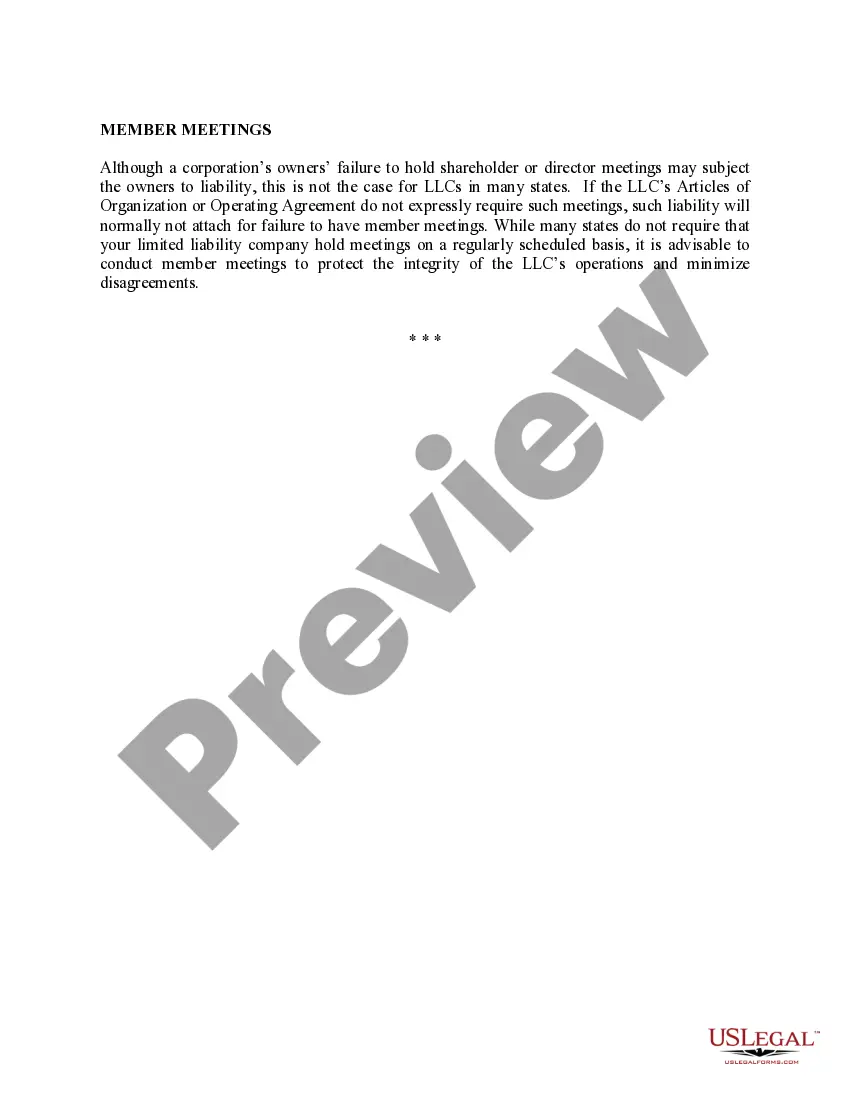
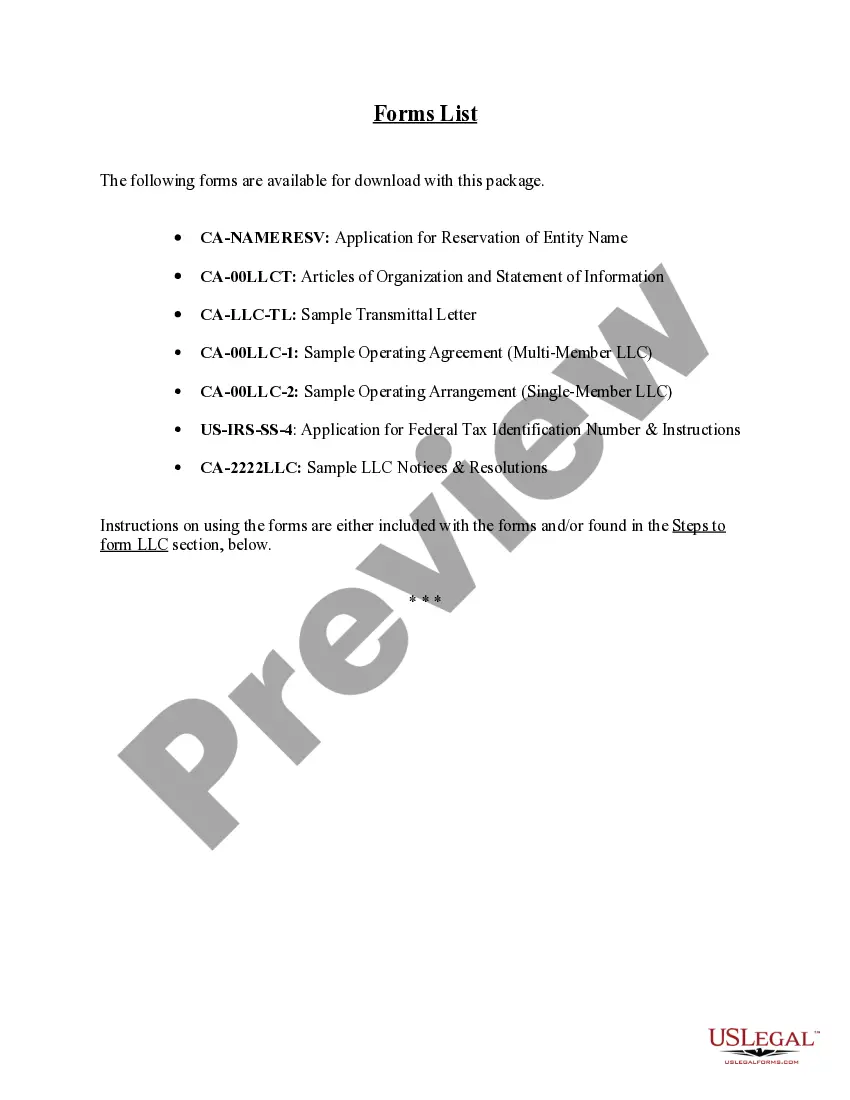
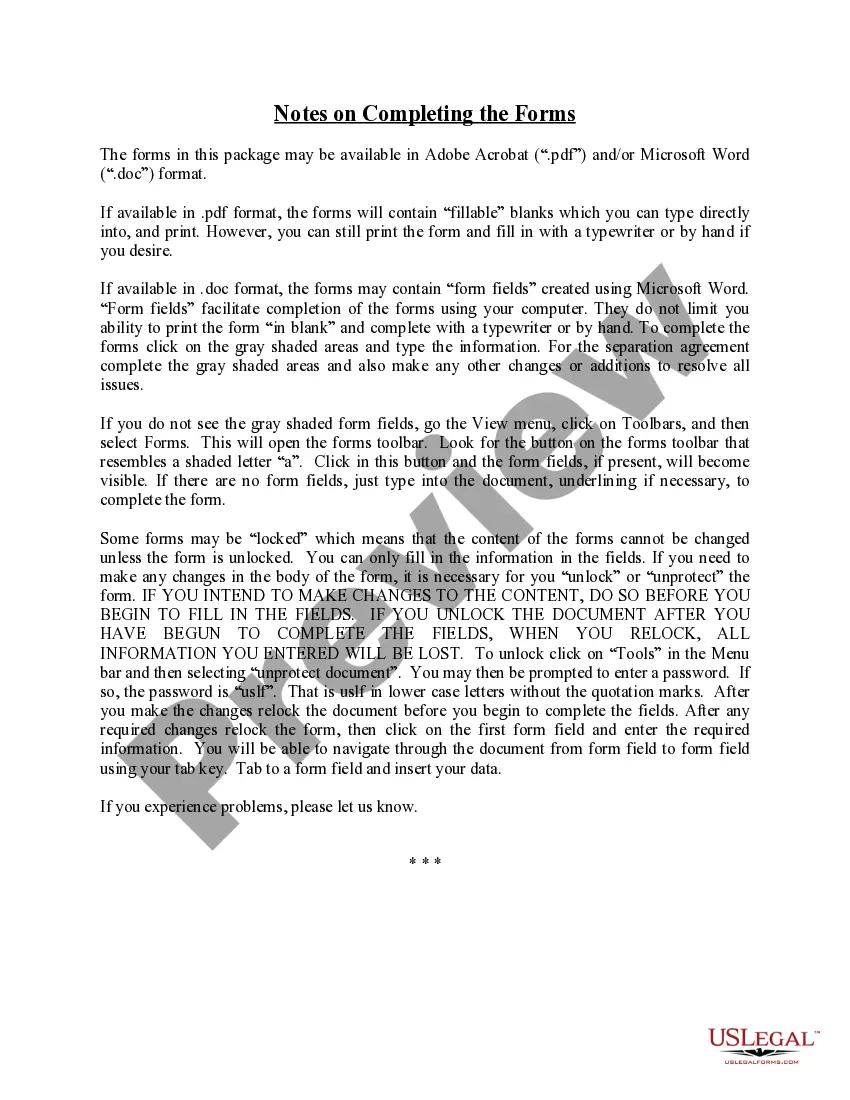
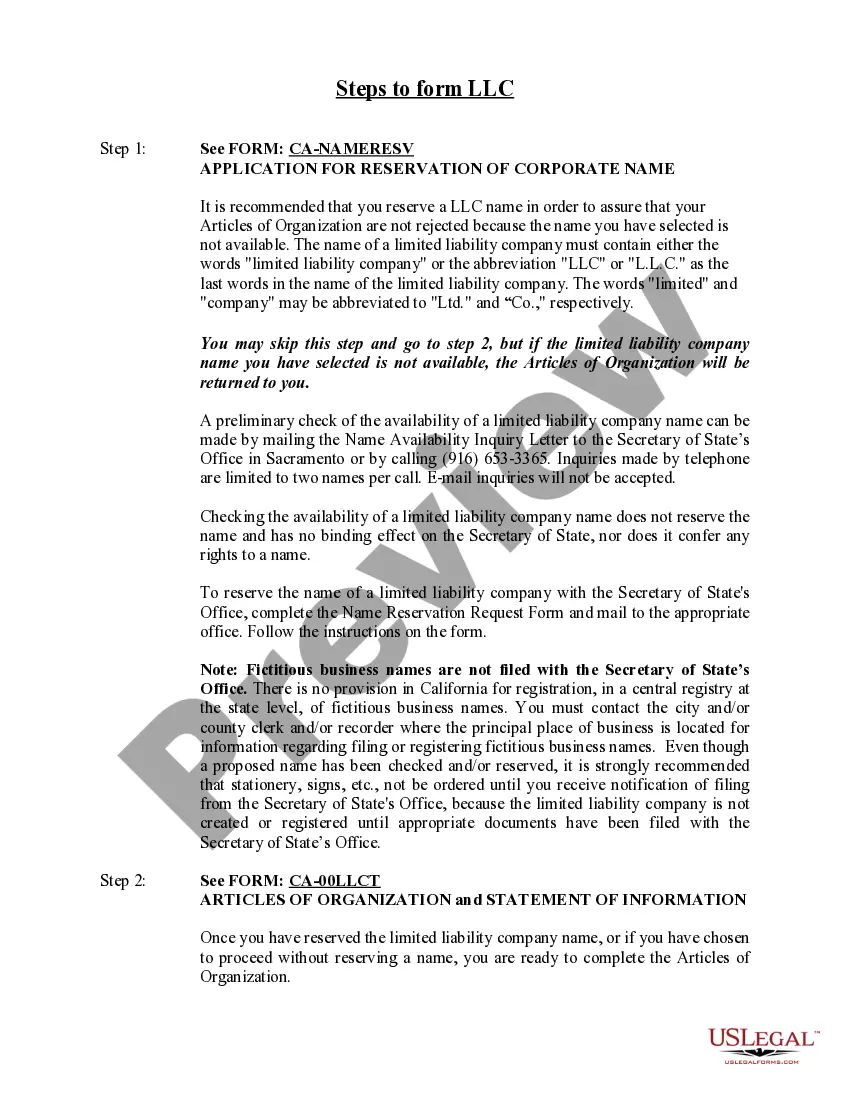
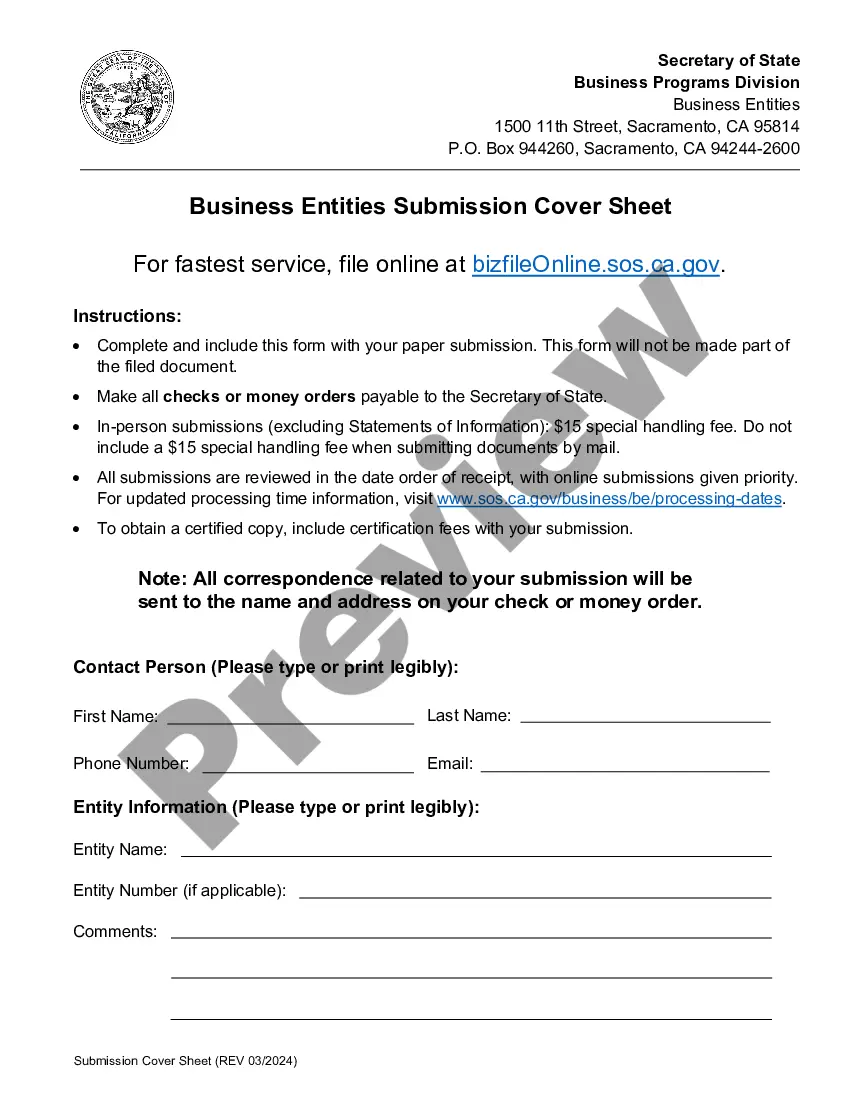
How to fill out California Limited Liability Company LLC Formation Package?
- If you're a returning user, log in to your account and select the required form template. Please verify your subscription validity; if expired, renew according to your plan.
- Preview the relevant form and its description to confirm it meets your specific requirements and complies with local laws.
- If necessary, use the Search feature to find alternative forms that may better suit your needs.
- Proceed to purchase the document by clicking the Buy Now button and selecting your preferred subscription plan, which requires account registration for library access.
- Complete your transaction by entering your payment information, using either a credit card or a PayPal account.
- Download the selected form to your device, and you can also access it anytime through the My Forms section of your profile.
In conclusion, US Legal Forms equips individuals and legal professionals with an extensive collection of over 85,000 editable templates. This makes it a top choice for ensuring your legal documents are well-prepared and compliant with regulations.
Take the next step in securing your bank’s limited liability formation. Visit US Legal Forms today!
Form popularity
FAQ
The formation of a limited liability company includes various key components. You need to file the Articles of Organization with your state, choose a business name, and possibly draft an operating agreement. Additionally, understanding local regulations is important during this process. Following these steps contributes to effective limited liability formation for a bank.
Yes, obtaining an Employer Identification Number (EIN) is necessary for opening a bank account for your LLC. The EIN serves as a tax ID for the business and is essential for tax reporting. Having an EIN also simplifies the process of limited liability formation for a bank, as it is often a requirement from most banking institutions.
To set up an LLC bank account, you first need to establish your LLC and obtain the necessary documentation. Gathering your Articles of Organization, EIN, and operating agreement is crucial. Then, approach your bank of choice with this information to open the account. Proper banking setup supports your limited liability formation for a bank.
Yes, banks generally require an operating agreement for an LLC. This document clarifies the management structure and operating procedures of the company. Having a solid operating agreement is crucial for the bank's assessment of your LLC during limited liability formation for a bank. It helps prevent disputes and ensures smooth operation.
Forming a limited liability company begins with selecting a name that complies with state regulations. After that, you will need to file Articles of Organization with the appropriate state agency. Additionally, it's beneficial to create an operating agreement detailing the roles of owners and management. This thorough process enhances the limited liability formation for a bank.
While a limited liability company (LLC) provides protection from personal liability, it can also have downsides. For instance, an LLC may face higher fees and taxes compared to a sole proprietorship. Additionally, there are more regulatory requirements and paperwork. Understanding these factors is essential for effective limited liability formation for a bank.
The primary purpose of forming an LLC is to provide personal liability protection for its owners, allowing them to operate business activities without risking personal assets. An LLC also offers taxation advantages and operational flexibility, making it an attractive choice for many entrepreneurs. By opting for limited liability formation for a bank, you can secure your financial interests while maintaining a professional structure. This structure supports sustainable business growth and fosters trust among clients and vendors.
To open an LLC bank account, you typically need your LLC formation documents, such as the articles of organization. Additionally, most banks require an Employer Identification Number (EIN) and a resolution from the LLC members stating who has authority to open the account. Having the necessary documentation in order not only eases the account opening process but also supports the benefits associated with limited liability formation for a bank. Always check with your chosen bank regarding specific requirements.
In banking, an LLC refers to a Limited Liability Company, a business structure designed to protect owners from personal liabilities while providing operational flexibility. An LLC in banking can own assets, enter into contracts, and manage finances independently. This structure benefits business owners by separating personal and business finances, which is crucial in limited liability formation for a bank. It ensures that the personal assets of the owners are shielded from business debts and obligations.
While it is possible to start certain banking activities for your Limited Liability Company without an Employer Identification Number (EIN), most banks require an EIN to open a business bank account. The EIN serves as a unique identifier for your LLC, helping to verify its legitimacy. Without an EIN, you may face limitations in terms of available banking services. To fully utilize the benefits of limited liability formation for a bank, securing an EIN is highly recommended.