Cost Plus Fee Contract With Suppliers
Description


Get your form ready online
Our built-in tools help you complete, sign, share, and store your documents in one place.
Make edits, fill in missing information, and update formatting in US Legal Forms—just like you would in MS Word.
Download a copy, print it, send it by email, or mail it via USPS—whatever works best for your next step.
Sign and collect signatures with our SignNow integration. Send to multiple recipients, set reminders, and more. Go Premium to unlock E-Sign.
If this form requires notarization, complete it online through a secure video call—no need to meet a notary in person or wait for an appointment.
We protect your documents and personal data by following strict security and privacy standards.

Make edits, fill in missing information, and update formatting in US Legal Forms—just like you would in MS Word.

Download a copy, print it, send it by email, or mail it via USPS—whatever works best for your next step.

Sign and collect signatures with our SignNow integration. Send to multiple recipients, set reminders, and more. Go Premium to unlock E-Sign.

If this form requires notarization, complete it online through a secure video call—no need to meet a notary in person or wait for an appointment.

We protect your documents and personal data by following strict security and privacy standards.
Looking for another form?








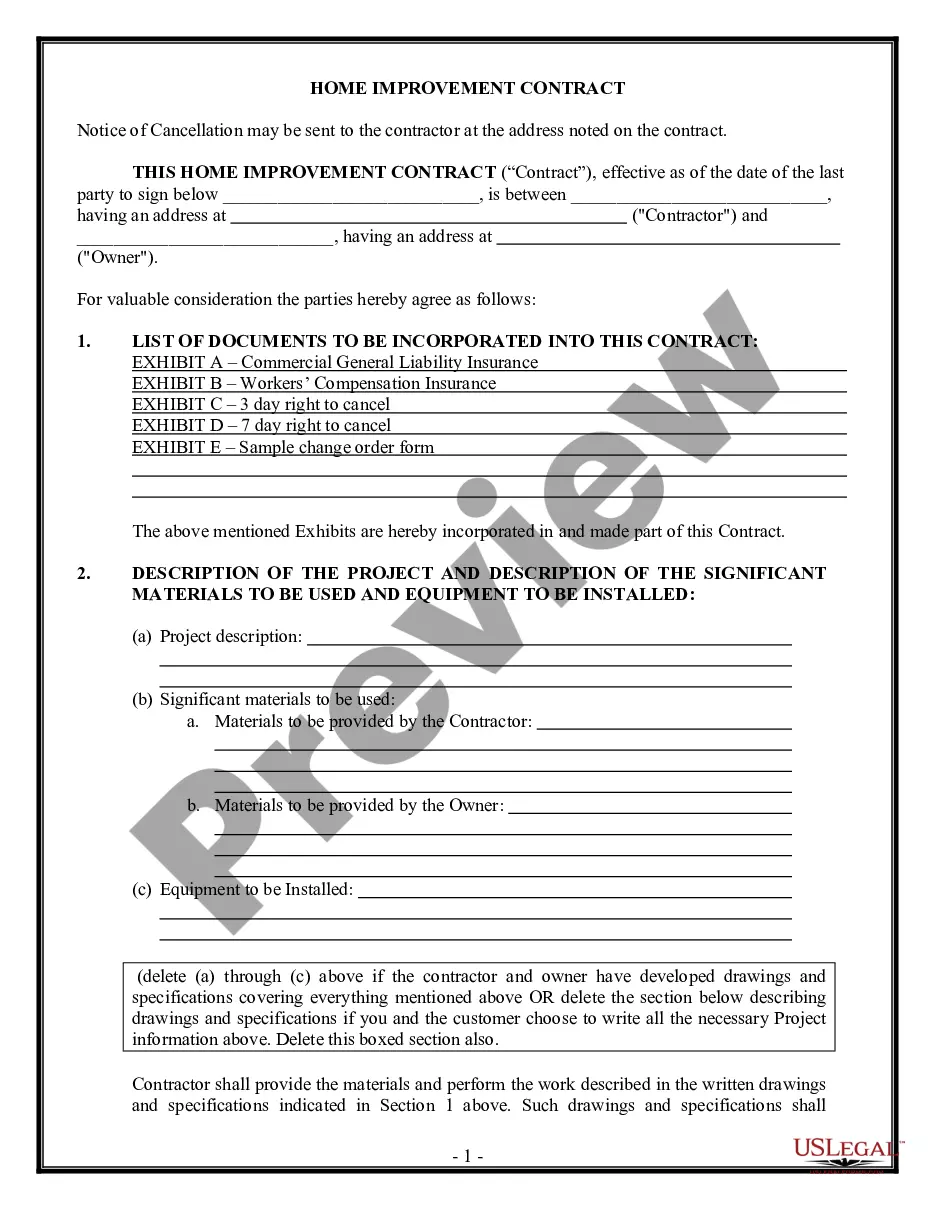
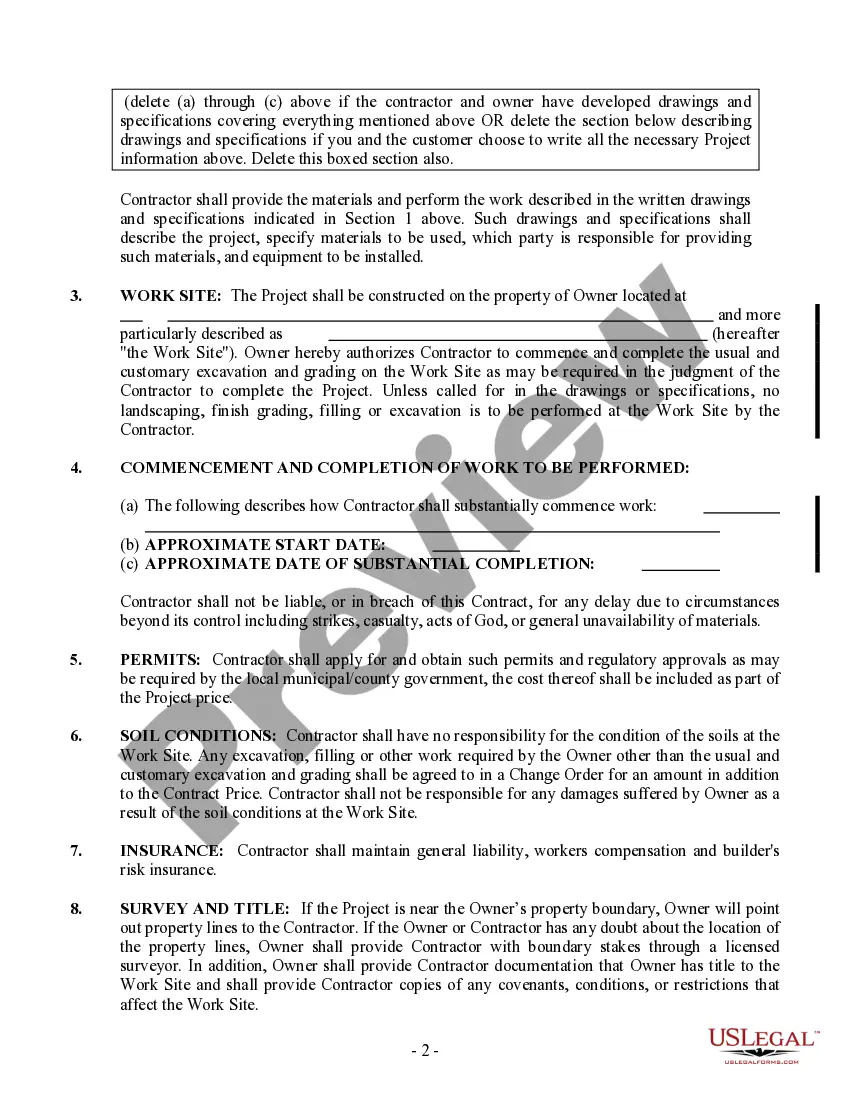
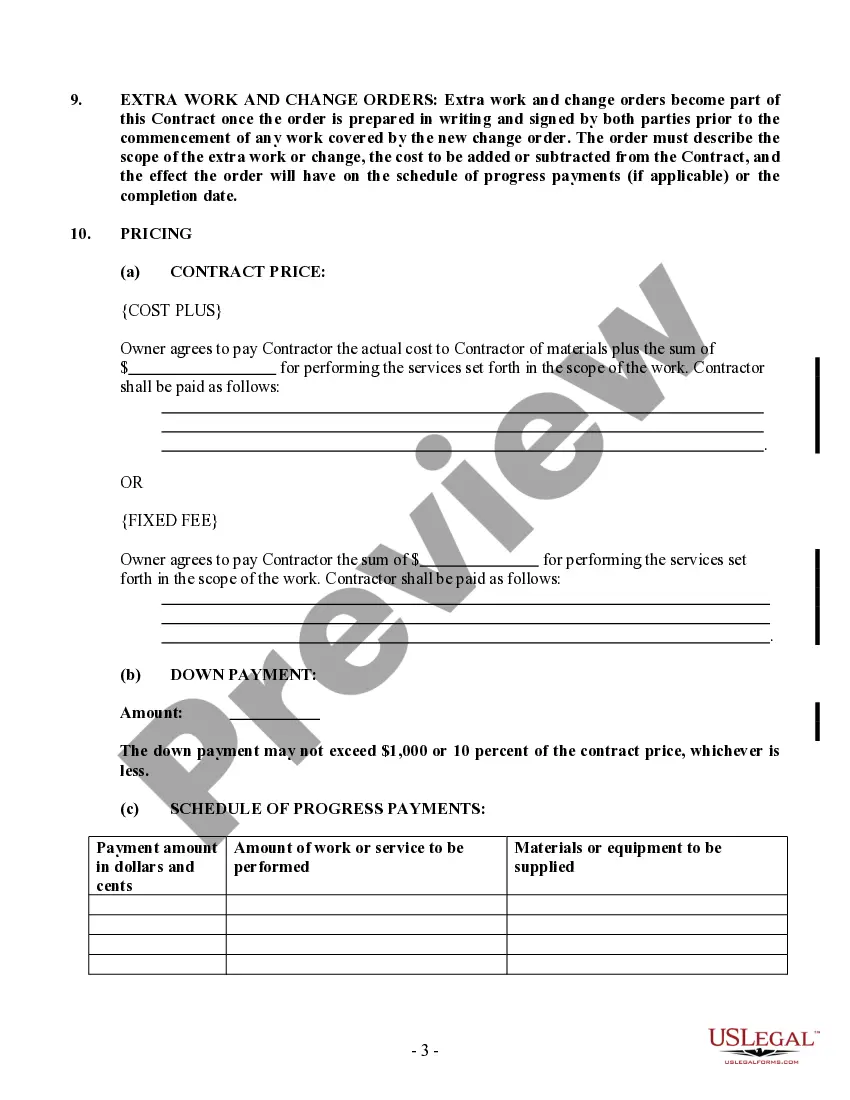
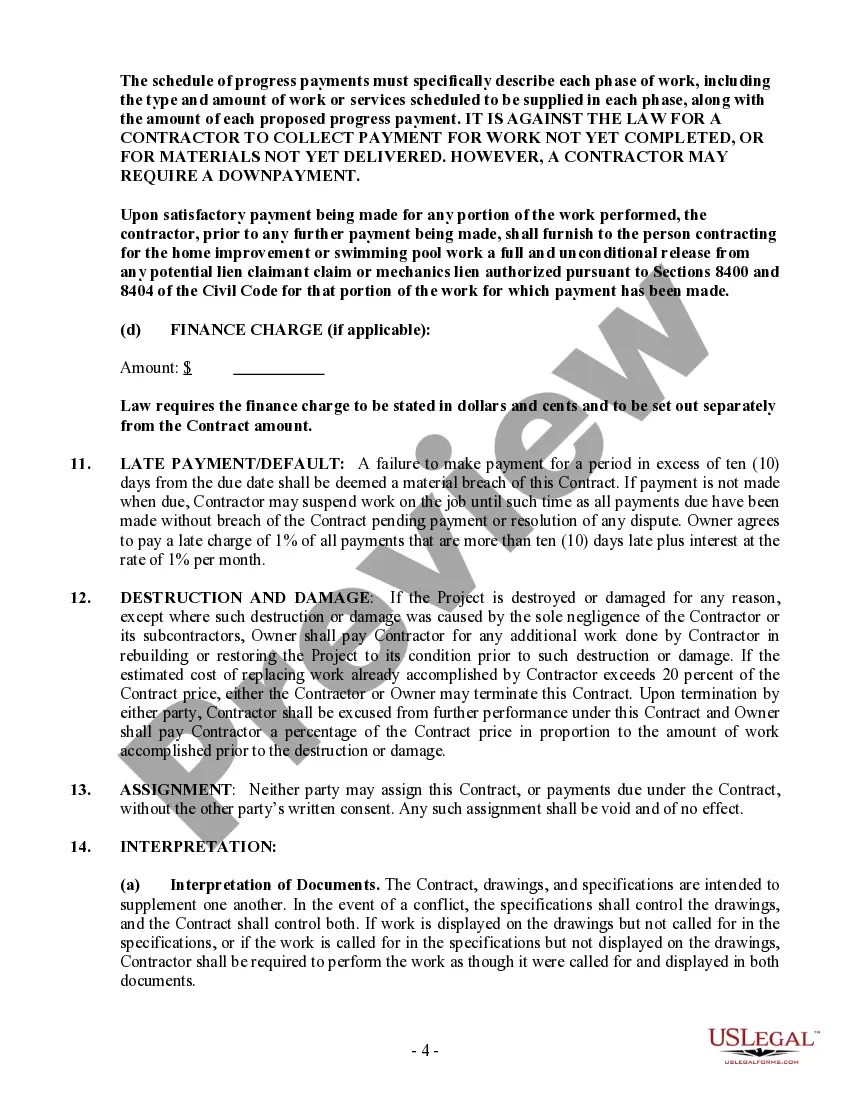
How to fill out California Construction Home Improvement Contract Cost Plus Or Fixed Fee?
Legal administration can be overwhelming, even for the most seasoned professionals.
When searching for a Cost Plus Fee Contract With Suppliers and lacking the time to dedicate to finding the correct and current version, the process can be stressful.
US Legal Forms addresses any requirements you may have, ranging from personal to business paperwork, all in one location.
Leverage advanced tools to complete and oversee your Cost Plus Fee Contract With Suppliers.
Here are the steps to follow after accessing the form you need: Validate that this is the correct document by previewing it and reviewing its description. Ensure that the template is recognized in your state or county. Select Buy Now when you are prepared. Choose a monthly subscription option. Find the format you prefer, and Download, fill out, eSign, print, and send your documents. Benefit from the US Legal Forms online library, backed by 25 years of expertise and reliability. Improve your daily document management in a simple and user-friendly manner today.
- Gain access to a repository of articles, guides, and manuals relevant to your situation and requirements.
- Save time and effort in locating the documents you need, and utilize US Legal Forms’ sophisticated search and Preview feature to find Cost Plus Fee Contract With Suppliers and obtain it.
- If you have a subscription, Log In to your US Legal Forms account, search for the form, and download it.
- Check the My documents section to see the documents you've previously saved and to organize your folders as desired.
- If this is your first experience with US Legal Forms, create a free account and enjoy unrestricted access to all the features of the library.
- A comprehensive online form library could be a transformative solution for anyone aiming to manage these scenarios effectively.
- US Legal Forms is a leader in online legal documentation, offering over 85,000 state-specific legal forms accessible to you at any time.
- With US Legal Forms, you can access state- or county-specific legal and business documents.
Form popularity
FAQ
A cost plus fee contract with suppliers is an agreement where the supplier is reimbursed for allowable expenses, plus an additional fee for profit. This type of contract is beneficial for projects where costs are uncertain. It provides flexibility for suppliers but requires careful tracking of expenses. Understanding this contract type can help you manage supplier relationships effectively.
A cost plus fee contract with suppliers may lead to higher costs due to less incentive for efficiency. Often, contractors may spend more time and resources than necessary, knowing they will be reimbursed. Additionally, this contract type can create budgeting challenges, as total expenses can be unpredictable. It's essential to weigh these factors when deciding if this contract structure fits your project.
To execute a cost-plus contract, begin by clearly defining the project scope and allowable costs with your suppliers. Next, establish the fixed fee that will be added to the total costs. It's essential to maintain transparent communication throughout the project to ensure all expenses align with the agreed terms. Utilizing platforms like US Legal Forms can simplify the process, offering templates and guidance for drafting effective cost plus fee contracts with suppliers.
The formula for a cost-plus fixed-fee contract involves calculating the total costs incurred by the supplier and then adding a predetermined fee. This fee is consistent regardless of the total costs, providing a stable profit margin for the supplier. Essentially, this type of contract ensures that suppliers are compensated for their expenses while earning a fixed profit. Understanding this formula is crucial when negotiating a cost plus fee contract with suppliers.
Components of a Cost-Plus Contract Direct Cost:- Direct Cost. Such costs can be determined by identifying the expenditure on cost objects. ... Overhead Cost:- Overhead Cost. ... Profit:- Usually, this is a fixed percentage amount calculated on the project's cost.
Percentage of cost: The contractor receives a markup equal to a certain percentage of the total project cost. This percentage fee can vary across projects and industries, but it's typically set between 5 and 25 percent. Fixed fee: The contractor receives a flat fee that's determined during contract formation.
A: As an example, a cost-plus contract may establish that the total estimated cost of a building project is $10 million plus a fixed fee of $1.5 million, roughly 15% of the total cost, as the contractor's profit. So the total expense to the buyer would be approximately $11.5 million ?the cost plus the fee.
If a product costs $100.00, they will set the price at cost + (Cost * 15%), which would be $115.00. Within the cost-plus system, there are different types of pricing strategies. However, because cost-plus is very popular in government contracting, the government allows only three types of cost-plus contracts.