Cost Plus Fee Contract With Customer
Description
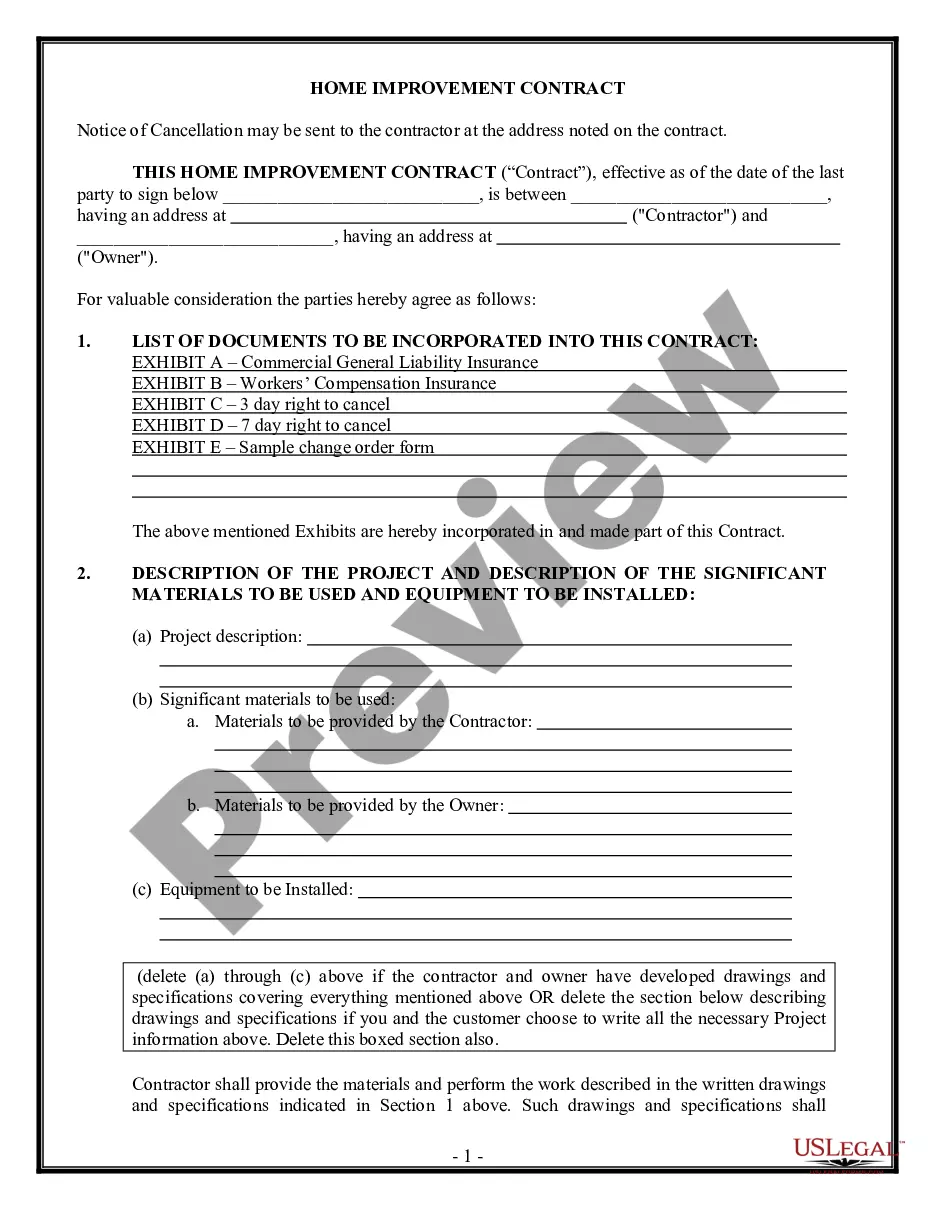
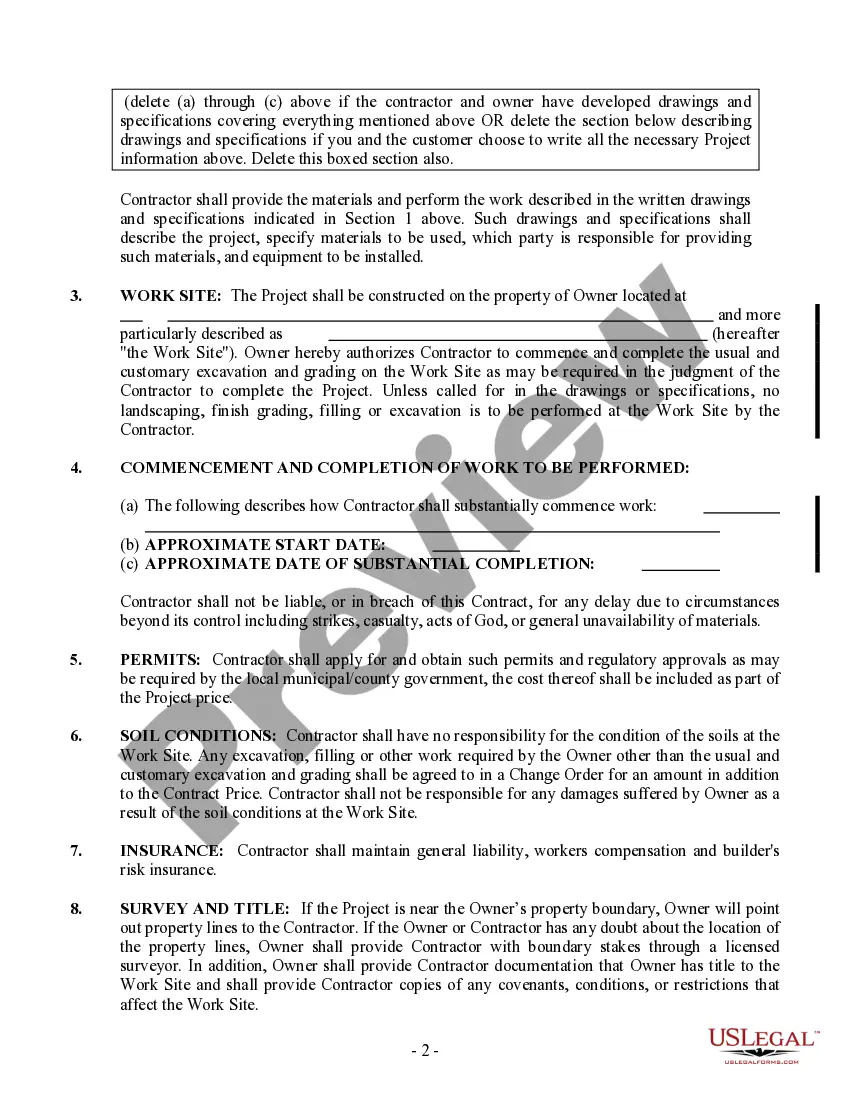
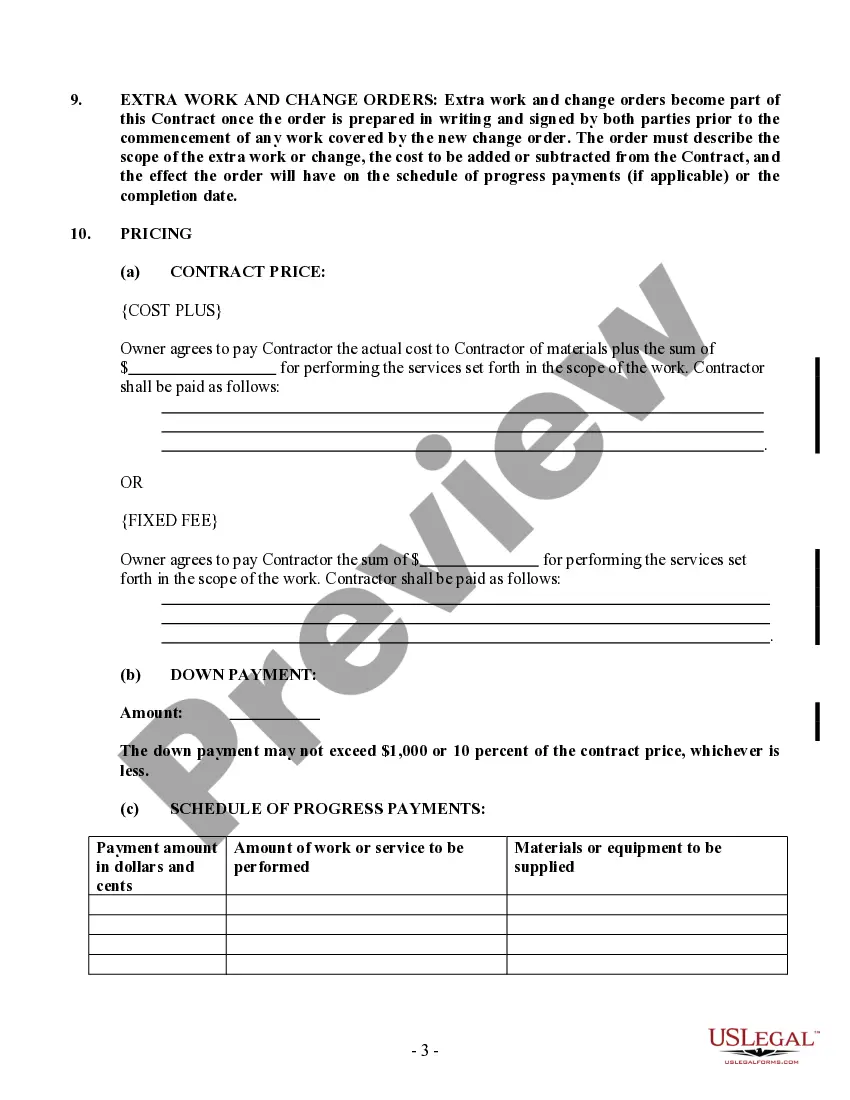
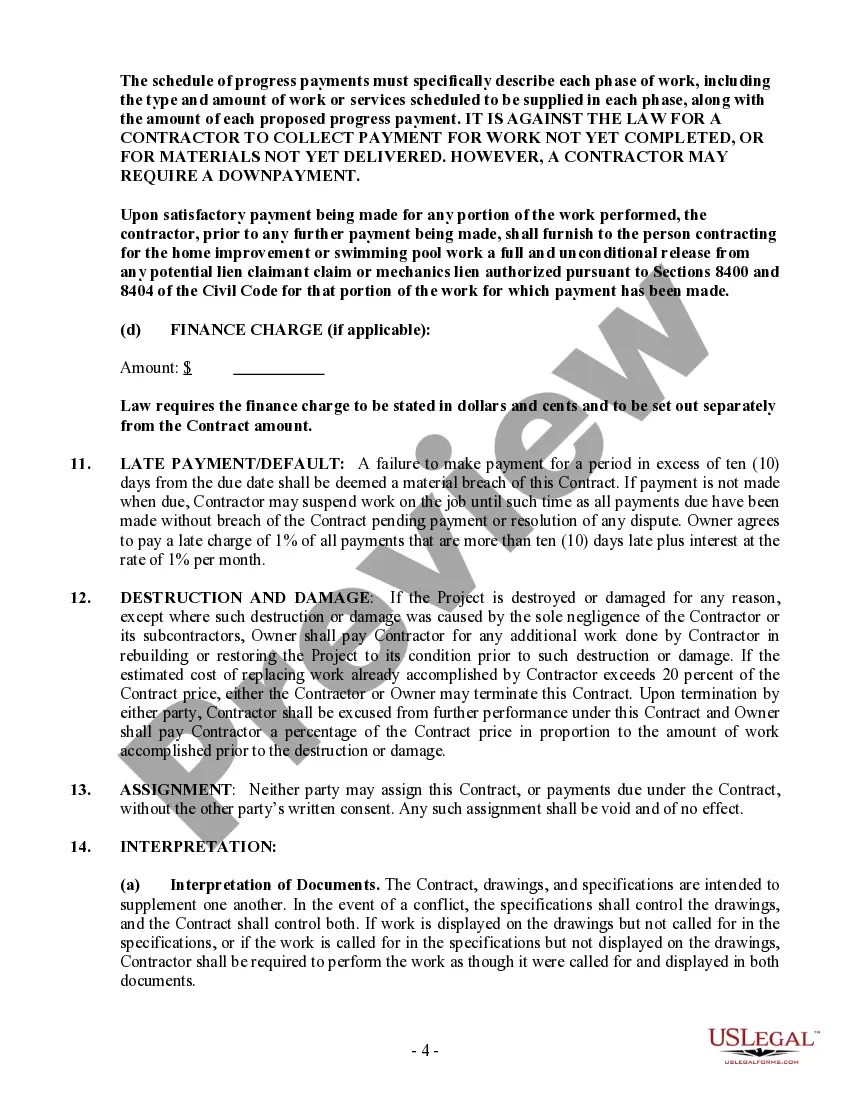


Get your form ready online
Our built-in tools help you complete, sign, share, and store your documents in one place.
Make edits, fill in missing information, and update formatting in US Legal Forms—just like you would in MS Word.
Download a copy, print it, send it by email, or mail it via USPS—whatever works best for your next step.
Sign and collect signatures with our SignNow integration. Send to multiple recipients, set reminders, and more. Go Premium to unlock E-Sign.
If this form requires notarization, complete it online through a secure video call—no need to meet a notary in person or wait for an appointment.
We protect your documents and personal data by following strict security and privacy standards.

Make edits, fill in missing information, and update formatting in US Legal Forms—just like you would in MS Word.

Download a copy, print it, send it by email, or mail it via USPS—whatever works best for your next step.

Sign and collect signatures with our SignNow integration. Send to multiple recipients, set reminders, and more. Go Premium to unlock E-Sign.

If this form requires notarization, complete it online through a secure video call—no need to meet a notary in person or wait for an appointment.

We protect your documents and personal data by following strict security and privacy standards.
Looking for another form?






How to fill out California Construction Home Improvement Contract Cost Plus Or Fixed Fee?
Whether for commercial reasons or for personal matters, everyone must confront legal scenarios at some point in their existence. Finalizing legal documents necessitates meticulous care, starting from choosing the appropriate template. For example, if you select an incorrect version of the Cost Plus Fee Contract With Customer, it will be turned down upon submission. Thus, it is crucial to find a trustworthy source of legal forms like US Legal Forms.
If you wish to obtain a Cost Plus Fee Contract With Customer template, adhere to these straightforward steps: Obtain the necessary template using the search bar or catalog navigation. Review the form’s details to ensure it aligns with your circumstances, state, and county. Click on the form’s preview to inspect it. If it is the wrong form, return to the search function to find the Cost Plus Fee Contract With Customer sample you require. Download the template if it meets your specifications. If you already possess a US Legal Forms account, click Log in to access previously saved templates in My documents. If you do not have an account yet, you can acquire the form by clicking Buy now. Select the suitable pricing option. Fill out the account registration form. Choose your payment method: use a credit card or PayPal account. Select the document format you prefer and download the Cost Plus Fee Contract With Customer. Once it is saved, you can fill out the form using editing software or print it and complete it by hand.
- With a comprehensive US Legal Forms catalog available, you do not need to waste time searching for the correct template online.
- Utilize the library’s straightforward navigation to find the suitable template for any circumstance.
Form popularity
FAQ
To bill a cost-plus fee contract with a customer, track all incurred costs meticulously and categorize them as direct or indirect. Prepare a detailed invoice that outlines each cost element, such as labor rates, material expenses, and any overhead charges. Don't forget to include the agreed-upon fee, whether it's a fixed fee or a percentage of costs. Using a platform like USLegalForms can streamline this process by providing templates and tools to ensure accurate and professional billing.
To structure a cost-plus fee contract with a customer, start by clearly defining the project's scope and objectives. Next, outline the specific costs that will be reimbursed, such as labor, materials, and overhead. It's essential to establish a mutually agreed-upon fee structure, which can be a fixed amount or a percentage of the costs incurred. By following these steps, you ensure transparency and foster a positive relationship with your customer.
An example of cost-plus billing could involve a construction project where the total project costs amount to $200,000. If the agreement specifies a 15% fee, the contractor would then bill the client for $230,000. This clear structure exemplifies a cost plus fee contract with customers, ensuring everyone is on the same page throughout the project.
A cost plus fee agreement is a contract where the contractor is reimbursed for costs incurred, plus an additional fee that serves as profit. This type of agreement provides flexibility for both the contractor and the client, allowing for adjustments based on project needs. Using a cost plus fee contract with customers can simplify project budgeting and enhance collaboration.
plusincentivefee contract motivates contractors to control costs by offering a bonus for keeping expenses below a specified threshold. In this arrangement, the contractor receives reimbursement for costs along with an additional amount based on savings achieved. This type of agreement can benefit both parties by encouraging efficiency in a cost plus fee contract with customers.
To bill under a cost-plus contract, you should first document all allowable costs incurred during the project. Next, calculate the agreed-upon percentage or fixed fee added to these costs to determine the total bill. This method fosters trust between you and the customer, as they see exactly how their payments align with the expenses in a cost plus fee contract with customers.
A: In a cost-plus contract, the buyer and seller agree on a set of expenses that will be reimbursed for a project, as well as a ?usually fixed ? fee on top of those costs. The fee represents the contractor's profit.
Six Ways to Deal with Cost-Plus Contracts 1) Demand Quantity Guarantees. ... 2) Limit Increases in the Contractor's Fee. ... 3) Eliminate Budgetary Fluff. ... 4) Carefully Select the Project Team. ... 5) Demand Transparency. ... 6) Reduced Risk means a Reduced Fee.
A: As an example, a cost-plus contract may establish that the total estimated cost of a building project is $10 million plus a fixed fee of $1.5 million, roughly 15% of the total cost, as the contractor's profit. So the total expense to the buyer would be approximately $11.5 million ?the cost plus the fee.
All expenses incurred in fulfilling a contract (e.g., materials, wages, direct expenses, cost of sub-contracts, cost of special plants, and indirect expenses) are debited to a contract account.