Roofing Contractors Sample With Financing
Description
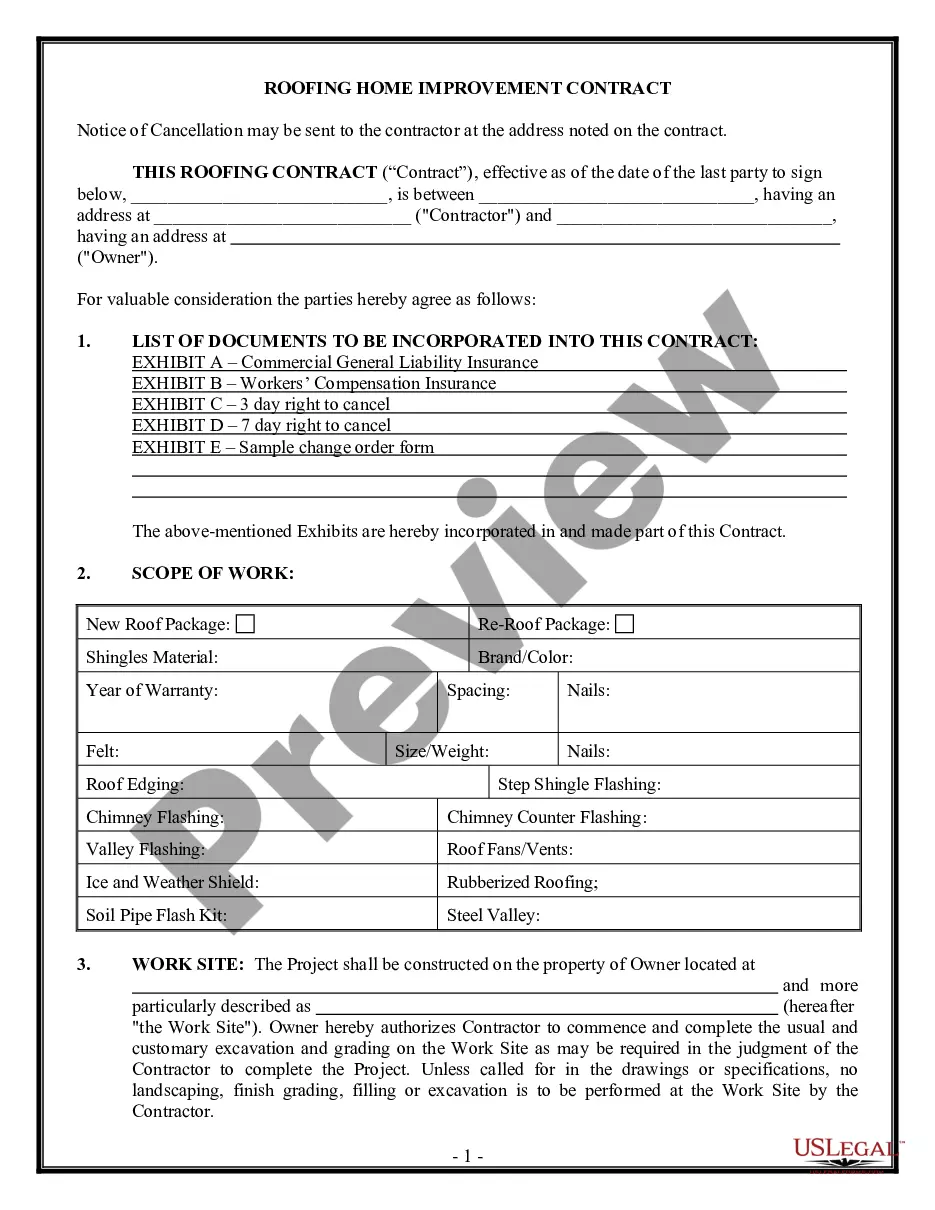
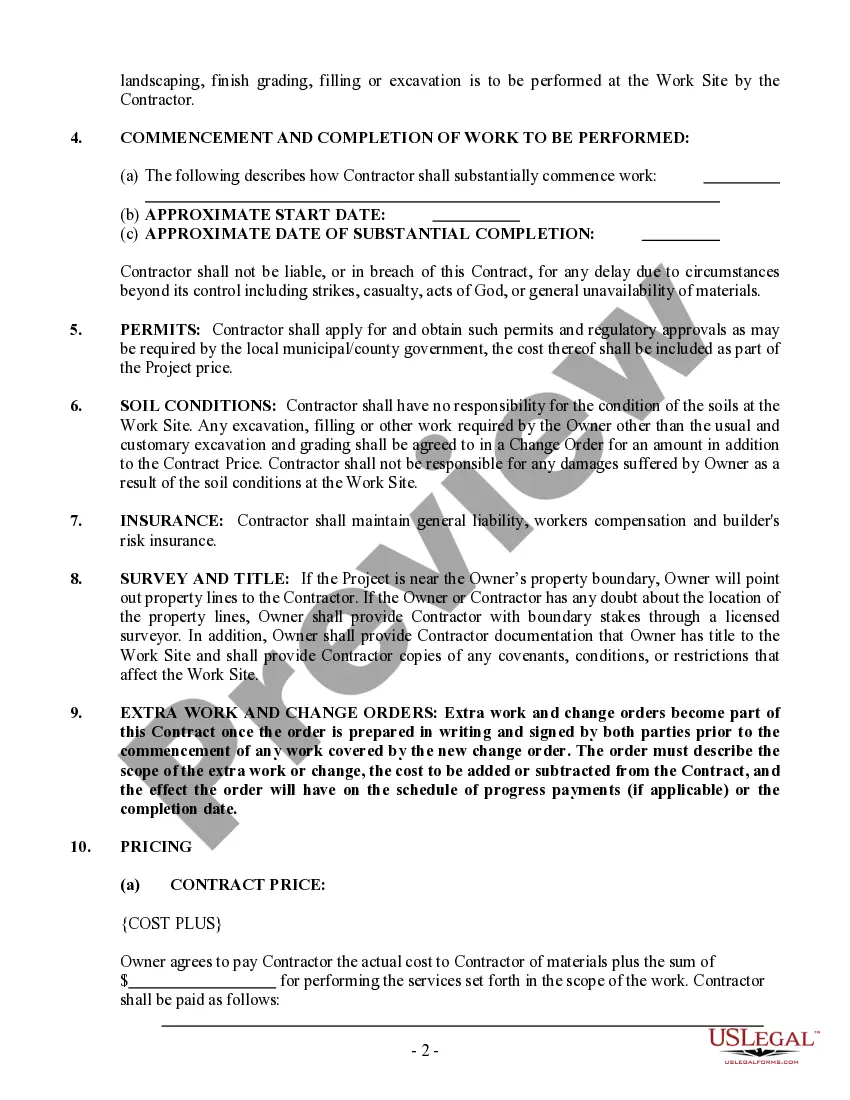
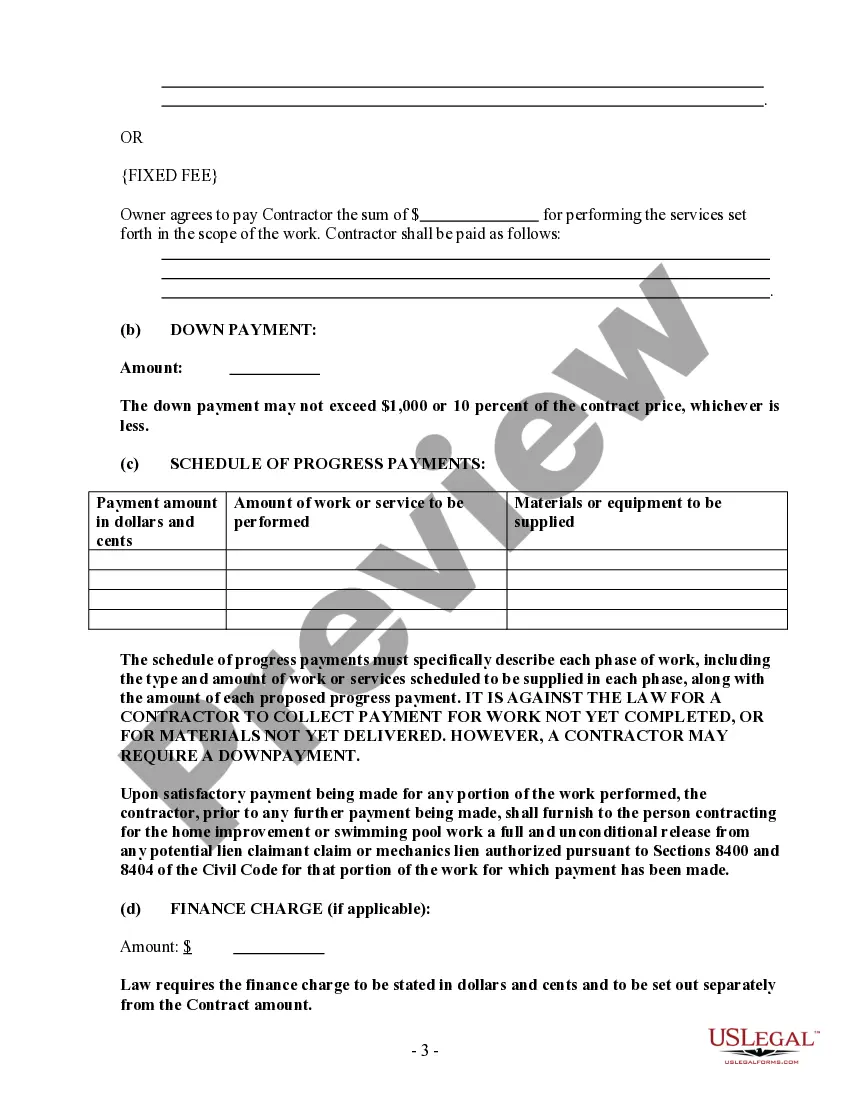
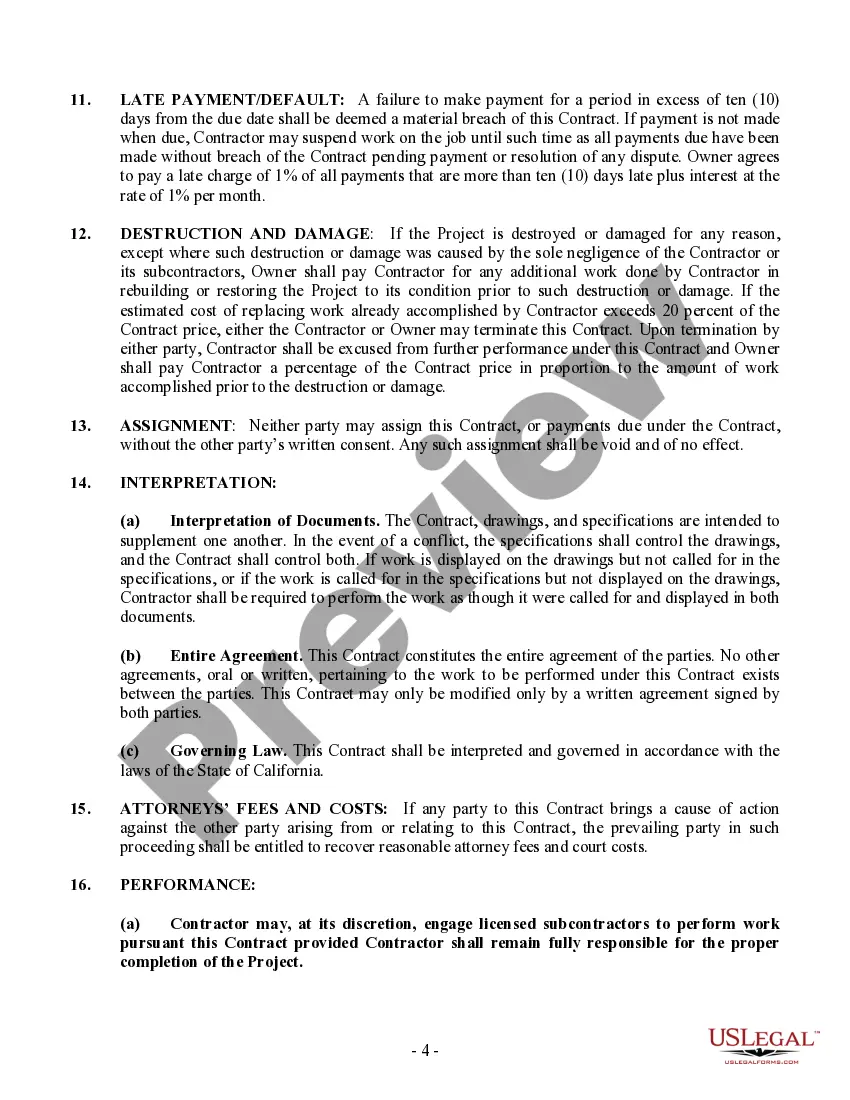
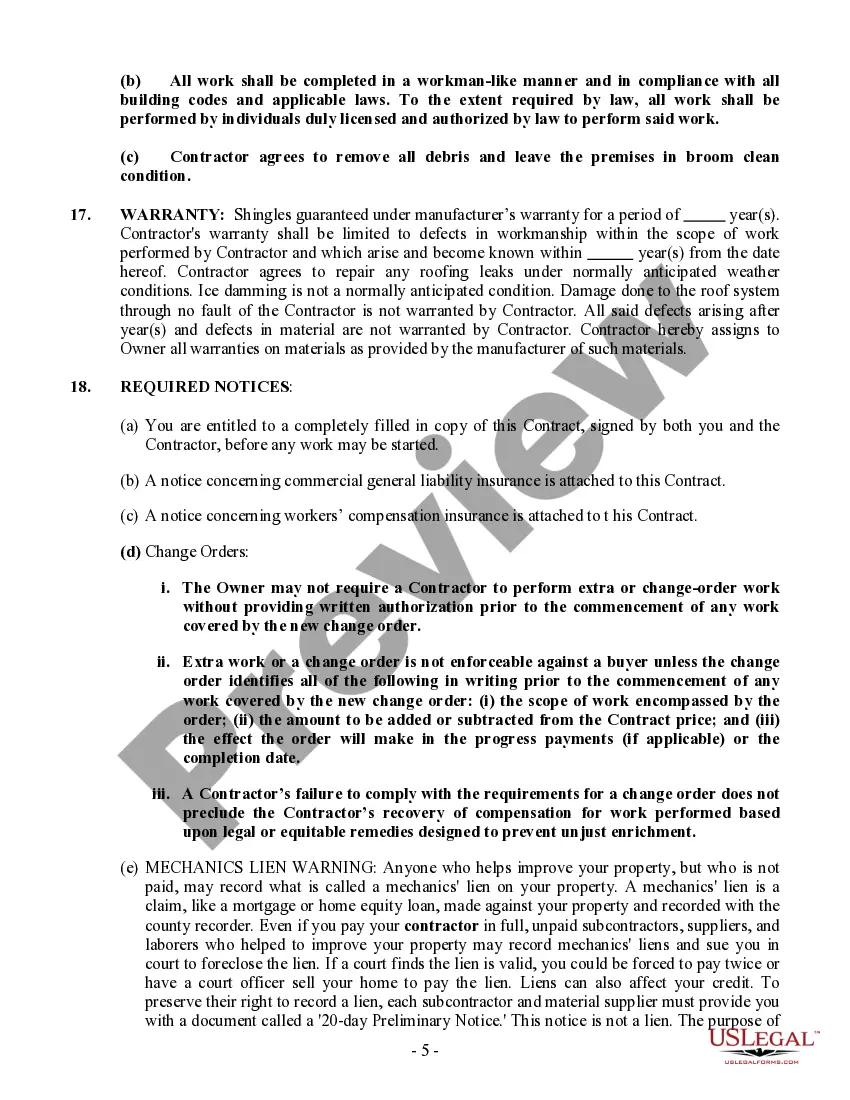
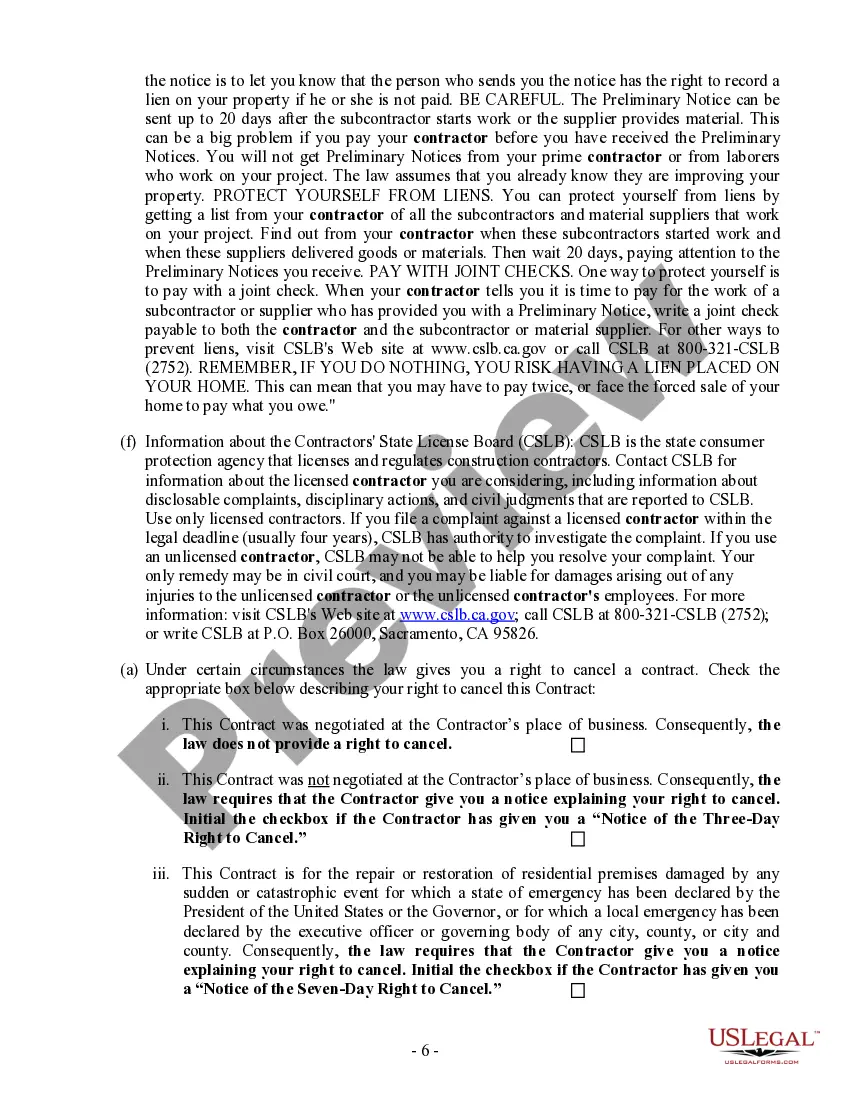
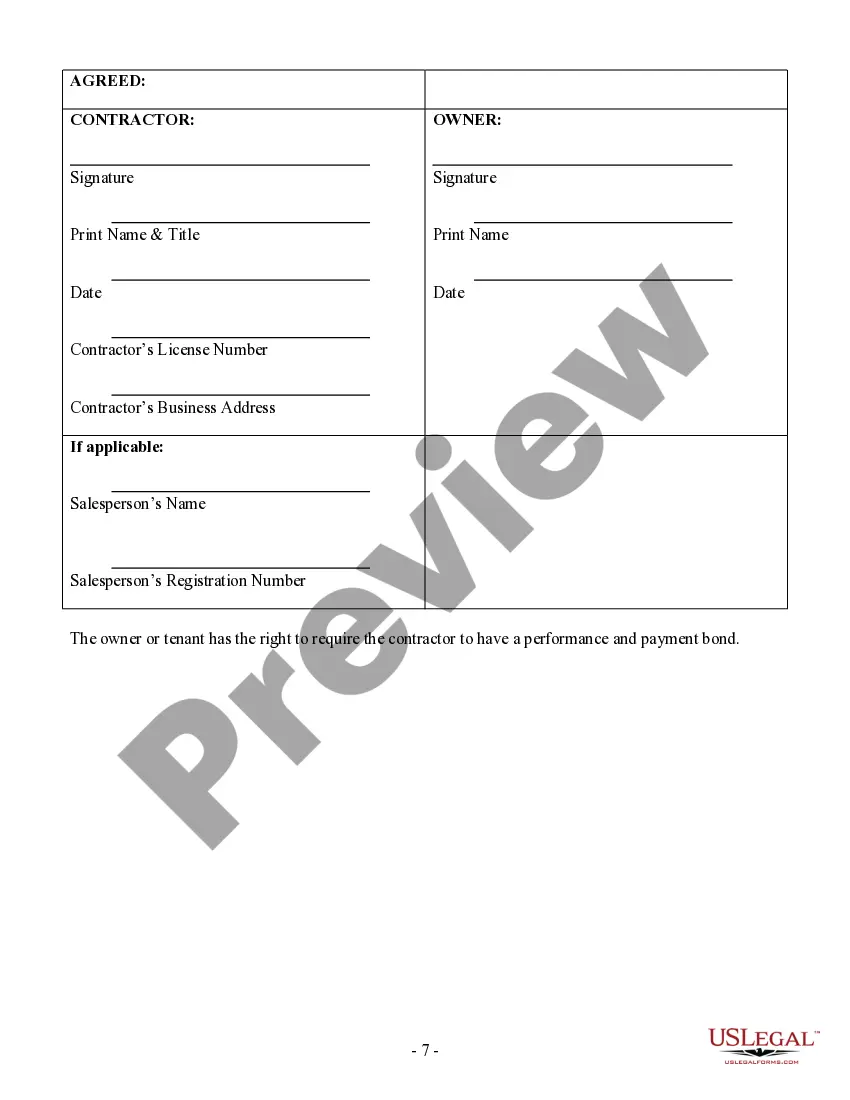
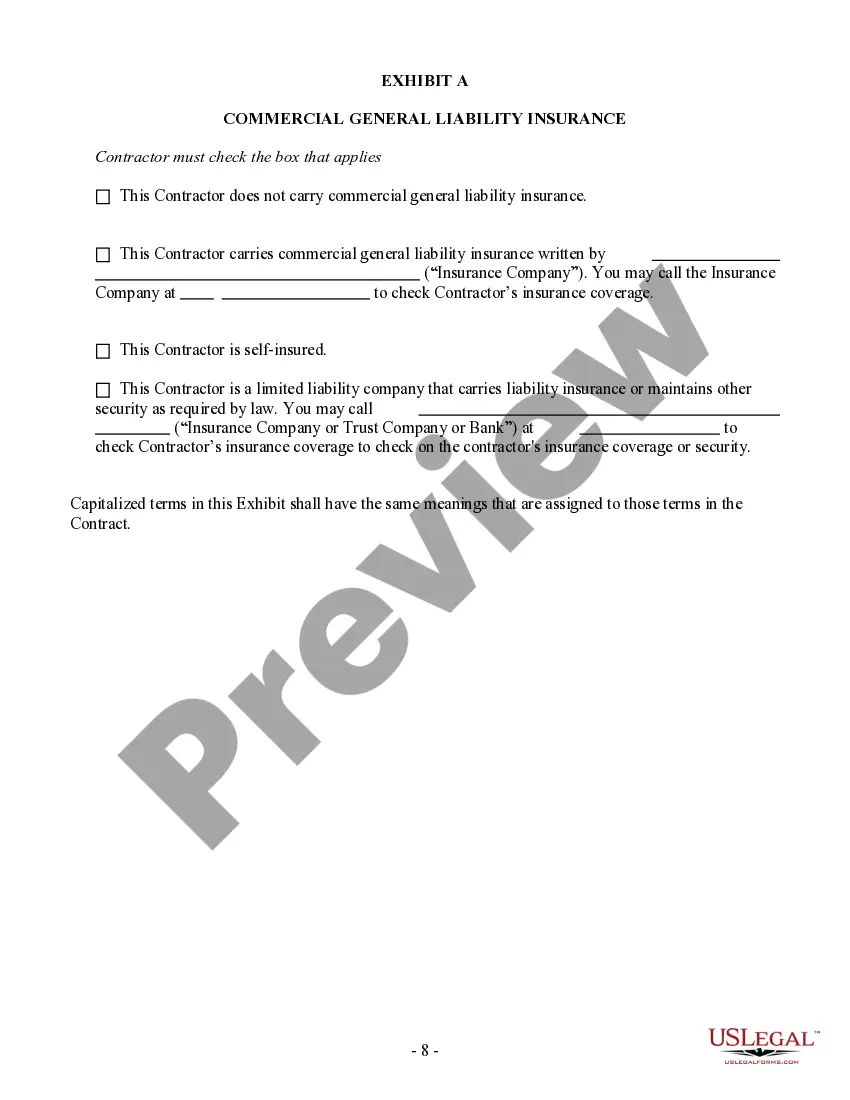

Get your form ready online
Our built-in tools help you complete, sign, share, and store your documents in one place.
Make edits, fill in missing information, and update formatting in US Legal Forms—just like you would in MS Word.
Download a copy, print it, send it by email, or mail it via USPS—whatever works best for your next step.
Sign and collect signatures with our SignNow integration. Send to multiple recipients, set reminders, and more. Go Premium to unlock E-Sign.
If this form requires notarization, complete it online through a secure video call—no need to meet a notary in person or wait for an appointment.
We protect your documents and personal data by following strict security and privacy standards.

Make edits, fill in missing information, and update formatting in US Legal Forms—just like you would in MS Word.

Download a copy, print it, send it by email, or mail it via USPS—whatever works best for your next step.

Sign and collect signatures with our SignNow integration. Send to multiple recipients, set reminders, and more. Go Premium to unlock E-Sign.

If this form requires notarization, complete it online through a secure video call—no need to meet a notary in person or wait for an appointment.

We protect your documents and personal data by following strict security and privacy standards.
Looking for another form?










How to fill out California Roofing Contract For Contractor?
Regardless of whether for professional reasons or personal issues, everyone must confront legal circumstances at some point in their lives.
Completing legal documents demands careful consideration, starting from selecting the right form template.
Once saved, you can fill out the form using editing software or print it and complete it manually. Having access to a vast catalog of US Legal Forms means you won’t need to waste time searching for the right template online. Take advantage of the library’s user-friendly navigation to find the appropriate form for any circumstance.
- For example, if you choose an incorrect version of the Roofing Contractors Sample With Financing, it will be rejected upon submission.
- Thus, it is crucial to have a reliable source of legal documents such as US Legal Forms.
- If you need to obtain a Roofing Contractors Sample With Financing template, follow these straightforward steps.
- Acquire the template required by using the search feature or catalog navigation.
- Review the description of the form to ensure it aligns with your circumstances, state, and county.
- Click on the form’s preview to examine it.
- If it turns out to be the wrong document, return to the search function to locate the Roofing Contractors Sample With Financing sample you require.
- Acquire the file if it satisfies your requirements.
- If you currently possess a US Legal Forms account, click Log in to access previously saved files in My documents.
- In case you do not have an account yet, you can obtain the form by clicking Buy now.
- Select the correct pricing option.
- Complete the profile registration form.
- Choose your payment method: utilize a credit card or PayPal account.
- Select the file format you prefer and download the Roofing Contractors Sample With Financing.
Form popularity
FAQ
New York state law does not require legal representation to complete a real estate transaction. However, the custom in New York City is for both the buyer and seller in a real estate transaction to have legal counsel present for each critical stage of their deal.
This web page provides information about using the City Register Office. Please contact the Richmond County Clerk for properties on Staten Island. Property records are public. People may use these records to get background information on purchases, mortgages, asset searches and other legal and financial transactions.
Settlement/closing the transaction Seller signs the deed and closing affidavit. Buyer signs the new note and mortgage. The old loan is paid off. Seller, real estate professionals, attorneys and other parties present at the closing of the transaction are paid.
You can search for property records and property ownership information online, in person, or over the phone with a 311 representative. Property owners of all boroughs except Staten Island can visit ACRIS. To search documents for Staten Island property, visit the Richmond County Clerk's website.
The closing statement typically lists fees in two columns, one detailing the buyer's expenses and one detailing the seller's expenses. The amount of cash the buyer must give the seller has its own entry at the bottom of the document.
The lender or title company prepares a closing statement, showing all the money that changes hands at the closing. A buyer's attorney will check the closing documents, and both parties' attorneys can explain those documents to their clients as well as the closing costs their clients need to pay.
On closing day itself, the homebuyer will be required to sign a great deal of paperwork that finalizes the deal. Often there are many other parties present for closing day, including the seller, the lender, real estate agents, the closing agent and often an attorney who will also review the paperwork being signed.
A closing attorney, also known as a real estate lawyer, plays a crucial role in the real estate closing process. Whether you are a buyer, seller, or lender, the attorney represents your interests and ensures that all necessary paperwork is completed accurately and in your best interest.