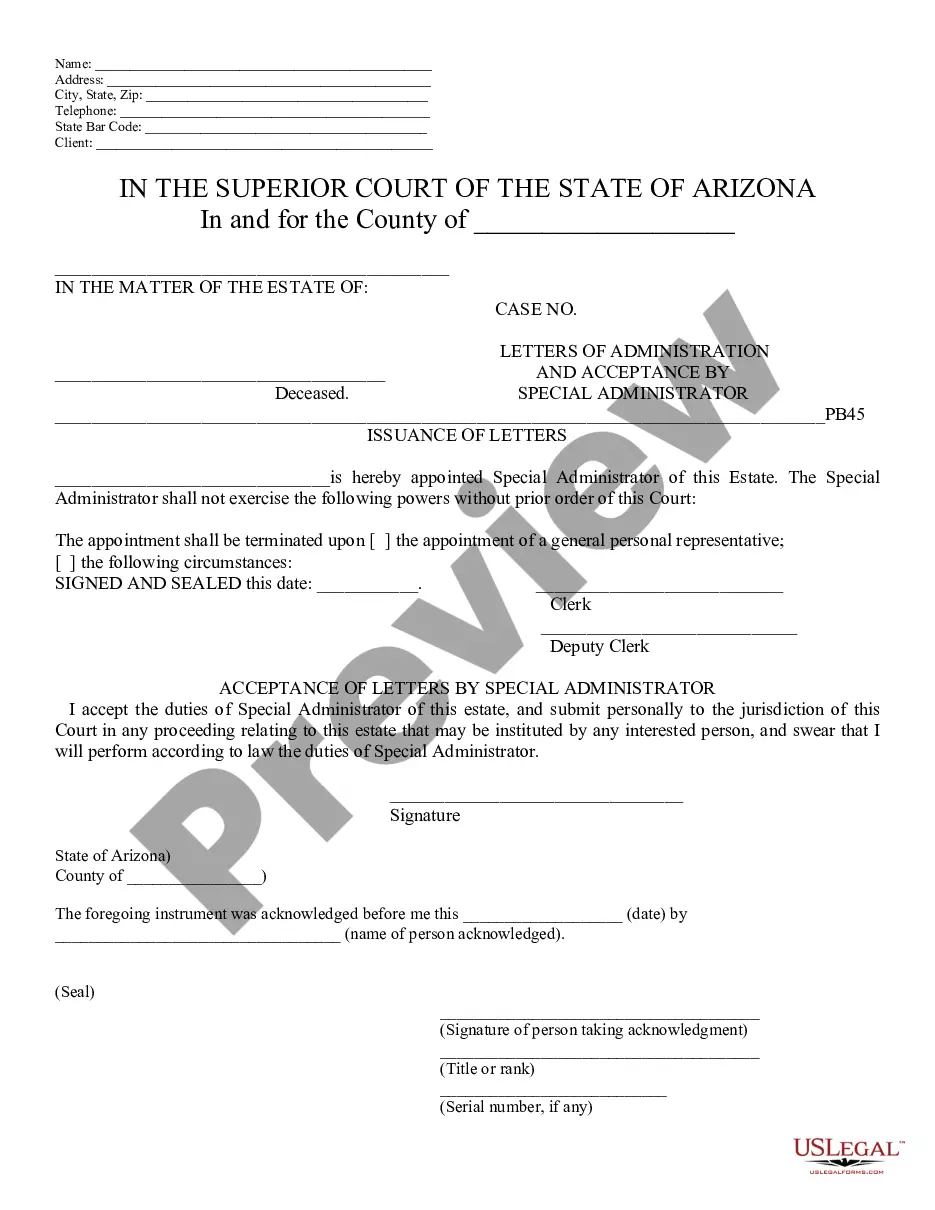
Letters Of Testamentary In Arizona
Description
Get your form ready online
Our built-in tools help you complete, sign, share, and store your documents in one place.
Make edits, fill in missing information, and update formatting in US Legal Forms—just like you would in MS Word.
Download a copy, print it, send it by email, or mail it via USPS—whatever works best for your next step.
Sign and collect signatures with our SignNow integration. Send to multiple recipients, set reminders, and more. Go Premium to unlock E-Sign.
If this form requires notarization, complete it online through a secure video call—no need to meet a notary in person or wait for an appointment.
We protect your documents and personal data by following strict security and privacy standards.

Make edits, fill in missing information, and update formatting in US Legal Forms—just like you would in MS Word.

Download a copy, print it, send it by email, or mail it via USPS—whatever works best for your next step.

Sign and collect signatures with our SignNow integration. Send to multiple recipients, set reminders, and more. Go Premium to unlock E-Sign.

If this form requires notarization, complete it online through a secure video call—no need to meet a notary in person or wait for an appointment.

We protect your documents and personal data by following strict security and privacy standards.
Looking for another form?


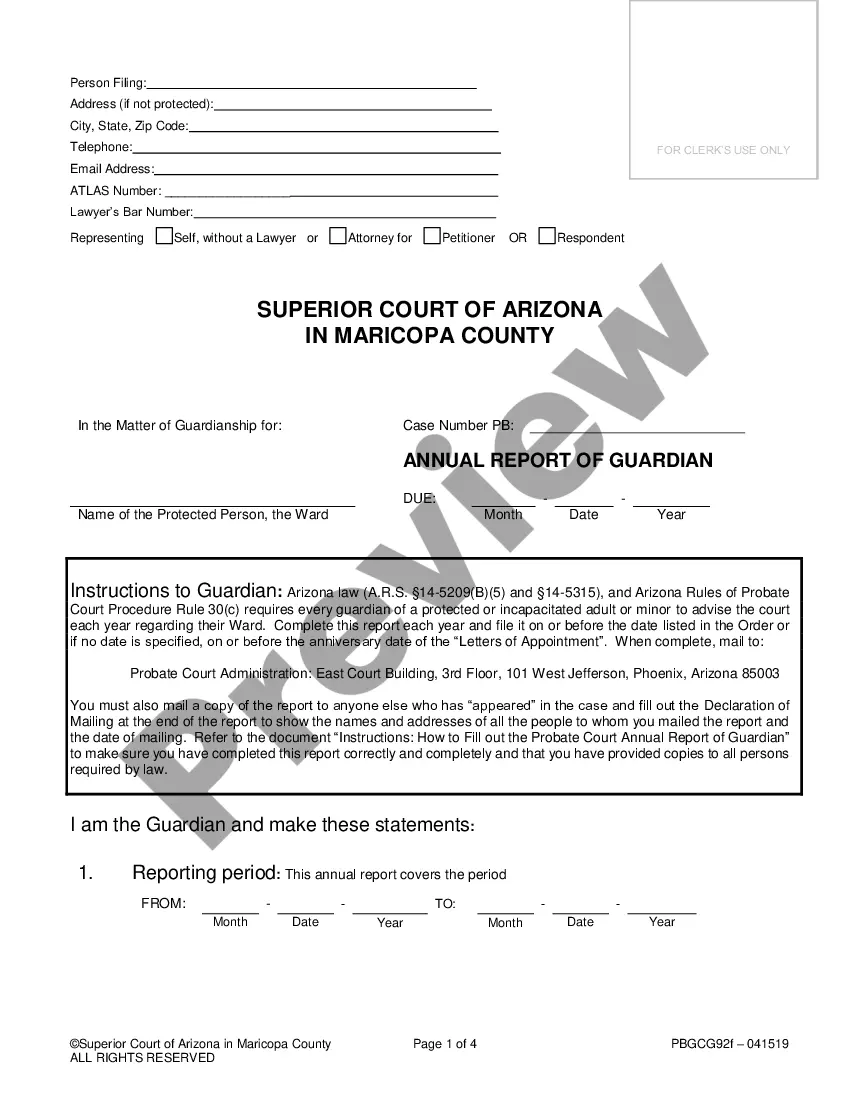
How to fill out Arizona Letters Of Administration And Acceptance By Special Administrator?
There's no longer a reason to squander time looking for legal documents to meet your local state requirements. US Legal Forms has gathered all of them in one location and made their availability more efficient.
Our website offers over 85k templates for various business and individual legal situations categorized by state and purpose. All forms are correctly prepared and validated for authenticity, so you can feel assured about acquiring the current Letters Of Testamentary In Arizona.
If you're acquainted with our service and already possess an account, ensure your subscription is active before accessing any templates. Log In to your account, select the document, and click Download. You can also revisit all previously obtained documents at any time by navigating to the My documents section in your profile.
Print your form to fill it out manually or upload the sample if you prefer to edit it online. Completing formal documents under federal and state laws is fast and simple with our library. Experience US Legal Forms today to keep your paperwork organized!
- If you have not used our service before, the procedure will require a few additional steps to finish.
- Here’s how new users can access the Letters Of Testamentary In Arizona from our collection.
- Review the page content thoroughly to confirm it features the sample you require.
- Utilize the form description and preview options, if available.
- Employ the Search field above to find another sample if the current one does not suit your needs.
- Click Buy Now next to the template title when you discover the fitting one.
- Choose the most appropriate pricing plan and either create an account or Log In.
- Make your subscription payment using a credit card or through PayPal to proceed.
- Select the file format for your Letters Of Testamentary In Arizona and download it to your device.
Form popularity
FAQ
To get a letter of testamentary in Arizona, start by gathering necessary documents such as the will, if available, and the death certificate. Next, file a petition with the probate court, providing all required information about the deceased and their estate. Once the court approves your petition, you will receive the letter testamentary, which grants you the power to handle the estate. If you're unsure about any steps, using a platform like US Legal Forms can simplify the process and provide guidance.
To receive a letter of testamentary, you must file the appropriate documents with the probate court. Once the court reviews your petition, they will issue the letter if everything is in order. This process typically involves providing proof of the deceased's passing and the legal right to manage their estate. Therefore, it's essential to follow all guidelines set by the court to obtain this important document.
A letter of testamentary in Arizona serves as a court document that confirms your authority as the executor of an estate. With this letter, you can access the deceased’s assets, settle debts, and distribute property according to their wishes outlined in the will. This document provides the legal backing you need to act on behalf of the deceased. In essence, it helps ensure the estate is settled properly and efficiently.
To order letters testamentary in Arizona, you must first file a petition with the probate court in the county where the deceased person lived. You will need to include necessary documents like the death certificate and the will, if applicable. After the court reviews and approves your petition, they will issue the letters testamentary. This process grants you the authority to manage the estate's assets.
Letters of testamentary and letters of appointment are not identical but are sometimes confused due to their similar functions. While both documents authorize individuals to manage an estate, letters of testamentary are exclusive to executors named in a will, whereas letters of appointment are typically issued by the court to personal representatives in cases with no will. Understanding this distinction is key in navigating estate management in Arizona.
A letter of testamentary outlines the authority granted to an executor by the court. It includes details about the deceased, the executor's name, and the specific duties authorized to manage the estate. This document serves as legal proof that the executor can start the process of accessing assets, paying debts, and distributing the estate according to the will.
The difference between a letter of testamentary and a letter of office lies in their purposes and scope. A letter of testamentary in Arizona specifically authorizes an executor named in a will to manage the estate. Conversely, a letter of office is issued to a personal representative appointed by the court when there is no will, allowing them to handle the estate administration.
In Arizona, bank accounts that have named beneficiaries typically do not need to go through probate. These accounts pass directly to the designated beneficiaries upon the account holder's death. However, letters of testamentary may still be necessary if there are other assets or complexities involved in the estate.
To obtain letters of testamentary in Arizona, you must file a petition for probate in the appropriate court. Along with the petition, you need to submit the deceased person's will and additional required documents. If the court approves your petition, they will issue the letters of testamentary, enabling you to manage the estate.
Another commonly used term for a letter of testamentary is 'letters testamentary' or simply 'testamentary letters.' In Arizona, these documents serve as proof that the executor has been authorized to administer the estate of the deceased. They play a crucial role in ensuring that the wishes outlined in the will are followed accordingly.