Trust Amendment And Restatement Form With Two Points

Description
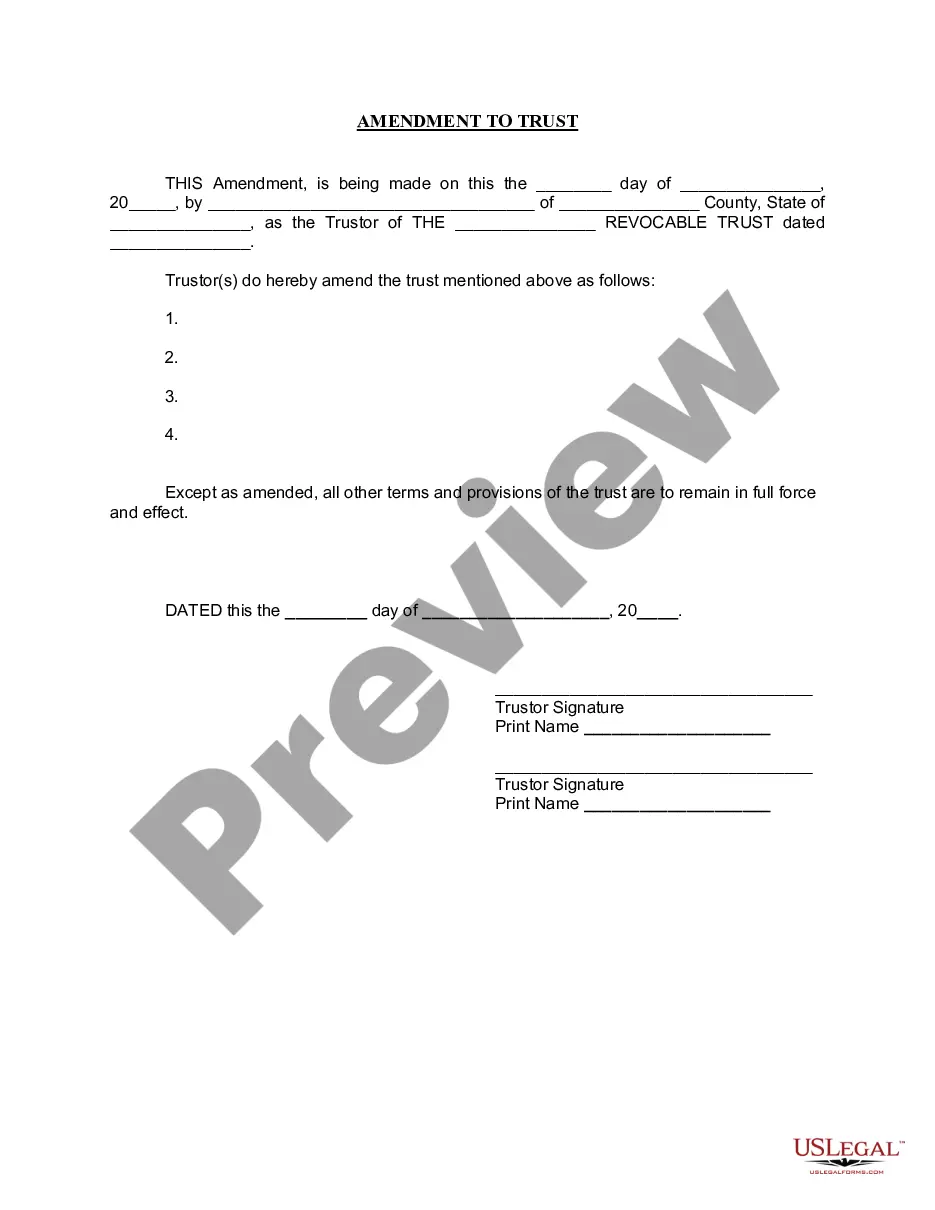


Get your form ready online
Our built-in tools help you complete, sign, share, and store your documents in one place.
Make edits, fill in missing information, and update formatting in US Legal Forms—just like you would in MS Word.
Download a copy, print it, send it by email, or mail it via USPS—whatever works best for your next step.
Sign and collect signatures with our SignNow integration. Send to multiple recipients, set reminders, and more. Go Premium to unlock E-Sign.
If this form requires notarization, complete it online through a secure video call—no need to meet a notary in person or wait for an appointment.
We protect your documents and personal data by following strict security and privacy standards.

Make edits, fill in missing information, and update formatting in US Legal Forms—just like you would in MS Word.

Download a copy, print it, send it by email, or mail it via USPS—whatever works best for your next step.

Sign and collect signatures with our SignNow integration. Send to multiple recipients, set reminders, and more. Go Premium to unlock E-Sign.

If this form requires notarization, complete it online through a secure video call—no need to meet a notary in person or wait for an appointment.

We protect your documents and personal data by following strict security and privacy standards.
Looking for another form?
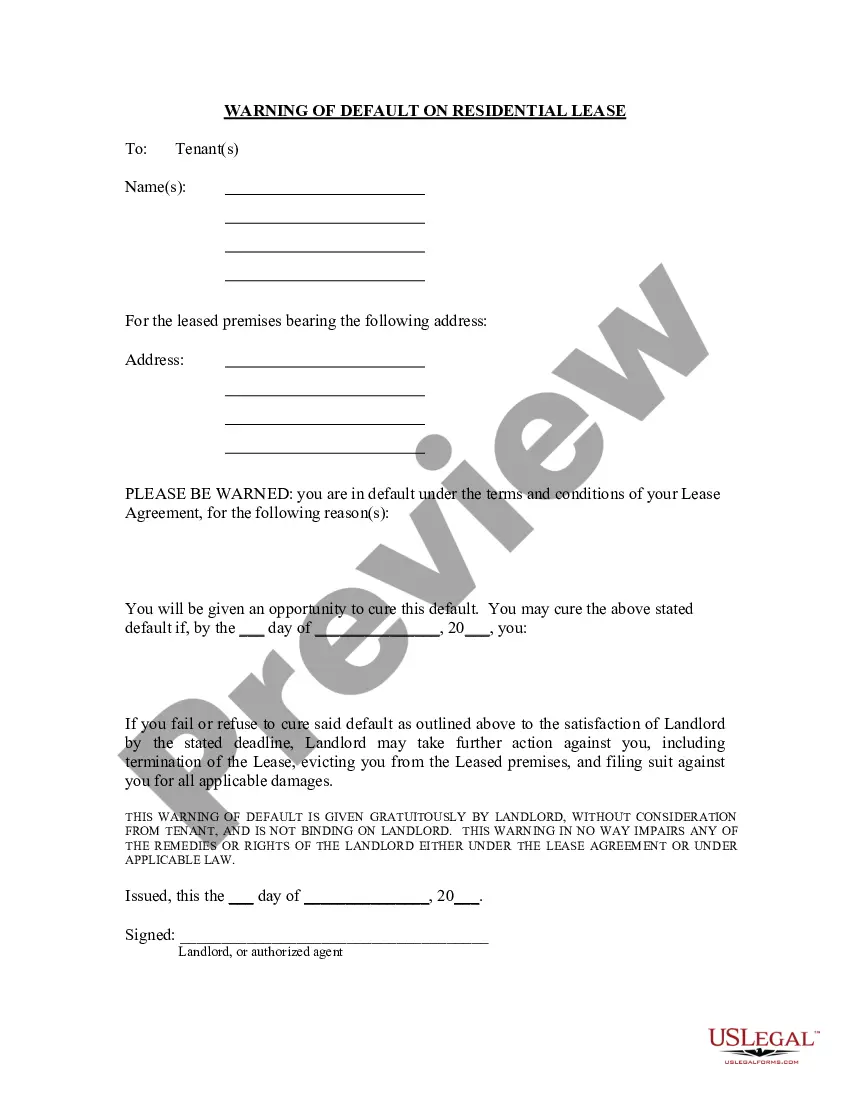


How to fill out Arizona Amendment To Living Trust?
Locating a reliable source for the most up-to-date and pertinent legal templates constitutes a significant part of navigating bureaucracy. Identifying the appropriate legal documents requires precision and meticulousness, highlighting the significance of sourcing samples of the Trust Amendment And Restatement Form With Two Points exclusively from trustworthy origins, such as US Legal Forms. An incorrect template will squander your time and prolong the situation you are facing. With US Legal Forms, you have minimal concerns. You can access and review all the particulars regarding the document’s use and applicability for your case and in your jurisdiction.
Consider the outlined steps to complete your Trust Amendment And Restatement Form With Two Points.
Eliminate the stress associated with your legal documentation. Browse the extensive collection of US Legal Forms to discover legal templates, assess their relevance to your circumstances, and download them immediately.
- Utilize the library navigation or search bar to locate your sample.
- Examine the form’s description to verify it aligns with the prerequisites of your state and locality.
- Check the form preview, if available, to ensure the form is the one you need.
- Continue the search and find the appropriate template if the Trust Amendment And Restatement Form With Two Points does not meet your needs.
- Once you are certain about the form’s applicability, download it.
- If you are a registered user, click Log in to verify and gain entry to your selected forms in My documents.
- If you have not registered yet, click Buy now to acquire the form.
- Choose the pricing option that fits your needs.
- Proceed to the registration to conclude your purchase.
- Complete your transaction by selecting a payment method (credit card or PayPal).
- Select the format for downloading the Trust Amendment And Restatement Form With Two Points.
- After obtaining the form on your device, you can modify it using the editor or print it out to complete manually.
Form popularity
FAQ
Amending a trust can be straightforward if you have the right resources. Using a Trust amendment and restatement form simplifies the process, allowing you to make necessary changes efficiently. You must ensure that the amendments align with your intentions and comply with state laws. Additionally, our platform provides templates and guidance to make this task as easy as possible for you.
An amendment addresses specific parts of a trust or contract, making targeted changes to the existing document without rewriting it. Conversely, an amendment and a restatement represent a new document that encompasses all previous amendments. This method ensures clear understanding and eliminates confusion. For a straightforward approach, utilizing a Trust amendment and restatement form can facilitate this process.
A revision generally involves updating a document to improve clarity or accuracy, while an amendment specifically adds to, deletes, or alters existing provisions. Revisions might not need formal approval, whereas amendments often require acknowledgment from relevant parties. If you find yourself needing to make changes, you might want to consider using a Trust amendment and restatement form for a more structured approach.
An amendment of trust makes specific changes to certain provisions of the trust document while leaving the rest intact. Meanwhile, a restatement of trust presents a new, comprehensive version of the trust, incorporating all amendments and reflecting the current intentions of the trust creator. It is often advisable to use a Trust amendment and restatement form, as this can ensure that all changes are documented clearly and effectively.
A contract restatement involves rewriting a contract in its entirety, usually to incorporate changes or clarify terms. This process creates a new version of the original contract, reflecting all past amendments. In contrast, an amendment modifies specific sections of the contract without altering the entire document. If you are unsure how to proceed, consider using a Trust amendment and restatement form to simplify the process.
You can easily obtain a trust amendment and restatement form from reputable online legal platforms like US Legal Forms. These sites provide a variety of customizable templates that meet state-specific requirements. Additionally, they offer guidance on filling out the form to ensure your trust amendment accurately reflects your intentions. By using these resources, you can simplify the process and efficiently manage your trust needs.
To amend and restate a trust, begin by reviewing the original trust document and identifying changes needed. Next, fill out a trust amendment and restatement form to capture these modifications, ensuring it complies with state laws. Once completed, sign the new document with the required witnesses and possibly a notary. This process will ensure that all changes are legally authenticated and clearly articulated.
A codicil is specific to wills and refers to an addition or modification of a will's terms, while an amendment deals exclusively with trusts. When you amend a trust, you can change its provisions without needing to create a brand new document. Therefore, utilizing a trust amendment and restatement form is essential for properly documenting these changes, preserving clarity and intent where a codicil wouldn't apply.
Amending and restating a trust means making changes to the original trust agreement while creating a new document that reflects the revised terms. This approach consolidates all modifications into one single document, which helps to avoid confusion. Using a trust amendment and restatement form can simplify this process, ensuring that your updates are legally documented and clear to all parties involved. This is beneficial for maintaining the trust's integrity over time.
A trust restatement is a complete rewriting of an existing trust document that incorporates all updates and changes. For instance, you might decide to include new beneficiaries or modify distribution terms. This process is done using a trust amendment and restatement form, ensuring that all previous provisions are revoked and the new terms take effect. It provides clarity and legal validity to your intentions.