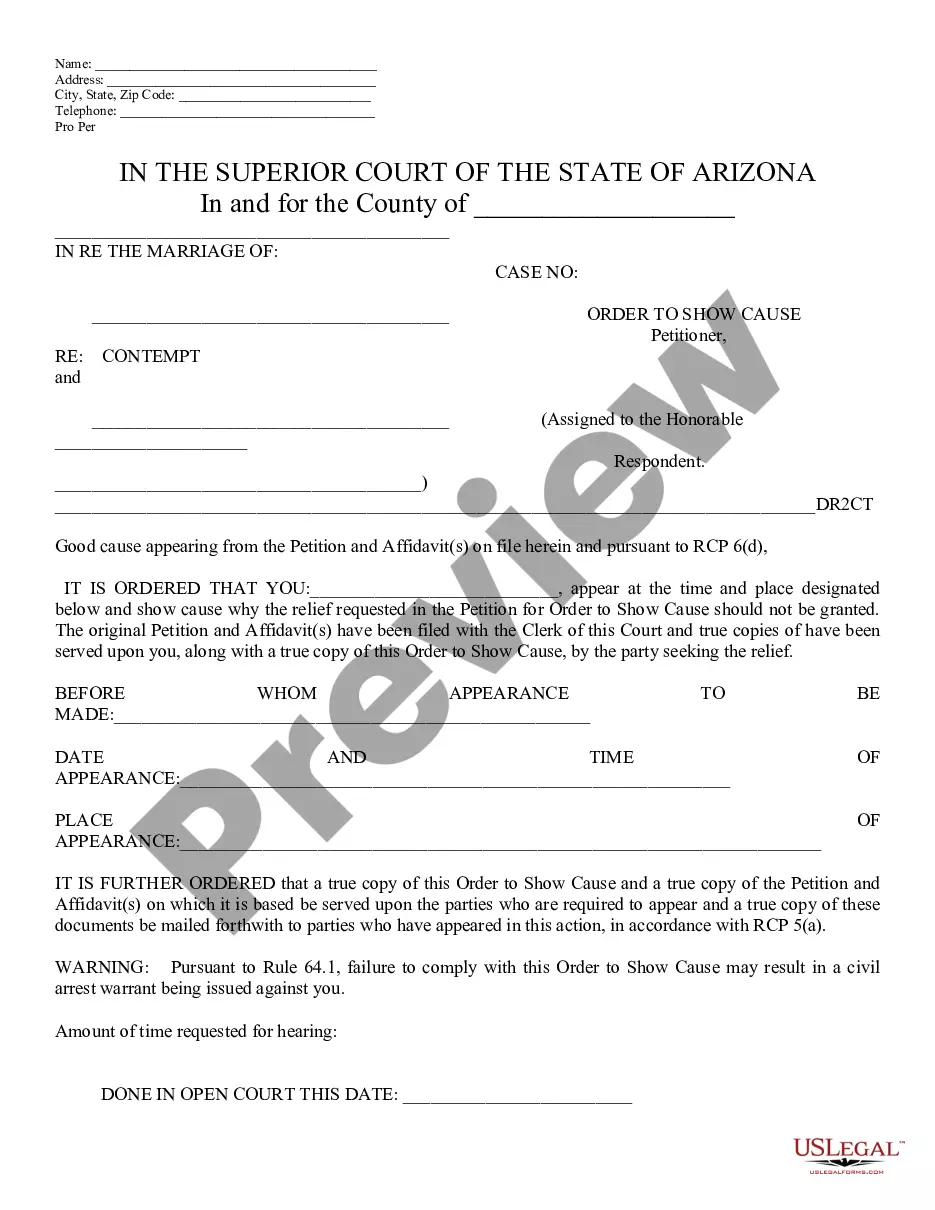
File A Petition For Contempt Az Without An Attorney
Description
Get your form ready online
Our built-in tools help you complete, sign, share, and store your documents in one place.
Make edits, fill in missing information, and update formatting in US Legal Forms—just like you would in MS Word.
Download a copy, print it, send it by email, or mail it via USPS—whatever works best for your next step.
Sign and collect signatures with our SignNow integration. Send to multiple recipients, set reminders, and more. Go Premium to unlock E-Sign.
If this form requires notarization, complete it online through a secure video call—no need to meet a notary in person or wait for an appointment.
We protect your documents and personal data by following strict security and privacy standards.

Make edits, fill in missing information, and update formatting in US Legal Forms—just like you would in MS Word.

Download a copy, print it, send it by email, or mail it via USPS—whatever works best for your next step.

Sign and collect signatures with our SignNow integration. Send to multiple recipients, set reminders, and more. Go Premium to unlock E-Sign.

If this form requires notarization, complete it online through a secure video call—no need to meet a notary in person or wait for an appointment.

We protect your documents and personal data by following strict security and privacy standards.
Looking for another form?

How to fill out Arizona OSC Regarding Contempt?
Regardless of whether it is for professional objectives or personal issues, all individuals must address legal circumstances at some point in their lives.
Filling out legal documents necessitates meticulous care, beginning with selecting the appropriate form template.
With an extensive US Legal Forms catalog available, you won't need to waste time searching for the appropriate template online. Utilize the library's easy navigation to find the suitable form for any scenario.
- Locate the template you require by utilizing the search box or browsing the catalog.
- Review the form's description to confirm it suits your case, state, and locality.
- Click on the form's preview to examine it.
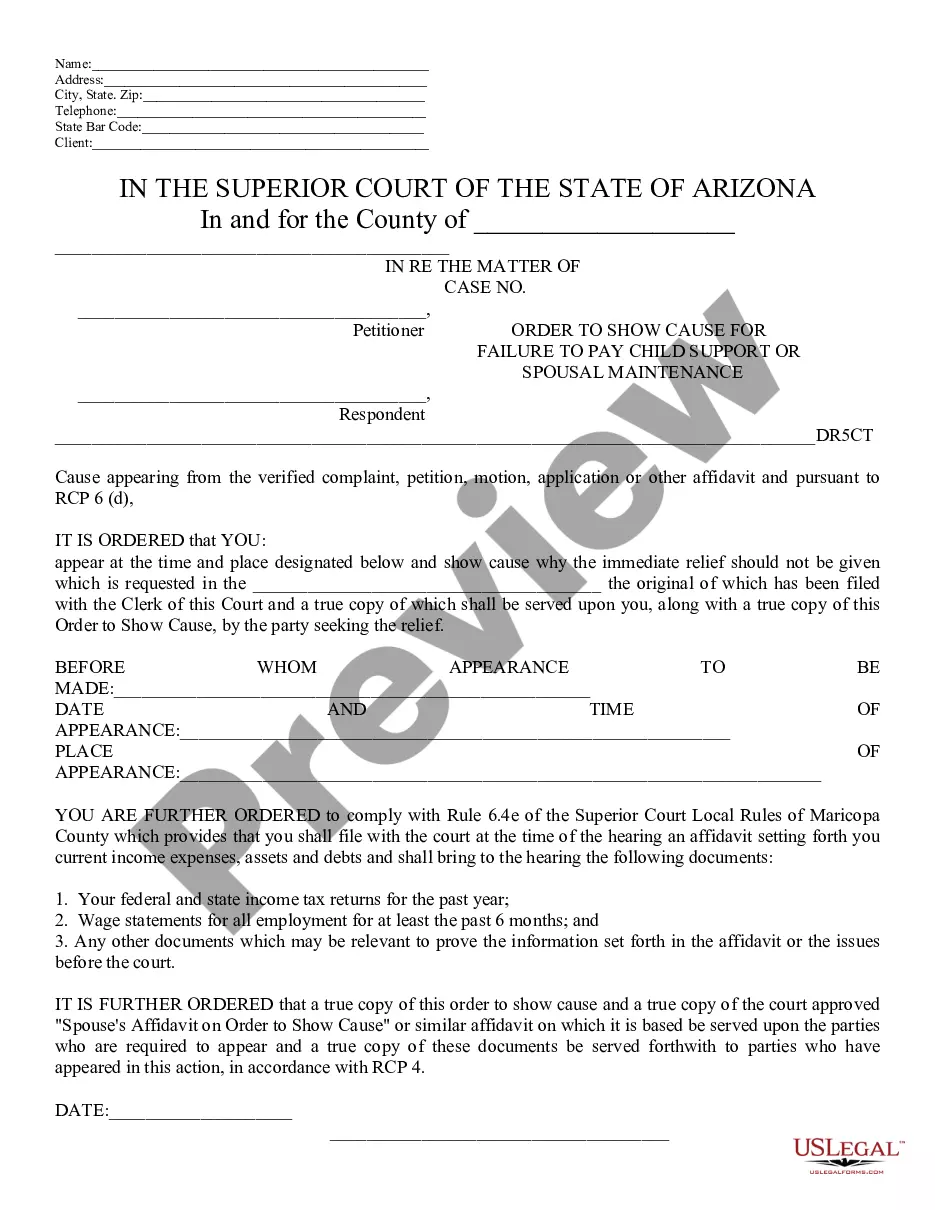
- If it is not the correct form, return to the search function to locate the File A Petition For Contempt Az Without An Attorney template you need.
- Download the template when it aligns with your requirements.
- If you already possess a US Legal Forms account, simply click Log in to access previously saved documents in My documents.
- Should you not have an account yet, you can acquire the form by clicking Buy now.
- Select the correct pricing option.
- Complete the profile registration form.
- Choose your payment method: you can use a credit card or PayPal account.
- Select the document format you prefer and download the File A Petition For Contempt Az Without An Attorney.
- Once it is downloaded, you can fill out the form using editing software or print it and complete it by hand.
Form popularity
FAQ
SPECIAL VERDICTS AND INTERROGATORIES. (a) Special Verdicts. The court may require a jury to return only a special verdict in the form of a special written finding upon each issue of fact.
Apply, through the attorney general or county attorney of the county in which the act, practice or transaction is alleged to have been committed, to the superior court in that county for an injunction restraining the person from engaging in the act, practice or transaction or doing any act in furtherance of the act, ...
An applicant who seeks to modify or enforce all or a portion of a judgment after the entry of the judgment must file a petition with the court and pay the required filing fee.
A Rule 69 Agreement allows the parties to settle some or all of their disputes privately, leaving only the unresolved issues to be resolved by the family law court. Common disputes settled ahead of divorce trial proceedings are visitation, parenting time, child support, and how to divide assets.
Arizona Rule of Family Law Procedure 49 (Rule 49) requires both parties to share information in family law cases. It requires each party send to the other party a detailed statement with the specific positions the party proposes to resolve all issues.